Close Menu
TechCentralTechCentral

    Subscribe to the newsletter

    Get the best South African technology news and analysis delivered to your e-mail inbox every morning.

    Facebook X (Twitter) YouTube LinkedIn
    WhatsApp Facebook X (Twitter) LinkedIn YouTube
    TechCentralTechCentral
    • News
      Nedbank hires MTN's former tech chief as group CIO - Nikos Angelopoulos

      Nedbank hires MTN’s former tech chief as group CIO

      31 July 2026
      Eskom's diesel bill falls 86% as breakdowns hit eight-year low

      Eskom’s diesel bill falls 86% as breakdowns hit eight-year low

      31 July 2026
      Ramaphosa signs off on taking the grid away from Eskom

      Ramaphosa signs off on taking the grid away from Eskom

      31 July 2026
      Microsoft just had the biggest day in stock market history

      Microsoft just had the biggest day in stock market history

      31 July 2026
      MTN Nigeria's growth engine stalled in second quarter - Karl Toriola

      MTN Nigeria’s growth engine stalled in second quarter

      31 July 2026
    • World
      Meta AI will now tell parents if their teen is in crisis

      Meta AI will now tell parents if their teen is in crisis

      17 July 2026
      IBM shares crash 25% as AI upends software spending - Arvind Krishna

      IBM shares crash 25% as AI upends software spending

      15 July 2026
      Jony Ive's first OpenAI device: an AI smart speaker - Jony Ive and Sam Altman

      Jony Ive’s first OpenAI device: an AI smart speaker

      15 July 2026
      Stripe, Advent in talks to buy PayPal for $53-billion

      Stripe, Advent in talks to buy PayPal for $53-billion

      15 July 2026
      Memory crisis sends smartphone market into steep decline

      Memory crisis sends smartphone market into steep decline

      13 July 2026
    • In-depth
      The plan to stop AI from breaking the world - Google DeepMind CEO Demis Hassabis. Image: John Sears

      The plan to stop AI from breaking the world

      16 July 2026
      The internet has a Strait of Hormuz problem

      The internet has a Strait of Hormuz problem

      15 July 2026
      AI boom sparks rally, frenzy and fear

      AI boom sparks rally, frenzy and fear

      11 June 2026
      Every plug-in hybrid on sale in South Africa, ranked by price - Lamborghini Temerario

      Every plug-in hybrid on sale in South Africa, ranked by price

      7 June 2026
      What Wi-Fi 8 will mean for wireless networks

      What Wi-Fi 8 will mean for wireless networks

      1 June 2026
    • TCS
      TCS+ | Why South African workers must become supervisors of digital labour - Accelera Digital Group Cliff de Wit

      TCS+ | Why South African workers must become supervisors of digital labour

      31 July 2026
      TCS | Rapid deployment rules can't work without municipalities: ACT - Nomvuyiso Batyi

      TCS | Icasa’s rules skip the real bottleneck: ACT

      30 July 2026
      TCS+ | iStore Business on why Apple makes sense for SMEs - Sudesh Pillay and Tamia Nontsikelelo

      TCS+ | iStore Business on why Apple makes sense for SMEs

      30 July 2026
      TCS+ | A smarter approach to cloud for South African businesses - Joel Chacko and Jonathan Oaker

      TCS+ | A smarter approach to cloud for South African businesses

      28 July 2026
      TCS | How Optasia lends billions to people banks can't see - Salvador Anglada

      TCS | How Optasia lends billions to people banks can’t see

      23 July 2026
    • Opinion
      The author, Jannie van Zyl

      Selling vapour is corporate suicide in slow motion

      16 July 2026
      Brazil's online gambling crackdown is a lesson for South Africa

      How Amazon outmanoeuvred Starlink in South Africa

      15 July 2026
      The Popia problem with agentic AI - Herman Haasbroek

      The Popia problem with agentic AI

      14 July 2026
      The author, Fanie van Rooyen

      South Africa can still catch the AI wave – here’s how

      7 July 2026
      The author, Fanie van Rooyen

      The AI utopia South Africa can’t afford

      1 July 2026
    • Company Hubs
      • 1Stream
      • Africa Data Centres
      • AfriGIS
      • Altron Digital Business
      • Altron Document Solutions
      • Altron Group
      • Arctic Wolf
      • Ascent Technology
      • AvertITD
      • BBD
      • Braintree
      • CallMiner
      • CambriLearn
      • CM Telecom
      • Contactable
      • CYBER1 Solutions
      • Digicloud Africa
      • Digimune
      • Domains.co.za
      • ESET
      • Euphoria Telecom
      • HOSTAFRICA
      • Incredible Business
      • iONLINE
      • IQbusiness
      • Iris Network Systems
      • Kaspersky
      • LSD Open
      • Mitel
      • NEC XON
      • Netstar
      • Network Platforms
      • Next DLP
      • Ovations
      • Paracon
      • Paratus
      • Q-KON
      • SevenC
      • SkyWire
      • Solid8 Technologies
      • Telit Cinterion
      • Telviva
      • Tenable
      • Vertiv
      • Videri Digital
      • Vodacom Business
      • Vox
      • Wipro
      • Workday
      • XLink
    • Sections
      • AI and machine learning
      • Banking
      • Broadcasting and Media
      • Cloud services
      • Contact centres and CX
      • Cryptocurrencies
      • Education and skills
      • Electronics and hardware
      • Energy and sustainability
      • Enterprise software
      • Financial services
      • HealthTech
      • Information security
      • Internet and connectivity
      • Internet of Things
      • Investment
      • IT services
      • Lifestyle
      • Policy and regulation
      • Public sector
      • Retail and e-commerce
      • Satellite communications
      • Science
      • SMEs and start-ups
      • Social media
      • Talent and leadership
      • Telecoms
      • Watts & Wheels
    • Events
    • Advertise
    TechCentralTechCentral
    Home » Sections » AI and machine learning » 2023 was the year of generative AI – what’s coming in 2024

    2023 was the year of generative AI – what’s coming in 2024

    This was the year of significant advances in generative AI. Here’s where we’re at, and what might come in 2024.
    By The Conversation20 December 2023
    Twitter LinkedIn Facebook WhatsApp Email Telegram Copy Link
    News Alerts
    WhatsApp

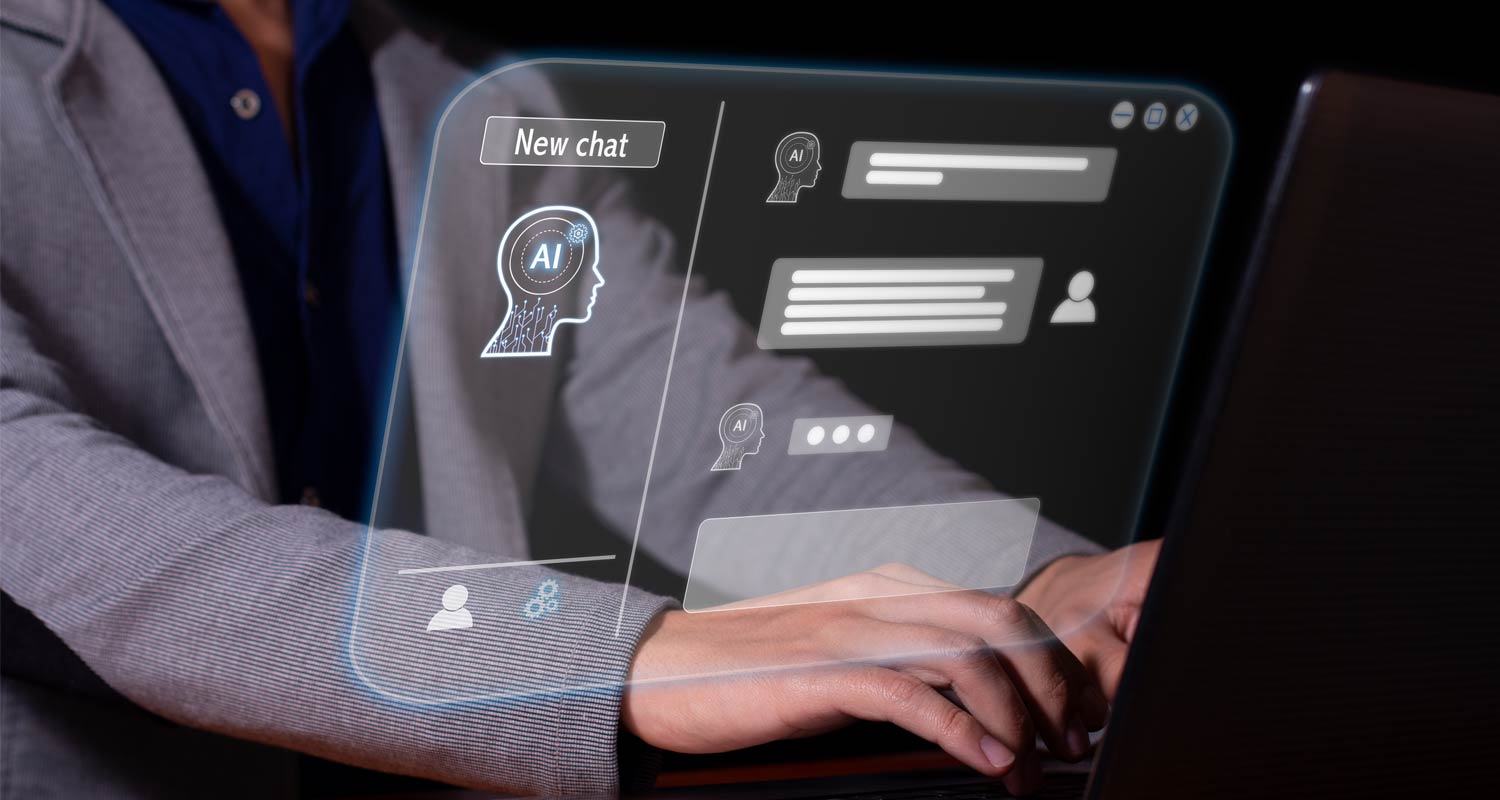
    In 2023, artificial intelligence truly entered our daily lives. At first, many people used these tools because they were curious about generative AI or wanted to be entertained. Now people ask generative AI for help with studies, for advice or use it to find or synthesise information. Other uses include getting help coding and making images, videos or audio.

    So-called “prompt whisperers” or prompt engineers offer guides on not just designing the best AI prompts, but even how to blend different AI services to achieve fantastical outputs.

    AI uses and functions have also shifted over the past 12 months as technological development, regulation and social factors have shaped what’s possible. Here’s where we’re at, and what might come in 2024.

    ChatGPT, the chatbot that’s become a household name, reached a user base of 100 million by February

    Generative AI made waves early in the year when it was used to enter and even win photography competitions, and tested for its ability to pass school exams.

    ChatGPT, the chatbot that’s become a household name, reached a user base of 100 million by February.

    Some musicians used AI voice cloning to create synthetic music that sounds like popular artists, such as Eminem. Google launched its chatbot, Bard. Microsoft integrated AI into Bing search. Snapchat launched MyAI, a ChatGPT-powered tool that allows users to ask questions and receive suggestions.

    GPT-4, the latest iteration of the AI that powers ChatGPT, launched in March. This release brought new features, such as analysing documents or longer pieces of text.

    Also in March, corporate giants like Coca-Cola began generating ads partly through AI, while Levi’s said it would use AI for creating virtual models. The now-infamous image of the Pope wearing a white Balenciaga puffer jacket went viral. A cohort of tech evangelists also called for an AI development pause.

    Whirlwind

    Amazon began integrating generative AI tools into its products and services in April. Meanwhile, Japan ruled there would be no no copyright restrictions for training generative AI in the country.

    In the US, screenwriters went on strike in May, demanding a ban of AI-generated scripts. Another AI-generated image, allegedly of the Pentagon on fire, went viral.

    In July, worshippers experienced some of the first religious services led by AI.

    Read: Amazon Alexa to be infused with generative AI

    In August, two months after AI-generated summaries became available in Zoom, the company faced intense scrutiny for changes to its terms of service around consumer data and AI. The company later clarified its policy and pledged not to use customers’ data without consent to train AI.

    In September, voice and image functionalities came to ChatGPT for paid users. Adobe began integrating generative AI into its applications like Illustrator and Photoshop.
    By December, we saw an increased shift to “edge AI”, where AI processes are handled locally, on devices themselves, rather than in the cloud, which has benefits in contexts when privacy and security are paramount. Meanwhile, the EU announced the world’s first “AI law”.

    Where to from here?

    Given the whirlwind of AI developments in the past 12 months, we’re likely to see more incremental changes in the next year and beyond. In particular, we expect to see changes in these four areas:

    1. Increased bundling of AI services and functions

    ChatGTP was initially just a chatbot that could generate text. Now, it can generate text, images and audio. Google’s Bard can now interface among Gmail, Docs and Drive, and complete tasks across these services.

    By bundling generative AI into existing services and combining functions, companies will try to maintain their market share and make AI services more intuitive, accessible and useful.

    At the same time, bundled services make users more vulnerable when inevitable data breaches happen.

    2. Higher quality, more realistic generations

    Earlier this year, AI struggled with rendering human hands and limbs. By now, AI generators have markedly improved on these tasks.

    At the same time, research has found how biased many AI generators can be.

    Some developers have created models with diversity and inclusivity in mind. Companies will likely see a benefit in providing services that reflect the diversity of their customer bases.

    3. Growing calls for transparency and media standards

    Various news platforms have been slammed in 2023 for producing AI-generated content without transparently communicating this.

    AI-generated images of world leaders and other newsworthy events abound on social media, with high potential to mislead and deceive.

    Media industry standards that transparently and consistently denote when AI has been used to create or augment content will need to be developed to improve public trust.

    4. Expansion of sovereign AI capacity

    In these early days, many have been content playfully exploring AI’s possibilities. However, as these AI tools begin to unlock rapid advancements across all sectors of our society, more fine-grained control over who governs these foundational technologies will become increasingly important.

    In 2024, we will likely see future-focused leaders incentivising the development of their sovereign capabilities through increased research and development funding, training programmes and other investments.

    For the rest of us, whether you’re using generative AI for fun, work or school, understanding the strengths and limitations of the technology is essential for using it in responsible, respectful and productive ways.

    Similarly, understanding how others – from governments to doctors – are increasingly using AI in ways that affect you, is equally important.The Conversation

    • The author, TJ Thomson, is senior lecturer in visual communication and digital media, RMIT University, and Daniel Angus, professor of digital communication, Queensland University of Technology
    • This article is republished from The Conversation under a Creative Commons licence

    Get breaking news alerts from TechCentral on WhatsApp

    Follow TechCentral on Google News Add TechCentral as your preferred source on Google


    WhatsApp YouTube
    Share. Facebook Twitter LinkedIn WhatsApp Telegram Email Copy Link
    Previous ArticleEurope’s electric car sales boom
    Next Article The extraordinary rise of the PlayStation 5

    Related Posts

    Nedbank hires MTN's former tech chief as group CIO - Nikos Angelopoulos

    Nedbank hires MTN’s former tech chief as group CIO

    31 July 2026
    Eskom's diesel bill falls 86% as breakdowns hit eight-year low

    Eskom’s diesel bill falls 86% as breakdowns hit eight-year low

    31 July 2026
    Ramaphosa signs off on taking the grid away from Eskom

    Ramaphosa signs off on taking the grid away from Eskom

    31 July 2026
    Company News
    Domains.co.za launches self-hosted n8n VPS hosting

    Domains.co.za launches self-hosted n8n VPS hosting

    31 July 2026
    Smarter.tech '26 shows why smarter technology begins with context - Obsidian Systems

    Context is the missing piece in enterprise AI: Obsidian

    31 July 2026
    Huawei launches 12 intelligent transport solutions in South Africa - Sam Tang

    Huawei launches 12 intelligent transport solutions in South Africa

    30 July 2026
    Opinion
    The author, Jannie van Zyl

    Selling vapour is corporate suicide in slow motion

    16 July 2026
    Brazil's online gambling crackdown is a lesson for South Africa

    How Amazon outmanoeuvred Starlink in South Africa

    15 July 2026
    The Popia problem with agentic AI - Herman Haasbroek

    The Popia problem with agentic AI

    14 July 2026

    Subscribe to Updates

    Get the best South African technology news and analysis delivered to your e-mail inbox every morning.

    Latest Posts
    Nedbank hires MTN's former tech chief as group CIO - Nikos Angelopoulos

    Nedbank hires MTN’s former tech chief as group CIO

    31 July 2026
    Eskom's diesel bill falls 86% as breakdowns hit eight-year low

    Eskom’s diesel bill falls 86% as breakdowns hit eight-year low

    31 July 2026
    Ramaphosa signs off on taking the grid away from Eskom

    Ramaphosa signs off on taking the grid away from Eskom

    31 July 2026
    TCS+ | Why South African workers must become supervisors of digital labour - Accelera Digital Group Cliff de Wit

    TCS+ | Why South African workers must become supervisors of digital labour

    31 July 2026
    © 2009 - 2026 NewsCentral Media
    Built and maintained by Chronon
    • Cookie policy (ZA)
    • TechCentral – privacy and Popia

    Type above and press Enter to search. Press Esc to cancel.

    Manage consent

    TechCentral uses cookies to enhance its offerings. Consenting to these technologies allows us to serve you better. Not consenting or withdrawing consent may adversely affect certain features and functions of the website.

    Functional Always active
    The technical storage or access is strictly necessary for the legitimate purpose of enabling the use of a specific service explicitly requested by the subscriber or user, or for the sole purpose of carrying out the transmission of a communication over an electronic communications network.
    Preferences
    The technical storage or access is necessary for the legitimate purpose of storing preferences that are not requested by the subscriber or user.
    Statistics
    The technical storage or access that is used exclusively for statistical purposes. The technical storage or access that is used exclusively for anonymous statistical purposes. Without a subpoena, voluntary compliance on the part of your Internet Service Provider, or additional records from a third party, information stored or retrieved for this purpose alone cannot usually be used to identify you.
    Marketing
    The technical storage or access is required to create user profiles to send advertising, or to track the user on a website or across several websites for similar marketing purposes.
    • Manage options
    • Manage services
    • Manage {vendor_count} vendors
    • Read more about these purposes
    View preferences
    • {title}
    • {title}
    • {title}