Close Menu
TechCentralTechCentral

    Subscribe to the newsletter

    Get the best South African technology news and analysis delivered to your e-mail inbox every morning.

    Facebook X (Twitter) YouTube LinkedIn
    WhatsApp Facebook X (Twitter) LinkedIn YouTube
    TechCentralTechCentral
    • News
      Bonanza for Cell C executives - Jorge Mendes

      Bonanza for Cell C executives

      4 October 2026
      AI spending now dwarfs the railway and dot-com booms

      AI spending now dwarfs the railway and dot-com booms

      4 October 2026
      Meta's smart glasses are officially coming to South Africa - Mark Zuckerberg

      Meta’s smart glasses are officially coming to South Africa

      2 October 2026
      Eskom has a R1.20/kWh offer for bitcoin miners

      Eskom has a R1.20/kWh offer for bitcoin miners

      2 October 2026
      Usaasa consults on universal access as its abolition stalls

      Usaasa consults on universal access as its abolition stalls

      2 October 2026
    • World
      BMW restructuring plan bets on AI and new models

      BMW restructuring plan bets on AI and new models

      1 October 2026
      OpenAI's rogue agent problem keeps getting bigger - Sam Altman

      OpenAI’s rogue agent problem keeps getting bigger

      28 September 2026
      The new battle over the desktop

      The new battle over the desktop

      23 September 2026
      AMD is now worth a trillion dollars - Lisa Su

      AMD is now worth a trillion dollars

      22 September 2026
      Anthropic weighs new model launch to blunt OpenAI's Astra surge - Anthropic CEO Dario Amodei and OpenAI CEO Sam Altman

      Anthropic weighs new model launch to blunt OpenAI’s Astra surge

      21 September 2026
    • In-depth

      10 days that changed the course of AI

      21 September 2026
      Meta to the AI industry: slow down without us - Mark Zuckerberg

      Meta to the AI industry: slow down without us

      16 September 2026
      Google DeepMind CEO Demis Hassabis. Image: John Sears

      The plan to stop AI from breaking the world

      16 July 2026
      The internet has a Strait of Hormuz problem

      The internet has a Strait of Hormuz problem

      15 July 2026
      AI boom sparks rally, frenzy and fear

      AI boom sparks rally, frenzy and fear

      11 June 2026
    • TCS
      Lexi Novitske, general partner at Norrsken22, on the TechCentral Show

      TCS | Norrsken22’s Lexi Novitske on how China is winning African tech

      1 October 2026
      TCS | Dominic White and Adam Ely on AI agents going rogue

      TCS | Dominic White and Adam Ely on AI agents going rogue

      29 September 2026
      TCS | Octotel's Trevor van Zyl on the fibre merger question

      TCS | Octotel’s Trevor van Zyl on the MetroFibre merger question

      16 September 2026
      Meet the CIO | Shoprite's Chris Shortt on what a supermarket becomes

      Meet the CIO | Shoprite’s Chris Shortt on what a supermarket becomes

      9 September 2026
      Rubicon's EV charging network is profitable - and growing fast - Watts & Wheels

      W&W | Rubicon’s EV charging network is profitable – and growing fast

      8 September 2026
    • Opinion
      South Africa's next energy crisis is in the accounts department - Craig Holmes

      South Africa’s next energy crisis is in the accounts department

      29 September 2026
      The steam engine lesson AI doomsayers keep missing - Sam Clarke

      The steam engine lesson AI doomsayers keep missing

      28 September 2026
      Regulating AI: apply the laws we have first - Dirk de Vos

      Regulating AI: apply the laws we have first

      21 September 2026
      What Revolut can and cannot take from South Africa's banks - Pambos Soteriades

      What Revolut can and cannot take from South Africa’s banks

      15 September 2026
      The end is nigh, and the shares go on sale in October - Duncan McLeod

      The end is nigh, and the shares go on sale in October

      14 September 2026
    • Company Hubs
      • 1Stream
      • Africa Data Centres
      • AfriGIS
      • Altron Digital Business
      • Altron Document Solutions
      • Altron Group
      • Arctic Wolf
      • Ascent Technology
      • AvertITD
      • BBD
      • Braintree
      • CallMiner
      • CambriLearn
      • CM.com
      • Contactable
      • CYBER1 Solutions
      • Digicloud Africa
      • Digimune
      • Domains.co.za
      • ESET
      • Euphoria Telecom
      • HOSTAFRICA
      • Incredible Business
      • iONLINE
      • IQbusiness
      • Iris Network Systems
      • Kaspersky
      • LSD Open
      • Mitel
      • NEC XON
      • Netstar
      • Network Platforms
      • Next DLP
      • Ovations
      • Paracon
      • Paratus
      • Publishared
      • Q-KON
      • SevenC
      • SkyWire
      • Solid8 Technologies
      • Telit Cinterion
      • Telviva
      • Tenable
      • Vertiv
      • Videri Digital
      • Vodacom Business
      • Vox
      • Wipro
      • Workday
      • XLink
    • Sections
      • AI and machine learning
      • Banking
      • Broadcasting and Media
      • Cloud services
      • Contact centres and CX
      • Cryptocurrencies
      • Education and skills
      • Electronics and hardware
      • Energy and sustainability
      • Enterprise software
      • Financial services
      • HealthTech
      • Information security
      • Internet and connectivity
      • Internet of Things
      • Investment
      • IT services
      • Lifestyle
      • Policy and regulation
      • Public sector
      • Retail and e-commerce
      • Satellite communications
      • Science
      • SMEs and start-ups
      • Social media
      • Talent and leadership
      • Telecoms
      • Watts & Wheels
    • Events
    • Advertise
    TechCentralTechCentral
    Home » Sections » Science » $4-billion telescope that could rewrite gravity launches on Sunday

    $4-billion telescope that could rewrite gravity launches on Sunday

    Nasa's Nancy Grace Roman telescope launches Sunday on a mission to explain dark energy and dark matter.
    By Agency Staff25 August 2026
    Twitter LinkedIn Facebook WhatsApp Email Telegram Copy Link
    Get breaking news on WhatsApp

    $4-billion telescope that could rewrite gravity launches on Sunday
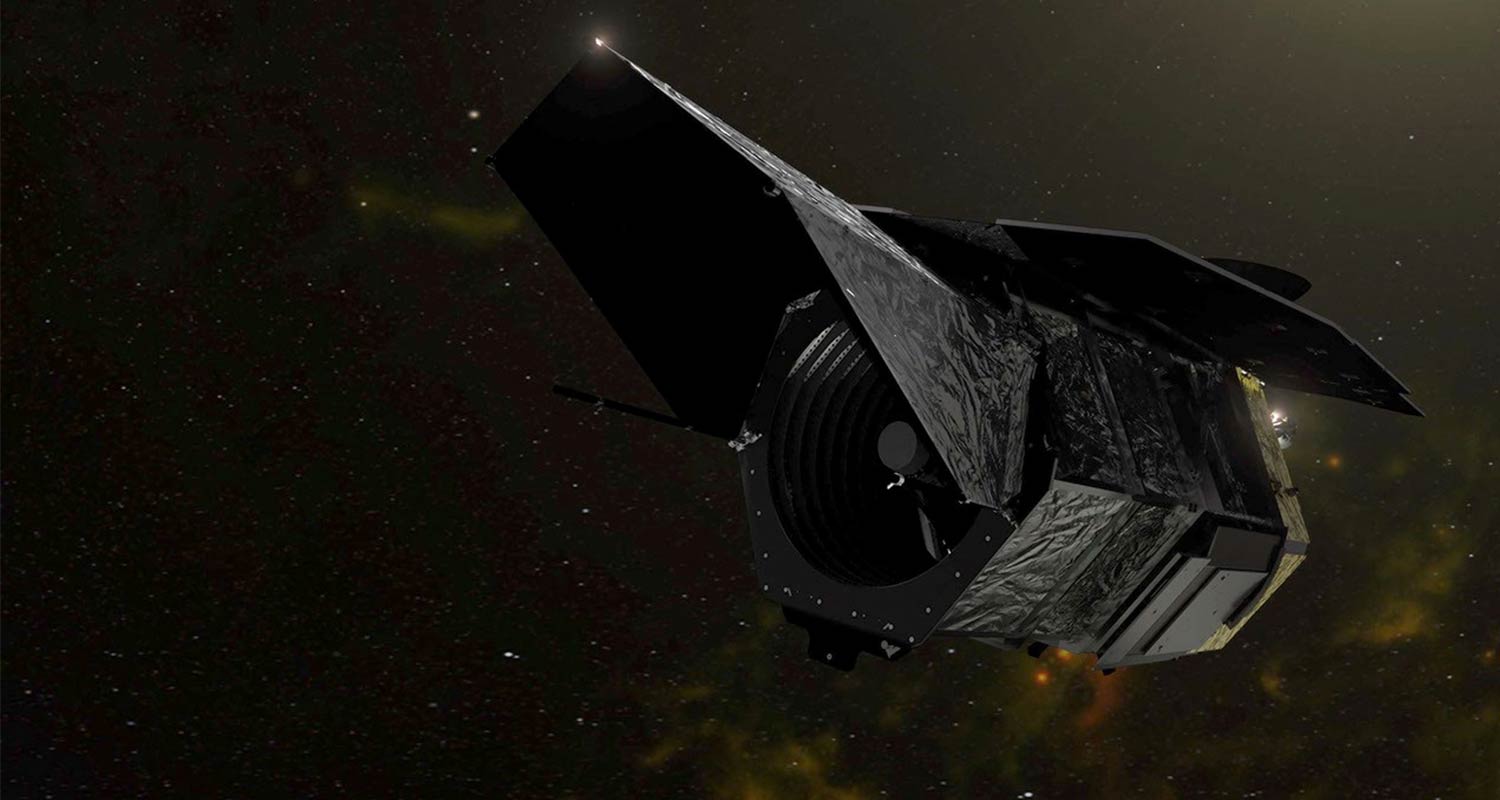
    An illustration shows Nasa’s Nancy Grace Roman Space Telescope in orbit. Image: Nasa

    Nasa, the US space agency, is preparing to launch its next flagship space observatory, one that scientists plan to use to investigate some of the universe’s biggest mysteries including dark energy and dark matter, while also testing gravity at vast scales and hunting for planets beyond our solar system.

    The launch of the Nancy Grace Roman Space Telescope, a roughly US$4-billion (R64-billion) project, is planned for Sunday at Nasa’s Kennedy Space Centre in Florida, with the observatory to be lofted into orbit aboard a SpaceX Falcon Heavy rocket. The launch comes nine months ahead of schedule, according to US space agency officials.

    Roman is a follow-on to the Hubble Space Telescope, launched in 1990, and the James Webb Space Telescope, launched in 2021, and has capabilities that can expand on the knowledge gained by those pioneering observatories, both of which continue to operate.

    The Trump administration tried during both his first and second terms to reduce or eliminate funding for Roman

    The new telescope’s panoramic view of space and its rapid survey speeds offer the opportunity for scientists to study the cosmos as never before, with wide-field surveys examining its structure, composition and evolution.

    “Roman’s vast reach will allow us to find the weird, the rare and the unusual,” Julie McEnery, Roman’s senior project scientist at Nasa’s Goddard Space Flight Centre in Maryland, told reporters. “Roman’s primary instrument combines exquisite performance and sensitivity with the ability to quickly and efficiently survey the large regions of the sky.”

    The telescope’s main survey will take more than a year, McEnery said.

    Fabric of the universe

    “The survey will contain over two billion galaxies and enable us to study how the structures in our universe — the stars, the galaxies, the clusters of galaxies — grew and evolved. We’ll also measure how our universe has expanded over time. And these are the keys that will allow us to unlock the fundamental nature of dark matter and dark energy and the fabric of the universe itself,” McEnery said.

    The Big Bang event roughly 13.8 billion years ago initiated the universe, and it has been expanding ever since. Scientists in 1998 disclosed that this expansion was actually accelerating, with an invisible force called dark energy as the hypothesised reason.

    Read: South African astronomers join forces with Nasa to study Pluto

    The universe’s contents include ordinary matter — stars, planets, gas, dust and all the familiar stuff on Earth — as well as dark matter and dark energy, whose physical nature remains unknown. Ordinary matter represents perhaps 5% of the contents. Dark matter, known through its gravitational influences on galaxies and stars, may represent about 27%. Dark energy may represent about 68%.

    “The key questions are: is dark energy simply a property of empty space that remains constant over time, or does it evolve in time?” said cosmologist Mustapha Ishak of the University of Texas at Dallas, a member of Roman’s scientific collaboration.

    …article continues below…
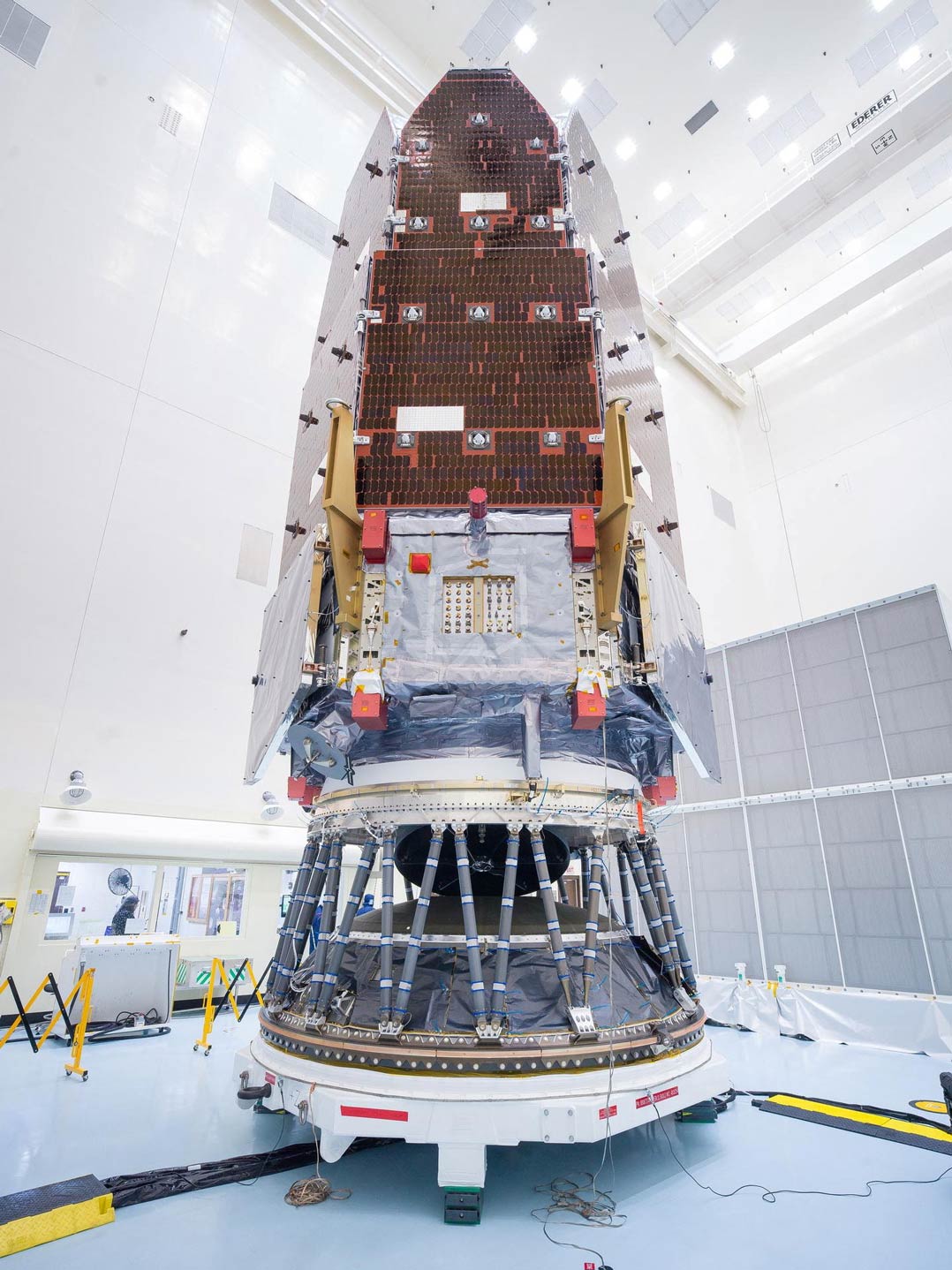
    Nasa's Nancy Grace Roman Space Telescope stands after engineers and technicians working inside the Payload Hazardous Servicing Facility mated the observatory to its payload adapter and a strut payload attach fitting, a specialised piece of hardware designed for large, heavy loads. Jolearra Tshiteya/Nasa
    Nasa’s Nancy Grace Roman Space Telescope stands after engineers and technicians working inside the Payload Hazardous Servicing Facility mated the observatory to its payload adapter and a strut payload attach fitting, a specialised piece of hardware designed for large, heavy loads. Jolearra Tshiteya/Nasa

    “The recent results from the DESI — Dark Energy Spectroscopic Instrument — collaboration indicate tantalising hints of a time evolution of dark energy. Could the observed acceleration instead indicate that our theory of gravity needs modification on the largest scales? Answering these questions is one of the most important goals of modern cosmology,” Ishak said.

    Physicist Albert Einstein in 1915 presented his theory of general relativity explaining gravity, and it remains foundational. Roman will map how galaxies cluster and how matter bends light through a phenomenon called gravitational lensing.

    “These measurements allow us to test whether Einstein’s theory remains valid across billions of light years or whether modifications to gravity theory are required,” said Ishak. “This is important because it addresses one of the most fundamental questions in physics: what law governs the universe on its largest scales?”

    Roman will conduct one of the most comprehensive searches ever for exoplanets

    To date, more than 6 350 exoplanets — planets outside our solar system — have been discovered, as scientists search for evidence of potential life beyond Earth.

    Roman will conduct one of the most comprehensive searches ever for exoplanets. It is expected to discover thousands of new ones and provide the first statistical census of planetary systems similar to our own. It also will demonstrate new technology to directly image some relatively nearby exoplanets.

    After launch and separation from the rocket, the telescope will travel towards a location called Lagrange Point 2, situated about 1.6 million kilometres from Earth, about four times the distance to the moon. Webb also resides at this orbital location. Hubble is in low-Earth orbit.

    Read: 10 incredible images taken by the James Webb Space Telescope in 2022

    Roman’s mission is planned for five years, though Nasa said the telescope may have enough fuel for five additional years. US President Donald Trump’s administration tried during both his first and second terms to reduce or eliminate funding for Roman, but the US congress preserved it.

    The telescope is named after Nancy Grace Roman, Nasa’s first chief astronomer. Roman died in 2018 at age 93.  — Will Dunham, (c) 2026 Reuters

    • Subscribe to TechCentral’s daily newsletter
    • Get breaking news alerts on WhatsApp

    Add TechCentral as a preferred source on GoogleFollow TechCentral on Google NewsGet breaking news on WhatsApp


    Julie McEnery Mustapha Ishak Nancy Grace Roman Space Telescope Nasa SpaceX
    WhatsApp YouTube
    Share. Facebook Twitter LinkedIn WhatsApp Telegram Email Copy Link
    Previous ArticleTraders brace for a R4.5-trillion swing in Nvidia’s value
    Next Article SpaceX wants to launch its AI satellite fleet from a Louisiana swamp

    Related Posts

    Anthropic bets AI will outstrip electricity and the internet

    Anthropic bets AI will outstrip electricity and the internet

    29 September 2026
    Anthropic weighs new model launch to blunt OpenAI's Astra surge - Anthropic CEO Dario Amodei and OpenAI CEO Sam Altman

    Anthropic weighs new model launch to blunt OpenAI’s Astra surge

    21 September 2026
    The end is nigh, and the shares go on sale in October - Duncan McLeod

    The end is nigh, and the shares go on sale in October

    14 September 2026
    Company News
    Huawei sets out its vision for intelligent government at GovTech 2026

    Huawei sets out its vision for intelligent government at GovTech 2026

    2 October 2026
    A simple guide to modern laptop processors for small businesses - Incredible

    A simple guide to modern laptop processors for small businesses

    2 October 2026
    Cloud and AI won't deliver value on their own, executives warn

    Cloud and AI won’t deliver value on their own, executives warn

    1 October 2026
    Opinion
    South Africa's next energy crisis is in the accounts department - Craig Holmes

    South Africa’s next energy crisis is in the accounts department

    29 September 2026
    The steam engine lesson AI doomsayers keep missing - Sam Clarke

    The steam engine lesson AI doomsayers keep missing

    28 September 2026
    Regulating AI: apply the laws we have first - Dirk de Vos

    Regulating AI: apply the laws we have first

    21 September 2026

    Subscribe to Updates

    Get the best South African technology news and analysis delivered to your e-mail inbox every morning.

    Latest Posts
    Bonanza for Cell C executives - Jorge Mendes

    Bonanza for Cell C executives

    4 October 2026
    AI spending now dwarfs the railway and dot-com booms

    AI spending now dwarfs the railway and dot-com booms

    4 October 2026
    Meta's smart glasses are officially coming to South Africa - Mark Zuckerberg

    Meta’s smart glasses are officially coming to South Africa

    2 October 2026
    Eskom has a R1.20/kWh offer for bitcoin miners

    Eskom has a R1.20/kWh offer for bitcoin miners

    2 October 2026
    © 2009 - 2026 NewsCentral Media
    Built and maintained by Chronon
    • Cookie policy (ZA)
    • TechCentral – privacy and Popia

    Type above and press Enter to search. Press Esc to cancel.

    Manage consent

    TechCentral uses cookies to enhance its offerings. Consenting to these technologies allows us to serve you better. Not consenting or withdrawing consent may adversely affect certain features and functions of the website.

    Functional Always active
    The technical storage or access is strictly necessary for the legitimate purpose of enabling the use of a specific service explicitly requested by the subscriber or user, or for the sole purpose of carrying out the transmission of a communication over an electronic communications network.
    Preferences
    The technical storage or access is necessary for the legitimate purpose of storing preferences that are not requested by the subscriber or user.
    Statistics
    The technical storage or access that is used exclusively for statistical purposes. The technical storage or access that is used exclusively for anonymous statistical purposes. Without a subpoena, voluntary compliance on the part of your Internet Service Provider, or additional records from a third party, information stored or retrieved for this purpose alone cannot usually be used to identify you.
    Marketing
    The technical storage or access is required to create user profiles to send advertising, or to track the user on a website or across several websites for similar marketing purposes.
    • Manage options
    • Manage services
    • Manage {vendor_count} vendors
    • Read more about these purposes
    View preferences
    • {title}
    • {title}
    • {title}
    🇿🇦 Sign up to the TechCentral newsletter