
Close Menu
TechCentralTechCentral

    Subscribe to the newsletter

    Get the best South African technology news and analysis delivered to your e-mail inbox every morning.

    Facebook X (Twitter) YouTube LinkedIn
    WhatsApp Facebook X (Twitter) LinkedIn YouTube
    TechCentralTechCentral
    • News
      Google launches the biggest reinvention of search in 25 years

      Google launches the biggest reinvention of search in 25 years

      20 May 2026
      Gen Z has stopped buying the AI dream - Eric Schmidt

      Gen Z has stopped buying the AI dream

      20 May 2026
      Troubling questions over South African internet infrastructure attacks

      Troubling questions over South African internet infrastructure attacks

      19 May 2026
      Eskom threatens to cut power to Joburg

      Eskom threatens to cut power to Joburg

      19 May 2026
      DDoS extortionists 'carpet bomb' South African internet hosts - Warwick Ward-Cox

      Extortionists ‘carpet bomb’ South African internet hosts

      19 May 2026
    • World
      Vatican confronts the age of artificial intelligence. Edgar Beltrán/The Pillar 

      Vatican confronts the age of artificial intelligence

      19 May 2026
      The walkout that could hit every laptop and AI server - Samsung

      The walkout that could hit every laptop and AI server

      18 May 2026
      Pop star sues Samsung for $15-million - Dua Lipa

      Pop star sues Samsung for $15-million

      11 May 2026
      OpenAI's new audio APIs aim for conversational voice agents

      OpenAI’s new audio APIs aim for conversational voice agents

      8 May 2026
      'It was my idea': Musk claims paternity of OpenAI - Elon Musk

      ‘It was my idea’: Musk claims paternity of OpenAI

      29 April 2026
    • In-depth
      Alfa's electric rebel - Alfa Romeo Junior Elettrica Veloce

      Alfa’s electric rebel

      29 April 2026
      Africa switches on as Europe dims the lights

      Africa switches on as Europe dims the lights

      9 April 2026
      The biggest untapped EV market on Earth is hiding in plain sight

      The biggest untapped EV market on Earth is hiding in plain sight

      1 April 2026
      Datatec is firing on all cylinders - Jens Montanana

      The R16-billion tech giant hiding in plain sight

      26 March 2026
      The last generation of coders

      The last generation of coders

      18 February 2026
    • TCS
      TCS+ | The Up&Up Group on the hidden cost of AI - Jason Harrison

      TCS+ | The Up&Up Group on the hidden cost of AI

      13 May 2026
      Michael Rossouw

      TCS+ | The retirement decision most South Africans get wrong

      6 May 2026
      TCS | The Cape Town start-up listening for TB with AI - Braden van Breda

      TCS | The Cape Town start-up listening for TB with AI

      4 May 2026

      TCS+ | ‘The ISP for ISPs’: Vox’s shift to wholesale aggregator

      20 April 2026
      TCS | Werner Lindemann on how AI is rewriting the infosec rulebook

      TCS | Werner Lindemann on how AI is rewriting the infosec rulebook

      15 April 2026
    • Opinion
      AI won't fix your culture - it will expose it - Jackie Kennedy

      AI won’t fix your culture – it will expose it

      19 May 2026
      Free calls, dead voice and Shameel Joosub's Spanish ghost - Duncan McLeod

      Free calls, dead voice and Shameel Joosub’s Spanish ghost

      22 April 2026
      The conflict of interest at the heart of PayShap's slow adoption - Cheslyn Jacobs

      The conflict of interest at the heart of PayShap’s slow adoption

      26 March 2026
      South Africa's energy future hinges on getting wheeling right - Aishah Gire

      South Africa’s energy future hinges on getting wheeling right

      10 March 2026
      Free calls, dead voice and Shameel Joosub's Spanish ghost - Duncan McLeod

      Apple just dropped a bomb on the Windows world

      5 March 2026
    • Company Hubs
      • 1Stream
      • Africa Data Centres
      • AfriGIS
      • Altron Digital Business
      • Altron Document Solutions
      • Altron Group
      • Arctic Wolf
      • Ascent Technology
      • AvertITD
      • BBD
      • Braintree
      • CallMiner
      • CambriLearn
      • CM Telecom
      • Contactable
      • CYBER1 Solutions
      • Digicloud Africa
      • Digimune
      • Domains.co.za
      • ESET
      • Euphoria Telecom
      • HOSTAFRICA
      • Incredible Business
      • iONLINE
      • IQbusiness
      • Iris Network Systems
      • Kaspersky
      • LSD Open
      • Mitel
      • NEC XON
      • Netstar
      • Network Platforms
      • Next DLP
      • Ovations
      • Paracon
      • Paratus
      • Q-KON
      • SevenC
      • SkyWire
      • Solid8 Technologies
      • Telit Cinterion
      • Telviva
      • Tenable
      • Vertiv
      • Videri Digital
      • Vodacom Business
      • Wipro
      • Workday
      • XLink
    • Sections
      • AI and machine learning
      • Banking
      • Broadcasting and Media
      • Cloud services
      • Contact centres and CX
      • Cryptocurrencies
      • Education and skills
      • Electronics and hardware
      • Energy and sustainability
      • Enterprise software
      • Financial services
      • HealthTech
      • Information security
      • Internet and connectivity
      • Internet of Things
      • Investment
      • IT services
      • Lifestyle
      • Motoring
      • Policy and regulation
      • Public sector
      • Retail and e-commerce
      • Satellite communications
      • Science
      • SMEs and start-ups
      • Social media
      • Talent and leadership
      • Telecoms
    • Events
    • Advertise
    TechCentralTechCentral
    Home » Sections » Motoring » Airbus buries A380, drawing curtain on jumbo-jet era

    Airbus buries A380, drawing curtain on jumbo-jet era

    By Agency Staff14 February 2019
    Twitter LinkedIn Facebook WhatsApp Email Telegram Copy Link
    News Alerts
    WhatsApp

    Airbus has decided to stop making the A380 double-decker after a dozen years in service, burying a prestige project that won the hearts of passengers and politicians but never the broad support of airlines that instead preferred smaller, more fuel-efficient aircraft.

    Production of the jumbo jet will end by 2021, after the A380’s biggest customer, Emirates, and a handful of remaining buyers receive their last orders. The Gulf carrier will pare down its current A380 order to 14 from 53, Airbus said in a statement on Thursday. Emirates said separately it would purchase 70 smaller A330neo and A350 wide bodies listed at US$21.4-billion before customary discounts.

    “Today’s announcement is painful for us and the A380 communities worldwide,” Airbus CEO Tom Enders said in a statement. Airbus said as many as 3 500 jobs are affected by the decision.

    From early on, the world’s largest commercial passenger plane had a hard time, both technically and commercially

    While the A380 has struggled for years to match its popular appeal with a robust order book, the radical move to cancel the plane outright marks a watershed moment for civil aviation. The A380 was always more than an aircraft, albeit a very large one. Rather, it was the manifestation of Europe’s collaborative drive and the continent’s industrial ambitions. For Airbus, the airliner sought to create a commanding counterweight to Boeing, promising unparalleled space and luxury for increasingly congested airports and the skies above.

    But from early on, the world’s largest commercial passenger plane had a hard time, both technically and commercially. Getting the A380 airborne for its maiden flight was severely delayed by wiring glitches that resulted from faulty communications between design teams. When the plane finally embarked on its first commercial flight in late 2007, the financial crisis that would cripple global travel was already on the horizon. Some customers had second thoughts about whether the giant aircraft was the right choice for meagre times, and cancellations started piling up.

    Boeing rivalry

    Airbus had watched enviously as Boeing monopolised the market for very large aircraft with its 747 jumbo, which celebrates its 50th anniversary this month and sold more than 1 500 units. While Airbus was a major force in the single-aisle space with its A320 family, the prestigious long-distance and ultra-large aircraft segment remained the domain of its US rival. With passenger numbers rising every year and major new hubs opening in markets like Dubai, the A380 seemed the obvious choice to address the need for a large people carrier, while picking market share off Boeing.

    Dubai did in fact turn into the A380’s major sponsor, with Emirates ordering a total of more than 160 units, far in excess of any other airline. But ironically it was also Emirates that contributed to the A380’s decline and fall. With Airbus increasingly reliant on a single customer for its flagship product, Emirates could make or break the programme by ordering or cancelling more A380s. When the airline decided to rethink latest order for 20 units, Airbus saw no choice but to draw down production, given the lack of other buyers.
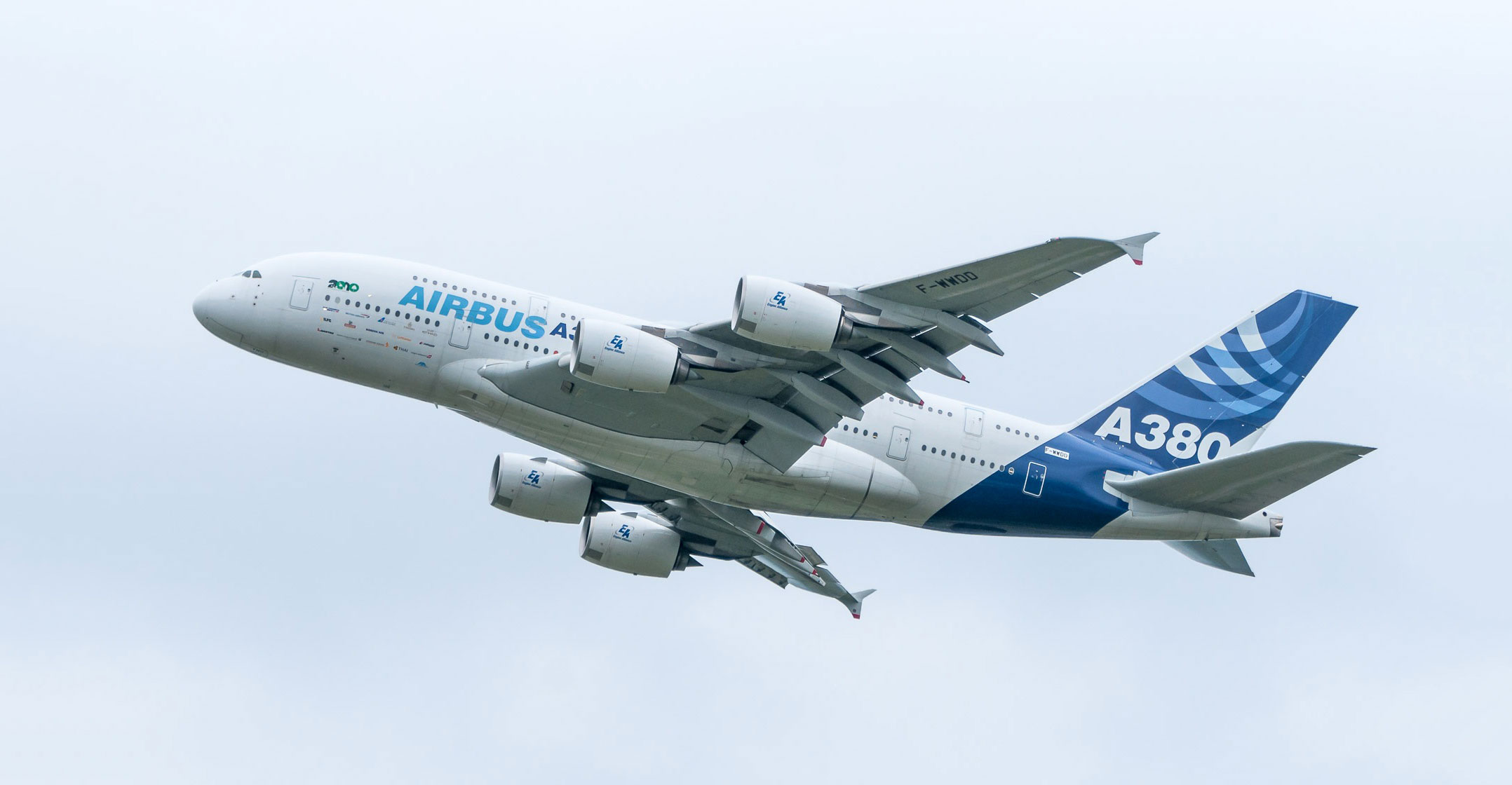
    “As a result of this decision we have no substantial A380 backlog and hence no basis to sustain production, despite all our sales efforts with other airlines in recent years,” Enders said.

    From its inception, the A380 was a grand European project. The wings, like those of all Airbus aircraft, came from the UK and components were ferried across the continent from production sites in Germany and France. The giant fuselage tubes were taken by barge and flat-bed truck to the main facility in Toulouse, and the planes were then painted and kitted out in Hamburg. Teams from across the region joined colleagues at other sites during crunch times, the quirky-looking Beluga freight planes would crisscross countries with parts, and the A380 was a popular backdrop at air shows for politicians celebrating Europe’s achievements.

    Over the past two decades, a new breed of aircraft gained popularity, making life harder for the A380 and the Boeing 747

    But over the past two decades, a new breed of aircraft gained popularity, making life harder for the A380 and the Boeing 747, which has also struggled with the latest passenger version of its iconic hump-backed plane. While the A380 represented an Airbus bet on congestion driving demand for ever-larger aircraft in mega-hub airports, Boeing in the early 2000s decided the future would lie in smaller long-range planes that could economically overfly the hubs and directly connect smaller markets.

    Its 777 model and the smaller 787 Dreamliner, as well as Airbus’s A350 models, twin-engine planes that pioneered the use of lightweight carbon fibre and efficient engines, helped airlines drastically cut fuel expenses and allowed them to use the planes with quicker turnaround times on smaller point-to-point routes. The giant jumbo aircraft, by contrast, suddenly became too expensive, too heavy and too cumbersome to operate.

    Hardly caught on

    Markets where Airbus had hoped to sell its prestige plane hardly caught on or didn’t materialise at all. There isn’t a single US carrier that uses the A380, Chinese airlines have only bought the model in low numbers, and Japan — traditionally a big buyer of the Boeing 747 — has only recently taken delivery of its first A380. Qantas Airways formally cancelled an outstanding order just last week, and carriers including Air France have pared back their commitments.

    Part of the A380’s problem is that there is no established second-hand market, typically the domain where prospective buyers can pick up jets at a discount. Singapore Airlines, the first commercial operator of the A380, learnt this just recently, when it returned some aircraft back to its leasing partner, only to see them scrapped in France for their parts.
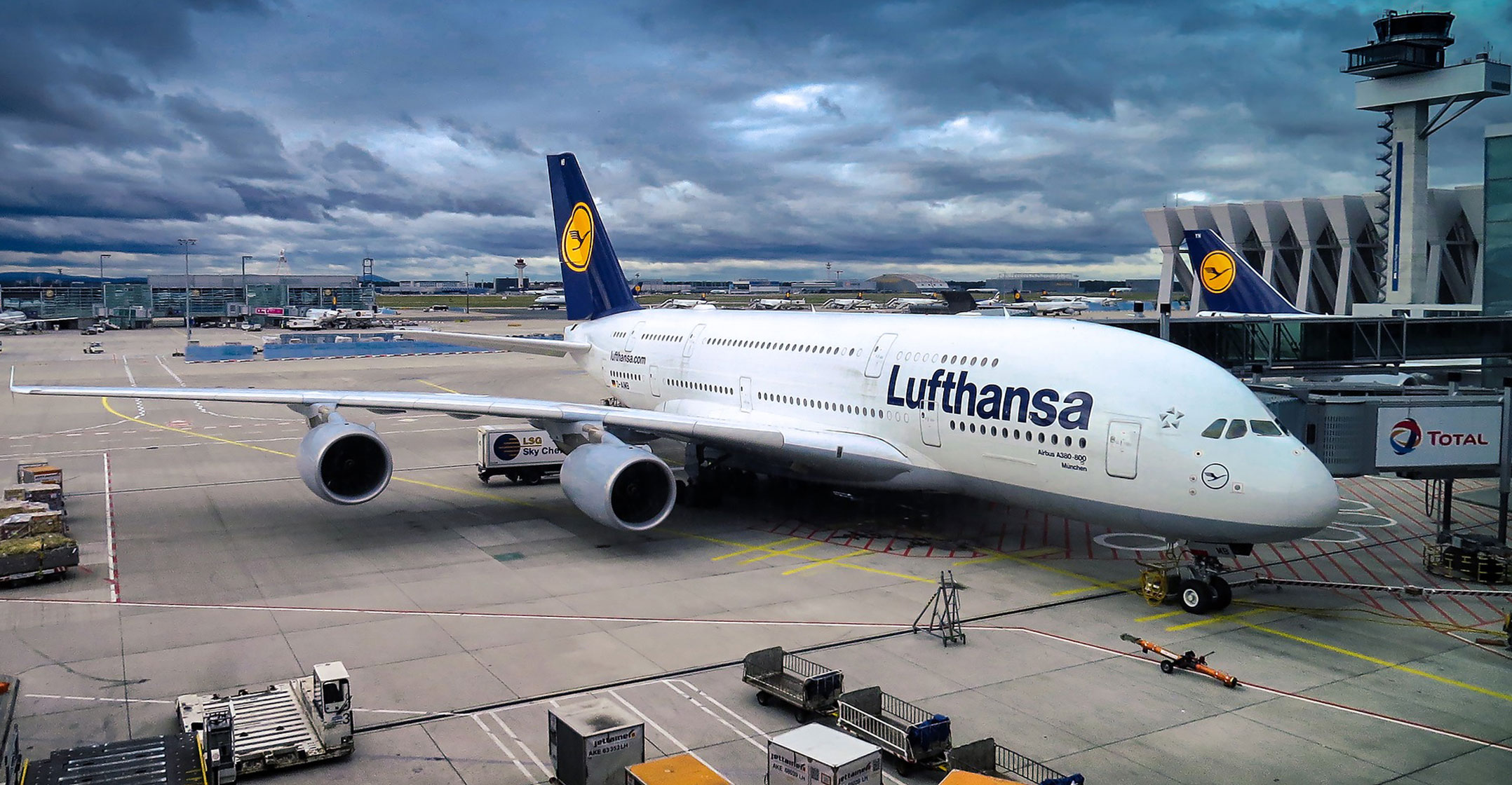
    Airbus itself acknowledged that timing may not have been on its side with the A380. While busy airports like London Heathrow have become major magnets for the model, congestion has not been felt acutely enough around the world to shock more airlines into buying the biggest plane. And many operators don’t even use the model at full capacity. The A380 is capable of carrying more than 800 passengers, but most airlines choose to transport no more than about 500 people, instead decking out the cabin with fancy features from in-flight bars to showers and multi-room suites that come with flourishes like butlers and sofas.

    Such fripperies were a hit with passengers, who often went out of their way to book a flight on the A380, which promised a more spacious, quieter, more luxurious flight experience than older long-distance models. At a time when flying had lost its jet-age mystique and budget carriers sought to cram as many people onto a plane as possible, the A380 offered a throwback to an era of stylish travel, with plush cabin layouts and free-flowing champagne.

    But in the end, it wasn’t passenger support, but the lack thereof from airlines that hastened the A380’s demise. Like Concorde, the supersonic jetliner that inspired a generation of plane-spotting fans, the A380 was brought back down to earth by the hard truths of commercial boardroom economics that gained the upper hand over popular aviation enthusiasm.  — Reported by Benjamin Katz and Benedikt Kammel, with assistance from Layan Odeh and Julie Johnsson, (c) 2019 Bloomberg LP


    Follow TechCentral on Google News Add TechCentral as your preferred source on Google


    Airbus Boeing top
    WhatsApp YouTube
    Share. Facebook Twitter LinkedIn WhatsApp Telegram Email Copy Link
    Previous ArticleGoogle, Facebook forced to pay creators under new EU rules
    Next Article Google steps up efforts against malicious Android apps

    Related Posts

    Telecoms firms lose bid to rein in US tech giants

    Europe firms agree satellite merger to counter Starlink

    23 October 2025
    Amazon to launch first Kuiper internet satellites

    Amazon to launch first Kuiper satellites in challenge to Starlink

    4 April 2025
    Bookmarks | Huawei makes its divorce from Android official

    Bookmarks | Huawei makes its divorce from Android official

    23 October 2024
    Company News
    Digital Parks Africa expands global network reach with Cogent

    Digital Parks Africa expands global network reach with Cogent

    19 May 2026
    Why the security operations centre is now a boardroom issue - Chris Norton Kaspersky

    Why the security operations centre is now a boardroom issue

    18 May 2026
    Netstar brings coding and robotics to inner-city Joburg - Collin Govender, Altron Group chief operating officer; Leona Pienaar, MES CEO; Marisa Jansen van Vuuren, Altron Group chief marketing officer; Innocent Mabusela, Jozi My Jozi CEO; and Warren Mande, incoming Netstar MD

    Netstar brings coding and robotics to inner-city Joburg

    18 May 2026
    Opinion
    AI won't fix your culture - it will expose it - Jackie Kennedy

    AI won’t fix your culture – it will expose it

    19 May 2026
    Free calls, dead voice and Shameel Joosub's Spanish ghost - Duncan McLeod

    Free calls, dead voice and Shameel Joosub’s Spanish ghost

    22 April 2026
    The conflict of interest at the heart of PayShap's slow adoption - Cheslyn Jacobs

    The conflict of interest at the heart of PayShap’s slow adoption

    26 March 2026

    Subscribe to Updates

    Get the best South African technology news and analysis delivered to your e-mail inbox every morning.

    Latest Posts
    Google launches the biggest reinvention of search in 25 years

    Google launches the biggest reinvention of search in 25 years

    20 May 2026
    Gen Z has stopped buying the AI dream - Eric Schmidt

    Gen Z has stopped buying the AI dream

    20 May 2026
    Troubling questions over South African internet infrastructure attacks

    Troubling questions over South African internet infrastructure attacks

    19 May 2026
    Eskom threatens to cut power to Joburg

    Eskom threatens to cut power to Joburg

    19 May 2026
    © 2009 - 2026 NewsCentral Media
    • Cookie policy (ZA)
    • TechCentral – privacy and Popia

    Type above and press Enter to search. Press Esc to cancel.

    Manage consent

    TechCentral uses cookies to enhance its offerings. Consenting to these technologies allows us to serve you better. Not consenting or withdrawing consent may adversely affect certain features and functions of the website.

    Functional Always active
    The technical storage or access is strictly necessary for the legitimate purpose of enabling the use of a specific service explicitly requested by the subscriber or user, or for the sole purpose of carrying out the transmission of a communication over an electronic communications network.
    Preferences
    The technical storage or access is necessary for the legitimate purpose of storing preferences that are not requested by the subscriber or user.
    Statistics
    The technical storage or access that is used exclusively for statistical purposes. The technical storage or access that is used exclusively for anonymous statistical purposes. Without a subpoena, voluntary compliance on the part of your Internet Service Provider, or additional records from a third party, information stored or retrieved for this purpose alone cannot usually be used to identify you.
    Marketing
    The technical storage or access is required to create user profiles to send advertising, or to track the user on a website or across several websites for similar marketing purposes.
    • Manage options
    • Manage services
    • Manage {vendor_count} vendors
    • Read more about these purposes
    View preferences
    • {title}
    • {title}
    • {title}