
Close Menu
TechCentralTechCentral

    Subscribe to the newsletter

    Get the best South African technology news and analysis delivered to your e-mail inbox every morning.

    Facebook X (Twitter) YouTube LinkedIn
    WhatsApp Facebook X (Twitter) LinkedIn YouTube
    TechCentralTechCentral
    • News
      Netflix, Warner Bros talks raise fresh headaches for MultiChoice

      Netflix, Warner Bros talks raise fresh headaches for MultiChoice

      5 December 2025
      Big Microsoft 365 price increases coming next year

      Big Microsoft price increases coming next year

      5 December 2025
      Vodacom to take control of Safaricom in R36-billion deal - Shameel Joosub

      Vodacom to take control of Safaricom in R36-billion deal

      4 December 2025
      Black Friday goes digital in South Africa as online spending surges to record high

      Black Friday goes digital in South Africa as online spending surges to record high

      4 December 2025
      BYD takes direct aim at Toyota with launch of sub-R500 000 Sealion 5 PHEV

      BYD takes direct aim at Toyota with launch of sub-R500 000 Sealion 5 PHEV

      4 December 2025
    • World
      Amazon and Google launch multi-cloud service for faster connectivity

      Amazon and Google launch multi-cloud service for faster connectivity

      1 December 2025
      Google makes final court plea to stop US breakup

      Google makes final court plea to stop US breakup

      21 November 2025
      Bezos unveils monster rocket: New Glenn 9x4 set to dwarf Saturn V

      Bezos unveils monster rocket: New Glenn 9×4 set to dwarf Saturn V

      21 November 2025
      Tech shares turbocharged by Nvidia's stellar earnings

      Tech shares turbocharged by stellar Nvidia earnings

      20 November 2025
      Config file blamed for Cloudflare meltdown that disrupted the web

      Config file blamed for Cloudflare meltdown that disrupted the web

      19 November 2025
    • In-depth
      Jensen Huang Nvidia

      So, will China really win the AI race?

      14 November 2025
      Valve's Linux console takes aim at Microsoft's gaming empire

      Valve’s Linux console takes aim at Microsoft’s gaming empire

      13 November 2025
      iOCO's extraordinary comeback plan - Rhys Summerton

      iOCO’s extraordinary comeback plan

      28 October 2025
      Why smart glasses keep failing - no, it's not the tech - Mark Zuckerberg

      Why smart glasses keep failing – it’s not the tech

      19 October 2025
      BYD to blanket South Africa with megawatt-scale EV charging network - Stella Li

      BYD to blanket South Africa with megawatt-scale EV charging network

      16 October 2025
    • TCS
      TCS+ | How Cloud on Demand helps partners thrive in the AWS ecosystem - Odwa Ndyaluvane and Xenia Rhode

      TCS+ | How Cloud On Demand helps partners thrive in the AWS ecosystem

      4 December 2025
      TCS | MTN Group CEO Ralph Mupita on competition, AI and the future of mobile

      TCS | Ralph Mupita on competition, AI and the future of mobile

      28 November 2025
      TCS | Dominic Cull on fixing South Africa's ICT policy bottlenecks

      TCS | Dominic Cull on fixing South Africa’s ICT policy bottlenecks

      21 November 2025
      TCS | BMW CEO Peter van Binsbergen on the future of South Africa's automotive industry

      TCS | BMW CEO Peter van Binsbergen on the future of South Africa’s automotive industry

      6 November 2025
      TCS | Why Altron is building an AI factory - Bongani Andy Mabaso

      TCS | Why Altron is building an AI factory in Johannesburg

      28 October 2025
    • Opinion
      Your data, your hardware: the DIY AI revolution is coming - Duncan McLeod

      Your data, your hardware: the DIY AI revolution is coming

      20 November 2025
      Zero Carbon Charge founder Joubert Roux

      The energy revolution South Africa can’t afford to miss

      20 November 2025
      It's time for a new approach to government IT spend in South Africa - Richard Firth

      It’s time for a new approach to government IT spend in South Africa

      19 November 2025
      How South Africa's broken Rica system fuels murder and mayhem - Farhad Khan

      How South Africa’s broken Rica system fuels murder and mayhem

      10 November 2025
      South Africa's AI data centre boom risks overloading a fragile grid - Paul Colmer

      South Africa’s AI data centre boom risks overloading a fragile grid

      30 October 2025
    • Company Hubs
      • Africa Data Centres
      • AfriGIS
      • Altron Digital Business
      • Altron Document Solutions
      • Altron Group
      • Arctic Wolf
      • AvertITD
      • Braintree
      • CallMiner
      • CambriLearn
      • CYBER1 Solutions
      • Digicloud Africa
      • Digimune
      • Domains.co.za
      • ESET
      • Euphoria Telecom
      • Incredible Business
      • iONLINE
      • IQbusiness
      • Iris Network Systems
      • LSD Open
      • NEC XON
      • Netstar
      • Network Platforms
      • Next DLP
      • Ovations
      • Paracon
      • Paratus
      • Q-KON
      • SevenC
      • SkyWire
      • Solid8 Technologies
      • Telit Cinterion
      • Tenable
      • Vertiv
      • Videri Digital
      • Vodacom Business
      • Wipro
      • Workday
      • XLink
    • Sections
      • AI and machine learning
      • Banking
      • Broadcasting and Media
      • Cloud services
      • Contact centres and CX
      • Cryptocurrencies
      • Education and skills
      • Electronics and hardware
      • Energy and sustainability
      • Enterprise software
      • Financial services
      • Information security
      • Internet and connectivity
      • Internet of Things
      • Investment
      • IT services
      • Lifestyle
      • Motoring
      • Public sector
      • Retail and e-commerce
      • Satellite communications
      • Science
      • SMEs and start-ups
      • Social media
      • Talent and leadership
      • Telecoms
    • Events
    • Advertise
    TechCentralTechCentral
    Home » Sections » Science » Are we really safe from killer asteroids?

    Are we really safe from killer asteroids?

    By Adam Minter13 November 2021
    Twitter LinkedIn Facebook WhatsApp Email Telegram Copy Link
    News Alerts
    WhatsApp

    In April, scientists discovered an asteroid that had a roughly one in 2 500 chance of colliding with Earth in six months’ time.

    As the weeks passed, and observations improved, they determined that the space rock — perhaps 670m across — was on target for central Europe, potentially putting a million people in harm’s way.

    Scientists, space agencies and civil defence organisations scrambled to find a life-saving solution, but soon determined that it was too late.

    “The exercise played out that we basically had to take the hit,” said Lindley Johnson, Nasa’s planetary defence officer. Fortunately, that’s all it was: an exercise. But next time might not be.

    Depending on where such a rock landed, it could cause casualties exceeding any known natural disaster

    Scientists estimate that there’s roughly a one in 100 chance of an asteroid larger than 140m across hitting the Earth every century. Depending on where such a rock landed, it could cause casualties exceeding any known natural disaster.

    The good news is that Nasa has a plan for such a scenario. Later this month, the US space agency will launch Dart (or the Double Asteroid Redirection Test), a mission that will test technologies designed to divert dangerous space objects. The bad news is that actually intercepting a killer asteroid could be a far harder — and more expensive — undertaking.

    Every day, the Earth is hit by more than 100t of space dust that burns up in the atmosphere. Twice a year or so, a more sizeable asteroid — comparable to a car — will cause a significant explosion before burning up. Between 2000 and 2013, the Comprehensive Nuclear-Test-Ban Treaty Organisation detected 26 large asteroid blasts in the atmosphere, ranging from one to 600 kilotons. By comparison, the Hiroshima bomb measured 15 kilotons.

    Close calls

    Every so often, there are closer calls. In 2013, a 20m asteroid exploded 32km above Chelyabinsk, Russia, releasing roughly 500 kilotons of energy, knocking people off their feet and blowing out windows in thousands of buildings. Had the explosion occurred closer to the ground, the damage could’ve been catastrophic. A space rock that exploded 10km over Siberia in 1908 flattened 500 000 acres of forest. A blast of that scale over New York City would cause millions of casualties.

    In the late 1990s, Nasa began paying more serious attention to this threat. “Is the probability high that we’re going to see some existential moment because of an asteroid? No, it’s not high,” said Sean O’Keefe, the former US navy secretary who led Nasa from 2001 to 2005, on a Zoom call. “But to the extent that it happens, and you’ve done nothing to even see what it would take to prevent that, to deter that…” He paused, and smiled. “We can’t just sit back and say that the Serenity Prayer is what we’ll consult.”

    In 2005, the US congress mandated that Nasa detect and track 90% of all near-Earth objects greater than 140m in diameter within 15 years. As of January, about 38% of the projected 25 000 objects of that size had been found. Nasa is now developing a space telescope to continue the search, with a planned launch in 2026. But without a plan for further action, the data it collects won’t amount to much more than a prophecy of civilisational destruction.
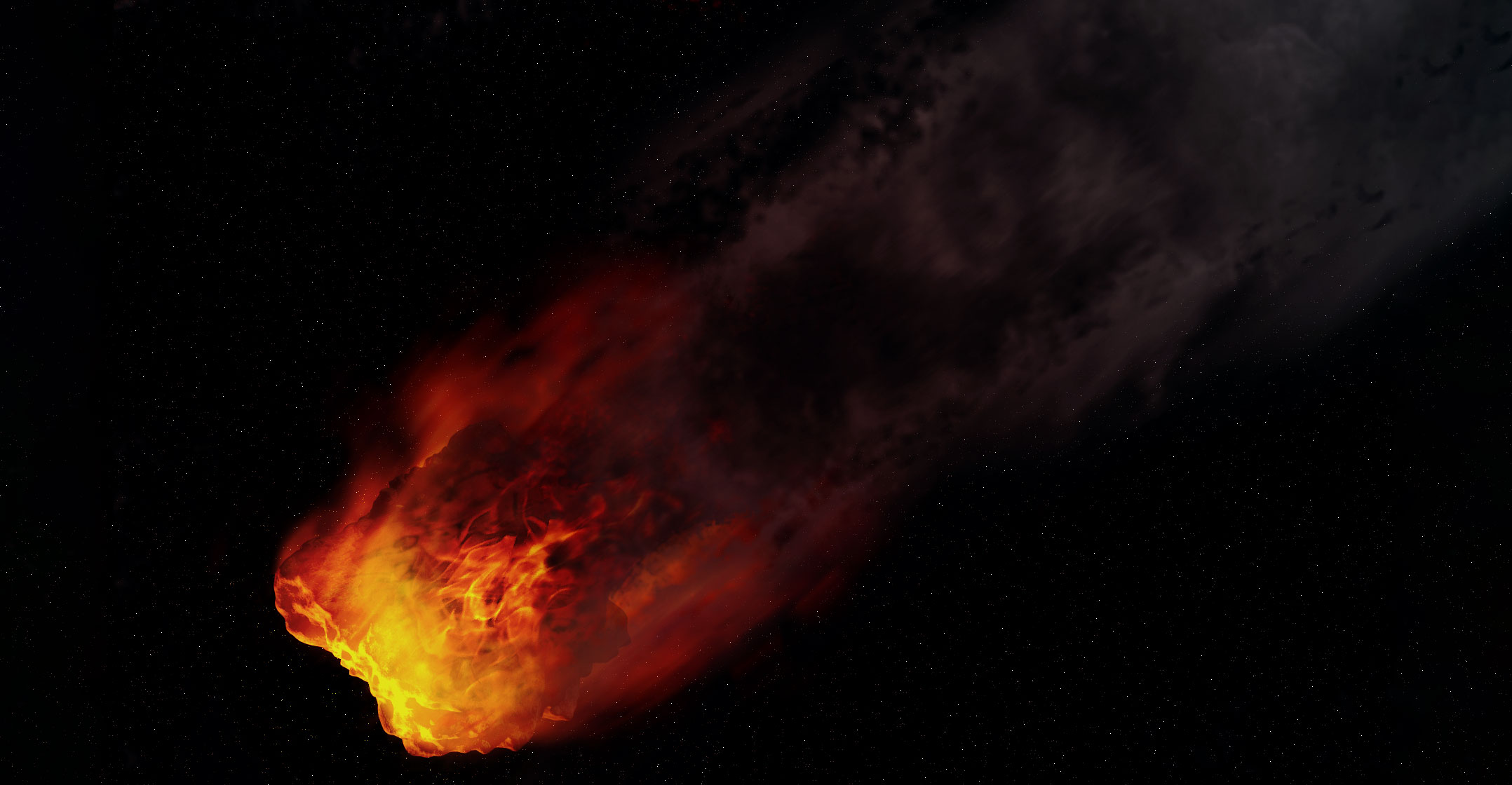
    Fortunately, experts have been working on such plans for years. The most famous proposal, thanks largely to Hollywood, is to fire a nuclear device at the incoming rock to deflect or destroy it. Another is the equally film-worthy “gravity tractor”, which would work by flying a spacecraft beside an asteroid and slowly — over years or decades — shifting its path. Finally, there’s the impactor concept behind the Dart spacecraft, which will slam into the moonlet of a non-threatening asteroid next year, hoping to disrupt its orbit.

    In the meantime, no one should rest easy. Although there are no known killer asteroids bound for Earth, the Chelyabinsk blast surprised scientists — they were actually monitoring another asteroid that passed nearby that day — and as recent simulations have shown, a lot more preparation is needed to deal with an incoming threat.

    As a start, Nasa should build on Dart by testing a gravity-tractor deflection spacecraft. Although it sounds extreme, preparing for a nuclear-armed mission would also make sense; earlier this year, researchers at the Lawrence Livermore National Laboratory and the Air Force Institute of Technology published a study on exactly that. Finally, as a 2018 report from the National Science and Technology Council suggested, the US should start evaluating global launch capabilities — and developing international protocols — in the event a rapid-response mission is needed.

    For now, these might seem like far-out ideas. But when that city-killing rock comes hurtling towards Earth, the only question anyone will be asking is: Who’s ready to launch?  — (c) 2021 Bloomberg LP



    Subscribe to TechCentral Subscribe to TechCentral
    Share. Facebook Twitter LinkedIn WhatsApp Telegram Email Copy Link
    Previous ArticleWhite House spurns Intel plan to boost chip production
    Next Article Mobile operators withdraw spectrum lawsuits against Icasa

    Related Posts

    Beat the summer heat with Samsung's WindFree air conditioners

    Beat the summer heat with Samsung’s WindFree air conditioners

    5 December 2025
    Netflix, Warner Bros talks raise fresh headaches for MultiChoice

    Netflix, Warner Bros talks raise fresh headaches for MultiChoice

    5 December 2025
    Big Microsoft 365 price increases coming next year

    Big Microsoft price increases coming next year

    5 December 2025
    Company News
    Beat the summer heat with Samsung's WindFree air conditioners

    Beat the summer heat with Samsung’s WindFree air conditioners

    5 December 2025
    AI is not a technology problem - iqbusiness

    AI is not a technology problem – iqbusiness

    5 December 2025
    Telcos are sitting on a data gold mine - but few know what do with it - Phillip du Plessis

    Telcos are sitting on a data gold mine – but few know what do with it

    4 December 2025
    Opinion
    Your data, your hardware: the DIY AI revolution is coming - Duncan McLeod

    Your data, your hardware: the DIY AI revolution is coming

    20 November 2025
    Zero Carbon Charge founder Joubert Roux

    The energy revolution South Africa can’t afford to miss

    20 November 2025
    It's time for a new approach to government IT spend in South Africa - Richard Firth

    It’s time for a new approach to government IT spend in South Africa

    19 November 2025

    Subscribe to Updates

    Get the best South African technology news and analysis delivered to your e-mail inbox every morning.

    Latest Posts
    Beat the summer heat with Samsung's WindFree air conditioners

    Beat the summer heat with Samsung’s WindFree air conditioners

    5 December 2025
    Netflix, Warner Bros talks raise fresh headaches for MultiChoice

    Netflix, Warner Bros talks raise fresh headaches for MultiChoice

    5 December 2025
    Big Microsoft 365 price increases coming next year

    Big Microsoft price increases coming next year

    5 December 2025
    AI is not a technology problem - iqbusiness

    AI is not a technology problem – iqbusiness

    5 December 2025
    © 2009 - 2025 NewsCentral Media
    • Cookie policy (ZA)
    • TechCentral – privacy and Popia

    Type above and press Enter to search. Press Esc to cancel.

    Manage consent

    TechCentral uses cookies to enhance its offerings. Consenting to these technologies allows us to serve you better. Not consenting or withdrawing consent may adversely affect certain features and functions of the website.

    Functional Always active
    The technical storage or access is strictly necessary for the legitimate purpose of enabling the use of a specific service explicitly requested by the subscriber or user, or for the sole purpose of carrying out the transmission of a communication over an electronic communications network.
    Preferences
    The technical storage or access is necessary for the legitimate purpose of storing preferences that are not requested by the subscriber or user.
    Statistics
    The technical storage or access that is used exclusively for statistical purposes. The technical storage or access that is used exclusively for anonymous statistical purposes. Without a subpoena, voluntary compliance on the part of your Internet Service Provider, or additional records from a third party, information stored or retrieved for this purpose alone cannot usually be used to identify you.
    Marketing
    The technical storage or access is required to create user profiles to send advertising, or to track the user on a website or across several websites for similar marketing purposes.
    • Manage options
    • Manage services
    • Manage {vendor_count} vendors
    • Read more about these purposes
    View preferences
    • {title}
    • {title}
    • {title}