Close Menu
TechCentralTechCentral

    Subscribe to the newsletter

    Get the best South African technology news and analysis delivered to your e-mail inbox every morning.

    Facebook X (Twitter) YouTube LinkedIn
    WhatsApp Facebook X (Twitter) LinkedIn YouTube
    TechCentralTechCentral
    • News
      Why stablecoins are booming in Africa - Yellow Card MD Lasbery Oludimu

      Why stablecoins are booming in Africa

      4 February 2026
      Prosus inks three-year AWS deal to scale AI across its global portfolio

      Prosus inks three-year AWS deal to scale AI across its global portfolio

      4 February 2026
      Vodacom's real growth story isn't mobile

      Vodacom’s real growth story isn’t mobile

      4 February 2026
      South African fintech Lula lands R340m to scale SME working capital - Trevor Gosling

      South African fintech Lula lands R340m to scale SME working capital

      4 February 2026
      Vodacom to take control of Safaricom in R36-billion deal - Shameel Joosub

      Vodacom leans on Africa growth as SA remains under pressure

      4 February 2026
    • World
      AI won't replace software, says Nvidia CEO amid market rout - Jensen Huang

      AI won’t replace software, says Nvidia CEO amid market rout

      4 February 2026
      Apple acquires audio AI start-up Q.ai

      Apple acquires audio AI start-up Q.ai

      30 January 2026
      SpaceX IPO may be largest in history

      SpaceX IPO may be largest in history

      28 January 2026
      Nvidia throws AI at the weather

      Nvidia throws AI at weather forecasting

      27 January 2026
      Debate erupts over value of in-flight Wi-Fi

      Debate erupts over value of in-flight Wi-Fi

      26 January 2026
    • In-depth
      How liberalisation is rewiring South Africa's power sector

      How liberalisation is rewiring South Africa’s power sector

      21 January 2026
      The top-performing South African tech shares of 2025

      The top-performing South African tech shares of 2025

      12 January 2026
      Digital authoritarianism grows as African states normalise internet blackouts

      Digital authoritarianism grows as African states normalise internet blackouts

      19 December 2025
      TechCentral's South African Newsmakers of 2025

      TechCentral’s South African Newsmakers of 2025

      18 December 2025
      Black Friday goes digital in South Africa as online spending surges to record high

      Black Friday goes digital in South Africa as online spending surges to record high

      4 December 2025
    • TCS
      TCS+ | How Cloud On Demand is helping SA businesses succeed in the cloud - Xhenia Rhode, Dion Kalicharan

      TCS+ | Cloud On Demand and Consnet: inside a real-world AWS partner success story

      30 January 2026
      Watts & Wheels S1E3: 'BYD's Corolla Cross challenger'

      Watts & Wheels S1E3: ‘BYD’s Corolla Cross challenger’

      30 January 2026
      Watts & Wheels S1E3: 'BYD's Corolla Cross challenger'

      Watts & Wheels S1E2: ‘China attacks, BMW digs in, Toyota’s sublime supercar’

      23 January 2026

      TCS+ | Why cybersecurity is becoming a competitive advantage for SA businesses

      20 January 2026
      Watts & Wheels S1E3: 'BYD's Corolla Cross challenger'

      Watts & Wheels: S1E1 – ‘William, Prince of Wheels’

      8 January 2026
    • Opinion
      South Africa's skills advantage is being overlooked at home - Richard Firth

      South Africa’s skills advantage is being overlooked at home

      29 January 2026
      Why Elon Musk's Starlink is a 'hard no' for me - Songezo Zibi

      Why Elon Musk’s Starlink is a ‘hard no’ for me

      26 January 2026
      South Africa's new fibre broadband battle - Duncan McLeod

      South Africa’s new fibre broadband battle

      20 January 2026
      AI moves from pilots to production in South African companies - Nazia Pillay SAP

      AI moves from pilots to production in South African companies

      20 January 2026
      South Africa's new fibre broadband battle - Duncan McLeod

      ANC’s attack on Solly Malatsi shows how BEE dogma trumps economic reality

      14 December 2025
    • Company Hubs
      • Africa Data Centres
      • AfriGIS
      • Altron Digital Business
      • Altron Document Solutions
      • Altron Group
      • Arctic Wolf
      • AvertITD
      • Braintree
      • CallMiner
      • CambriLearn
      • CYBER1 Solutions
      • Digicloud Africa
      • Digimune
      • Domains.co.za
      • ESET
      • Euphoria Telecom
      • Incredible Business
      • iONLINE
      • IQbusiness
      • Iris Network Systems
      • LSD Open
      • NEC XON
      • Netstar
      • Network Platforms
      • Next DLP
      • Ovations
      • Paracon
      • Paratus
      • Q-KON
      • SevenC
      • SkyWire
      • Solid8 Technologies
      • Telit Cinterion
      • Tenable
      • Vertiv
      • Videri Digital
      • Vodacom Business
      • Wipro
      • Workday
      • XLink
    • Sections
      • AI and machine learning
      • Banking
      • Broadcasting and Media
      • Cloud services
      • Contact centres and CX
      • Cryptocurrencies
      • Education and skills
      • Electronics and hardware
      • Energy and sustainability
      • Enterprise software
      • Financial services
      • Information security
      • Internet and connectivity
      • Internet of Things
      • Investment
      • IT services
      • Lifestyle
      • Motoring
      • Public sector
      • Retail and e-commerce
      • Satellite communications
      • Science
      • SMEs and start-ups
      • Social media
      • Talent and leadership
      • Telecoms
    • Events
    • Advertise
    TechCentralTechCentral
    Home » Editor's pick » Battery revolution on the horizon

    Battery revolution on the horizon

    By The Conversation11 August 2015
    Twitter LinkedIn Facebook WhatsApp Email Telegram Copy Link
    News Alerts
    WhatsApp

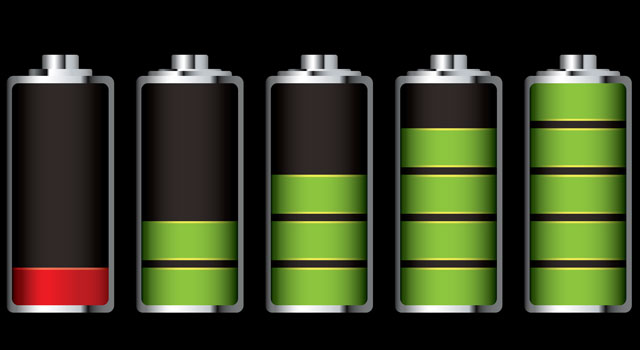
    battery-640

    While our gadgets these days are constantly getting smaller and more powerful, the development of commercial batteries both small enough and with sufficient capacity to feed their power-hungry demands has not quite kept pace.

    Lithium-ion (Li-ion) batteries are in almost all mobile electronic devices — from mobile phones and laptops, through to back-up power supplies on jets and even spacecraft. Surprisingly though, despite this huge demand, the fundamental design of Li-ion batteries has remained broadly similar in recent years.

    Battery life is frequently the constraining factor in many existing and experimental applications. It’s key for the future of technologies such as electric cars, and for high-capacity energy storage for renewables such as wind and solar power. In fact, the comparatively slow progress with developing new batteries has resulted in many electronics manufacturers turning to trying to reduce or maintain their products’ power requirements to find a balance.

    Which is not to say that there’s no research into new energy storage techniques. Far from it in fact. The past few decades have seen an explosion of research in this area. Unsurprisingly, a good deal of this revolves around improving Li-ion batteries. The new “wonder material” graphene has also been suggested as a possible key to the solution. Graphene has number of interesting properties that have led researchers to suggest either modifying components of Li-ion batteries, or using graphene as the energy storage medium instead as promising solutions.

    Just add graphene
    Graphene has also been used to develop electronic devices with extremely low power requirements. This is possible (in part) because pure graphene has the lowest resistivity of any known material at room temperature — devices made of pure graphene can conduct electricity more efficiently than any other material (at room temperature). As a consequence, very little energy is wasted.

    Devices built with graphene would not experience the same problems of heating faced by current electronics — they could run indefinitely with very little increase in temperature. Heat is bad for electronics; it means energy is being wasted and it often serves to reduce the efficiency of the device further as it heats up. Pure graphene virtually eliminates energy losses of this kind, which makes devices produced from it extremely energy efficient.

    For consumer electronics, this could mean significantly more powerful devices with massively improved battery life – a win-win scenario if ever there was one.

    What’s more, studies indicate that using graphene to replace or enhance components of Li-ion batteries can significantly improve the energy density and longevity of the battery. One popular technique has been to make the anodes or cathodes in Li-ion batteries out of graphene.
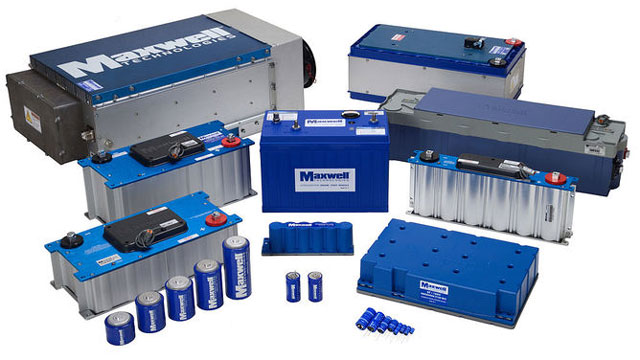
    Supercapacitors of various sizes -- but none of them small enough, yet
    Supercapacitors of various sizes — but none of them small enough, yet

    Another technique is to use graphene as the energy storage medium itself. This has been used to construct supercapacitors — perhaps the strongest future competitor to Li-ion batteries in uses that require very rapid charge times, such as in the case of electric cars.

    This is arguably their critical feature. A supercapacitor can go from fully discharged to fully charged many orders of magnitude faster than comparable Li-ion batteries. In this context, it is the large surface area of graphene that is important, because the amount of charge that can be stored is related to the surface area of the materials from which it’s made. So again, graphene is ideal.

    Despite supercapacitors’ potential to challenge the ubiquitous Li-ion battery, current supercapacitors are invariably too large and too expensive to replace them in the same roles. However, prototypes indicate that superconductors may meet the requirements necessary to replace conventional batteries in the not too distant future.

    Ultimately, the challenge with any of these prototypes is the ability to scale production to meet the demands of the consumer electronics industry. Graphene-based solutions have so far been notoriously difficult to manufacture on a large scale, thanks in part to the difficulty of isolating high-quality graphene. Nevertheless, the future for energy storage and energy-efficient technology looks bright. Whether graphene ultimately plays a part in the revolution or not, it’s clear that the research into these technologies will eventually lead to the introduction of cheaper and more durable products with a higher capacity.

    It’s no understatement to say that an energy revolution awaits as a result of next-generation energy storage devices, which could help usher in the age of fully electric vehicles, large-scale renewable energy generation and the end of our reliance on fossil fuels.The Conversation

    • Mark Douthwaite is PhD candidate in high integrity systems engineering at the University of York
    • This article was originally published on The Conversation


    WhatsApp YouTube Follow on Google News Add as preferred source on Google
    Share. Facebook Twitter LinkedIn WhatsApp Telegram Email Copy Link
    Previous ArticleAlphabet is Google’s new parent
    Next Article SA firms still pay women less

    Related Posts

    Most business owners don't worry about IT, until they have to - Graeme Millar SevenC

    Most business owners don’t worry about IT – until they have to

    4 February 2026
    Why cloud projects fail - and how three days can fix it - LSD Open

    Why cloud projects fail – and how three days can fix this

    4 February 2026
    Why stablecoins are booming in Africa - Yellow Card MD Lasbery Oludimu

    Why stablecoins are booming in Africa

    4 February 2026
    Company News
    Most business owners don't worry about IT, until they have to - Graeme Millar SevenC

    Most business owners don’t worry about IT – until they have to

    4 February 2026
    Why cloud projects fail - and how three days can fix it - LSD Open

    Why cloud projects fail – and how three days can fix this

    4 February 2026
    Zero downtime, 12 months: XLink raises the bar for mission-critical networks

    Zero downtime, 12 months: XLink raises the bar for mission-critical networks

    4 February 2026
    Opinion
    South Africa's skills advantage is being overlooked at home - Richard Firth

    South Africa’s skills advantage is being overlooked at home

    29 January 2026
    Why Elon Musk's Starlink is a 'hard no' for me - Songezo Zibi

    Why Elon Musk’s Starlink is a ‘hard no’ for me

    26 January 2026
    South Africa's new fibre broadband battle - Duncan McLeod

    South Africa’s new fibre broadband battle

    20 January 2026

    Subscribe to Updates

    Get the best South African technology news and analysis delivered to your e-mail inbox every morning.

    Latest Posts
    Most business owners don't worry about IT, until they have to - Graeme Millar SevenC

    Most business owners don’t worry about IT – until they have to

    4 February 2026
    Why cloud projects fail - and how three days can fix it - LSD Open

    Why cloud projects fail – and how three days can fix this

    4 February 2026
    Why stablecoins are booming in Africa - Yellow Card MD Lasbery Oludimu

    Why stablecoins are booming in Africa

    4 February 2026
    Zero downtime, 12 months: XLink raises the bar for mission-critical networks

    Zero downtime, 12 months: XLink raises the bar for mission-critical networks

    4 February 2026
    © 2009 - 2026 NewsCentral Media
    • Cookie policy (ZA)
    • TechCentral – privacy and Popia

    Type above and press Enter to search. Press Esc to cancel.

    Manage consent

    TechCentral uses cookies to enhance its offerings. Consenting to these technologies allows us to serve you better. Not consenting or withdrawing consent may adversely affect certain features and functions of the website.

    Functional Always active
    The technical storage or access is strictly necessary for the legitimate purpose of enabling the use of a specific service explicitly requested by the subscriber or user, or for the sole purpose of carrying out the transmission of a communication over an electronic communications network.
    Preferences
    The technical storage or access is necessary for the legitimate purpose of storing preferences that are not requested by the subscriber or user.
    Statistics
    The technical storage or access that is used exclusively for statistical purposes. The technical storage or access that is used exclusively for anonymous statistical purposes. Without a subpoena, voluntary compliance on the part of your Internet Service Provider, or additional records from a third party, information stored or retrieved for this purpose alone cannot usually be used to identify you.
    Marketing
    The technical storage or access is required to create user profiles to send advertising, or to track the user on a website or across several websites for similar marketing purposes.
    • Manage options
    • Manage services
    • Manage {vendor_count} vendors
    • Read more about these purposes
    View preferences
    • {title}
    • {title}
    • {title}