Close Menu
TechCentralTechCentral

    Subscribe to the newsletter

    Get the best South African technology news and analysis delivered to your e-mail inbox every morning.

    Facebook X (Twitter) YouTube LinkedIn
    WhatsApp Facebook X (Twitter) LinkedIn YouTube
    TechCentralTechCentral
    • News
      Liquid dodges debt crunch - at a hefty price - Hardy Pemhiwa

      Liquid dodges debt crunch – at a hefty price

      21 April 2026
      Microsoft slashes Xbox Game Pass prices in big strategy shift

      Microsoft slashes Xbox Game Pass prices in big strategy shift

      21 April 2026
      Naspers stalwart Steve Pacak passes away

      Naspers stalwart Steve Pacak passes away

      21 April 2026
      Why AI chatbots are a legal liability waiting to happen - Ahmore Burger-Smidt

      Why AI chatbots are a legal liability waiting to happen

      21 April 2026
      South African tech juniors squeezed as AI reshapes hiring

      South African tech juniors squeezed as AI reshapes hiring

      21 April 2026
    • World
      More organic compounds detected on Mars - Nasa Curiosity rover

      More organic compounds detected on Mars

      21 April 2026
      Adobe bets on AI agents to fend off cheaper rivals

      Adobe bets on AI agents to fend off cheaper rivals

      16 April 2026
      Google poised to lose ad crown to Meta

      Google poised to lose ad crown to Meta

      14 April 2026
      Grand Theft Data - hackers hit Rockstar Games - Grand Theft Auto

      Grand Theft Data – hackers hit Rockstar Games

      14 April 2026
      UK PM Keir Starmer declares war on doomscrolling

      UK PM Keir Starmer declares war on doomscrolling

      13 April 2026
    • In-depth
      Africa switches on as Europe dims the lights

      Africa switches on as Europe dims the lights

      9 April 2026
      The biggest untapped EV market on Earth is hiding in plain sight

      The biggest untapped EV market on Earth is hiding in plain sight

      1 April 2026
      The R18-billion tech giant hiding in plain sight - Jens Montanana

      The R16-billion tech giant hiding in plain sight

      26 March 2026
      The last generation of coders

      The last generation of coders

      18 February 2026
      Sentech is in dire straits

      Sentech is in dire straits

      10 February 2026
    • TCS

      TCS+ | ‘The ISP for ISPs’: Vox’s shift to wholesale aggregator

      20 April 2026
      TCS | Werner Lindemann on how AI is rewriting the infosec rulebook

      TCS | Werner Lindemann on how AI is rewriting the infosec rulebook

      15 April 2026
      TCS | Donovan Marsh on AI and the future of filmmaking

      TCS | Donovan Marsh on AI and the future of filmmaking

      7 April 2026
      TCS+ | Vodacom Business moves to crack the SME tech gap - Andrew Fulton, Sannesh Beharie

      TCS+ | Vodacom Business moves to crack the SME tech gap

      7 April 2026
      TCS | MTN's Divysh Joshi on the strategy behind Pi - Divyesh Joshi

      TCS | MTN’s Divyesh Joshi on the strategy behind Pi

      1 April 2026
    • Opinion
      The conflict of interest at the heart of PayShap's slow adoption - Cheslyn Jacobs

      The conflict of interest at the heart of PayShap’s slow adoption

      26 March 2026
      South Africa's energy future hinges on getting wheeling right - Aishah Gire

      South Africa’s energy future hinges on getting wheeling right

      10 March 2026
      Hold the doom: the case for a South African comeback - Duncan McLeod

      Apple just dropped a bomb on the Windows world

      5 March 2026
      R230-million in the bag for Endeavor's third Harvest Fund - Alison Collier

      VC’s centre of gravity is shifting – and South Africa is in the frame

      3 March 2026
      Hold the doom: the case for a South African comeback - Duncan McLeod

      Hold the doom: the case for a South African comeback

      26 February 2026
    • Company Hubs
      • 1Stream
      • Africa Data Centres
      • AfriGIS
      • Altron Digital Business
      • Altron Document Solutions
      • Altron Group
      • Arctic Wolf
      • Ascent Technology
      • AvertITD
      • BBD
      • Braintree
      • CallMiner
      • CambriLearn
      • CYBER1 Solutions
      • Digicloud Africa
      • Digimune
      • Domains.co.za
      • ESET
      • Euphoria Telecom
      • HOSTAFRICA
      • Incredible Business
      • iONLINE
      • IQbusiness
      • Iris Network Systems
      • Kaspersky
      • LSD Open
      • Mitel
      • NEC XON
      • Netstar
      • Network Platforms
      • Next DLP
      • Ovations
      • Paracon
      • Paratus
      • Q-KON
      • SevenC
      • SkyWire
      • Solid8 Technologies
      • Telit Cinterion
      • Telviva
      • Tenable
      • Vertiv
      • Videri Digital
      • Vodacom Business
      • Wipro
      • Workday
      • XLink
    • Sections
      • AI and machine learning
      • Banking
      • Broadcasting and Media
      • Cloud services
      • Contact centres and CX
      • Cryptocurrencies
      • Education and skills
      • Electronics and hardware
      • Energy and sustainability
      • Enterprise software
      • Financial services
      • HealthTech
      • Information security
      • Internet and connectivity
      • Internet of Things
      • Investment
      • IT services
      • Lifestyle
      • Motoring
      • Policy and regulation
      • Public sector
      • Retail and e-commerce
      • Satellite communications
      • Science
      • SMEs and start-ups
      • Social media
      • Talent and leadership
      • Telecoms
    • Events
    • Advertise
    TechCentralTechCentral
    Home » Opinion » Karl Muller » Better safe than worry

    Better safe than worry

    By Editor4 December 2009
    Twitter LinkedIn Facebook WhatsApp Email Telegram Copy Link
    News Alerts
    WhatsApp

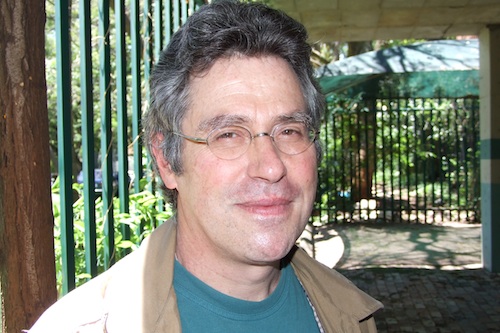
    Karl Muller

    [By Karl Muller] A fair degree of heat has been raised recently over the possible hazards to health and the environment posed by cellphone and broadband wireless masts.

    In all of this, only one thing is certain: no-one knows what the long-term effects are of bathing the landscape in digitally pulsed microwave radiation at levels millions of times above the natural cosmic microwave background.

    Prof Leif Salford of Lund University in Sweden describes the proliferation of cellphone technology as “the single biggest experiment ever carried out on the human race”. Salford found and recently confirmed permanent brain damage in rats exposed to just two hours of cellphone radiation at levels comparable to those found near base stations.

    Salford’s research findings — along with thousands of other scientific studies — indicate that there may be severe risks to microwave exposure. But no-one knows what the ultimate results of this “experiment” will be.

    What does one do in such a situation, where there is evidence of possible harm, but no certainty?

    There is, in fact, a very deep moral, political and legal principle that has been developed over the years to meet exactly this contingency.

    It’s called the precautionary principle (PP), and in some legal systems — such as the European Union — it is a general and compulsory principle of law.

    Its legal origins date back to the concept of “duty of care” in English common law of the late 1800s. This says that where a person undertakes an activity that might cause damage, “a duty arises to use ordinary care and skill to avoid such danger”.

    In everyday life, this principle is expressed in terms such as “better safe than sorry” and “an ounce of prevention is better than a pound of cure”.

    Perhaps the most relevant statement of this concept in the SA context is principle 15 of the Rio Declaration of 1992, the UN “Earth Summit”, which says: “In order to protect the environment, the precautionary approach shall be widely applied by states according to their capabilities. Where there are threats of serious or irreversible damage, lack of full scientific certainty shall not be used as a reason for postponing cost-effective measures to prevent environmental degradation.”

    This embodies a pragmatic attitude which takes account of the different capacities of states to take action, but where precaution prevails over the necessity for full scientific proof when preventing possible harm to the environment.

    SA was not only a signatory to this declaration, but hosted the next World Summit on Sustainable Development in 2002 in Johannesburg — so we have a special responsibility to try and implement these internationally agreed policies.

    With regard to health policies and electromagnetic radiation, the government of SA has deferred completely to the World Health Organisation. What is the WHO’s attitude towards the precautionary principle and electromagnetic radiation?

    In 2003, great excitement was generated when the WHO released a draft position paper that called for the PP to be applied both for power line and radio frequency fields. But as reported in Microwave News of May/June 2003, the WHO then did a major “flip-flop”, with Michael Repacholi, director of the WHO’s International EMF Project, saying the organisation had decided not to invoke the PP: “We have not changed our minds, and have not made a 180-degree turn, but rather we have developed a comprehensive risk management framework in which precaution plays a role at every stage, thus there is no need to evoke it.”

    Repacholi later went on to say, “Precautionary policies should not be applied to electromagnetic fields”, and told MW News: “It is not WHO’s job to be recommending ‘prudent avoidance’ to national governments.”

    He also argued: “The lower the limits, the greater the public concern.”

    This last argument is one which industry has played upon: they say that invoking the PP will “alarm” the public, and this should be avoided. It seems that governments, the WHO and industry would far rather put your life in possible peril, than — God forbid! — “alarm” you.

    The WHO has so successfully avoided “evoking” the PP that — to the best of my knowledge — not one word of warning or any hint of precaution has been made by any authority in SA.

    Governments in Russia, the UK, Italy, Austria, Switzerland, Israel, France, India and other countries have all issued warnings, especially regarding exposure of children to cellphone radiation.

    Looking specifically at the environment, several studies have found that microwave radiation affects insects, birds, amphibians and trees. The Skrunda radar station study in Latvia, for example, found that pine trees were stunted in the beam of the mast, and tree rings showed that this stunting started with the radar’s operation.

    In SA, the Oppenheimer family has funded a million-rand research project into the effects of cellphone radiation and other factors on insect life.

    The first results were presented by Dr Max Clark in March 2008 at the Oppenheimer’s Brenthurst home.

    The most significant initial finding was a 10% decline in ant species in areas with high cellphone radiation levels at both 900MHz and 1 800MHz. These are entire species disappearing from the landscape; a one-in-ten reduction is literally a decimation of ant species.

    I asked Prof Shirley Hanrahan, head of zoology at Wits University and a world-renowned entomologist, who was at the presentation, whether this was of evolutionary significance. “Yes of course”, she replied.

    Dr Clark also referred to research at the University of Landau, which showed that just 7% of bees exposed to digital cordless phone radiation found their way back to the hive, as opposed to 40% of non-radiated bees.

    He concluded that although there was much research to be done, there was enough evidence from these insect studies to call for the precautionary principle to be invoked.

    No-one can accuse bees and ants of displaying “hysterical”, psychosomatic symptoms; and even ant species that are for some reason sensitive to microwave radiation have a right to exist. No-one can tell what will happen when we start removing a range of species from the ecosphere because they are not “microwave compliant”. Remember, extinction is forever.

    It’s time we observed the most basic duty of care to our environment, and found ways to limit the proliferation of masts across the landscape.

    What do you think? Should we be concerned? Leave a comment below.

    • Muller is a journalist and former physics lecturer

    • Subscribe to our free daily newsletter
    • Follow us on Twitter
    Follow TechCentral on Google News Add TechCentral as your preferred source on Google


    Karl Muller
    WhatsApp YouTube
    Share. Facebook Twitter LinkedIn WhatsApp Telegram Email Copy Link
    Previous ArticleGoldstuck, Internet legend, chases down his first novel
    Next Article All filler, no thriller

    Related Posts

    Like nutritious meals, water is an essential nutrient for learners

    Like nutritious meals, water is an essential nutrient for learners

    12 April 2024

    Activist lays criminal charges against iBurst

    11 May 2010
    Company News
    Why retail's future is digital - but still physical - NEC XON

    Why the future of retail is digital – but still physical

    21 April 2026
    Africa's AI dream needs bricks and gigawatts - Gary Galolo, head of technology, media, and telecommunications and digital infrastructure finance at Nedbank CIB

    Africa’s AI dream needs bricks and gigawatts

    21 April 2026
    Fibre: the backbone of South Africa's digital health ecosystem - Mweb

    Fibre: the backbone of South Africa’s digital health ecosystem

    16 April 2026
    Opinion
    The conflict of interest at the heart of PayShap's slow adoption - Cheslyn Jacobs

    The conflict of interest at the heart of PayShap’s slow adoption

    26 March 2026
    South Africa's energy future hinges on getting wheeling right - Aishah Gire

    South Africa’s energy future hinges on getting wheeling right

    10 March 2026
    Hold the doom: the case for a South African comeback - Duncan McLeod

    Apple just dropped a bomb on the Windows world

    5 March 2026

    Subscribe to Updates

    Get the best South African technology news and analysis delivered to your e-mail inbox every morning.

    Latest Posts
    Liquid dodges debt crunch - at a hefty price - Hardy Pemhiwa

    Liquid dodges debt crunch – at a hefty price

    21 April 2026
    Microsoft slashes Xbox Game Pass prices in big strategy shift

    Microsoft slashes Xbox Game Pass prices in big strategy shift

    21 April 2026
    Naspers stalwart Steve Pacak passes away

    Naspers stalwart Steve Pacak passes away

    21 April 2026
    Why AI chatbots are a legal liability waiting to happen - Ahmore Burger-Smidt

    Why AI chatbots are a legal liability waiting to happen

    21 April 2026
    © 2009 - 2026 NewsCentral Media
    • Cookie policy (ZA)
    • TechCentral – privacy and Popia

    Type above and press Enter to search. Press Esc to cancel.

    Manage consent

    TechCentral uses cookies to enhance its offerings. Consenting to these technologies allows us to serve you better. Not consenting or withdrawing consent may adversely affect certain features and functions of the website.

    Functional Always active
    The technical storage or access is strictly necessary for the legitimate purpose of enabling the use of a specific service explicitly requested by the subscriber or user, or for the sole purpose of carrying out the transmission of a communication over an electronic communications network.
    Preferences
    The technical storage or access is necessary for the legitimate purpose of storing preferences that are not requested by the subscriber or user.
    Statistics
    The technical storage or access that is used exclusively for statistical purposes. The technical storage or access that is used exclusively for anonymous statistical purposes. Without a subpoena, voluntary compliance on the part of your Internet Service Provider, or additional records from a third party, information stored or retrieved for this purpose alone cannot usually be used to identify you.
    Marketing
    The technical storage or access is required to create user profiles to send advertising, or to track the user on a website or across several websites for similar marketing purposes.
    • Manage options
    • Manage services
    • Manage {vendor_count} vendors
    • Read more about these purposes
    View preferences
    • {title}
    • {title}
    • {title}