
The US$6.3-billion raid on Binance this week was not, as far as anyone can tell, an AI-powered attack. But as AI gives attackers faster, cheaper tools, it raises the question of whether any crypto exchange can credibly promise customers that their funds are safe.
Binance, the world’s largest crypto exchange, has temporarily suspended withdrawals and committed to covering all losses from its own funds and its Secure Asset Fund for Users (SAFU), an emergency reserve. “User funds are safe,” Binance Africa said in a statement shared with TechCentral on Friday.
On Thursday, 29 October, an attacker moved funds out of Binance wallets on 10 blockchains, most of it in about 20 minutes from 10.05pm South African time, according to blockchain intelligence firm TRM Labs. TRM puts the haul at $6.36-billion, about four times the $1.5-billion taken from Bybit in February 2025. Binance’s estimate is about $6.3-billion.
By early on 30 October, TRM counted about $2.7-billion frozen, mostly stablecoins; Binance says about $3-billion. But the attacker still holds about $2.4-billion in ether and bitcoin, which no issuer can freeze. That alone is more than twice the $1-billion Binance said in January it would keep in the SAFU fund.
“The attackers didn’t break the encryption or steal the private keys. They took over the system that tells the keys what to sign,” said Hendrik de Bruin, head of security consulting for Africa at Check Point Software Technologies.
Binance’s initial findings suggest the attack may have started with the compromised laptop of a DevOps engineer, one of the staff who build and run its software systems, which gave the attacker access to a service able to submit withdrawals. Binance says it has found no evidence of a private key leak.
The lesson
Wallets on several chains then signed transfers to the attacker within minutes. TRM says this points to a compromise of the system that signs transactions for Binance’s hot wallets, the internet-connected wallets it uses for day-to-day withdrawals. On Ethereum, the attacker used a delegation feature, with 50 pre-signed authorisations, to turn a hot wallet into a sweeper under its control, TRM says.
“That’s the lesson: a strong vault doesn’t matter if someone controls the process that opens it,” De Bruin said.
TRM Labs attributes the attack, with high confidence, to TraderTraitor, a North Korean state-sponsored hacking unit the US Federal Bureau of Investigation blamed for the Bybit theft. Binance hasn’t named an attacker and, as of 30 October, no government had confirmed the attribution.
De Bruin said the raid echoes one on Bitget, which lost about $388-million on 24 September in an attack that abused its wallet control layer without touching its keys. Bitget first put the loss at $352-million, then revised it. “Two major exchanges in just over a month is a trend we cannot ignore,” De Bruin said.
TechCentral asked Binance Africa how much was stolen from African and South African users, and whether AI is making it untenable for exchanges to guarantee the safety of funds. It had not responded by publication.
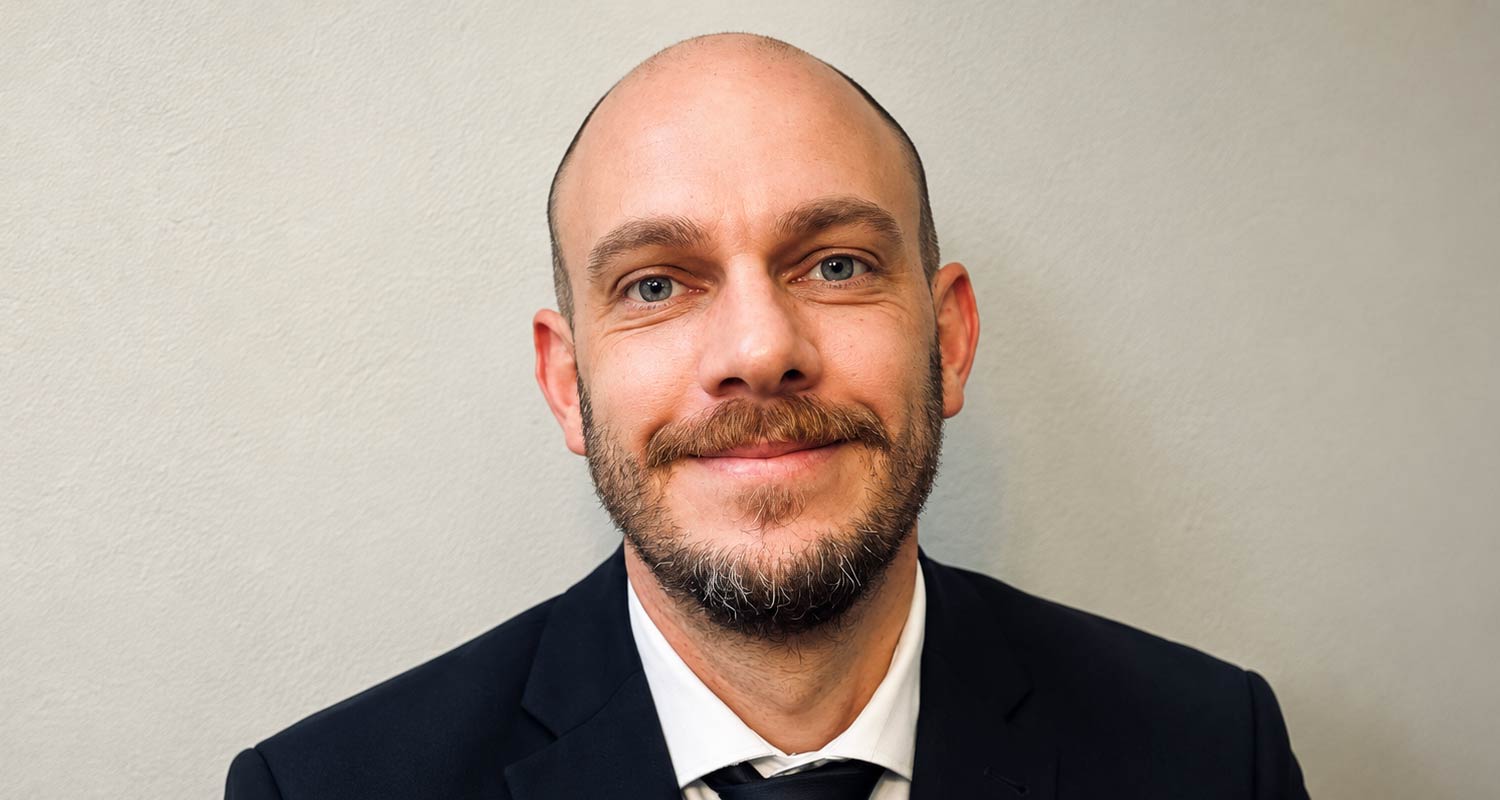
Leon Jacobs, chief technology officer of Orange Cyberdefense, said the breach “raises questions for everyone about developer/production segmentation”: keeping developers’ machines walled off from the live systems that move money. He sees no obvious AI angle “beyond ‘everyone is using it so of course attackers do, too'”.
Steven Boykey Sidley, a professor of practice at the University of Johannesburg, stressed that “the blockchain was not hacked, it was, as always with these things, a compromised end user”.
Getting into an engineer’s laptop, rather than phishing a wallet key or password, suggests security protocols were not followed, he said. “Whether this indicates new dangers ahead is unclear. But this is all supposition for the moment.”
Cheaper attacks
De Bruin said the risk goes well beyond crypto, to any organisation “whose automated systems move money or data on instruction”. Sidley sees AI widening the target further: “AI hacking makes everything a bigger target – traditional exchanges, banks, crypto exchanges, corporate data, personal data, government secrets.” He believes it “is emerging as the single biggest threat to an internet-dependent society”.
De Bruin gives Binance credit “for freezing funds quickly and committing to cover customer losses”, but says “the industry can’t keep relying on clean-up”.
“Assume any machine or credential can be compromised, and make sure none of them can move large sums without an independent check,” he said. “Prevention has to come first, because once money spreads across multiple blockchains, getting it back is the exception.”
For individual holders, crypto’s oldest advice applies: “not your keys, not your coins”. With cold storage, private keys stay offline and the exchange never holds them. Only funds for active trading need to stay on a platform:
- Hardware wallets keep keys offline and sign transactions on the device. Buy new, from the manufacturer or an authorised reseller.
- The seed phrase, the 12- or 24-word recovery phrase, is the wallet. Write it on paper or metal, store it away from the device, and never photograph it or type it into a website.
- Multisignature wallets, for larger holdings, need, say, two of three keys to approve a transaction, so one lost or stolen key isn’t fatal.
Self-custody carries its own risk. Lose the device and the seed phrase, and there is no SAFU fund to fall back on. – (c) 2026 NewsCentral Media