


Close Menu
TechCentralTechCentral

    Subscribe to the newsletter

    Get the best South African technology news and analysis delivered to your e-mail inbox every morning.

    Facebook X (Twitter) YouTube LinkedIn
    WhatsApp Facebook X (Twitter) LinkedIn YouTube
    TechCentralTechCentral
    • News
      Toyota SA CEO: NEV inaction will cost South Africa its motoring industry - Andrew Kirby

      Toyota SA CEO: NEV inaction will cost South Africa its motoring industry

      12 February 2026
      Censorship-resistant internet from space - Spacecoin

      Censorship-resistant internet from space

      12 February 2026
      Chip shortage hits PCs as AI swallows the world's memory supply

      Chip shortage hits PCs as AI swallows the world’s memory supply

      12 February 2026
      Altron jumps after company flags strong earnings growth

      Altron jumps after company flags strong earnings growth

      12 February 2026
      Here comes the next wave of Chinese AI models

      Here comes the next wave of Chinese AI models

      12 February 2026
    • World
      Russia bans WhatsApp

      Russia bans WhatsApp

      12 February 2026
      EU regulators take aim at WhatsApp

      EU regulators take aim at WhatsApp

      9 February 2026
      Musk hits brakes on Mars mission

      Musk hits brakes on Mars mission

      9 February 2026
      Crypto firm accidentally sends R700-billion in bitcoin to its users

      Crypto firm accidentally sends R700-billion in bitcoin to its users

      8 February 2026
      AI won't replace software, says Nvidia CEO amid market rout - Jensen Huang

      AI won’t replace software, says Nvidia CEO amid market rout

      4 February 2026
    • In-depth
      How liberalisation is rewiring South Africa's power sector

      How liberalisation is rewiring South Africa’s power sector

      21 January 2026
      The top-performing South African tech shares of 2025

      The top-performing South African tech shares of 2025

      12 January 2026
      Digital authoritarianism grows as African states normalise internet blackouts

      Digital authoritarianism grows as African states normalise internet blackouts

      19 December 2025
      TechCentral's South African Newsmakers of 2025

      TechCentral’s South African Newsmakers of 2025

      18 December 2025
      Black Friday goes digital in South Africa as online spending surges to record high

      Black Friday goes digital in South Africa as online spending surges to record high

      4 December 2025
    • TCS
      Watts & Wheels S1E4: 'We drive an electric Uber'

      Watts & Wheels S1E4: ‘We drive an electric Uber’

      10 February 2026
      TCS+ | How Cloud On Demand is helping SA businesses succeed in the cloud - Xhenia Rhode, Dion Kalicharan

      TCS+ | Cloud On Demand and Consnet: inside a real-world AWS partner success story

      30 January 2026
      Watts & Wheels S1E4: 'We drive an electric Uber'

      Watts & Wheels S1E3: ‘BYD’s Corolla Cross challenger’

      30 January 2026
      Watts & Wheels S1E4: 'We drive an electric Uber'

      Watts & Wheels S1E2: ‘China attacks, BMW digs in, Toyota’s sublime supercar’

      23 January 2026

      TCS+ | Why cybersecurity is becoming a competitive advantage for SA businesses

      20 January 2026
    • Opinion
      South Africa's skills advantage is being overlooked at home - Richard Firth

      South Africa’s skills advantage is being overlooked at home

      29 January 2026
      Why Elon Musk's Starlink is a 'hard no' for me - Songezo Zibi

      Why Elon Musk’s Starlink is a ‘hard no’ for me

      26 January 2026
      South Africa's new fibre broadband battle - Duncan McLeod

      South Africa’s new fibre broadband battle

      20 January 2026
      AI moves from pilots to production in South African companies - Nazia Pillay SAP

      AI moves from pilots to production in South African companies

      20 January 2026
      South Africa's new fibre broadband battle - Duncan McLeod

      ANC’s attack on Solly Malatsi shows how BEE dogma trumps economic reality

      14 December 2025
    • Company Hubs
      • Africa Data Centres
      • AfriGIS
      • Altron Digital Business
      • Altron Document Solutions
      • Altron Group
      • Arctic Wolf
      • AvertITD
      • Braintree
      • CallMiner
      • CambriLearn
      • CYBER1 Solutions
      • Digicloud Africa
      • Digimune
      • Domains.co.za
      • ESET
      • Euphoria Telecom
      • Incredible Business
      • iONLINE
      • IQbusiness
      • Iris Network Systems
      • LSD Open
      • Mitel
      • NEC XON
      • Netstar
      • Network Platforms
      • Next DLP
      • Ovations
      • Paracon
      • Paratus
      • Q-KON
      • SevenC
      • SkyWire
      • Solid8 Technologies
      • Telit Cinterion
      • Tenable
      • Vertiv
      • Videri Digital
      • Vodacom Business
      • Wipro
      • Workday
      • XLink
    • Sections
      • AI and machine learning
      • Banking
      • Broadcasting and Media
      • Cloud services
      • Contact centres and CX
      • Cryptocurrencies
      • Education and skills
      • Electronics and hardware
      • Energy and sustainability
      • Enterprise software
      • Financial services
      • Information security
      • Internet and connectivity
      • Internet of Things
      • Investment
      • IT services
      • Lifestyle
      • Motoring
      • Public sector
      • Retail and e-commerce
      • Satellite communications
      • Science
      • SMEs and start-ups
      • Social media
      • Talent and leadership
      • Telecoms
    • Events
    • Advertise
    TechCentralTechCentral
    Home » Sections » Motoring » Car makers shed 80 000 jobs as electric shift upends industry

    Car makers shed 80 000 jobs as electric shift upends industry

    By Agency Staff4 December 2019
    Twitter LinkedIn Facebook WhatsApp Email Telegram Copy Link
    News Alerts
    WhatsApp

    It’s turning out to be one of the worst years ever for auto workers across the globe amid shrinking demand and a tectonic shift in vehicle technology, with Daimler and Audi announcing almost 20 000 job cuts in just the past week.

    All told, car makers are eliminating more than 80 000 jobs during the coming years, according to data compiled by Bloomberg News. Although the cuts are concentrated in Germany, the US and the UK, faster-growing economies haven’t been immune and are seeing automakers scale back operations there.

    The German companies joined General Motors, Ford and Nissan in massive retrenchments put in motion over the past year. The industry is sputtering as trade tensions and tariffs raise costs and stifle investment, and as manufacturers reassess their workforce in an era of electrification, autonomous driving and ride-on-demand services.

    The global auto industry will produce 88.8 million cars and light trucks this year, an almost 6% drop from a year ago

    The global auto industry will produce 88.8 million cars and light trucks this year, an almost 6% drop from a year ago, according to researcher IHS Markit. German auto-industry lobby VDA on Wednesday predicted that the decline will continue next year, forecasting global deliveries of 78.9 million vehicles, the lowest level since 2015.

    The pace of job cuts in the home of Mercedes-Benz, Porsche and BMW is expected to be “more pronounced in 2020”, VDA president Bernhard Mattes said at a press conference in Berlin, adding that the technology shift alone could lead to the loss of 70 000 jobs over the next decade.

    “A fundamental structural change with enormously high investments at a time of deteriorating market dynamics — the tension is being felt at many companies,” said Mattes.

    China cuts

    Cuts are also being carried out in China, which employs the largest number of people in the industry and has been mired in a sales slump. Electric vehicle start-up NIO, which has lost billions of dollars and watched its New York-listed shares plummet, dismissed about 20% of its workforce by the end of September, shedding more than 2 000 jobs.

    “The persistent slowdown in global markets will continue to dent automakers’ margins and earnings, which have already been hurt by increased R&D spending for autonomous driving technology,” said Gillian Davis, an analyst with Bloomberg Intelligence. “Many automakers are now focused on cost-saving plans to prevent margin erosion.”

    Being an early leader in electrification hasn’t spared Nissan, which has been in turmoil since the arrest of former chairman Carlos Ghosn a year ago.
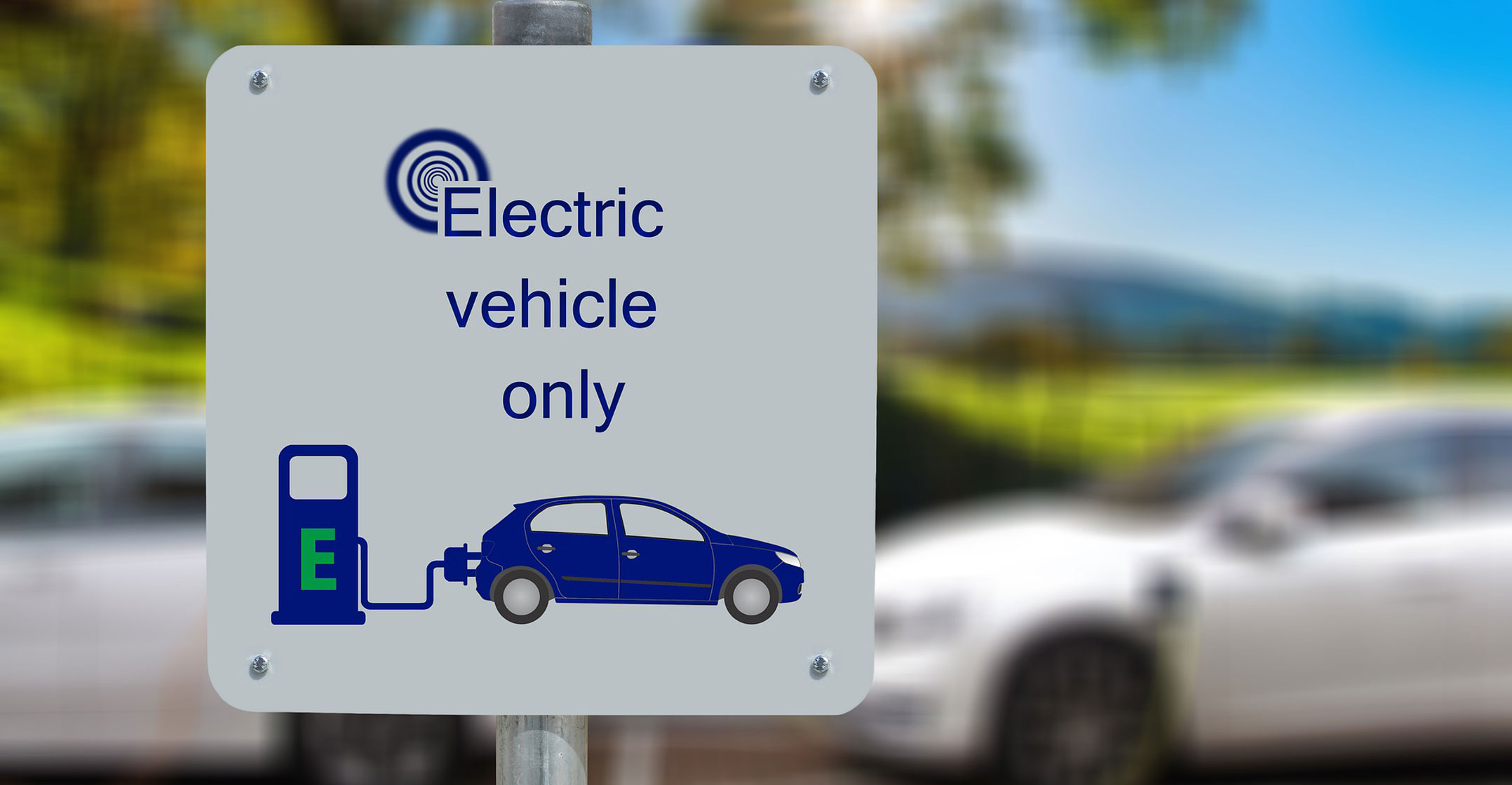
    With profits plumbing decade lows, the Japanese automaker is shedding 12 500 positions in the coming years, mostly at factories across the globe, to reduce costs as it rushes to refresh an ageing model line-up. A redesigned version of the battery-powered Leaf, which debuted later than planned because of the loss of the company’s longtime leader, isn’t giving the company much of a boost this year.

    Factory-floor workers have been rising up against the retrenching. GM’s more than 46 000 US hourly workers staged a 40-day-long strike this autumn — the longest against the company in almost half a century — but managed to coax the company into keeping open only one of the four American factories it made plans to shut a year ago.

    On 22 November, about 15 000 people marched in the streets to protest job cuts and factory closures in Stuttgart, the German city that’s home to the global headquarters of Daimler, Porsche and major parts supplier Robert Bosch.

    Being an early leader in electrification hasn’t spared Nissan, which has been in turmoil since the arrest of former chairman Carlos Ghosn a year ago

    Protesters in the historic downtown square of Schlossplatz wore red scarfs, blew whistles and waved red flags in support of Germany’s powerful labour union IG Metall, which organised the demonstrations. Top union officials who represent workers at Mercedes-Benz, Audi and many parts makers claim the companies are using the shift toward EVs as an excuse to push through deeper cuts and boost profits.

    “We don’t let our jobs be taken away just because some managers haven’t done their homework,” Roman Zitzelsberger, the regional head of IG Metall in the state of Baden-Wuerttemberg and the worker representative on Daimler’s supervisory board, told the crowd.

    The job concerns proved to be justified. Audi announced a week later it will eliminate as many as 9 500 positions in Germany through to 2025 as parent Volkswagen prepares for a costly transition to electric vehicles. Daimler announced plans to shed more than 10 000 worldwide.

    Sixth largest

    If it were a country, the auto industry would be the world’s sixth largest economy, according to Fircroft, a technical job placement firm. In Germany alone, when including local operations of foreign manufacturers, about 150 000 jobs might be at risk in coming years, according to estimates by the Centre of Automotive Management, near Cologne.

    The clouds started to form for US car makers last year, when Ford revealed plans for a years-long, US$11-billion restructuring. The company has made a series of piecemeal announcements since then, slashing roughly 10% of its global salaried ranks and shutting six plants: three in Russia and one apiece in the US, UK and France. Of roughly 17 000 jobs Ford is eliminating, 12 000 will be in Europe.

    The state of car-factory jobs in the US is less clear, mainly thanks to the new contracts Detroit-area automakers have been negotiating for the next four years.
    The prospects looked somewhat bleak for the United Auto Workers union when talks began this summer. With vehicle demand slowing, production shifts were being pared back across the country — by Nissan at its truck-and-van plant in Mississippi, Fiat Chrysler Automobiles at its Jeep Cherokee SUV factory in Illinois and Honda at an Ohio plant that mostly makes Accord sedans. Workers fear plug-in cars, which have fewer parts and require less labour to build, will doom auto jobs.

    In the end, the UAW has announced commitments by GM, Ford and Fiat Chrysler to invest almost $23-billion in US facilities over the course of the next four years, and to add or retain more than 25 000 jobs. While that sounds like a lot, it remains to be seen whether the spending will actually boost production. It costs the companies billions to convert or retool existing factories for them to make new cars and powertrains.

    The union also didn’t emerge without some bruising losses, with the most notably being its lost battle to save GM’s spacious car plant in Lordstown, Ohio. The factory, opened in 1966, became a political football when the company announced production of Chevrolet Cruze sedans would end in March. President Donald Trump told supporters a year and a half earlier not to sell their homes, assuring them his administration would bring jobs back. GM sold the complex to cash-strapped electric-truck start-up Lordstown Motors last month.

    The clouds started to form for US car makers last year, when Ford revealed plans for a years-long, US$11-billion restructuring

    For Scott Brubaker, GM’s offloading of the Lordstown plant could be a one-way ticket out of the auto industry. The automaker transferred him to its Corvette sports-car plant in Bowling Green, Kentucky, which meant leaving an Ohio farm his family has owned for four generations.

    The idling of the factory left him with two options: live in his camper trailer in Bowling Green and commute home on weekends, or take a $75 000 severance check from GM and find a new job near Lordstown. He has an offer to work for a company clearing land for developers, but it pays $5 an hour less than GM, and he says it would cost him his pension. Lordstown Motors is still raising money for its electric trucks, and Brubaker has his doubts it will succeed.

    “I went to GM for good pay and benefits,” Brubaker said. “What we did in the plant we did successfully, and GM still pawned us off.”  — Reported by Christoph Rauwald, David Welch and Anurag Kotoky, with assistance from Kristie Pladson, Keith Naughton, Gabrielle Coppola, Craig Trudell, Cécile Daurat and Chris Reiter, (c) 2019 Bloomberg LP



    WhatsApp YouTube Follow on Google News Add as preferred source on Google
    Share. Facebook Twitter LinkedIn WhatsApp Telegram Email Copy Link
    Previous ArticleStudents will save time at SU, with SnapScan
    Next Article End of an era: Page, Brin to step down at Alphabet

    Related Posts

    Toyota SA CEO: NEV inaction will cost South Africa its motoring industry - Andrew Kirby

    Toyota SA CEO: NEV inaction will cost South Africa its motoring industry

    12 February 2026
    Russia bans WhatsApp

    Russia bans WhatsApp

    12 February 2026
    Censorship-resistant internet from space - Spacecoin

    Censorship-resistant internet from space

    12 February 2026
    Company News
    How NEC XON tackled identity risk for a major telco - Michael de Neuilly Rice

    How NEC XON tackled identity risk for a major telco

    11 February 2026

    Why Acer is the strategic choice for South Africa’s educational future

    11 February 2026
    Fyndae is building Africa's human verification layer for community security and collaboration

    Fyndae wants to turn lost-item recovery into Africa’s trust infrastructure

    11 February 2026
    Opinion
    South Africa's skills advantage is being overlooked at home - Richard Firth

    South Africa’s skills advantage is being overlooked at home

    29 January 2026
    Why Elon Musk's Starlink is a 'hard no' for me - Songezo Zibi

    Why Elon Musk’s Starlink is a ‘hard no’ for me

    26 January 2026
    South Africa's new fibre broadband battle - Duncan McLeod

    South Africa’s new fibre broadband battle

    20 January 2026

    Subscribe to Updates

    Get the best South African technology news and analysis delivered to your e-mail inbox every morning.

    Latest Posts
    Toyota SA CEO: NEV inaction will cost South Africa its motoring industry - Andrew Kirby

    Toyota SA CEO: NEV inaction will cost South Africa its motoring industry

    12 February 2026
    Russia bans WhatsApp

    Russia bans WhatsApp

    12 February 2026
    Censorship-resistant internet from space - Spacecoin

    Censorship-resistant internet from space

    12 February 2026
    Chip shortage hits PCs as AI swallows the world's memory supply

    Chip shortage hits PCs as AI swallows the world’s memory supply

    12 February 2026
    © 2009 - 2026 NewsCentral Media
    • Cookie policy (ZA)
    • TechCentral – privacy and Popia

    Type above and press Enter to search. Press Esc to cancel.

    Manage consent

    TechCentral uses cookies to enhance its offerings. Consenting to these technologies allows us to serve you better. Not consenting or withdrawing consent may adversely affect certain features and functions of the website.

    Functional Always active
    The technical storage or access is strictly necessary for the legitimate purpose of enabling the use of a specific service explicitly requested by the subscriber or user, or for the sole purpose of carrying out the transmission of a communication over an electronic communications network.
    Preferences
    The technical storage or access is necessary for the legitimate purpose of storing preferences that are not requested by the subscriber or user.
    Statistics
    The technical storage or access that is used exclusively for statistical purposes. The technical storage or access that is used exclusively for anonymous statistical purposes. Without a subpoena, voluntary compliance on the part of your Internet Service Provider, or additional records from a third party, information stored or retrieved for this purpose alone cannot usually be used to identify you.
    Marketing
    The technical storage or access is required to create user profiles to send advertising, or to track the user on a website or across several websites for similar marketing purposes.
    • Manage options
    • Manage services
    • Manage {vendor_count} vendors
    • Read more about these purposes
    View preferences
    • {title}
    • {title}
    • {title}