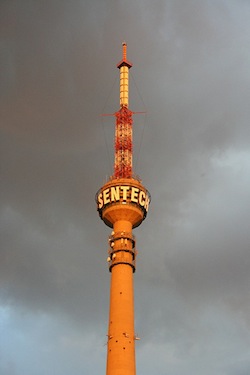
In a bid to curb its financial woes, state-owned signal distributor Sentech will start cutting off customers that don’t pay on time. Last week, TechCentral learnt Sentech was battling to get government institutions and community broadcast customers that owe it money to pay up. It is now owed a total of R30m.

Browsing: Top
Android, Google’s mobile operating system, is set to contest the top spot in market share from Symbian within the next four years, says international technology research firm Gartner. Android was launched in late 2007 and has climbed steadily towards being the most popular operating system since.
MultiChoice, which operates the DStv service, has been awarded a digital mobile television broadcasting licence by default after the other bidder, Super 5 Media, withdrew its application. The Independent Communications Authority of SA (Icasa) announced on Friday morning that MultiChoice would become the second mobile TV broadcaster after e.tv was awarded a licence earlier this year.
State-owned broadcast signal distributor Sentech is establishing test transmission sites in order to pilot digital terrestrial television broadcasts based on Brazilian and Japanese standards. In an exclusive interview with TechCentral, Sentech chairman Quraysh Patel says the two countries, whose terrestrial broadcasting standards are similar, have asked to set up test broadcasts at their costs.
Cabinet should look carefully at all the implications of a review of the policy on digital migration. This is the telling conclusion reached by the parliamentary portfolio committee on communications in a report detailing a review of two television standards being considered for SA’s move from analogue to digital terrestrial television.
Events conspired against us and we missed last week’s TalkCentral recording. But we’re back with a bumper episode 9 of SA’s business technology podcast, and there’s plenty to talk about. Your hosts, Duncan McLeod and Candice Jones, delve in detail into Cell C’s launch of its broadband wireless network and look at how it’s taking the fight to bigger rivals MTN and Vodacom.
Construction of a new, high-capacity submarine telecommunications cable system linking SA, Angola, Nigeria and Brazil should start early next year and be ready for service some time in 2012. That’s the word from Lawrence Mulaudzi, MD of eFive Telecoms, the SA-based company that is driving the project.
Internet service provider MWeb is expanding its capacity by adding extra last-mile access on Telkom’s network. MWeb CEO Rudi Jansen says since the launch of uncapped broadband earlier this year, customers are flooding to the service. “The uptake on our uncapped product has been incredible,” he says.
MTN and Telkom, which recently signed a cellular roaming agreement, are facing off in a dispute over wholesale mobile termination rates. Telkom, which is due to launch its own mobile network within the next couple of months, wants to charge MTN — and presumably other operators — 93c/minute to carry calls onto its new network.
South Africans are a cynical lot. When it comes to telecommunications, that cynicism is often justified. Too often, SA operators are big on promises and short on delivery. But Cell C’s new strategy may indeed shake up SA broadband. Cell C CEO Lars Reichelt is a dynamic and colourful character. His colleagues at the cellular network operator say he works harder than anyone they’ve met, often pulling stints late into the night and insisting that his team be available to work similarly long hours.