Close Menu
TechCentralTechCentral

    Subscribe to the newsletter

    Get the best South African technology news and analysis delivered to your e-mail inbox every morning.

    Facebook X (Twitter) YouTube LinkedIn
    WhatsApp Facebook X (Twitter) LinkedIn YouTube
    TechCentralTechCentral
    • News
      Africa's most popular phones have a tracking problem

      Africa’s most popular phones have a tracking problem

      24 July 2026
      Vodacom taps UJ, AWS to build its AI talent pipeline - Vodacom Group CEO Shameel Joosub

      Vodacom taps UJ, AWS to build its AI talent pipeline

      24 July 2026
      Intel is back in the game - Intel CEO Lip-Bu Tan. Laure Andrillon/Reuters

      Intel is back in the game

      24 July 2026
      Fat bonuses at Telkom despite group missing own targets - Serame Taukobong

      Fat bonuses at Telkom despite group missing own targets

      23 July 2026
      Massive changes coming to Amazon Prime Video - Jeff Bezos

      Massive changes coming to Amazon Prime Video

      23 July 2026
    • World
      Meta AI will now tell parents if their teen is in crisis

      Meta AI will now tell parents if their teen is in crisis

      17 July 2026
      IBM shares crash 25% as AI upends software spending - Arvind Krishna

      IBM shares crash 25% as AI upends software spending

      15 July 2026
      Jony Ive's first OpenAI device: an AI smart speaker - Jony Ive and Sam Altman

      Jony Ive’s first OpenAI device: an AI smart speaker

      15 July 2026
      Stripe, Advent in talks to buy PayPal for $53-billion

      Stripe, Advent in talks to buy PayPal for $53-billion

      15 July 2026
      Memory crisis sends smartphone market into steep decline

      Memory crisis sends smartphone market into steep decline

      13 July 2026
    • In-depth
      The plan to stop AI from breaking the world - Google DeepMind CEO Demis Hassabis. Image: John Sears

      The plan to stop AI from breaking the world

      16 July 2026
      The internet has a Strait of Hormuz problem

      The internet has a Strait of Hormuz problem

      15 July 2026
      AI boom sparks rally, frenzy and fear

      AI boom sparks rally, frenzy and fear

      11 June 2026
      Every plug-in hybrid on sale in South Africa, ranked by price - Lamborghini Temerario

      Every plug-in hybrid on sale in South Africa, ranked by price

      7 June 2026
      What Wi-Fi 8 will mean for wireless networks

      What Wi-Fi 8 will mean for wireless networks

      1 June 2026
    • TCS
      TCS | How Optasia lends billions to people banks can't see - Salvador Anglada

      TCS | How Optasia lends billions to people banks can’t see

      23 July 2026
      The rands-and-cents case for electric trucks - William Kelly Watts & Wheels with Wills

      The rands-and-cents case for electric trucks

      20 July 2026
      Watts & Wheels S1E7: 'Ferrari's EV breaks the internet'

      Watts & Wheels S1E7: ‘Ferrari’s EV breaks the internet’

      8 July 2026
      TCS | Pick n Pay's Enrico Ferigolli on Penny, the AI that shops for you

      TCS | Pick n Pay’s Enrico Ferigolli on Penny, the AI that shops for you

      2 July 2026
      TCS+ | How Tracker is turning vehicle data into business strategy - Silvia Schollenberger

      TCS+ | How Tracker is turning vehicle data into business strategy

      1 July 2026
    • Opinion
      Selling vapour is corporate suicide in slow motion - Jannie van Zyl

      Selling vapour is corporate suicide in slow motion

      16 July 2026
      Brazil's online gambling crackdown is a lesson for South Africa

      How Amazon outmanoeuvred Starlink in South Africa

      15 July 2026
      The Popia problem with agentic AI - Herman Haasbroek

      The Popia problem with agentic AI

      14 July 2026
      The author, Fanie van Rooyen

      South Africa can still catch the AI wave – here’s how

      7 July 2026
      The author, Fanie van Rooyen

      The AI utopia South Africa can’t afford

      1 July 2026
    • Company Hubs
      • 1Stream
      • Africa Data Centres
      • AfriGIS
      • Altron Digital Business
      • Altron Document Solutions
      • Altron Group
      • Arctic Wolf
      • Ascent Technology
      • AvertITD
      • BBD
      • Braintree
      • CallMiner
      • CambriLearn
      • CM Telecom
      • Contactable
      • CYBER1 Solutions
      • Digicloud Africa
      • Digimune
      • Domains.co.za
      • ESET
      • Euphoria Telecom
      • HOSTAFRICA
      • Incredible Business
      • iONLINE
      • IQbusiness
      • Iris Network Systems
      • Kaspersky
      • LSD Open
      • Mitel
      • NEC XON
      • Netstar
      • Network Platforms
      • Next DLP
      • Ovations
      • Paracon
      • Paratus
      • Q-KON
      • SevenC
      • SkyWire
      • Solid8 Technologies
      • Telit Cinterion
      • Telviva
      • Tenable
      • Vertiv
      • Videri Digital
      • Vodacom Business
      • Vox
      • Wipro
      • Workday
      • XLink
    • Sections
      • AI and machine learning
      • Banking
      • Broadcasting and Media
      • Cloud services
      • Contact centres and CX
      • Cryptocurrencies
      • Education and skills
      • Electronics and hardware
      • Energy and sustainability
      • Enterprise software
      • Financial services
      • HealthTech
      • Information security
      • Internet and connectivity
      • Internet of Things
      • Investment
      • IT services
      • Lifestyle
      • Policy and regulation
      • Public sector
      • Retail and e-commerce
      • Satellite communications
      • Science
      • SMEs and start-ups
      • Social media
      • Talent and leadership
      • Telecoms
      • Watts & Wheels
    • Events
    • Advertise
    TechCentralTechCentral
    Home » In-depth » China struggles to grasp Trump’s end game

    China struggles to grasp Trump’s end game

    By Agency Staff23 May 2019
    Twitter LinkedIn Facebook WhatsApp Email Telegram Copy Link
    News Alerts
    WhatsApp
    Donald Trump

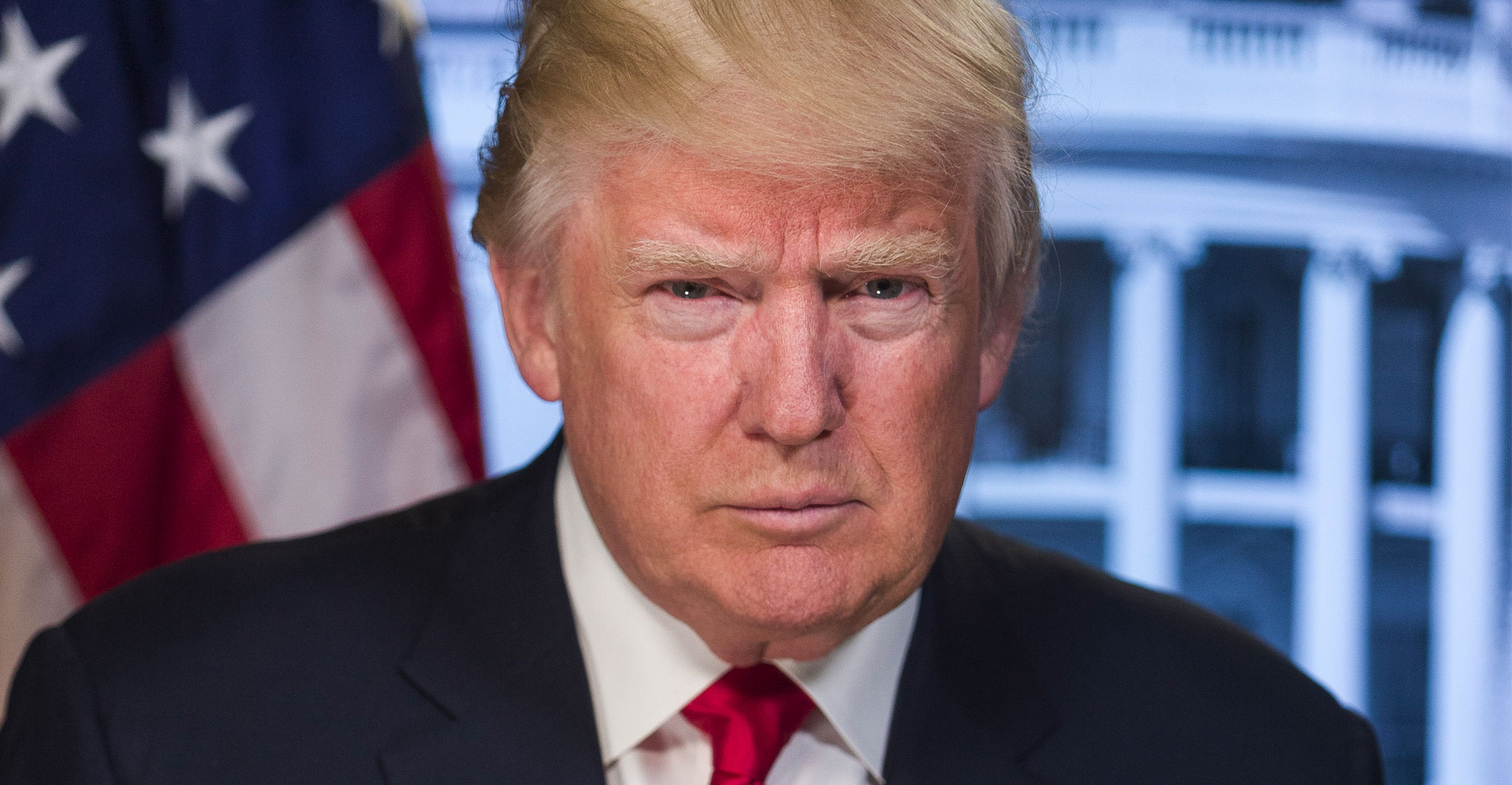
    When Donald Trump first took office in 2017, officials in Beijing saw a pragmatic businessman. All that tough campaign talk, they argued, was merely art-of-the-deal negotiating tactics rather than deeply held beliefs.

    Yet more than two years later, President Xi Jinping finds himself on the verge of a new Cold War his government sees fanned by Washington’s most ideological China hawks. What’s worse, the view that China is a strategic competitor that must be thwarted at all costs is picking up supporters across the US political spectrum by the day.

    As Trump continues to raise the stakes with threats to kneecap Huawei and other companies over what the US says are rising national security risks, officials in Beijing are weighing their options to respond. They are stoking up anti-US sentiment and drawing up contingency plans to bail out Huawei, while also still calling for dialogue to resolve the dispute.

    Party media is stoking nationalism, but when you talk to officials they are still quite restrained in their criticisms of the US

    “I don’t think there is a clear strategy that’s being conveyed through the system,” said Ether Yin, a partner at Trivium China, a Beijing-based consultancy. “On the one side, party media is stoking nationalism, but when you talk to officials they are still quite restrained in their criticisms of the US.”

    That hesitancy stems from uncertainty over whether Trump is simply ramping up threats before ultimately reaching a deal, or if the US is fundamentally looking to curb China’s rise as a global superpower. It’s a question that even seasoned Washington policy wonks are struggling to answer.

    “It’s very hard to tell whether the effort to deal with Huawei is simply a national security issue or a negotiating tactic to make progress in the trade negotiations,” said Scott Kennedy, director of the Project on Chinese Business and Political Economy at CSIS in Washington, who was in Beijing last week for meetings when the US commerce department placed Huawei on an entity list. The list prohibits US companies from providing critical technology to Huawei without an export licence.

    Slew of measures

    “It could be the NSC agrees with the conclusions that the only safe Huawei is a dead Huawei, but they’re also interested in resolving the trade dispute,” Kennedy added, referring to the US National Security Council, which is led by longtime China hawk John Bolton.

    Since trade talks broke down earlier this month, the Trump administration has unleashed a slew of measures that would amount to containing China. In addition to the moves against Huawei, which could potentially curtail its ability to help nations around the globe roll out critical 5G mobile networks, the US is also considering cutting off vital American technology to five Chinese companies leading the world in video surveillance.

    China’s response so far has been largely rhetorical. Diplomats have blasted the US for “bullying”, and state media has called the trade dispute a “people’s war”. Anti-Americanism is rising on social media, with a viral song declaring: “If the perpetrator wants to fight, we will beat him out of his wits.”
    Speaking in the southeast province of Jiangxi this week, Xi readied Chinese officials for a lengthy fight. He warned cadres of the “complicated and long-term effects” of external influences and called for a “new Long March” — recalling the party’s revolutionary struggles in the 1930s.

    Xi said China should become self-reliant in core technologies and even issued a veiled threat when he visited a rare earths processing plant, signalling to Trump that China may restrict sales of the elements used in everything from smartphones to electric vehicles.

    China’s government is drawing up plans to potentially bail out Huawei if necessary, according to a person familiar with discussions on how to respond to the threats to the company. One possible option includes offering financial assistance to Huawei, according to the person, who added that nothing had been decided yet.

    The whole concept that the Trump administration can do things like harming Huawei without being hurt is completely inaccurate

    “The Chinese government will probably wait to see if other provocations come from the Trump administration, but certainly they’re sending some signals,” said Wang Dong, secretary general of the Pangoal Institution, a Beijing-based think tank, who has served as a Chinese delegate at international security conferences. “The whole concept that the Trump administration can do things like harming Huawei without being hurt is completely inaccurate.”

    Trump’s moves against Huawei are part of an emerging great-power competition with China that the administration spelled out in its 2017 National Security Strategy. The approach essentially equates economic security with national security.

    Despite some initial reluctance, more and more European nations are now coming around to the US view that they should avoid incorporating Huawei equipment into 5G networks because of the security risks the Chinese technology poses, according to an administration official who asked not to be identified.

    Not new

    US security concerns about Huawei and Chinese trade practices aren’t new. The Obama administration began raising alarms about the potential threats posed by the Shenzhen-based company at least as far back as 2010. A report released in 2012 by the house intelligence committee tagged Huawei and ZTE as potential security threats, saying their hardware could be tweaked to enable widespread surveillance.

    The company has long denied that it helps Beijing spy on other governments or companies. The Communist Party’s flagship People’s Daily newspaper on Thursday accused US politicians of waging a “technology cold war” and warned that targets in other countries could also suffer from the US’s “zero-sum mentality”.

    Initially, international resistance to Trump was mainly due to his “cack-handed” style rather than disagreements over China’s trade practices, said Chris Patten, who was the last British colonial governor of Hong Kong. “What he should have done is to talk to what used to be America’s allies, Japan and Europe and so on, because we have a common set of worries,” he said.
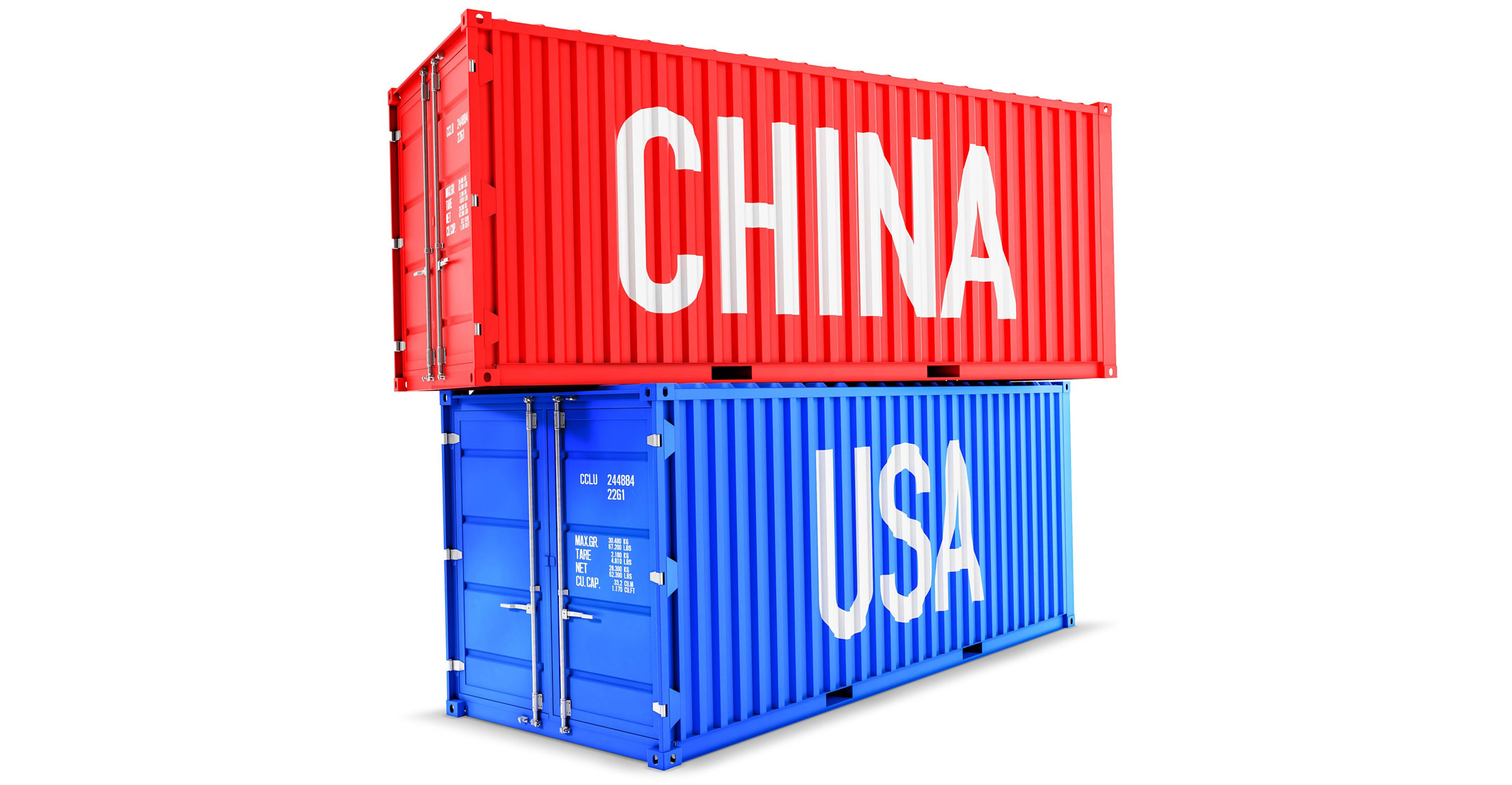
    One possible route to get US-China talks back on track is the Group of 20 summit in Japan at the end of June. Trump and Xi managed to work out a temporary truce at the last meeting of the group in Argentina late last year, and the leaders are expected to meet again.

    The US business community sees that meeting as one of the last chances to reach an agreement before the 2020 election campaign makes doing so unfeasible. Trump has already hit out at potential re-election challenger Joe Biden, saying at a campaign rally on Monday that Beijing wants the former vice president to replace him so it “can continue to make US$500-billion/year and more ripping off the United States”.

    About a fifth of US companies in China are considering moving some or all of their production out of the country to deal with the trade tensions, and a third are delaying or cancelling investment decisions, according to a survey of 239 firms in the market by American business groups in China.

    “There’s going to have to be blinking on both sides,” Myron Brilliant, executive vice president of the US Chamber of Commerce, told Bloomberg Television on Wednesday. “They’ve boxed themselves in with the escalation of tensions, but at the end of the day this is too big a relationship to fail.”  — Reported with assistance from Nick Wadhams, Margaret Talev, Rosalind Mathieson and Steven Yang, (c) 2019 Bloomberg LP


    Follow TechCentral on Google News Add TechCentral as your preferred source on Google


    Donald Trump Huawei top Xi Jinping
    WhatsApp YouTube
    Share. Facebook Twitter LinkedIn WhatsApp Telegram Email Copy Link
    Previous ArticleProtect your business from loss of revenue and reputational damage
    Next Article GDPR probe launched into Google’s ad business

    Related Posts

    Intel is back in the game - Intel CEO Lip-Bu Tan. Laure Andrillon/Reuters

    Intel is back in the game

    24 July 2026
    After Anthropic ban, US battles 'kill switch' backlash - Marco Rubio

    After Anthropic ban, US battles ‘kill switch’ backlash

    23 July 2026
    China weighs blocking the West from its best AI

    China weighs blocking the West from its best AI

    21 July 2026
    Company News
    Why Europe is turning to South Africa for cross-border innovation - BBD Software

    Why Europe is turning to South Africa for cross-border innovation

    24 July 2026
    Green dashboards, stalled change: the CIO's blind spot - Change Logic Marchant van den Heever

    Green dashboards, stalled change: the CIO’s blind spot

    24 July 2026
    Why Africa's cloud needs more than one path - Africa Data Centres

    Why Africa’s cloud needs more than one path

    23 July 2026
    Opinion
    Selling vapour is corporate suicide in slow motion - Jannie van Zyl

    Selling vapour is corporate suicide in slow motion

    16 July 2026
    Brazil's online gambling crackdown is a lesson for South Africa

    How Amazon outmanoeuvred Starlink in South Africa

    15 July 2026
    The Popia problem with agentic AI - Herman Haasbroek

    The Popia problem with agentic AI

    14 July 2026

    Subscribe to Updates

    Get the best South African technology news and analysis delivered to your e-mail inbox every morning.

    Latest Posts
    Africa's most popular phones have a tracking problem

    Africa’s most popular phones have a tracking problem

    24 July 2026
    Vodacom taps UJ, AWS to build its AI talent pipeline - Vodacom Group CEO Shameel Joosub

    Vodacom taps UJ, AWS to build its AI talent pipeline

    24 July 2026
    Intel is back in the game - Intel CEO Lip-Bu Tan. Laure Andrillon/Reuters

    Intel is back in the game

    24 July 2026
    Why Europe is turning to South Africa for cross-border innovation - BBD Software

    Why Europe is turning to South Africa for cross-border innovation

    24 July 2026
    © 2009 - 2026 NewsCentral Media
    Built and maintained by Chronon
    • Cookie policy (ZA)
    • TechCentral – privacy and Popia

    Type above and press Enter to search. Press Esc to cancel.

    Manage consent

    TechCentral uses cookies to enhance its offerings. Consenting to these technologies allows us to serve you better. Not consenting or withdrawing consent may adversely affect certain features and functions of the website.

    Functional Always active
    The technical storage or access is strictly necessary for the legitimate purpose of enabling the use of a specific service explicitly requested by the subscriber or user, or for the sole purpose of carrying out the transmission of a communication over an electronic communications network.
    Preferences
    The technical storage or access is necessary for the legitimate purpose of storing preferences that are not requested by the subscriber or user.
    Statistics
    The technical storage or access that is used exclusively for statistical purposes. The technical storage or access that is used exclusively for anonymous statistical purposes. Without a subpoena, voluntary compliance on the part of your Internet Service Provider, or additional records from a third party, information stored or retrieved for this purpose alone cannot usually be used to identify you.
    Marketing
    The technical storage or access is required to create user profiles to send advertising, or to track the user on a website or across several websites for similar marketing purposes.
    • Manage options
    • Manage services
    • Manage {vendor_count} vendors
    • Read more about these purposes
    View preferences
    • {title}
    • {title}
    • {title}