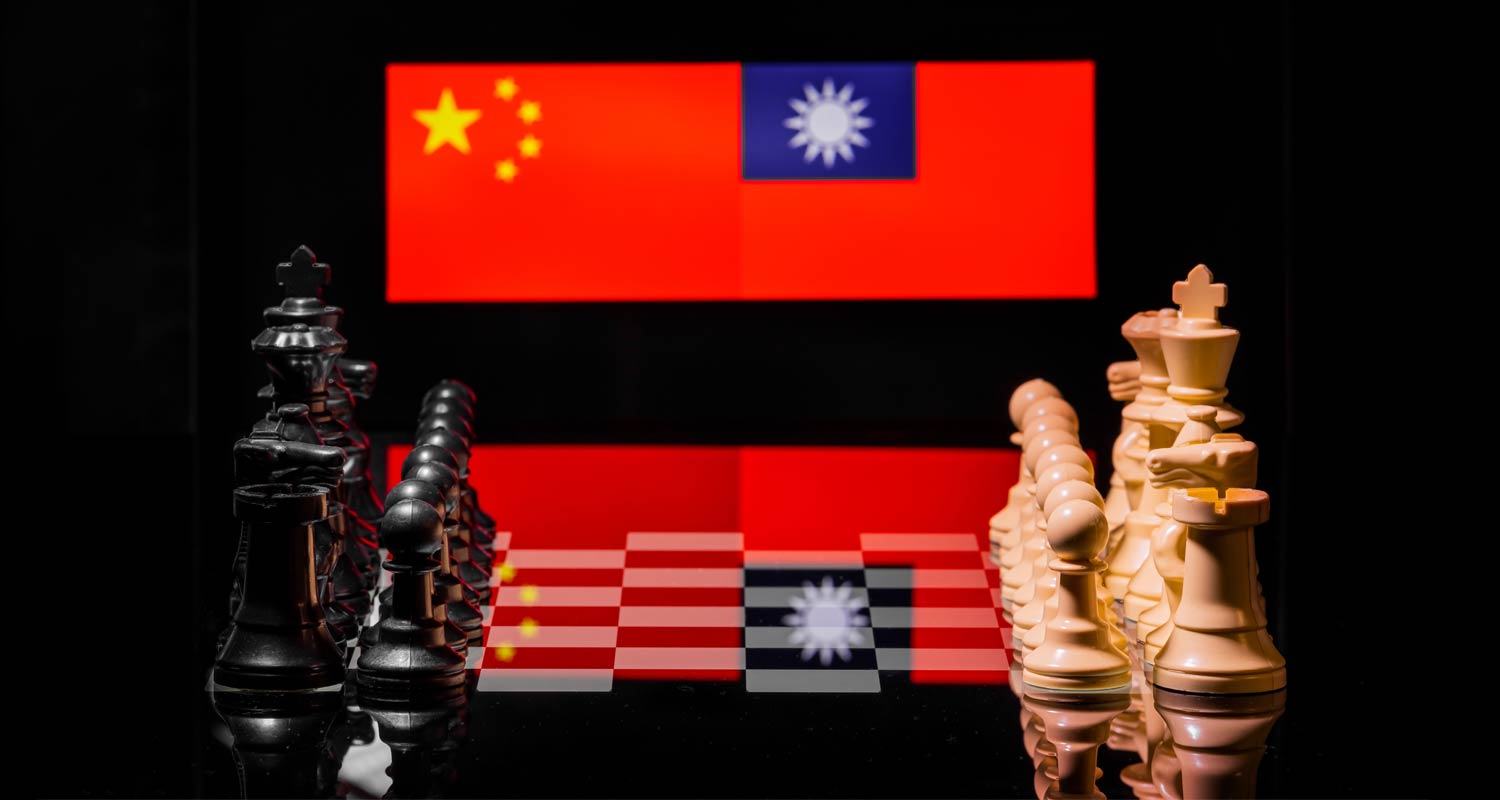
 War over Taiwan would have a cost in blood and treasure so vast that even those unhappiest with the status quo have reason not to risk it.
Bloomberg Economics estimates the price tag at around US$10-trillion (R187-trillion), equal to about 10% of global GDP — dwarfing the blow from the war in Ukraine, Covid pandemic and global financial crisis.
China’s rising economic and military heft, Taiwan’s burgeoning sense of national identity, and fractious relations between Beijing and Washington mean the conditions for a crisis are in place. With cross-Strait relations on the ballot, Taiwan’s 13 January election is a potential flashpoint.
Few put a high probability on an imminent Chinese invasion. The People’s Liberation Army isn’t massing troops on the coast. Reports of corruption in China’s military cast doubts on President Xi Jinping’s ability to wage a successful campaign. US officials say tensions eased somewhat at the November summit between President Joe Biden and Xi, who pledged “heart-warming” measures to woo foreign investors.
Still, the outbreak of war in Ukraine and Gaza are reminders of how long-simmering tensions can erupt into conflict. Everyone from Wall Street investors to military planners and the swathe of businesses that rely on Taiwan’s semiconductors are already moving to hedge against the risk.
National security experts in the Pentagon, think-tanks in the US and Japan, and global consulting firms are gaming out scenarios from a Chinese maritime “quarantine” of Taiwan, to the seizure of Taiwan’s outlying islands, and a full-scale Chinese invasion.
‘Exploded’
Jude Blanchette, a China expert at the Centre for Strategic and International Studies, says interest in a Taiwan crisis from multinational firms he advises has “exploded” since Russia’s 2022 invasion of Ukraine. The subject comes up in 95% of conversations, he said.
Russia’s invasion of Ukraine, and the semiconductor shortage as the world reopened from Covid lockdowns, provide a small glimpse of what’s at stake for the global economy. The impact of war in the Taiwan Strait would be far bigger.
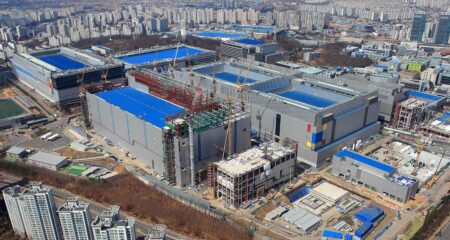
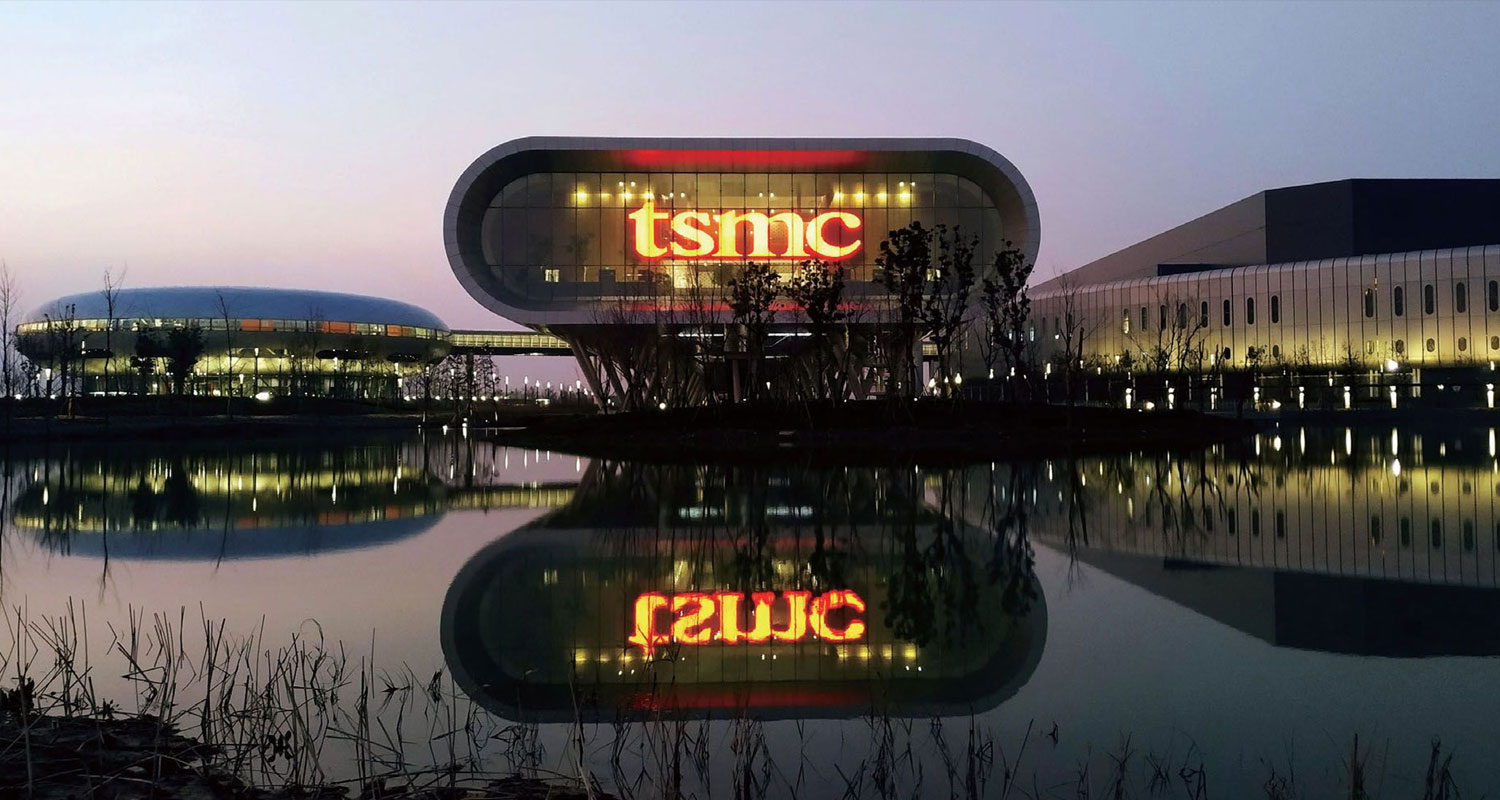
Taiwan makes most of the world’s advanced logic semiconductors, and a lot of lagging-edge chips as well. Globally, 5.6% of total value added comes from sectors using chips as direct inputs — nearly $6-trillion. Total market cap for the top 20 customers of chip giant TSMC is around $7.4-trillion.
Read: Apple CEO downplays talk of China crisis
Bloomberg Economics has modelled two scenarios: a Chinese invasion drawing the US into a local conflict, and a blockade cutting Taiwan off from trade with the rest of the world. A suite of models is used to estimate the impact on GDP, taking account of the blow to semiconductor supply, disruption to shipping in the region, trade sanctions and tariffs, and the impact on financial markets.
For the main protagonists, other major economies, and the world as a whole, the biggest hit comes from the missing semiconductors. Factory lines producing laptops, tablets and smartphones — where Taiwan’s high-end chips are the irreplaceable “golden screw” — would stall. Motor manufacturing and other sectors that use lower-end chips would also take a significant hit.
 Barriers to trade and a significant risk-off shock in financial markets add to the costs.
In the case of a war:
- Taiwan’s economy would be decimated. Based on comparable recent conflicts, Bloomberg Economics estimates a 40% blow to GDP. A population and industrial base concentrated on the coast would add to the human and economic cost.
- With relations to major trade partners turned off and no access to advanced semiconductors, China’s GDP would suffer a 16.7% blow.
- For the US, further from the centre of the action but still with a lot at stake — through the reliance of Apple on the Asian electronics supply chain, for example — GDP would be down 6.7%.
- For the world as a whole, GDP would be down 10.2%, with South Korea, Japan and other East Asian economies most impacted.
A key assumption in this scenario is that the US would succeed in enlisting allies in concerted and severe economic sanctions against China.
US officials say that the Chinese reaction to then-US house speaker Nancy Pelosi’s visit to Taipei in August 2022 helped convince other G7 countries that the risk of conflict is real. Beijing saw it as a shift in the status quo that made Xi appear weak, particularly after domestic commentators suggested that China would be able to stop her from landing in Taipei.
The fallout from the Pelosi visit, which saw China conduct large-scale naval drills seen as practice runs for a blockade, helped build diplomatic muscle memory for concerted reactions, the US officials said.
“China’s rhetoric and the People’s Liberation Army response to Pelosi’s visit triggered a wave of quiet corporate contingency and scenario planning,” said Rick Waters, MD of the China practice at Eurasia Group and formerly the top China policy official at the US state department.
Blockade
Bloomberg Economics also modelled what a yearlong blockade of Taiwan by mainland China would mean for the global economy:
- For Taiwan, a small, open economy that has thrived through trade, GDP in the first year would be down 12.2%.
- For China, the US, and the world as a whole, GDP in the first year would be down 8.9%, 3.3% and 5%, respectively.
The reason for the smaller impact relative to the war scenario is that while the global economy still loses access to all of Taiwan’s chips, other shocks — including tariffs between the US and its allies and China, the disruption to Asian shipping and financial market fallout — are scaled down.
The Bloomberg Economics exercise is unique in bringing together geopolitical and economic modelling expertise. Still, the results are significantly driven by the scenario assumptions, and the band of uncertainty is wide. A war or blockade of shorter duration, and with less significant disruptions to semiconductor supply and trade, would have a smaller impact.
Read: Netherlands blocks ASML exports to China
Even if the outcome of Taiwan’s election doesn’t trigger an immediate crisis, it will define the direction of cross-Strait relations.
Lai Ching-te — currently serving as vice president in the Democratic Progressive Party administration — has been at pains to present himself as a continuity candidate, with no plans to disturb relations with Beijing.
In the past, though, he described himself as a “pragmatic worker for Taiwanese independence”. For Beijing, which views the island as part of its territory, any formal push for independence would cross a red line. At his meeting with Biden, Xi expressed deep concern about the possibility of a Lai win, according to a senior administration official.
The DPP counterpoint, which aligns with the assessment in Washington, is that Beijing’s belligerence is the problem — not Taiwan’s desire for continued autonomy.
Lai’s opponents — Hou Yu-ih of the Kuomintang and Ko Wen-je of the Taiwan People’s Party — are both promising pragmatic steps to improve relations with Taiwan’s giant neighbour, without sacrificing the island’s de facto independence.
US officials say China may be planning a multipronged reaction to the election, with military incursions, economic sanctions and “grey zone tactics” like cyberattacks.
Officials in Washington and Taipei say the period from the election in January to inauguration of the new president in May is a danger zone for Chinese actions aimed at hemming in Taiwan’s next president.
Whoever wins will have to deal with a changed, and challenging, set of cross-Strait realities.
In 1979, when the US switched diplomatic recognition from Taipei to Beijing, US GDP was 10 times that of China, China’s military was in the early stages of modernisation, and Taiwan was still under single-party rule. Fast-forward to today and China’s GDP has closed much of the gap with the US, its military boasts near-peer status — especially close to home — and Taiwan’s liberal democracy is a visible contrast to China’s authoritarian system.
Statements by leaders in Beijing and Washington have added to the tension.
Unification
Xi has said more than once that Taiwan is not an issue that can be “passed down generation after generation”. Along with his efforts to modernise the military, those statements have spurred speculation he wants to deliver unification on his watch, with 2027 cited as a danger year by US intelligence and military officials. At his meeting with Biden, Xi vented frustration with the view that China’s forces are aiming at readiness for an invasion by 2027, which he said was mistaken, according to a senior US official.
For his part, Biden has said the US would come to Taiwan’s aid in the event of a Chinese invasion. That bluntness eroded layers of carefully crafted ambiguity about the US position, stoking anger in China and concerns the US is emboldening pro-independence boisterousness.
Bloomberg Economics’ Taiwan stress index — based on warning words used by China’s ministry of foreign affairs and military incursions in Taiwan’s air defence identification zone — shows the temperature over the last year and a half elevated.
Read: TSMC is becoming the chip maker it didn’t aspire to be
Investors and businesses are already preparing for the worst. Kirk Yang, chairman of equity investment fund Kirkland Capital and an expert on Asia technology firms, says the fund’s position in Taiwan is now close to zero. Geopolitical tensions have “added incentive to scale back investments at a faster pace” he said. He’s in good company. Legendary investor Warren Buffett sold down his stake in TSMC in the first quarter of 2023, citing geopolitical risk as the reason.
Businesses and governments are also making preparations. Greenfield investment in electronics and electrical equipment rocketed to $181-billion in 2022 from $48-billion in 2020 as governments in the US, Japan and Germany opened their wallets to diversify sources of semiconductor supply.
If there’s an upside from the Bloomberg Economics analysis, perhaps it’s this: the $10-trillion cost of a crisis would be so high for all players that the incentive to avoid it is strong.
The status quo might be no one’s ideal outcome, but for Taipei, Beijing and Washington the alternatives are worse. That’s a reason Taiwan’s ambiguous autonomy might remain an equilibrium outcome, even as the conditions that make it so shift.
A key uncertainty in the analysis is the extent to which missing semiconductor output from Taiwan could be replaced by output in other locations, worked around by manufacturing firms, or backstopped from inventories.
The scenarios assume that all production using semiconductors as inputs has to be reduced in line with the reduction in semiconductors availability:
- For advanced electronics such as smartphones using cutting-edge logic chips, this translates into a 60% reduction in production in the blockade scenario, rising to 85% in the war scenario when access to South Korean production is also severely curtailed.
- For sectors using lagging-edge logic chips, like those used in cars and home electronics, that means 35% in the blockade scenario when Taiwan’s output goes offline, and 62% in the war scenario when output from China, Japan, and South Korea is also lost.
Reality could end up being better. For example, other countries could amp up chip production, or motoring firms and other manufacturers might find work arounds for missing inputs.
It could also be worse. For example, if Taiwan’s chips are not replaceable and use of them is distributed widely across products. If production for all sectors using leading and lagging edge chips goes to zero, the blow to global GDP in the war scenario increases from 10.2% to 14%. — Jennifer Welch, Jenny Leonard, Maeva Cousin, Gerard DiPippo and Tom Orlik, with Betty Hou, Eleonora Mavroeidi, Jennifer Creery, Bhargavi Sakthivel, Sam Dodge and Nick Hallmark, (c) 2024 Bloomberg LP
Get breaking news alerts from TechCentral on WhatsApp