Close Menu
TechCentralTechCentral

    Subscribe to the newsletter

    Get the best South African technology news and analysis delivered to your e-mail inbox every morning.

    Facebook X (Twitter) YouTube LinkedIn
    WhatsApp Facebook X (Twitter) LinkedIn YouTube
    TechCentralTechCentral
    • News
      How AI agents are reshaping banking in South Africa - Lindelani Ramukumba, Absa

      How agentic AI is reshaping banking in South Africa

      5 April 2026
      South Africa's 5G boom is bypassing rural areas: Icasa

      South Africa’s 5G boom is bypassing rural areas: Icasa

      5 April 2026
      WhatsApp is eating South African operators' revenue

      WhatsApp is eating South African operators’ revenue

      4 April 2026
      DeepSeek V4 to run on Huawei silicon as China builds its own AI stack

      DeepSeek V4 to run on Huawei silicon as China builds its own AI stack

      4 April 2026
      Gaping holes in South African government cyber defences

      Gaping holes in South African government cyber defences

      2 April 2026
    • World
      Amazon in talks to buy satellite operator Globalstar

      Amazon in talks to buy satellite operator Globalstar

      2 April 2026

      Apple plans to open Siri to rival AI services

      27 March 2026
      It's official: ads are coming to ChatGPT

      It’s official: ads are coming to ChatGPT

      23 March 2026
      Mystery Chinese AI model revealed to be Xiaomi's

      Mystery Chinese AI model revealed to be Xiaomi’s

      19 March 2026
      A mystery AI model has developers buzzing

      A mystery AI model has developers buzzing

      18 March 2026
    • In-depth
      The biggest untapped EV market on Earth is hiding in plain sight

      The biggest untapped EV market on Earth is hiding in plain sight

      1 April 2026
      The R18-billion tech giant hiding in plain sight - Jens Montanana

      The R16-billion tech giant hiding in plain sight

      26 March 2026
      The last generation of coders

      The last generation of coders

      18 February 2026
      Sentech is in dire straits

      Sentech is in dire straits

      10 February 2026
      How liberalisation is rewiring South Africa's power sector

      How liberalisation is rewiring South Africa’s power sector

      21 January 2026
    • TCS
      TCS | MTN's Divysh Joshi on the strategy behind Pi - Divyesh Joshi

      TCS | MTN’s Divyesh Joshi on the strategy behind Pi

      1 April 2026
      Anoosh Rooplal

      TCS | Anoosh Rooplal on the Post Office’s last stand

      27 March 2026
      Meet the CIO | HealthBridge CTO Anton Fatti on the future of digital health

      Meet the CIO | Healthbridge CTO Anton Fatti on the future of digital health

      23 March 2026
      TCS+ | Arctic Wolf unpacks the evolving threat landscape for SA businesses - Clare Loveridge and Jason Oehley

      TCS+ | Arctic Wolf unpacks the evolving threat landscape for SA businesses

      19 March 2026
      TCS+ | Vox Kiwi: a wireless solution promising a fibre-like experience - Theo van Zyl

      TCS+ | Vox Kiwi: a wireless solution promising a fibre-like experience

      13 March 2026
    • Opinion
      The conflict of interest at the heart of PayShap's slow adoption - Cheslyn Jacobs

      The conflict of interest at the heart of PayShap’s slow adoption

      26 March 2026
      South Africa's energy future hinges on getting wheeling right - Aishah Gire

      South Africa’s energy future hinges on getting wheeling right

      10 March 2026
      Hold the doom: the case for a South African comeback - Duncan McLeod

      Apple just dropped a bomb on the Windows world

      5 March 2026
      VC's centre of gravity is shifting - and South Africa is in the frame - Alison Collier

      VC’s centre of gravity is shifting – and South Africa is in the frame

      3 March 2026
      Hold the doom: the case for a South African comeback - Duncan McLeod

      Hold the doom: the case for a South African comeback

      26 February 2026
    • Company Hubs
      • 1Stream
      • Africa Data Centres
      • AfriGIS
      • Altron Digital Business
      • Altron Document Solutions
      • Altron Group
      • Arctic Wolf
      • Ascent Technology
      • AvertITD
      • BBD
      • Braintree
      • CallMiner
      • CambriLearn
      • CYBER1 Solutions
      • Digicloud Africa
      • Digimune
      • Domains.co.za
      • ESET
      • Euphoria Telecom
      • HOSTAFRICA
      • Incredible Business
      • iONLINE
      • IQbusiness
      • Iris Network Systems
      • Kaspersky
      • LSD Open
      • Mitel
      • NEC XON
      • Netstar
      • Network Platforms
      • Next DLP
      • Ovations
      • Paracon
      • Paratus
      • Q-KON
      • SevenC
      • SkyWire
      • Solid8 Technologies
      • Telit Cinterion
      • Telviva
      • Tenable
      • Vertiv
      • Videri Digital
      • Vodacom Business
      • Wipro
      • Workday
      • XLink
    • Sections
      • AI and machine learning
      • Banking
      • Broadcasting and Media
      • Cloud services
      • Contact centres and CX
      • Cryptocurrencies
      • Education and skills
      • Electronics and hardware
      • Energy and sustainability
      • Enterprise software
      • Financial services
      • HealthTech
      • Information security
      • Internet and connectivity
      • Internet of Things
      • Investment
      • IT services
      • Lifestyle
      • Motoring
      • Policy and regulation
      • Public sector
      • Retail and e-commerce
      • Satellite communications
      • Science
      • SMEs and start-ups
      • Social media
      • Talent and leadership
      • Telecoms
    • Events
    • Advertise
    TechCentralTechCentral
    Home » Current affairs » Cyril can fix the ANC, but…

    Cyril can fix the ANC, but…

    By The Conversation5 January 2017
    Twitter LinkedIn Facebook WhatsApp Email Telegram Copy Link
    News Alerts
    WhatsApp
    Cyril Ramaphosa

    South Africa’s deputy president, Cyril Ramaphosa, has confirmed his availability to contest the presidency of the ANC at its 54th national conference later this year. He has already secured the endorsement of trade union federation Cosatu.

    He failed in his bid to lead the party once before. Twenty years ago, his comrades Thabo Mbeki and Jacob Zuma were chosen ahead of him for the top two jobs at the party’s 1997 Mafikeng Conference. If his dream is going to be realised this time he is going to have to take on a major task of convincing ANC branches of his suitability.

    Ramaphosa will need a restoration and renewal narrative to convince them. He’ll need to show he has a plan to rebuild the party, and inspire its cadres sitting on the side-lines to join in his renewal efforts.

    If successful, he will need to switch immediately to election campaigning mode. The country goes to the polls in 2019 and he will have to do everything in his powers to salvage the former liberation movement’s declining electoral support.

    For South Africans at large, he will need to show how the ANC as a brand can reclaim its sentimental and inspirational traits to warrant their trust.

    These tasks seem insurmountable when one considers the extent of damage done to the party since Zuma’s rise to power was solidified at the ANC’s bitterly divisive Polokwane conference in 2007. But Ramaphosa has faced seemingly insurmountable tasks of building organisations in challenging times before. He has also served in various international organisations and has been a member of teams appointed to help countries in transition.

    He will need to draw on all this experience to succeed.

    Born on 17 November 1952, Ramaphosa is from a generation I regard as the agitators in the struggle for South Africa’s liberation. Inspired by Steve Biko, among others, this generation — born in the early 1940s to late 1960s — injected greater momentum to the fight against apartheid in the 1970s and 1980s.

    As a young person, Ramaphosa was an active member of the erstwhile Student Christian Movement (SCM) at Sekano-Ntoane High School in Soweto. His evangelical experience cannot be understated in the task that confronts him now. Much like the biblical character Nehemiah, his task is to inspire a dejected and hopeless people with a new vision.

    That will not be a new experience for Ramaphosa. While pursuing standard 9 and 10 at Mphaphuli High School in his parents’ village of Sibasa in Venda, he built a stronger SCM within a short time. This was after he was elected to its leadership in the first year of his arrival.

    The same happened when he went to study at the then University of the North (now University of Limpopo). The SCM was weak and seen by some as a tool of domination. Ramaphosa worked tirelessly with Frank Chikane and others to turn it into a vibrant organisation. It became a vehicle of struggle when the Black Consciousness student movements were banned.

    Ramaphosa’s claim to fame, however, is the work he did in founding the National Mineworkers Union (NUM) in the early 1980s. The NUM operated under the auspices of the Council of Unions of South Africa. Until then, attempts to unite mineworkers and fight for their representation in the mines had failed.

    The fact that Ramaphosa was able to build a union in a mining industry fraught with ethnic politics, worker fragmentation and a history of state-sanctioned exploitation attests to his organisation building capabilities. This is especially so considering that he had never worked on the mines himself.

    Ramaphosa’s colourful leadership continued over the next three decades across various settings. He became the ANC’s chief negotiator during the country’s transition from apartheid to democracy, beating ANC president Oliver Tambo’s protégé, Thabo Mbeki, to the position.
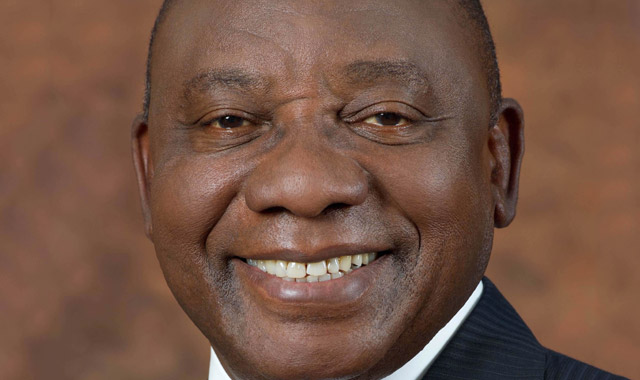
    Ramaphosa became the secretary general of the ANC at its 1991 national conference in Durban after out-campaigning Zuma. He was succeeded in the position in 1997 by Kgalema Motlanthe, with whom he had worked at the NUM.

    As the chief negotiator of the ANC, he managed the negotiating committee. He showed great leadership, alongside the National Party’s counterpart Roelf Meyer when the talks broke down.

    Ramaphosa became a member of parliament in 1994 and headed the constitutional assembly which drew up the final constitution of the republic. This was finally approved — to international acclaim — in 1996.

    But after his crushing defeat by Mbeki to the post of deputy president in 1997, Ramaphosa went into business but maintained some involvement in politics. He was to make a sterling return 15 years later when he was elected ANC deputy president in 2012 at the 53rd national conference in Mangaung (Bloemfontein).

    Ramaphosa the businessman

    Ramaphosa was among the first beneficiaries of the first wave of equity-based black economic empowerment deals in 1997. In partnership with medical doctor and anti-apartheid activist Nthato Motlala, he joined New African Investment Limited. From those early beginnings, he was to form Shanduka Group, an unlisted entity with interests in resources, energy, real estate, banking, insurance and telecommunications.

    He also chaired a number of South Africa’s largest companies, such as Bidvest Group and MTN, and held nonexecutive board positions of others such as Standard Bank and SABMiller.

    His most controversial role was as a nonexecutive member of the mining group Lonmin’s board. Shanduka was a minority shareholder in Lonmin, which owned the mine in Marikana where 34 miners were shot by police in 2012.

    Leadership qualities

    Ramaphosa has the leadership experience to salvage the ANC and become a great president with a wide range of skills. He has the potential to restore hope at the top of the ANC following a period of mediocrity and scandal.

    However, while he has a chance in convincing ANC members of his potential, the broader South African public will be even harder to convince. Firstly, as a key player at Lonmin, Ramaphosa is seen as having failed to improve the working conditions of the mineworkers he fought for in the 1980s.

    Secondly, his relationship with Zuma, whom he has served as deputy president, has led to some awkward questions. Until last year he appeared to be complacent — or actively defended — Zuma even as the president became more deeply embroiled in alleged corruption scandals. This silence was evident even when Zuma was accused of violating the constitution Ramaphosa was party to creating.

    It may be that Ramaphosa has the restoration and renewal narrative — as well as the organisational building skills and tenacity — to turn his own fate and that of the ANC around, but it’s going to be a “long walk” as he put it. Time will tell.The Conversation

    • Ongama Mtimka is lecturer and PhD candidate, department of political & conflict studies, Nelson Mandela Metropolitan University
    • This article was originally published on The Conversation

    Follow TechCentral on Google News Add TechCentral as your preferred source on Google


    Cyril Ramaphosa Jacob Zuma Thabo Mbeki
    WhatsApp YouTube
    Share. Facebook Twitter LinkedIn WhatsApp Telegram Email Copy Link
    Previous ArticleHow M-Pesa transformed Kenya’s economy
    Next Article Musk’s Gigafactory has been activated

    Related Posts

    Government steps in as fuel shock hits

    Government steps in as fuel shock hits

    31 March 2026
    Hold the doom: the case for a South African comeback - Duncan McLeod

    Hold the doom: the case for a South African comeback

    26 February 2026
    The biggest thing missing from the state of the nation address - Cyril Ramaphosa

    The biggest thing missing from the state of the nation address

    16 February 2026
    Company News
    Synthesis helps financial enterprises transform with new Gemini Enterprise - Digicloud Africa

    Synthesis helps financial enterprises transform with new Gemini Enterprise

    2 April 2026
    The next churn wave is already in your contact centre conversations - CallMiner

    The next churn wave is already in your contact centre conversations

    2 April 2026
    Mining's problem isn't output, it's execution - Workday

    Mining’s problem isn’t output, it’s execution – Workday

    1 April 2026
    Opinion
    The conflict of interest at the heart of PayShap's slow adoption - Cheslyn Jacobs

    The conflict of interest at the heart of PayShap’s slow adoption

    26 March 2026
    South Africa's energy future hinges on getting wheeling right - Aishah Gire

    South Africa’s energy future hinges on getting wheeling right

    10 March 2026
    Hold the doom: the case for a South African comeback - Duncan McLeod

    Apple just dropped a bomb on the Windows world

    5 March 2026

    Subscribe to Updates

    Get the best South African technology news and analysis delivered to your e-mail inbox every morning.

    Latest Posts
    How AI agents are reshaping banking in South Africa - Lindelani Ramukumba, Absa

    How agentic AI is reshaping banking in South Africa

    5 April 2026
    South Africa's 5G boom is bypassing rural areas: Icasa

    South Africa’s 5G boom is bypassing rural areas: Icasa

    5 April 2026
    WhatsApp is eating South African operators' revenue

    WhatsApp is eating South African operators’ revenue

    4 April 2026
    DeepSeek V4 to run on Huawei silicon as China builds its own AI stack

    DeepSeek V4 to run on Huawei silicon as China builds its own AI stack

    4 April 2026
    © 2009 - 2026 NewsCentral Media
    • Cookie policy (ZA)
    • TechCentral – privacy and Popia

    Type above and press Enter to search. Press Esc to cancel.

    Manage consent

    TechCentral uses cookies to enhance its offerings. Consenting to these technologies allows us to serve you better. Not consenting or withdrawing consent may adversely affect certain features and functions of the website.

    Functional Always active
    The technical storage or access is strictly necessary for the legitimate purpose of enabling the use of a specific service explicitly requested by the subscriber or user, or for the sole purpose of carrying out the transmission of a communication over an electronic communications network.
    Preferences
    The technical storage or access is necessary for the legitimate purpose of storing preferences that are not requested by the subscriber or user.
    Statistics
    The technical storage or access that is used exclusively for statistical purposes. The technical storage or access that is used exclusively for anonymous statistical purposes. Without a subpoena, voluntary compliance on the part of your Internet Service Provider, or additional records from a third party, information stored or retrieved for this purpose alone cannot usually be used to identify you.
    Marketing
    The technical storage or access is required to create user profiles to send advertising, or to track the user on a website or across several websites for similar marketing purposes.
    • Manage options
    • Manage services
    • Manage {vendor_count} vendors
    • Read more about these purposes
    View preferences
    • {title}
    • {title}
    • {title}