Close Menu
TechCentralTechCentral

    Subscribe to the newsletter

    Get the best South African technology news and analysis delivered to your e-mail inbox every morning.

    Facebook X (Twitter) YouTube LinkedIn
    WhatsApp Facebook X (Twitter) LinkedIn YouTube
    TechCentralTechCentral
    • News
      Nedbank hires MTN's former tech chief as group CIO - Nikos Angelopoulos

      Nedbank hires MTN’s former tech chief as group CIO

      31 July 2026
      Eskom's diesel bill falls 86% as breakdowns hit eight-year low

      Eskom’s diesel bill falls 86% as breakdowns hit eight-year low

      31 July 2026
      Ramaphosa signs off on taking the grid away from Eskom

      Ramaphosa signs off on taking the grid away from Eskom

      31 July 2026
      Microsoft just had the biggest day in stock market history

      Microsoft just had the biggest day in stock market history

      31 July 2026
      MTN Nigeria's growth engine stalled in second quarter - Karl Toriola

      MTN Nigeria’s growth engine stalled in second quarter

      31 July 2026
    • World
      Meta AI will now tell parents if their teen is in crisis

      Meta AI will now tell parents if their teen is in crisis

      17 July 2026
      IBM shares crash 25% as AI upends software spending - Arvind Krishna

      IBM shares crash 25% as AI upends software spending

      15 July 2026
      Jony Ive's first OpenAI device: an AI smart speaker - Jony Ive and Sam Altman

      Jony Ive’s first OpenAI device: an AI smart speaker

      15 July 2026
      Stripe, Advent in talks to buy PayPal for $53-billion

      Stripe, Advent in talks to buy PayPal for $53-billion

      15 July 2026
      Memory crisis sends smartphone market into steep decline

      Memory crisis sends smartphone market into steep decline

      13 July 2026
    • In-depth
      The plan to stop AI from breaking the world - Google DeepMind CEO Demis Hassabis. Image: John Sears

      The plan to stop AI from breaking the world

      16 July 2026
      The internet has a Strait of Hormuz problem

      The internet has a Strait of Hormuz problem

      15 July 2026
      AI boom sparks rally, frenzy and fear

      AI boom sparks rally, frenzy and fear

      11 June 2026
      Every plug-in hybrid on sale in South Africa, ranked by price - Lamborghini Temerario

      Every plug-in hybrid on sale in South Africa, ranked by price

      7 June 2026
      What Wi-Fi 8 will mean for wireless networks

      What Wi-Fi 8 will mean for wireless networks

      1 June 2026
    • TCS
      TCS+ | Why South African workers must become supervisors of digital labour - Accelera Digital Group Cliff de Wit

      TCS+ | Why South African workers must become supervisors of digital labour

      31 July 2026
      TCS | Rapid deployment rules can't work without municipalities: ACT - Nomvuyiso Batyi

      TCS | Icasa’s rules skip the real bottleneck: ACT

      30 July 2026
      TCS+ | iStore Business on why Apple makes sense for SMEs - Sudesh Pillay and Tamia Nontsikelelo

      TCS+ | iStore Business on why Apple makes sense for SMEs

      30 July 2026
      TCS+ | A smarter approach to cloud for South African businesses - Joel Chacko and Jonathan Oaker

      TCS+ | A smarter approach to cloud for South African businesses

      28 July 2026
      TCS | How Optasia lends billions to people banks can't see - Salvador Anglada

      TCS | How Optasia lends billions to people banks can’t see

      23 July 2026
    • Opinion
      The author, Jannie van Zyl

      Selling vapour is corporate suicide in slow motion

      16 July 2026
      Brazil's online gambling crackdown is a lesson for South Africa

      How Amazon outmanoeuvred Starlink in South Africa

      15 July 2026
      The Popia problem with agentic AI - Herman Haasbroek

      The Popia problem with agentic AI

      14 July 2026
      The author, Fanie van Rooyen

      South Africa can still catch the AI wave – here’s how

      7 July 2026
      The author, Fanie van Rooyen

      The AI utopia South Africa can’t afford

      1 July 2026
    • Company Hubs
      • 1Stream
      • Africa Data Centres
      • AfriGIS
      • Altron Digital Business
      • Altron Document Solutions
      • Altron Group
      • Arctic Wolf
      • Ascent Technology
      • AvertITD
      • BBD
      • Braintree
      • CallMiner
      • CambriLearn
      • CM Telecom
      • Contactable
      • CYBER1 Solutions
      • Digicloud Africa
      • Digimune
      • Domains.co.za
      • ESET
      • Euphoria Telecom
      • HOSTAFRICA
      • Incredible Business
      • iONLINE
      • IQbusiness
      • Iris Network Systems
      • Kaspersky
      • LSD Open
      • Mitel
      • NEC XON
      • Netstar
      • Network Platforms
      • Next DLP
      • Ovations
      • Paracon
      • Paratus
      • Q-KON
      • SevenC
      • SkyWire
      • Solid8 Technologies
      • Telit Cinterion
      • Telviva
      • Tenable
      • Vertiv
      • Videri Digital
      • Vodacom Business
      • Vox
      • Wipro
      • Workday
      • XLink
    • Sections
      • AI and machine learning
      • Banking
      • Broadcasting and Media
      • Cloud services
      • Contact centres and CX
      • Cryptocurrencies
      • Education and skills
      • Electronics and hardware
      • Energy and sustainability
      • Enterprise software
      • Financial services
      • HealthTech
      • Information security
      • Internet and connectivity
      • Internet of Things
      • Investment
      • IT services
      • Lifestyle
      • Policy and regulation
      • Public sector
      • Retail and e-commerce
      • Satellite communications
      • Science
      • SMEs and start-ups
      • Social media
      • Talent and leadership
      • Telecoms
      • Watts & Wheels
    • Events
    • Advertise
    TechCentralTechCentral
    Home » Sections » Energy and sustainability » De Ruyter’s Truth to Power exposes Eskom’s heart of darkness

    De Ruyter’s Truth to Power exposes Eskom’s heart of darkness

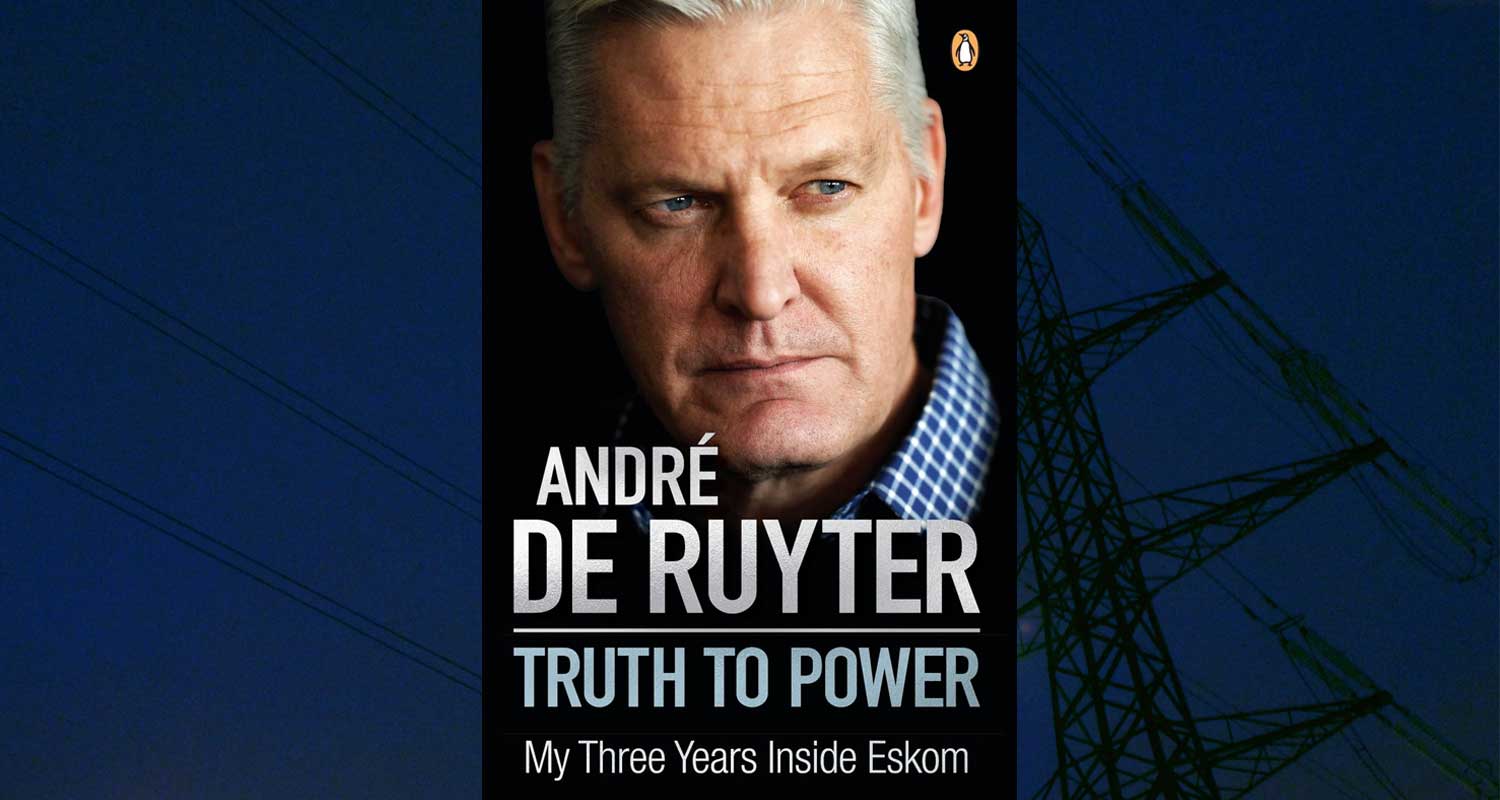
    Book review | In Truth to Power, former Eskom CEO André de Ruyter writes that decisions taken in 2007 will haunt South Africa for years to come.
    By Sandra Laurence19 May 2023
    Twitter LinkedIn Facebook WhatsApp Email Telegram Copy Link
    News Alerts
    WhatsApp

    In Truth to Power, published on Sunday, three months after being sacked as Eskom CEO, André de Ruyter writes that decisions taken in 2007 will haunt South Africa for years to come.

    He is referring specifically to a Hitachi tender for boilers at Medupi and Kusile which should have been disqualified for a number of irregularities, but which was hurried through in only two weeks.

    Initially the tender had been won by the French company Alstom, but rival bidder Hitachi didn’t take the loss lying down. Hitachi’s black economic empowerment partner was Chancellor House, the ANC’S investment firm.

    Chancellor House was ultimately rewarded with R97-million for greasing Hitachi’s path to the tender

    “The Eskom team adjudicating one of the largest tenders for the new power stations showed a distinct lack of due diligence… Chancellor House was ultimately rewarded with R97-million for greasing Hitachi’s path to the tender. The R97-million included a ‘success fee’, dividends and eventually a share buyback.”

    In 2009, Hitachi paid a US$19-million fine to the US Securities and Exchange Commission for contravening the Foreign Corrupt Practices Act – but this development was never investigated further by South African authorities. And due to faulty boiler specifications, signed off by one Matshela Koko, who was then the senior Eskom engineer responsible for boiler design, Medupi and Kusile became Eskom’s terrible twins, wreaking havoc with operational efficiency and its finances.

    “For the ANC’S 97 million pieces of silver, the taxpayer is paying billions. Because of Kusile’s design flaws, we’ve lost around 2 100MW of generation capacity during 2023, enough to eliminate two stages of load shedding,” writes De Ruyter. “To fix only some of the boiler mistakes will cost R4.2-billion and we’ve already burnt R30-billion of diesel due to lost capacity.”

    ‘Common denominator’

    De Ruyter writes that “all the spin doctoring and obfuscation in the world can’t hide that there is one common denominator to all these events, whether through policy failings, incompetence, state capture or corruption”.

    As President Cyril Ramaphosa wrote to his ANC colleagues on 23 August 2020, the party and its leaders stood as “accused number 1 in the dock, accused of corruption”. But the ex-CEO says it is only the ANC that can indulge in this frank appraisal. “All others who dare point out what the president himself has acknowledged are publicly excoriated and calumniated (blamed).”

    The tender bid mentioned above is just one of hundreds of examples of neglect, irregularities and corruption at the state-owned power company. But the ANC and Eskom have retaliated with vitriol.

    Read: Eskom crisis to cost ANC dearly at the polls

    Public enterprises minister Pravin Gordhan, De Ruyter’s former political principal, in an appearance before parliament on 17 May, heaped scorn on the former CEO and accused him of breaching the confidentiality clause of his employment contract. This was not the first time that Gordhan had criticised him for keeping the public informed.

    At his first media briefing in January 2020, De Ruyter said South Africa needed extra generating capacity of between 4GW and 6GW as soon as possible – in the December before that, the country had experienced the worst-ever load shedding at stage 6. Gordhan called him afterwards and told him he had no right to share company information with the public.
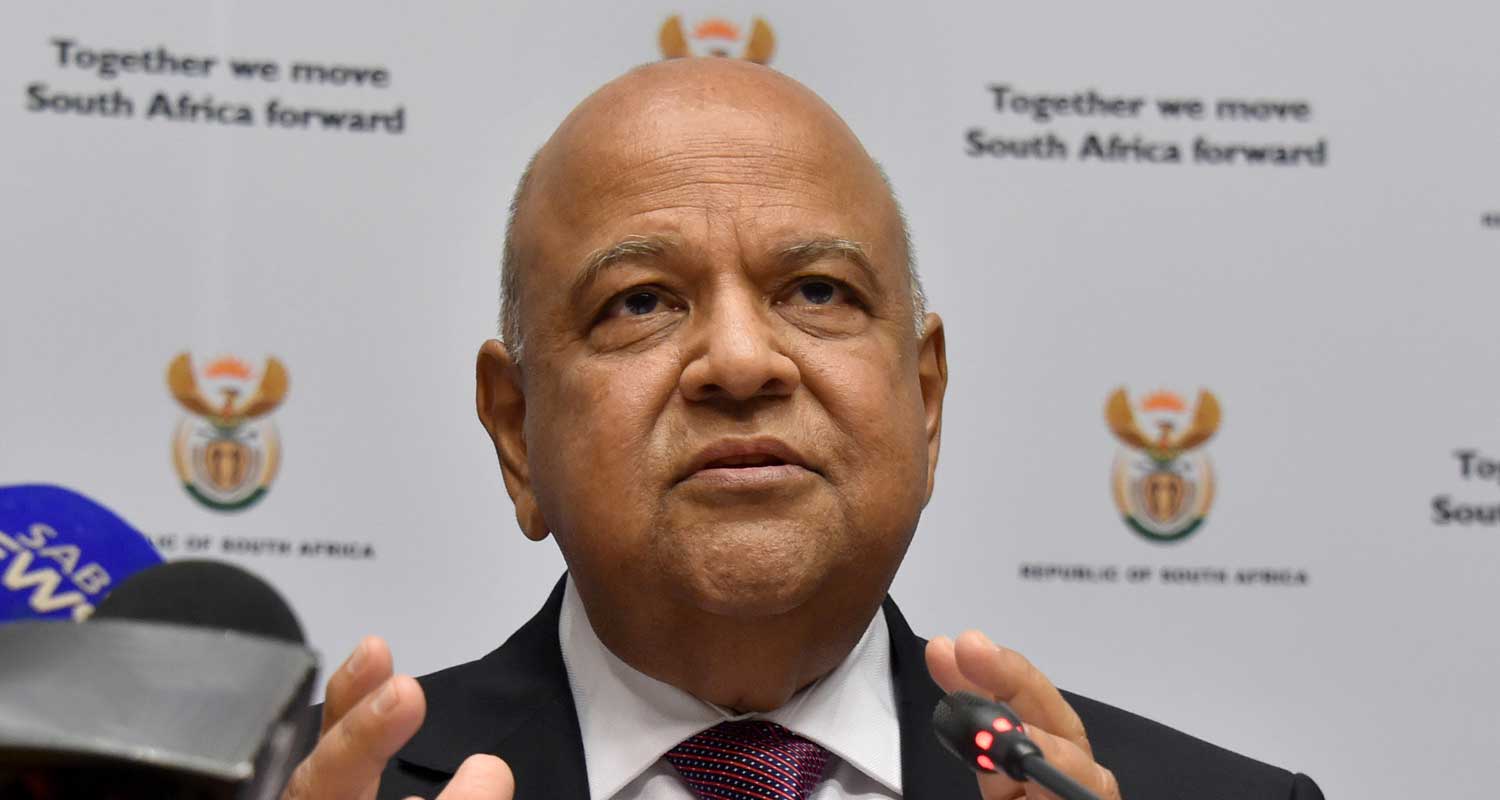
    Pravin Gordhan. Image: GCIS

    Over the years, friction between Gordhan, a committed cadre and former member of the South African Communist Party, and the corporate-capitalist De Ruyter grew, culminating in the minister’s extraordinary attack on De Ruyter this week in parliament.

    And in the 18 May briefing to discuss the state of the system and winter outlook, Eskom chairman Mpho Makwana used the word “repulsive” to describe De Ruyter’s behaviour, saying he broke the trust between himself and the company. He said the book broke a number of laws, including access to private information and corporate governance laws; the company secretary will take the book on legal review.

    Nevertheless, in his book, De Ruyter acknowledges Gordhan’s integrity and that he is a disciplined party member who would never criticise his colleagues, except in the most oblique way. “For his bravery in taking on President Jacob Zuma and his cronies, Gordhan deserves the nation’s thanks. But it’s difficult to escape the conclusion that he is being hamstrung by his loyalty to the ANC. He knows something is amiss, but after 50 years in the struggle, it’s not easy to admit.”

    Read: Gordhan undermined Eskom management: De Ruyter

    The realisation dawned on De Ruyter after a meeting with police commissioner Fannie Masemola about the criminality and corruption at Eskom that he was sitting on more actionable intelligence than the country’s police chief. He had already commissioned a private investigation, but writes he didn’t want to play all his cards because the group of senior police officials and State Security Agency (SSA) agents was large and he wasn’t sure whom he could trust.

    According to De Rutyer, Masemola told him everything he had just heard from the ex-Eskom boss was new to him – from sabotage to coal theft to illegal squatting in Eskom housing.

    Ministers and even the National Prosecuting Authority took away cellphones during meetings to avoid possible interception

    De Ruyter was in a quandary: who did he report his findings to? The police “mishandled even the simplest and most clear-cut cases we presented”, while the SSA allegedly admitted to having sat on explosive information for three years and acceded to a demand from a “highly placed politician” that the dossier be shared only with him. He suspected senior government officials might be involved themselves.

    This is the nub of the accusations against De Ruyter: that he should dare to expose corruption at Eskom, but also link it to the ANC. At one stage Eskom had lodged 104 cases but there were only 12 prosecutions.

    A feature of De Ruyter’s experience that is particularly worrying is the cloak and dagger experiences which were commonplace. Ministers and even the National Prosecuting Authority took away cellphones during meetings to avoid possible interception; he had to park far away from Gordhan’s house for a private meeting so that his presence wasn’t noted; and then there was the alleged attempt to poison him.

    Read: Eskom corruption is killing South Africa

    The detail and evidence in Truth to Power is comprehensive – not surprising when one hears that De Ruyter began collecting information for the book six months after taking over as CEO in January 2020, according to the Financial Mail.

    “I’d make copious notes, so what I’d do was, every Sunday between about 8am and [midday] I’d get those thoughts down on paper.” This is not the action of a CEO who feels secure in his workplace, and one finishes his account of his three years at Eskom with a strong feeling of regret: that so much goodwill and energy was wasted and that so much unnecessary political interference and negligence has led to the impasse South Africa now finds itself in.
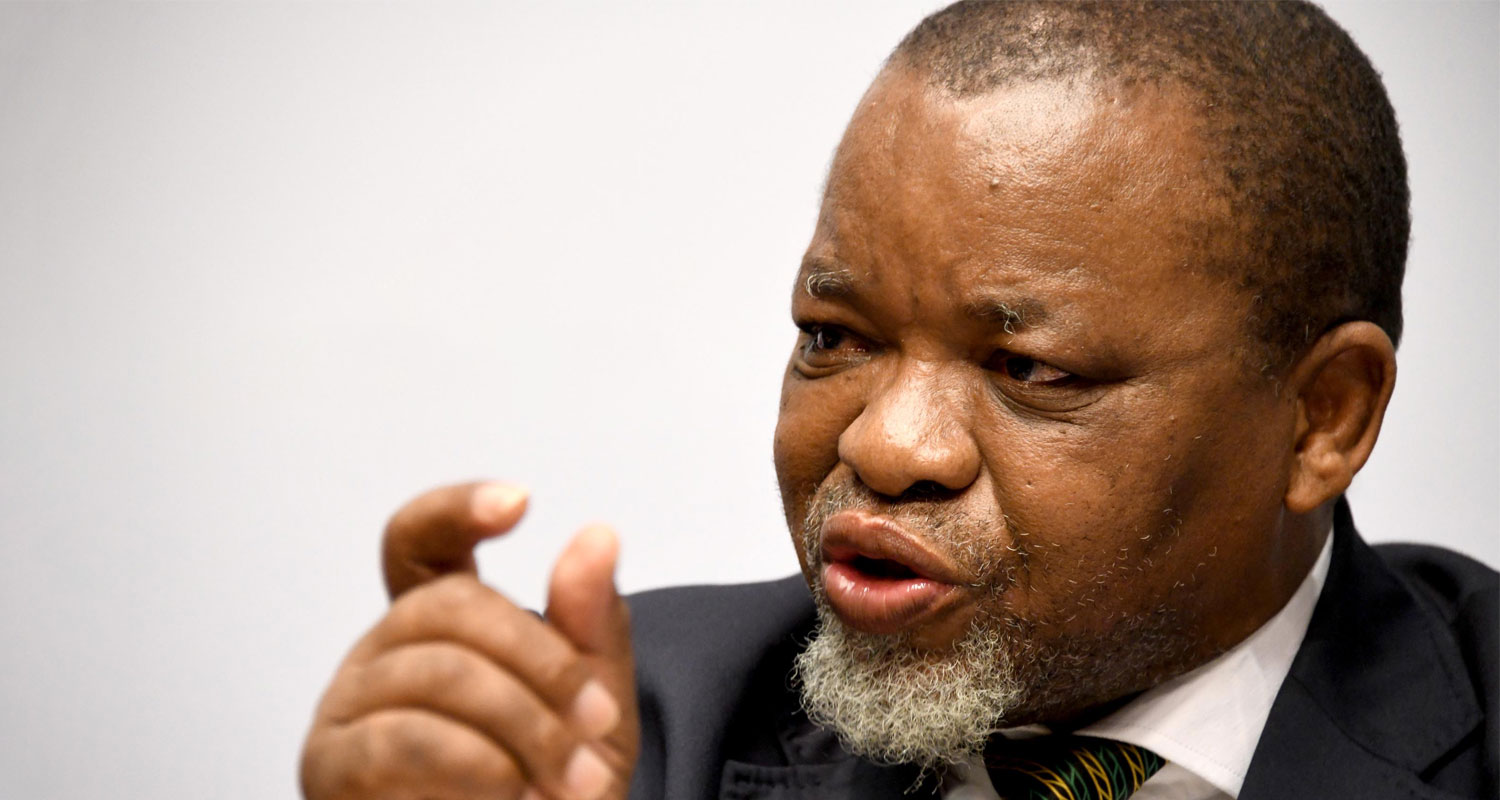
    Gwede Mantashe. Image: GCIS

    No doubt some of De Ruyter’s actions were contrary to the way ANC cabinet ministers conduct business and were deemed arrogant; no doubt he was perceived as impatient and no doubt he probably did contravene the confidentiality clause of his employment contract.

    Energy minister Gwede Mantashe calls the book a “novel” that is “basically a diary, there is nothing novel about it — it’s a diary of meetings he has had”.

    But be that as it may, De Ruyter felt that his hands were tied because he pursued every avenue open to him try to lance the poison at the heart of the Eskom corruption but was thwarted by political considerations. And since the current load shedding crisis affects every aspect of life for South Africans, they have a right to know some of the reasons for their predicament.

    De Ruyter’s expose is obviously a subjective account of his experience at Eskom, and includes contemptuous observations about some South African cabinet ministers and politicians. However, it makes for fascinating reading with details and facts that certainly have more than a ring of truth to them.  — (c) 2023 NewsCentral Media

    Get TechCentral’s daily newsletter

    Follow TechCentral on Google News Add TechCentral as your preferred source on Google


    Andre de Ruyter Cyril Ramaphosa Eskom Fannie Masemola Gwede Mantashe Matshela Koko Mpho Makwana Pravin Gordhan
    WhatsApp YouTube
    Share. Facebook Twitter LinkedIn WhatsApp Telegram Email Copy Link
    Previous ArticleBusiness has lost confidence in Cyril Ramaphosa
    Next Article Blue Origin wins Nasa contract to build lunar lander

    Related Posts

    Eskom's diesel bill falls 86% as breakdowns hit eight-year low

    Eskom’s diesel bill falls 86% as breakdowns hit eight-year low

    31 July 2026
    Ramaphosa signs off on taking the grid away from Eskom

    Ramaphosa signs off on taking the grid away from Eskom

    31 July 2026
    Huawei Connect 2026: taking South African AI beyond pilots

    Huawei Connect 2026: taking South African AI beyond pilots

    29 July 2026
    Company News
    Domains.co.za launches self-hosted n8n VPS hosting

    Domains.co.za launches self-hosted n8n VPS hosting

    31 July 2026
    Smarter.tech '26 shows why smarter technology begins with context - Obsidian Systems

    Context is the missing piece in enterprise AI: Obsidian

    31 July 2026
    Huawei launches 12 intelligent transport solutions in South Africa - Sam Tang

    Huawei launches 12 intelligent transport solutions in South Africa

    30 July 2026
    Opinion
    The author, Jannie van Zyl

    Selling vapour is corporate suicide in slow motion

    16 July 2026
    Brazil's online gambling crackdown is a lesson for South Africa

    How Amazon outmanoeuvred Starlink in South Africa

    15 July 2026
    The Popia problem with agentic AI - Herman Haasbroek

    The Popia problem with agentic AI

    14 July 2026

    Subscribe to Updates

    Get the best South African technology news and analysis delivered to your e-mail inbox every morning.

    Latest Posts
    Nedbank hires MTN's former tech chief as group CIO - Nikos Angelopoulos

    Nedbank hires MTN’s former tech chief as group CIO

    31 July 2026
    Eskom's diesel bill falls 86% as breakdowns hit eight-year low

    Eskom’s diesel bill falls 86% as breakdowns hit eight-year low

    31 July 2026
    Ramaphosa signs off on taking the grid away from Eskom

    Ramaphosa signs off on taking the grid away from Eskom

    31 July 2026
    TCS+ | Why South African workers must become supervisors of digital labour - Accelera Digital Group Cliff de Wit

    TCS+ | Why South African workers must become supervisors of digital labour

    31 July 2026
    © 2009 - 2026 NewsCentral Media
    Built and maintained by Chronon
    • Cookie policy (ZA)
    • TechCentral – privacy and Popia

    Type above and press Enter to search. Press Esc to cancel.

    Manage consent

    TechCentral uses cookies to enhance its offerings. Consenting to these technologies allows us to serve you better. Not consenting or withdrawing consent may adversely affect certain features and functions of the website.

    Functional Always active
    The technical storage or access is strictly necessary for the legitimate purpose of enabling the use of a specific service explicitly requested by the subscriber or user, or for the sole purpose of carrying out the transmission of a communication over an electronic communications network.
    Preferences
    The technical storage or access is necessary for the legitimate purpose of storing preferences that are not requested by the subscriber or user.
    Statistics
    The technical storage or access that is used exclusively for statistical purposes. The technical storage or access that is used exclusively for anonymous statistical purposes. Without a subpoena, voluntary compliance on the part of your Internet Service Provider, or additional records from a third party, information stored or retrieved for this purpose alone cannot usually be used to identify you.
    Marketing
    The technical storage or access is required to create user profiles to send advertising, or to track the user on a website or across several websites for similar marketing purposes.
    • Manage options
    • Manage services
    • Manage {vendor_count} vendors
    • Read more about these purposes
    View preferences
    • {title}
    • {title}
    • {title}