
Close Menu
TechCentralTechCentral

    Subscribe to the newsletter

    Get the best South African technology news and analysis delivered to your e-mail inbox every morning.

    Facebook X (Twitter) YouTube LinkedIn
    WhatsApp Facebook X (Twitter) LinkedIn YouTube
    TechCentralTechCentral
    • News
      Estonia's digital ID lesson for South Africa

      Estonia’s digital ID lesson for South Africa

      4 February 2026
      Vodacom's real growth story isn't mobile

      Vodacom’s real growth story isn’t mobile

      4 February 2026
      Why stablecoins are booming in Africa - Yellow Card MD Lasbery Oludimu

      Why stablecoins are booming in Africa

      4 February 2026
      Prosus inks three-year AWS deal to scale AI across its global portfolio

      Prosus inks three-year AWS deal to scale AI across its global portfolio

      4 February 2026
      South African fintech Lula lands R340m to scale SME working capital - Trevor Gosling

      South African fintech Lula lands R340m to scale SME working capital

      4 February 2026
    • World
      AI won't replace software, says Nvidia CEO amid market rout - Jensen Huang

      AI won’t replace software, says Nvidia CEO amid market rout

      4 February 2026
      Apple acquires audio AI start-up Q.ai

      Apple acquires audio AI start-up Q.ai

      30 January 2026
      SpaceX IPO may be largest in history

      SpaceX IPO may be largest in history

      28 January 2026
      Nvidia throws AI at the weather

      Nvidia throws AI at weather forecasting

      27 January 2026
      Debate erupts over value of in-flight Wi-Fi

      Debate erupts over value of in-flight Wi-Fi

      26 January 2026
    • In-depth
      How liberalisation is rewiring South Africa's power sector

      How liberalisation is rewiring South Africa’s power sector

      21 January 2026
      The top-performing South African tech shares of 2025

      The top-performing South African tech shares of 2025

      12 January 2026
      Digital authoritarianism grows as African states normalise internet blackouts

      Digital authoritarianism grows as African states normalise internet blackouts

      19 December 2025
      TechCentral's South African Newsmakers of 2025

      TechCentral’s South African Newsmakers of 2025

      18 December 2025
      Black Friday goes digital in South Africa as online spending surges to record high

      Black Friday goes digital in South Africa as online spending surges to record high

      4 December 2025
    • TCS
      TCS+ | How Cloud On Demand is helping SA businesses succeed in the cloud - Xhenia Rhode, Dion Kalicharan

      TCS+ | Cloud On Demand and Consnet: inside a real-world AWS partner success story

      30 January 2026
      Watts & Wheels S1E3: 'BYD's Corolla Cross challenger'

      Watts & Wheels S1E3: ‘BYD’s Corolla Cross challenger’

      30 January 2026
      Watts & Wheels S1E3: 'BYD's Corolla Cross challenger'

      Watts & Wheels S1E2: ‘China attacks, BMW digs in, Toyota’s sublime supercar’

      23 January 2026

      TCS+ | Why cybersecurity is becoming a competitive advantage for SA businesses

      20 January 2026
      Watts & Wheels S1E3: 'BYD's Corolla Cross challenger'

      Watts & Wheels: S1E1 – ‘William, Prince of Wheels’

      8 January 2026
    • Opinion
      South Africa's skills advantage is being overlooked at home - Richard Firth

      South Africa’s skills advantage is being overlooked at home

      29 January 2026
      Why Elon Musk's Starlink is a 'hard no' for me - Songezo Zibi

      Why Elon Musk’s Starlink is a ‘hard no’ for me

      26 January 2026
      South Africa's new fibre broadband battle - Duncan McLeod

      South Africa’s new fibre broadband battle

      20 January 2026
      AI moves from pilots to production in South African companies - Nazia Pillay SAP

      AI moves from pilots to production in South African companies

      20 January 2026
      South Africa's new fibre broadband battle - Duncan McLeod

      ANC’s attack on Solly Malatsi shows how BEE dogma trumps economic reality

      14 December 2025
    • Company Hubs
      • Africa Data Centres
      • AfriGIS
      • Altron Digital Business
      • Altron Document Solutions
      • Altron Group
      • Arctic Wolf
      • AvertITD
      • Braintree
      • CallMiner
      • CambriLearn
      • CYBER1 Solutions
      • Digicloud Africa
      • Digimune
      • Domains.co.za
      • ESET
      • Euphoria Telecom
      • Incredible Business
      • iONLINE
      • IQbusiness
      • Iris Network Systems
      • LSD Open
      • NEC XON
      • Netstar
      • Network Platforms
      • Next DLP
      • Ovations
      • Paracon
      • Paratus
      • Q-KON
      • SevenC
      • SkyWire
      • Solid8 Technologies
      • Telit Cinterion
      • Tenable
      • Vertiv
      • Videri Digital
      • Vodacom Business
      • Wipro
      • Workday
      • XLink
    • Sections
      • AI and machine learning
      • Banking
      • Broadcasting and Media
      • Cloud services
      • Contact centres and CX
      • Cryptocurrencies
      • Education and skills
      • Electronics and hardware
      • Energy and sustainability
      • Enterprise software
      • Financial services
      • Information security
      • Internet and connectivity
      • Internet of Things
      • Investment
      • IT services
      • Lifestyle
      • Motoring
      • Public sector
      • Retail and e-commerce
      • Satellite communications
      • Science
      • SMEs and start-ups
      • Social media
      • Talent and leadership
      • Telecoms
    • Events
    • Advertise
    TechCentralTechCentral
    Home » Sections » Public sector » Estonia’s digital ID lesson for South Africa

    Estonia’s digital ID lesson for South Africa

    Estonia’s digital ID success offers South Africa clear lessons on trust, governance and inclusive design.
    By Amy Musgrave4 February 2026
    Twitter LinkedIn Facebook WhatsApp Email Telegram Copy Link
    News Alerts
    WhatsApp

    Estonia's digital ID lesson for South Africa

    Digital identity has become economic infrastructure across the globe. For South Africa, which could begin rolling out its own digital IDs for citizens later this year, whether they drive inclusion or exclusion will depend on design, governance and cyber resilience.

    The core difference between smart IDs, which are currently replacing the green ID book, and digital IDs lies in their format and application. A digital ID is a virtual credential, often stored on a mobile phone – essentially a wallet-style app for paperless and remote authentication – while a smart ID is a physical, chip-enabled plastic card.

    TechCentral approached experts in the field, and they agreed that whether digital IDs become an engine of inclusion or a barrier to progress will hinge on how they are designed and governed. Public trust in the system is paramount.

    For digital ID systems to gain legitimacy, they must be inclusive by design, ensuring that no one is excluded

    Lohan Spies, founder and CEO of DIDx, a South African company that specialises in self-sovereign identity (giving individuals control over the information they use to prove who they are to websites, services and applications), said public trust is the foundational requirement for any digital identity system, particularly in countries characterised by high levels of fraud, inequality and historical institutional mistrust.

    “Trust does not emerge from technological sophistication alone; rather, it is shaped by whether the system is perceived to serve citizens first, reduce real-world friction and protect individual rights,” he said.

    “For digital identity systems to gain legitimacy, they must be inclusive by design, ensuring that no one is excluded due to poverty, geography, disability or limited access to digital infrastructure,” Spies said.

    Governance frameworks

    “Equally important is the perception of purpose. Digital identity must be experienced as a tool that solves concrete problems for individuals, not as an extension of surveillance or administrative control.”

    Spies said immediate and visible benefits – such as seamless digital interaction with government, reduced time spent in queues, lower compliance costs, faster access to grants and services, and the elimination of repetitive paperwork – are critical for early adoption and sustained trust.

    Part of this trust lies in individuals retaining meaningful control over their digital identities, including explicit consent over what data is shared, with whom and for what purpose. Without clear governance frameworks, digital ID systems risk operating without enforceable rules or accountability.

    Read: Digital IDs will launch before year-end, government says

    Thomas Linder, senior researcher at Research ICT Africa, said building public trust must include a focus on real accessibility, including processes that are designed to be as comprehensible, easy to use and complete as possible.

    If the system is built by a private contractor, it must be explicit that the contractor has no access to the data and no right to use or share it for any other purpose.

    Estonia's digital ID lesson for South Africa - Tõnu Grünberg
    Tõnu Grünberg, Estonia’s deputy under-secretary for digital infrastructure and cybersecurity

    Spies said that globally, digital ID systems vary widely in architecture, governance and societal impact. While these differences offer lessons for other countries, implementation is shaped by local legal, institutional and social conditions. No single model can be transplanted wholesale into another national context.

    Consortium systems, such as BankID in Sweden, demonstrate strong adoption and usability, but also highlight risks of private-sector dominance over access to essential services. In contrast, decentralised approaches – such as Bhutan’s national digital identity initiative – prioritise individual control and data minimisation, but face different challenges around scalability and ecosystem participation.

    Linder pointed to several examples of poorly designed and implemented ID systems, including Uganda’s Ndaga Muntu, where thousands were excluded due to non-inclusive design and roll-out, as well as cases where digital IDs were made obligatory to access social services.

    A key trust element is that citizens can see who has accessed their data, especially in sensitive domains

    Mauritania and Tanzania’s digital ID deployments have been “quite successful”, he said, but challenges remain around rural, informal and marginalised communities – a challenge South Africa will also need to address.

    The country widely considered to be the world’s most advanced digital society is Estonia. More than 99% of its citizens have a mandatory national ID card and digital IDs that are used for public services, including voting, filing taxes, healthcare and banking.

    Tõnu Grünberg, Estonia’s deputy under-secretary for digital infrastructure and cybersecurity at the justice & digital affairs ministry, told TechCentral that his country’s experience shows public trust is not primarily a technological achievement. Instead, it is the result of deliberate governance choices that make technology verifiably non-abusive.

    Architectural choice

    “From the very beginning, the core assumption was that efficiency alone is not enough: citizens will only trust digital identity if it is embedded in a strong legal framework, transparent by design and constrained by clear rules,” he said.

    One of the most important early decisions was to avoid building a single, centralised “super-database” of citizens’ information. Instead, data remained with institutions that already had a legal mandate to hold it, while services accessed data through a secure interoperability layer when – and only when – necessary.

    Read: Home affairs promises full automation by next year

    “This architectural choice significantly reduced fears of surveillance and abuse, while also strengthening security. Every data request had to be attributable, logged and auditable, reinforcing the idea that misuse leaves traces and can be sanctioned,” Grünberg explained.

    “A key trust element is that citizens can see who has accessed their data, especially in sensitive domains, reinforcing the principle that transparency is a citizen right, not a technical afterthought.”

    Lohan Spies, founder and CEO of DIDx
    Lohan Spies, founder and CEO of DIDx

    On technical design, Grünberg said decentralisation by default limits systemic risk, while strong cryptographic identity and qualified digital signatures ensure high assurance for sensitive transactions. Secure interoperability standards and consistent monitoring also made it possible to scale safely across the public and private sectors.

    “The underlying philosophy was simple: if a solution is secure and privacy-compliant in a strict legal environment, it becomes a global quality benchmark,” he said.

    For digital ID to work at scale, a clear legal foundation for digital interaction is critical. Grünberg said the most challenging law was the Digital Signatures Act, as it required a major shift in legal culture by accepting cryptographic signatures as fully legally binding. Balancing interoperability with data protection was another sensitive area, requiring strong safeguards to maintain public trust.

    Grünberg stressed that digital IDs cannot work at scale without a supporting legal ecosystem, including:

    • Identity and authentication laws that define assurance levels and liability;
    • Digital signature legislation ensuring legal certainty in transactions;
    • Data protection rules establishing transparency, citizen rights and independent oversight; and
    • Administrative procedure laws clarifying how digital decisions are made and how they can be challenged.

    “Politically, the most difficult laws to pass were those that touched on data sharing between institutions and sensitive domains such as health or law enforcement. These debates were unavoidable, but they were also essential for building durable legitimacy,” he said.

    Asked how Estonia prevented digital IDs from excluding citizens without smartphones, internet access or digital literacy, Grünberg said seamless use across government and the private sector was achieved by creating a shared trust framework.

    Common standards

    Common standards allowed banks, telecommunications operators and public authorities to rely on the same digital identity with predictable assurance levels. Early private-sector integration was crucial: once people used the same ID for banking, signing contracts and interacting with the state, digital identity became part of everyday life rather than a niche government tool.

    He advised countries like South Africa that are starting their own digital ID journeys to replicate the “trust architecture, not just the technology”.

    Read: Why stablecoins are booming in Africa

    “What should be copied is decentralised data management, auditability as a citizen right, legal equivalence of digital actions, early but tightly regulated private-sector integration and inclusion by design.

    “What should be avoided is launching identity systems before governance, oversight and liability are clear; building centralised data silos; and mandating use without delivering value.”
    digital ID

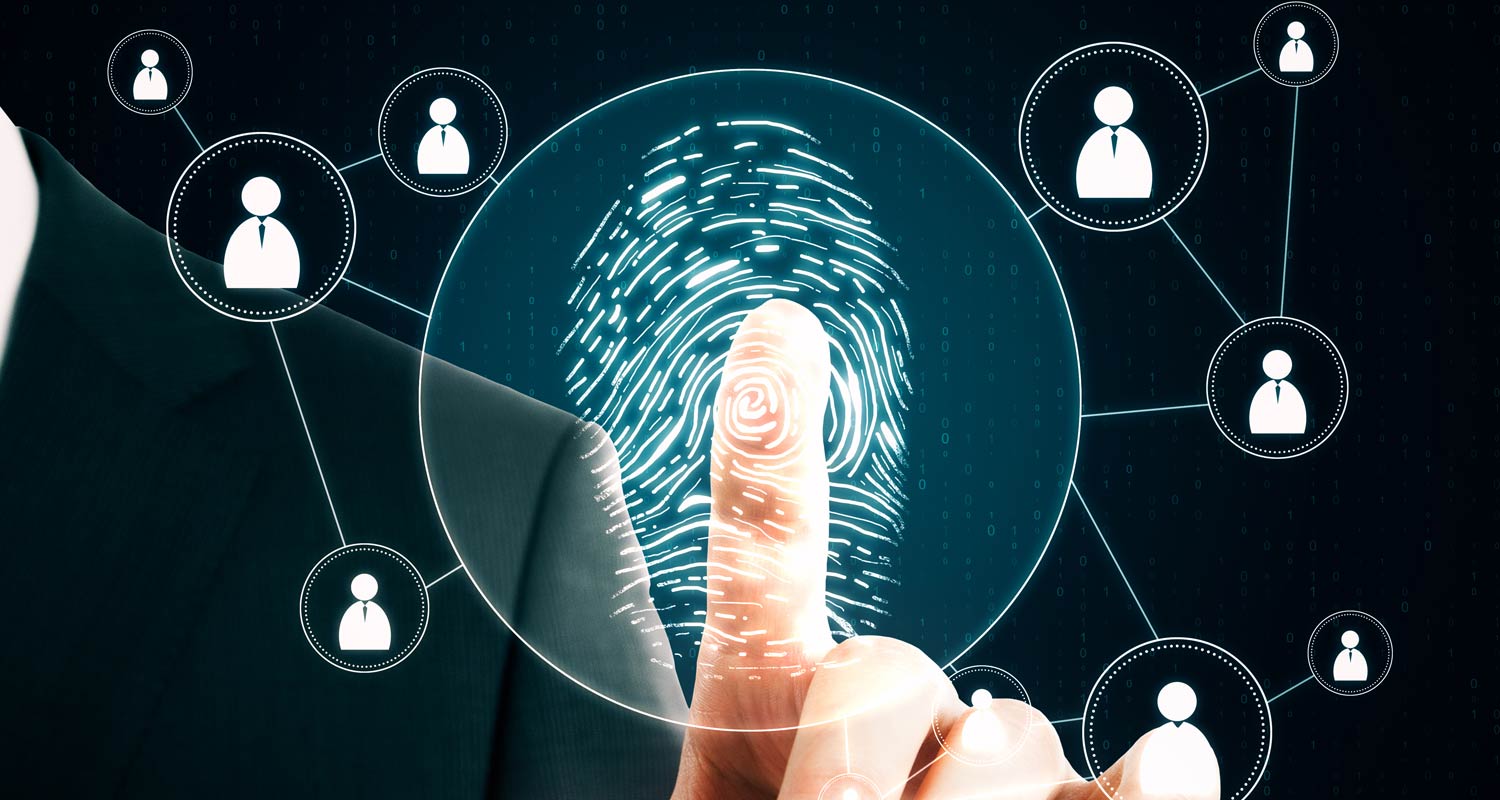
    As South Africa considers how to implement digital IDs, experts warn that unless the system saves time, lowers costs, protects dignity and removes barriers to participation, it risks being seen as another institution-first system rather than one designed for citizens. – © 2026 NewsCentral Media

    Get breaking news from TechCentral on WhatsApp. Sign up here.



    DIDx Lohan Spies Research ICT Africa Thomas Linder Tõnu Grünberg
    WhatsApp YouTube Follow on Google News Add as preferred source on Google
    Share. Facebook Twitter LinkedIn WhatsApp Telegram Email Copy Link
    Previous ArticleVodacom’s real growth story isn’t mobile

    Related Posts

    A shift in South Africa's communications landscape - Richard Firth

    Telkom urges Icasa to scrap call termination fees completely

    12 December 2024

    Icasa to hold hearings on cybersecurity

    3 January 2019

    TechCentral’s top 5 podcasts in September – what did you miss?

    1 October 2018
    Company News
    Most business owners don't worry about IT, until they have to - Graeme Millar SevenC

    Most business owners don’t worry about IT – until they have to

    4 February 2026
    Why cloud projects fail - and how three days can fix it - LSD Open

    Why cloud projects fail – and how three days can fix this

    4 February 2026
    Zero downtime, 12 months: XLink raises the bar for mission-critical networks

    Zero downtime, 12 months: XLink raises the bar for mission-critical networks

    4 February 2026
    Opinion
    South Africa's skills advantage is being overlooked at home - Richard Firth

    South Africa’s skills advantage is being overlooked at home

    29 January 2026
    Why Elon Musk's Starlink is a 'hard no' for me - Songezo Zibi

    Why Elon Musk’s Starlink is a ‘hard no’ for me

    26 January 2026
    South Africa's new fibre broadband battle - Duncan McLeod

    South Africa’s new fibre broadband battle

    20 January 2026

    Subscribe to Updates

    Get the best South African technology news and analysis delivered to your e-mail inbox every morning.

    Latest Posts
    Estonia's digital ID lesson for South Africa

    Estonia’s digital ID lesson for South Africa

    4 February 2026
    Vodacom's real growth story isn't mobile

    Vodacom’s real growth story isn’t mobile

    4 February 2026
    Why stablecoins are booming in Africa - Yellow Card MD Lasbery Oludimu

    Why stablecoins are booming in Africa

    4 February 2026
    Prosus inks three-year AWS deal to scale AI across its global portfolio

    Prosus inks three-year AWS deal to scale AI across its global portfolio

    4 February 2026
    © 2009 - 2026 NewsCentral Media
    • Cookie policy (ZA)
    • TechCentral – privacy and Popia

    Type above and press Enter to search. Press Esc to cancel.

    Manage consent

    TechCentral uses cookies to enhance its offerings. Consenting to these technologies allows us to serve you better. Not consenting or withdrawing consent may adversely affect certain features and functions of the website.

    Functional Always active
    The technical storage or access is strictly necessary for the legitimate purpose of enabling the use of a specific service explicitly requested by the subscriber or user, or for the sole purpose of carrying out the transmission of a communication over an electronic communications network.
    Preferences
    The technical storage or access is necessary for the legitimate purpose of storing preferences that are not requested by the subscriber or user.
    Statistics
    The technical storage or access that is used exclusively for statistical purposes. The technical storage or access that is used exclusively for anonymous statistical purposes. Without a subpoena, voluntary compliance on the part of your Internet Service Provider, or additional records from a third party, information stored or retrieved for this purpose alone cannot usually be used to identify you.
    Marketing
    The technical storage or access is required to create user profiles to send advertising, or to track the user on a website or across several websites for similar marketing purposes.
    • Manage options
    • Manage services
    • Manage {vendor_count} vendors
    • Read more about these purposes
    View preferences
    • {title}
    • {title}
    • {title}