 When Facebook hosted an internal competition a few years ago to develop new product ideas, a handful of employees teamed up to build a robot named Max.
Shaped like a small, upside-down bowl, Max was designed to be a companion — a physical device humans could talk to that could detect their mood, according to two people familiar with the hackathon project. The creators gave Max little ears and whiskers so the device would be more fun and approachable, like a cat.
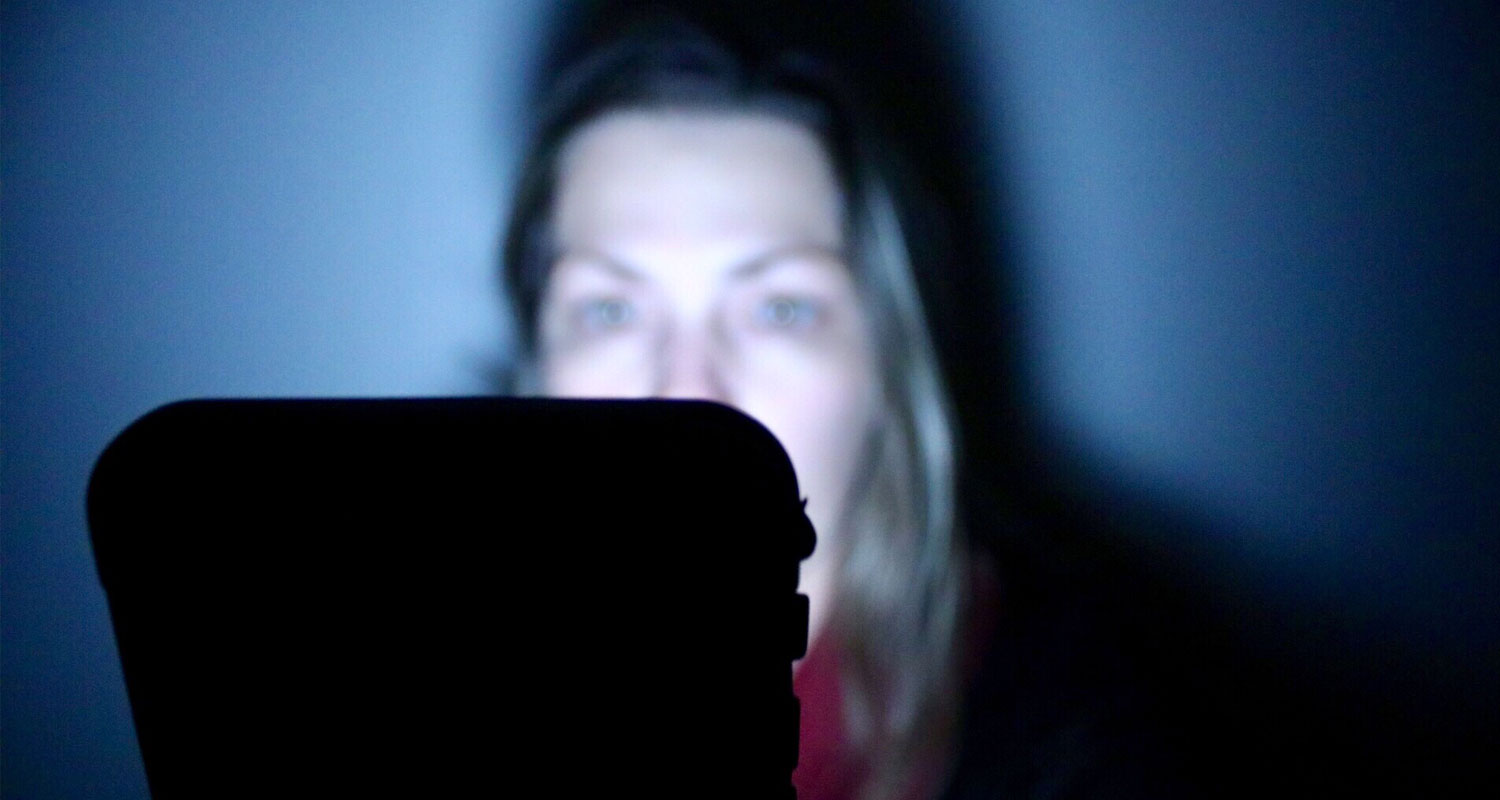
Max never evolved beyond the hackathon. But engineers and researchers at the company, now called Meta Platforms, are still grappling with the thorny problem the experimental robot cat was designed to combat: loneliness. Meta, with a mission to help people connect online, has discovered through internal research that its products can just as easily have an isolating effect. As the company struggles to retain and add users for its already-massive social networks, making sure those people are happy is key to Meta’s financial success.
Loneliness has come into sharper focus at Meta during the Covid-19 pandemic, as people use its social media apps as alternatives to in-person experiences. Meta has promoted its role as a digital connector, running ads touting its groups and messaging products. “We change the game when we find each other,” reads a tagline for one of its recent ads. But internally, employees are questioning their products’ impact on mental health.
Meta wants to address the problem but doesn’t know how. Internal research shows that a given feature — such as one that shows people photo memories — can spark feelings of connection for some and sadness for others. Regulators, meanwhile, are already probing whether Meta’s Instagram harms young people.
An internal study from September 2018 found that more than a third of Facebook users — approximately 36% — reported feeling lonely in the past month, according to documents disclosed by Frances Haugen, a former product manager. Haugen, responsible for leaking a large cache of internal documents, was selected by the Joe Biden administration to attend the state of the union address, where the US president underscored the need to “hold social media platforms accountable for the national experiment they’re conducting on our children for profit”. The study, based on in-depth interviews with 53 people, found loneliness was most common with young people, age 13 to 24, a key demographic that Meta is targeting for both Facebook and Instagram. Loneliness was also more common with men than women.
Conflicting results
Internal researchers acknowledged that Meta’s social networks could be exacerbating loneliness instead of alleviating it. Another study from November 2018, also in Haugen’s cache of documents, found that certain Facebook experiences increase loneliness — like seeing “negative posts or hurtful comments”, seeing friends having fun without you, or seeing posts that lead to social comparisons. Facebook use made people feel “less lonely” than some other activities, like using Twitter or dating apps. But people also said using Facebook increased loneliness more than other activities its researchers surveyed, including videogames and TV.
Other experiences reduced loneliness, like “seeing something funny or entertaining”, the research found. One key data point relates to how much time users spent on the service, the report found. “People who spend about an hour a day are the least lonely,” it says. “People who spend much less or much more time are lonelier.” When users who are already lonely turn to Facebook, 41% said it made them feel better, and just 6% said it made them feel worse. But 42% said they felt both more and less lonely after using the app.
The conflicting results make it difficult to prescribe what kinds of product changes could benefit Facebook’s users. And the stakes are high: on 2 February, Facebook reported that its user base stopped growing, and shrank in some markets, for the first time. The company’s shares lost more than a quarter of their value the next day.
Continuing to understand loneliness is key to the company’s goals, said Eden Litt, a director on Meta’s internal research team.
“There tends to be a relationship between social media and loneliness” in some research, Litt said, “but those studies can’t answer for us: is social media causing loneliness? Are lonely people coming to social media?” Users’ life experiences, such as big moves or romantic breakups, may affect the data, she added.
 The stakes of loneliness extend far beyond fleeting moments of discomfort, according to a growing body of academic research. Feeling socially disconnected from others is linked to physical and emotional problems such as heart disease, Alzheimer’s, depression and anxiety. Lonely people are also more likely to get less sleep, exercise less and consume more alcohol, said Julianne Holt-Lunstad, a professor of psychology and neuroscience at Brigham Young University.
“We’re not meant to be alone,” Holt-Lunstad said. “Our brains use more metabolic resources when facing threats alone versus when we’re in the presence of others.”
Whether or not it’s responsible for such feelings, Meta has a business incentive to solve the problem of loneliness. The more social media connections someone has, and the more fulfilling those connections are, the more likely people will find value in using Meta’s products.
At the start of the pandemic, when Meta saw people logging into its apps more often, the company pushed aggressively into video- and voice-calling features to compete with Apple’s FaceTime and Zoom Video Communications. New Facebook video products, like Rooms, were created to keep Facebook users connected, but also offered the company a chance to capture an even greater segment of users’ time spent online.
Facebook Groups has been another popular way to promote more intimate interactions. More than 1.8 billion people use Facebook Groups each month, making it one of the company’s most popular features, but Groups have also become an incubator for many of Meta’s biggest problems, like misinformation and extremism. The company has also experimented over the years with dating and location products that encourage friends to meet up offline, without much success.
Facebook’s memories product, which shows users old photos and videos, increased loneliness for 40% of respondents
In an experience akin to having a robot cat, users of Meta’s WhatsApp can now message an automated chat account. If someone tells the bot they’re lonely, they are sent a comforting response. “We’re so sorry to hear that you are feeling lonely,” the bot says. “Please know that there is no shame or stigma in feeling lonely — nearly everyone has experienced loneliness at some point in their lives.”
The chatbot was created after WhatApp approached the UK-based Jo Cox Foundation for help, according to Su Moore, the head of the organisation. The bot includes messages from public figures in the UK, who all share personal experiences of social isolation.
Ultimately, Meta’s research reports concluded that Facebook is a “net positive” when it comes to loneliness. Still, they note that the tendency of its products to encourage social comparison can “drive people to use Facebook in ways that aggravate loneliness”. The researchers recommended letting users set time limits for how much they use the service.
Employees also found that “funny, inspirational and instructive content” helps reduce loneliness. The internal report recommended the company “up-rank” those types of posts in user feeds. The recommendation came with a warning, though, that Facebook should “be careful not to over-pivot to ‘junk food’ that makes people feel happy in the short term.”
Facebook’s memories product, which shows users old photos and videos, increased loneliness for 40% of respondents, the company found. But it also decreased loneliness for 46% of respondents.
Healthy use
Litt says the company has continued to study loneliness throughout the pandemic, though a spokesman declined to share updated research from the past two years.
Some outside researchers agree with Facebook’s 2018 finding that an hour a day on social media represents healthy use. Young people who log in for that time range “seem to have the highest levels of well-being and connectedness and are less lonely”, scoring higher on wellness measures than people who use social media much more or not at all, said Melissa Hunt, associate director of the clinical training department of psychology at the University of Pennsylvania in the US.
Meta has faced intense scrutiny in recent months from regulators and advocates who argue the company gets vulnerable users hooked on its products while spoon-feeding them content that hurts their mental health. For others, those same social networks are a lifeline away from social isolation.
Meta may end up relying on its users to build communities people want to join. Instagram has increased its investment in creators and influencers on its app, who can build a sense of belonging around certain interests or talents. And then there are people like Sue Ottey.
Ottey, 58, is the kind of user Meta would feature in an ad. She started a Facebook support group for people like her, who are feeling alone during the pandemic. In the group, which now has more than 250 members, users share their feelings with her about grappling with job losses or emotionally unsatisfying intimate relationships.
“If they’re dealing with loneliness, they are not putting themselves in social situations where they can vent, where they can express their feelings,” Ottey said. “All of those things just will drive you to a really dark place, if you don’t nip it in the bud and that’s what I’m hoping to do.” — Naomi Nix and Kurt Wagner, (c) 2022 Bloomberg LP