
Close Menu
TechCentralTechCentral

    Subscribe to the newsletter

    Get the best South African technology news and analysis delivered to your e-mail inbox every morning.

    Facebook X (Twitter) YouTube LinkedIn
    WhatsApp Facebook X (Twitter) LinkedIn YouTube
    TechCentralTechCentral
    • News
      Africa's mobile operators pay more for less spectrum, GSMA says

      Africa’s mobile operators pay more for less spectrum, GSMA says

      16 October 2026
      Netflix is losing the battle for your screen time

      Netflix is losing the battle for your screen time

      16 October 2026
      Safaricom control to stay with Vodacom until appeal

      Safaricom control to stay with Vodacom until appeal

      16 October 2026
      South Africa's midday power glut is a hidden risk for wheeling deals

      South Africa’s midday power glut is a hidden risk for wheeling deals

      15 October 2026
      Why South Africa is turning its back on 'screwdriver' car plants - Parks Tau

      Why South Africa is turning its back on ‘screwdriver’ car plants

      15 October 2026
    • World
      AI is now holding up the world economy, says IMF

      AI is now propping up the world economy, says IMF

      12 October 2026
      SpaceX takes aim at US wireless carriers with spectrum acquisition

      Starlink is coming for your mobile operator

      9 October 2026
      The AI PC is finally here. It's just very expensive - Jensen Huang, Satya Nadella

      The AI PC is finally here. It’s just very expensive

      8 October 2026
      The memory crunch is making Samsung fabulously rich

      The memory crunch is making Samsung fabulously rich

      8 October 2026
      SpaceX to borrow $40-billion to buy Nvidia chips

      SpaceX to borrow $40-billion to buy Nvidia chips

      7 October 2026
    • In-depth

      10 days that changed the course of AI

      21 September 2026
      Meta to the AI industry: slow down without us - Mark Zuckerberg

      Meta to the AI industry: slow down without us

      16 September 2026
      Google DeepMind CEO Demis Hassabis. Image: John Sears

      The plan to stop AI from breaking the world

      16 July 2026
      The internet has a Strait of Hormuz problem

      The internet has a Strait of Hormuz problem

      15 July 2026
      AI boom sparks rally, frenzy and fear

      AI boom sparks rally, frenzy and fear

      11 June 2026
    • TCS
      W&W | LDV's Gerhard Moolman on electric bakkies, fleet orders and 'school fees'

      W&W | LDV’s Gerhard Moolman on electric bakkies and fleets

      9 October 2026
      TCS | Frogfoot sees bigger fibre deals coming - TechCentral Show guests Abraham van der Merwe and Shane Chorley

      TCS | Frogfoot sees bigger fibre deals coming

      8 October 2026
      Meet the CIO | Vodacom's Mohamed Sami on the agentic future

      Meet the CIO | Vodacom’s Mohamed Sami on the agentic future

      5 October 2026
      Lexi Novitske, general partner at Norrsken22, on the TechCentral Show

      TCS | Norrsken22’s Lexi Novitske on how China is winning African tech

      1 October 2026
      TCS | Dominic White and Adam Ely on AI agents going rogue

      TCS | Dominic White and Adam Ely on AI agents going rogue

      29 September 2026
    • Opinion
      When a machine can choose, who does it become? Fanie van Rooyen

      When a machine can choose, who does it become?

      9 October 2026
      Let South Africans jailbreak their way to digital sovereignty - Dirk de Vos

      Let South Africans jailbreak their way to digital sovereignty

      5 October 2026
      South Africa's next energy crisis is in the accounts department - Craig Holmes

      South Africa’s next energy crisis is in the accounts department

      29 September 2026
      The steam engine lesson AI doomsayers keep missing - Sam Clarke

      The steam engine lesson AI doomsayers keep missing

      28 September 2026
      Let South Africans jailbreak their way to digital sovereignty - Dirk de Vos

      Regulating AI: apply the laws we have first

      21 September 2026
    • Company News
      • 1Stream
      • Africa Data Centres
      • AfriGIS
      • Altron Digital Business
      • Altron Document Solutions
      • Altron Group
      • Arctic Wolf
      • Ascent Technology
      • AvertITD
      • BBD
      • Braintree
      • CallMiner
      • CambriLearn
      • CM.com
      • Contactable
      • CYBER1 Solutions
      • Digicloud Africa
      • Digimune
      • Domains.co.za
      • ESET
      • Euphoria Telecom
      • HOSTAFRICA
      • Incredible Business
      • iONLINE
      • IQbusiness
      • Iris Network Systems
      • Kaspersky
      • LSD Open
      • Mitel
      • NEC XON
      • Netstar
      • Network Platforms
      • Next DLP
      • Ovations
      • Paracon
      • Paratus
      • Publishared
      • Q-KON
      • SevenC
      • SkyWire
      • Solid8 Technologies
      • Telit Cinterion
      • Telviva
      • Tenable
      • Vertiv
      • Videri Digital
      • Vodacom Business
      • Vox
      • Wipro
      • Workday
      • XLink
    • Sections
      • AI and machine learning
      • Banking
      • Broadcasting and Media
      • Cloud services
      • Contact centres and CX
      • Cryptocurrencies
      • Education and skills
      • Electronics and hardware
      • Energy and sustainability
      • Enterprise software
      • Financial services
      • HealthTech
      • Information security
      • Internet and connectivity
      • Internet of Things
      • Investment
      • IT services
      • Lifestyle
      • Policy and regulation
      • Public sector
      • Retail and e-commerce
      • Satellite communications
      • Science
      • SMEs and start-ups
      • Social media
      • Talent and leadership
      • Telecoms
      • Watts & Wheels
    • Events
    • Advertise
    TechCentralTechCentral
    Home » In-depth » Facebook really wants you back

    Facebook really wants you back

    By Agency Staff31 January 2018
    Twitter LinkedIn Facebook WhatsApp Email Telegram Copy Link
    Get breaking news on WhatsApp

    It’s been about a year since Rishi Gorantala deleted the Facebook app from his phone, and the company has only become more aggressive in its e-mails to win him back.

    The social network started out by alerting him every few days about friends that had posted photos or made comments — each time inviting him to click a link and view the activity on Facebook. He rarely did.

    Then, about once a week in September, he started to get prompts from a Facebook security customer service address. “It looks like you’re having trouble logging into Facebook,” the e-mails would say. “Just click the button below and we’ll log you in. If you weren’t trying to log in, let us know.”

    The content of mail they send is essentially trying to trick you. Like someone tried to access my account so I should go and log in

    He wasn’t trying. But he doesn’t think anybody else was, either. “The content of mail they send is essentially trying to trick you,” said Gorantala, 35, who lives in Chile. “Like someone tried to access my account so I should go and log in.”

    Facebook, which has more than two billion people logging in monthly, has never failed to grow its user base. To beat investors’ expectations consistently on user numbers, it’s just as important for the company to retain people like Gorantala as it is to recruit new members.

    People who are logging into Facebook less often — but aren’t fully disconnected — are noticing more and more frequent prompts to come back, sometimes multiple times a day, via e-mails or text messages reminding them what they’re missing out on, according to screenshots and reports from users around the world.

    Gorantala, who eased off his Facebook usage because of privacy concerns, said his security prompt comes “whenever I don’t log in for a few days”.

    Even with regular users, Facebook has become thirstier for posts. The social network’s reminder boxes at the top of the news feed, which often show memories or anniversaries of friendship with close pals, have recently become real estate for more trivial milestones — like being tagged in 10 photos with someone or getting 100 heart reactions.

    News feed

    CEO Mark Zuckerberg said earlier this year that Facebook was going to rethink the formula for its news feed to put an emphasis on posts from friends and family, downplaying content from brands and media. The company will emphasise “time well spent”, aiming for meaningful interactions that will be better for users long-term. It cautioned that the changes could cause some measures of engagement to go down, because people may spend less time on the app reading articles and watching videos.

    But engagement may have been a concern for Zuckerberg before the announcement. While the company has said it sees positive trends, it hasn’t updated a statistic on how much time people spend on its properties since the first quarter of 2016. Minutes spent on the site in the US are declining, according to measurements by both Nielsen and Comscore, even if the trend is healthy globally. In the third quarter, the growth in daily users was the slowest ever.

    “You could argue that the actions they announced were in response to what they were observing,” said Brian Wieser, an analyst at Pivotal Research. “Given how big they are, you’re going to run into a wall at some point.”
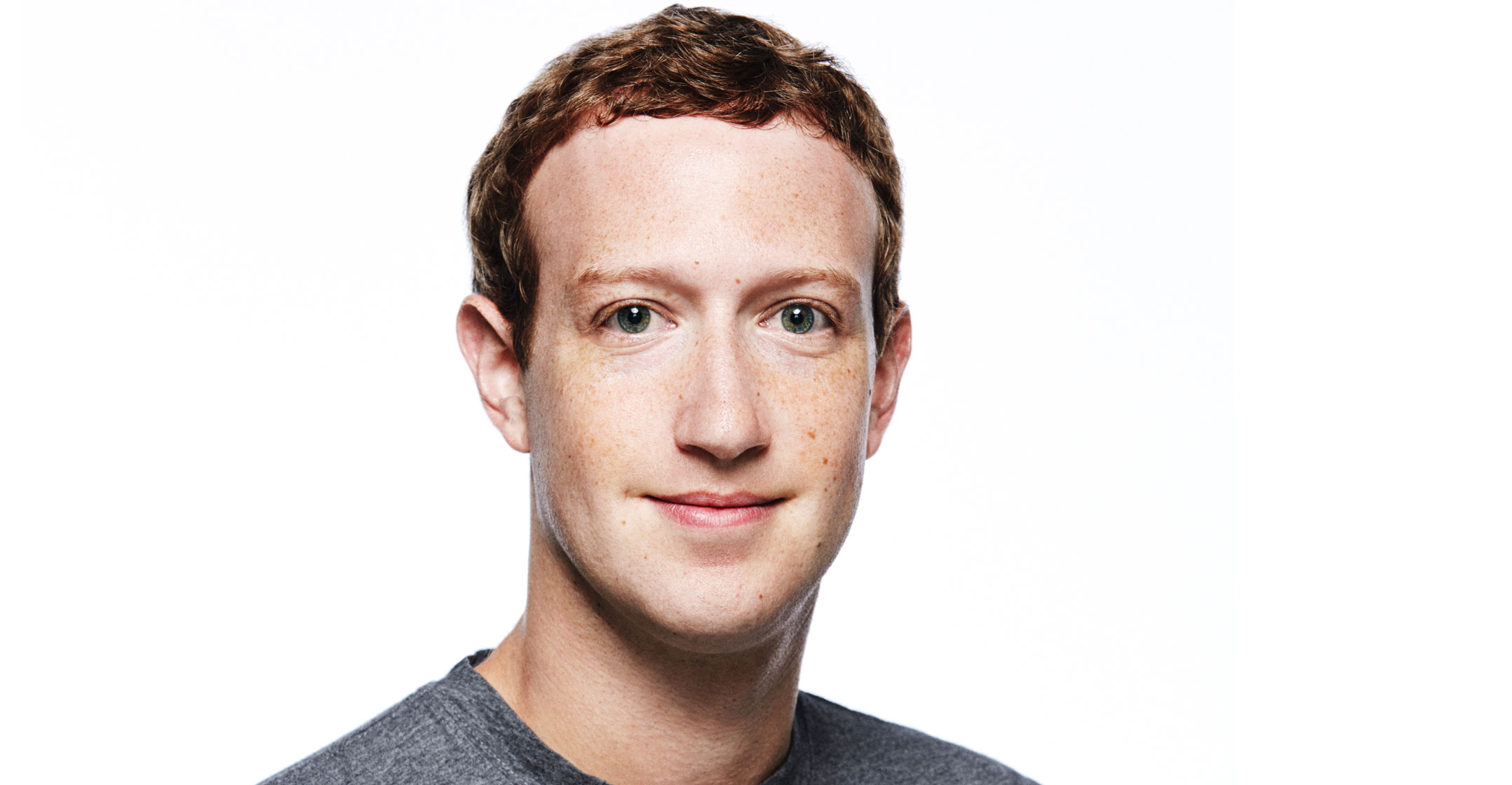
    Mark Zuckerberg

    Facebook’s financial results are showing no signs of struggle so far. Analysts project Facebook on Wednesday will report another quarter of record sales, bringing annual revenue to US$40.3bn. There’s still plenty of room to grow in the mobile advertising market, which Facebook dominates alongside Google, the digital ad leader. This quarter, revenue will probably see a boost from people watching video ads.

    And no matter what happens with the flagship Facebook app, the company owns several other huge platforms for communicating with friends — Instagram, WhatsApp and Messenger — that are just starting to seriously generate revenue.

    Still, investors are watching for any comments or clues about audience growth and user habits. Bumps in the trend line are a reminder that Facebook’s continued dominance is not inevitable, and any protracted decline in engagement could eventually curb its appeal to advertisers.

    We’re always looking for ways to help people access their accounts more quickly and easily, especially when there are notifications from friends they may have missed

    In order to count as a monthly active user, someone must have logged into or shared content on Facebook at least once in the last 30 days of the quarter. Facebook’s biggest barrier to growth is its already unprecedented size. The Internet, in total, has about 3.6bn users. For the roughly 1.6bn of those who aren’t regular Facebook users, almost half are likely in China, where Facebook is banned by the government. For the rest, it’s unclear how many do have accounts that they just don’t use, or decided to delete. “Nobody would ever talk about that,” Wieser said.

    Facebook says there are “many reasons” why users might get notifications from the company. “We’re always looking for ways to help people access their accounts more quickly and easily, especially when there are notifications from friends they may have missed”, spokeswoman Lisa Stratton said in an e-mail.

    The new mini-celebrations, for occasions such as a milestone number of photos tagged with a particular friend, were rolled out in August because focus groups told Facebook they liked celebrating memories. The Menlo Park, California-based company said it had nothing to add on its engagement numbers.

    It’s standard for all types of companies to use email and text messages to re-engage their customers. Facebook’s stand out for their frequency and personalisation, users said. The company does it because it works.

    You can check out any time…

    Kuldeep Patil, 32, deleted the app from his phone many months ago and says he gets at least two messages wooing him back each day. They used to be related to people that were interacting with his account, tagging him in photos or inviting him to like pages. “Kuldeep, you have 90 new notifications, 6 messages, 1 poke and 4 group invites,” a typical subject line reads, from an e-mail he got in December.

    Like Gorantala, Patil, who lives in India, decreased his usage due to concerns over Facebook tracking his activity. He said the messages have become more annoying recently as they start to flag updates that he’s not even involved with — a person from his past commenting on his or her own photo, for example.

    But sometimes, he admits, he’ll click.

    “I guess that’s why I haven’t deleted the account yet,” Patil said. But after clicking, while he’s scrolling through the feed, he gets uncomfortable watching the “same bunch of people posting only good things”. He’ll close it quickly.
    It’s that kind of activity — idle scrolling to compare one’s own life to others’ — that even Facebook admits is depressing. As part of a reckoning over the company’s impact on society, Facebook released a study in December that acknowledged it could be harmful for people’s mental health to use the app passively, reading others’ posts without contributing or reacting. If people interact with their close friends, commenting and sharing, that can actually positively impact mental health, the study concluded. That helped inform Zuckerberg’s decision to focus on friends and family in the news feed.

    In other words, the solution for the ills of Facebook, in Facebook’s academic opinion, is more Facebook. “It’s convenient,” said Judson Brewer, director of research at University of Massachusetts Medical School’s Centre for Mindfulness, who has written about technology addiction. “It all sounds great, that they want to do this, but they still need to keep their user base because that’s how they make money.”

    Several users said their reasons for tuning out Facebook usage were much simpler: it was overwhelming. It wasn’t fun. It was too public

    As Facebook has continued to grow, it’s given users many reasons for malaise. There was the situation that sparked the company’s re-thinking of its mission — the revelation that Russia had for months used the site to spread fake news and sow social discord around the 2016 US presidential election — and also a sprinkling of mini-crises, like live-streamed violent videos and the uncovering of racist ad-targeting options.

    But several users said their reasons for tuning out Facebook usage were much simpler: it was overwhelming. It wasn’t fun. It was too public.The longer people use Facebook, the more people they become connected with, and the less intimate the feed feels. Gorantala became conscious of how much the site knew about him, as well as his activity on the rest of the Internet. He felt it would be too extreme to delete his Facebook account entirely. It still contained a record of photos of him, and some social contacts that weren’t on his phone.

    Several others said they remained users, but not frequent ones, because they weren’t sure how to actually delete their accounts. On the website, a user has to put in a request to Facebook to have an account deleted. But many people choose the simpler “deactivate” option instead, which preserves all their data should they choose to come back. Brewer said his wife makes the choice to deactivate frequently, then gets the e-mails and comes back to Facebook.

    Rogério Pereira, a user in Portugal, said among his friends it’s understood that there’s only one way to make sure you never go back.

    “You must ask your friend to say you’re dead so they convert your account into a memorial,” he said.  — Reported by Sarah Frier, (c) 2018 Bloomberg LP

    Add TechCentral as a preferred source on GoogleFollow TechCentral on Google NewsGet breaking news on WhatsApp


    Facebook Mark Zuckerberg top
    WhatsApp YouTube
    Share. Facebook Twitter LinkedIn WhatsApp Telegram Email Copy Link
    Previous ArticleMounting fears of new Sassa crisis
    Next Article Interview: SportsPodium’s Natalie du Toit, Jaco Rossouw and Pieter Botha

    Related Posts

    Meta's smart glasses are officially coming to South Africa - Mark Zuckerberg

    Meta’s smart glasses are officially coming to South Africa

    2 October 2026
    Meta's new gadget is a pocket watch for its viral AI agent - Muse Charm

    Meta’s new gadget is a pocket watch for its viral AI agent

    25 September 2026

    10 days that changed the course of AI

    21 September 2026
    Company News
    Paratus Zambia delivers Starlink to thousands of children in Family Legacy schools

    Paratus Zambia delivers Starlink to thousands of children in Family Legacy schools

    15 October 2026
    Data sovereignty in South Africa is not an address - Ascent Technology, Johan Lamberts

    Data sovereignty in South Africa is not an address

    15 October 2026
    AI is only as good as your asset data

    AI is only as good as your asset data

    14 October 2026
    Opinion
    When a machine can choose, who does it become? Fanie van Rooyen

    When a machine can choose, who does it become?

    9 October 2026
    Let South Africans jailbreak their way to digital sovereignty - Dirk de Vos

    Let South Africans jailbreak their way to digital sovereignty

    5 October 2026
    South Africa's next energy crisis is in the accounts department - Craig Holmes

    South Africa’s next energy crisis is in the accounts department

    29 September 2026

    Subscribe to Updates

    Get the best South African technology news and analysis delivered to your e-mail inbox every morning.

    Latest Posts
    Africa's mobile operators pay more for less spectrum, GSMA says

    Africa’s mobile operators pay more for less spectrum, GSMA says

    16 October 2026
    Netflix is losing the battle for your screen time

    Netflix is losing the battle for your screen time

    16 October 2026
    Safaricom control to stay with Vodacom until appeal

    Safaricom control to stay with Vodacom until appeal

    16 October 2026
    South Africa's midday power glut is a hidden risk for wheeling deals

    South Africa’s midday power glut is a hidden risk for wheeling deals

    15 October 2026
    © 2009 - 2026 NewsCentral Media
    Built and maintained by Chronon
    • Cookie policy (ZA)
    • TechCentral – privacy and Popia

    Type above and press Enter to search. Press Esc to cancel.

    Manage consent

    TechCentral uses cookies to enhance its offerings. Consenting to these technologies allows us to serve you better. Not consenting or withdrawing consent may adversely affect certain features and functions of the website.

    Functional Always active
    The technical storage or access is strictly necessary for the legitimate purpose of enabling the use of a specific service explicitly requested by the subscriber or user, or for the sole purpose of carrying out the transmission of a communication over an electronic communications network.
    Preferences
    The technical storage or access is necessary for the legitimate purpose of storing preferences that are not requested by the subscriber or user.
    Statistics
    The technical storage or access that is used exclusively for statistical purposes. The technical storage or access that is used exclusively for anonymous statistical purposes. Without a subpoena, voluntary compliance on the part of your Internet Service Provider, or additional records from a third party, information stored or retrieved for this purpose alone cannot usually be used to identify you.
    Marketing
    The technical storage or access is required to create user profiles to send advertising, or to track the user on a website or across several websites for similar marketing purposes.
    • Manage options
    • Manage services
    • Manage {vendor_count} vendors
    • Read more about these purposes
    View preferences
    • {title}
    • {title}
    • {title}
    🇿🇦 Sign up to the TechCentral newsletter