Close Menu
TechCentralTechCentral

    Subscribe to the newsletter

    Get the best South African technology news and analysis delivered to your e-mail inbox every morning.

    Facebook X (Twitter) YouTube LinkedIn
    WhatsApp Facebook X (Twitter) LinkedIn YouTube
    TechCentralTechCentral
    • News
      South Africa's new fibre broadband battle

      South Africa’s new fibre broadband battle

      20 January 2026
      South Africa needs a national 'quantum defence strategy'

      South Africa needs a national ‘quantum defence strategy’

      20 January 2026
      Chinese brands tighten grip on South Africa's used car market

      Chinese brands tighten grip on South Africa’s used car market

      20 January 2026
      Severe geomagnetic storm hits Earth, Sansa confirms

      Severe geomagnetic storm hits Earth, Sansa confirms

      20 January 2026
      Icasa to target Sentech with tougher broadcast pricing rules

      Icasa to target Sentech with tougher broadcast pricing rules

      19 January 2026
    • World
      Taiwan, US strike strategic AI and chip supply-chain pact - TSMC

      Taiwan, US strike strategic AI and chip supply-chain pact

      20 January 2026
      Oracle sued as bondholders allege AI debt plans were hidden - Larry Ellison

      Oracle sued as bondholders allege AI debt plans were hidden

      15 January 2026
      Activists call for X, Grok to removed from app stores - Elon Musk

      Activists call for X, Grok to removed from app stores

      14 January 2026
      Uganda shuts down internet ahead of pivotal election

      Uganda shuts down internet ahead of pivotal election

      14 January 2026
      Taiwan seeks arrest of OnePlus CEO - Pete Lau

      Taiwan seeks arrest of OnePlus CEO

      14 January 2026
    • In-depth
      Digital authoritarianism grows as African states normalise internet blackouts

      Digital authoritarianism grows as African states normalise internet blackouts

      19 December 2025
      TechCentral's South African Newsmakers of 2025

      TechCentral’s South African Newsmakers of 2025

      18 December 2025
      Black Friday goes digital in South Africa as online spending surges to record high

      Black Friday goes digital in South Africa as online spending surges to record high

      4 December 2025
      DStv dodges channel blackout in last-minute deal with Warner Bros

      Canal+ plays hardball – and DStv viewers feel the pain

      3 December 2025
      Jensen Huang Nvidia

      So, will China really win the AI race?

      14 November 2025
    • TCS

      TCS+ | Why cybersecurity is becoming a competitive advantage for SA businesses

      20 January 2026
      TCS+ | Africa's digital transformation - unlocking AI through cloud and culture - Cliff de Wit Accelera Digital Group

      TCS+ | Cloud without culture won’t deliver AI: Accelera’s Cliff de Wit

      12 December 2025
      TCS+ | How Cloud on Demand helps partners thrive in the AWS ecosystem - Odwa Ndyaluvane and Xenia Rhode

      TCS+ | How Cloud On Demand helps partners thrive in the AWS ecosystem

      4 December 2025
      TCS | MTN Group CEO Ralph Mupita on competition, AI and the future of mobile

      TCS | Ralph Mupita on competition, AI and the future of mobile

      28 November 2025
      TCS | Dominic Cull on fixing South Africa's ICT policy bottlenecks

      TCS | Dominic Cull on fixing South Africa’s ICT policy bottlenecks

      21 November 2025
    • Opinion
      AI moves from pilots to production in South African companies - Nazia Pillay SAP

      AI moves from pilots to production in South African companies

      20 January 2026
      ANC's attack on Solly Malatsi shows how BEE dogma trumps economic reality - Duncan McLeod

      ANC’s attack on Solly Malatsi shows how BEE dogma trumps economic reality

      14 December 2025
      Netflix, Warner Bros deal raises fresh headaches for MultiChoice - Duncan McLeod

      Netflix, Warner Bros deal raises fresh headaches for MultiChoice

      5 December 2025
      BIN scans, DDoS and the next cybercrime wave hitting South Africa's banks - Entersekt Gerhard Oosthuizen

      BIN scans, DDoS and the next cybercrime wave hitting South Africa’s banks

      3 December 2025
      ANC's attack on Solly Malatsi shows how BEE dogma trumps economic reality - Duncan McLeod

      Your data, your hardware: the DIY AI revolution is coming

      20 November 2025
    • Company Hubs
      • Africa Data Centres
      • AfriGIS
      • Altron Digital Business
      • Altron Document Solutions
      • Altron Group
      • Arctic Wolf
      • AvertITD
      • Braintree
      • CallMiner
      • CambriLearn
      • CYBER1 Solutions
      • Digicloud Africa
      • Digimune
      • Domains.co.za
      • ESET
      • Euphoria Telecom
      • Incredible Business
      • iONLINE
      • IQbusiness
      • Iris Network Systems
      • LSD Open
      • NEC XON
      • Netstar
      • Network Platforms
      • Next DLP
      • Ovations
      • Paracon
      • Paratus
      • Q-KON
      • SevenC
      • SkyWire
      • Solid8 Technologies
      • Telit Cinterion
      • Tenable
      • Vertiv
      • Videri Digital
      • Vodacom Business
      • Wipro
      • Workday
      • XLink
    • Sections
      • AI and machine learning
      • Banking
      • Broadcasting and Media
      • Cloud services
      • Contact centres and CX
      • Cryptocurrencies
      • Education and skills
      • Electronics and hardware
      • Energy and sustainability
      • Enterprise software
      • Financial services
      • Information security
      • Internet and connectivity
      • Internet of Things
      • Investment
      • IT services
      • Lifestyle
      • Motoring
      • Public sector
      • Retail and e-commerce
      • Satellite communications
      • Science
      • SMEs and start-ups
      • Social media
      • Talent and leadership
      • Telecoms
    • Events
    • Advertise
    TechCentralTechCentral
    Home » In-depth » Gold at the end of the Brainbow

    Gold at the end of the Brainbow

    By Rowan Philp28 June 2013
    Twitter LinkedIn Facebook WhatsApp Email Telegram Copy Link
    News Alerts
    WhatsApp

    brain-640

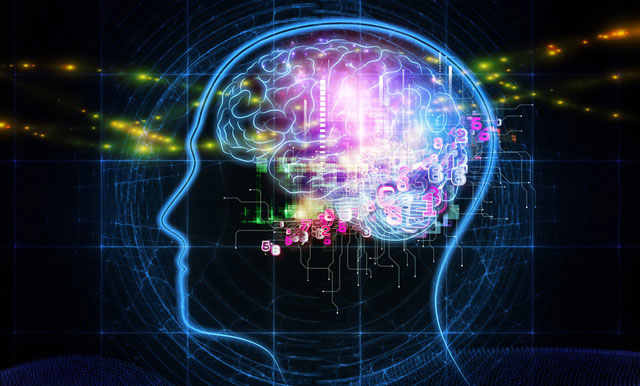
    Imagine opening a computer and finding that  the manufacturer hasn’t bothered to provide multicoloured wires in the tangle of cords. Now multiply that tangle of grey wires by 100m, unplug the power cord — and then try to follow the signals from each keystroke through those wires to an answer on the computer screen.

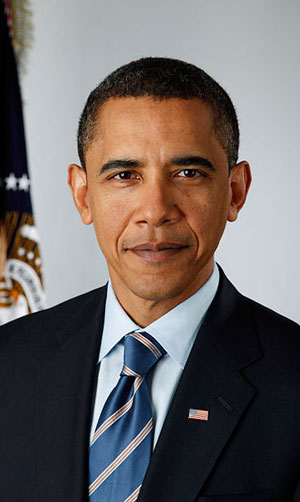
    That’s the challenge US president Barack Obama appears to have laid down for scientists a few months ago, with his “moonshot” plan to map the human brain in 10 years.

    A “dream team” of 15 neuroscientists is to get R900m in start-up funding to direct a national effort comparable to the human genome project, and which may cost more than R30bn in the next decade.

    At stake, according to some experts, is the only realistic route to curing both degenerative diseases, such as Alzheimer’s and Parkinson’s, as well as neurological disorders such as epilepsy, autism and schizophrenia.

    Experts told the Mail & Guardian that many cures — perhaps even for violent psychosis — could lie simply in blocking misfiring cells, if only we knew where they were.

    Some were optimistic, largely based on the recent invention of two breakthrough mapping tools by a bioengineering genius at Stanford University, Karl Deisseroth, the superstar in Obama’s dream team.

    But Vivienne Russell, associate professor of neuroscience at the University of Cape Town, says their challenge was far beyond the sheer number of “wires”, with about 100bn brain cells and perhaps a trillion brain connections.

    Russell says medical science already fully understands our other organs. “If you understand one kidney cell or liver cell, you understand them all.”

    But no two brain cells, or neurons, do exactly the same thing, she says, and many are wildly different.

    So mapping a kidney is a bit like understanding the ecology of a commercial timber forest, where researchers can walk on the neat, bare ground among identical trees.

    To date, mapping the brain has been like trying to understand the Amazon jungle, where researchers must try to grasp all the interacting flora and fauna from an aircraft flying overhead.

    Russell said a map of the brain could lead to effective treatments for disorders such as epilepsy, but said degenerative disorders would require additional understanding of the chemistry of the cells. “We need to know why neurons die,” she said.

    Critics of Obama’s plan — many of them neuroscientists — argue the mission either puts all brain research eggs in one basket or that it is “insanely ambitious”.

    That’s because the human brain is the most complex object known in the universe, and by far the most difficult maze to solve.

    To be precise, it was recently confirmed at Harvard’s Center for Brain Science that a human infant’s brain is the most complicated known object, with three times the brain connections of adults.

    The research showed that most of these “dry up” and fall off as a baby learns it doesn’t need them, or as rival connections compete with each other.

    This lab has pioneered one of the key tools, called “Brainbow”, for telling individual brain cells apart — including the bushy dendrites, the cell body, the sausage-like axon, and the sparkplug-like synapse gap — from the dense forest of cells around it.

    When the M&G visited the centre, near the iconic, facebrick Harvard Yard, it looked more like a computer lab than anything to do with biology.

    That’s partly because the brain tissue analysed here is sliced into sections 1000th the width of a human hair.

    Even a tissue film that thin is swarming with an impossible tangle of axons, so researchers here use genes from jellyfish and other animals to dye each neuron one of 16 phosphorescent colours.
    Barack Obama
    Barack Obama

    And so — like reverse engineering an old computer hard drive — they can follow a single, say, yellow-green axon on either side of a knot of cells.

    Prof Jeff Lichtman, the Brainbow team leader, warns that Obama’s challenge, called Brain Research through Advancing Innovative Neurotechnologies — Brain, for short, “at the moment is not yet a project”, and that its focus was not yet clear.

    Lichtman said he was optimistic about the project’s benefits for disease if it focused on “wiring”, but not so if it sought to map the brain’s “firing”.

    “The president’s advisers have raised the idea of a ‘brain activity map’ — and it’s the ‘activity’ part of that which concerns me,” he said. “We have a long way to go before we have even a fundamental understanding of this organ, much less trying to map the electric pulses running through its circuits. If you map the wiring, you’ll know when you’re done, but how do you finish a map of electric signals?”

    For a wiring map, Lichtman said the Brainbow technique could be used in conjunction with a breakthrough technique announced by Deisseroth’s team at Stanford last month. Called “Clarity”, the method turns the opaque brain into a transparent, jelly-like organ, allowing scientists to trace nerve fibres deep into the tissue.

    The technique dissolves fats while leaving most proteins undamaged.

    Meanwhile, Deisseroth has also pioneered a second method, called “optogenetics”, which can control individual brain cells with light-sensitive proteins.

    Lichtman said Deisseroth’s breakthroughs were critical because functional magnetic resonance imaging scanners had resolutions far too limited to track individual nerve cells.

    Another way to understand the scale of the challenge is this: Obama’s “dream team”, using MRIs, optogenetics and supercomputers, will start their map with a conceptual tool no more advanced than the 120-year-old drawings of an eccentric Spanish artist.

    In the 1880s, Ramón Cajal produced sketches of what he claimed were whole brain cells and neural networks, for which he was derided by senior scientists.

    At the time, neurons were unknown; the nervous system was assumed to be made up of “grey matter” — a blob known as “reticulum”, which was merely nourished by round nerve cells.

    Cajal created his own drawings from coloured stains under a microscope, and figured out modern neuroscience through “pure deductive reasoning”.

    But he didn’t just draw the thread-like individual nerve cells, complete with dendrites, synapses, and complicated neural network trees.

    Audaciously, Cajal also included arrows, to show which direction the current of thought was flowing.

    According to Lichtman, the arrows, in particular, were “absolute intuitive genius” — and admitted that “we haven’t learned very much more” about the brain’s microcircuitry in the century of research since.

    He said Cajal simply looked at brain cells and understood, the way Isaac Newton understood gravity or Tesla understood electricity.

    Now, groups such as the US’s Alzheimers Association — which supports Obama’s push — are hoping people like Deisseroth can make similar leaps.

    New York University neuroscientist Rodolfo Llinás recently wrote: “To many of us, Ramon Cajal personifies, above all, the belief that we actually can understand the nervous system.”

    Lichtman said it had taken years, using a supercomputer in his lab, to map the nerve cells that cause a mouse’s ear to twitch.

    Asked whether brain circuits could be mapped within 10 years, as per Obama’s challenge, Lichtman gave an answer that was all the more extraordinary, and depressing, for his enthusiasm: “Yes — we could perhaps map a full cubic millimetre of brain in a decade; it’s doable!”  — (c) 2013 Mail & Guardian

    • Visit the Mail & Guardian Online, the smart news source

    Barack Obama Jeff Lichtman Ramón Cajal Rodolfo Llinás Vivienne Russell
    WhatsApp YouTube Follow on Google News Add as preferred source on Google
    Share. Facebook Twitter LinkedIn WhatsApp Telegram Email Copy Link
    Previous ArticleUproar over TV ratings
    Next Article SA post office goes hi-tech

    Related Posts

    Beware the digital demagogues

    Beware the digital demagogues

    19 August 2024

    A hack like this could start the next World War

    8 March 2021

    In hidden message on White House website, Biden calls for coders

    21 January 2021
    Company News
    How Norton is protecting digital lives in a hostile online world - Avert ITD Avert IT Distribution

    How Norton is protecting digital lives in a hostile online world

    20 January 2026
    Beyond the hype: trust is the first step to generative AI ROI

    Beyond the hype: trust is the first step to generative AI ROI

    19 January 2026
    New Planet Energy and Span Africa launch landmark solar project

    New Planet Energy and Span Africa launch landmark solar project

    19 January 2026
    Opinion
    AI moves from pilots to production in South African companies - Nazia Pillay SAP

    AI moves from pilots to production in South African companies

    20 January 2026
    ANC's attack on Solly Malatsi shows how BEE dogma trumps economic reality - Duncan McLeod

    ANC’s attack on Solly Malatsi shows how BEE dogma trumps economic reality

    14 December 2025
    Netflix, Warner Bros deal raises fresh headaches for MultiChoice - Duncan McLeod

    Netflix, Warner Bros deal raises fresh headaches for MultiChoice

    5 December 2025

    Subscribe to Updates

    Get the best South African technology news and analysis delivered to your e-mail inbox every morning.

    Latest Posts
    South Africa's new fibre broadband battle

    South Africa’s new fibre broadband battle

    20 January 2026
    South Africa needs a national 'quantum defence strategy'

    South Africa needs a national ‘quantum defence strategy’

    20 January 2026
    AI moves from pilots to production in South African companies - Nazia Pillay SAP

    AI moves from pilots to production in South African companies

    20 January 2026
    Taiwan, US strike strategic AI and chip supply-chain pact - TSMC

    Taiwan, US strike strategic AI and chip supply-chain pact

    20 January 2026
    © 2009 - 2026 NewsCentral Media
    • Cookie policy (ZA)
    • TechCentral – privacy and Popia

    Type above and press Enter to search. Press Esc to cancel.

    Manage consent

    TechCentral uses cookies to enhance its offerings. Consenting to these technologies allows us to serve you better. Not consenting or withdrawing consent may adversely affect certain features and functions of the website.

    Functional Always active
    The technical storage or access is strictly necessary for the legitimate purpose of enabling the use of a specific service explicitly requested by the subscriber or user, or for the sole purpose of carrying out the transmission of a communication over an electronic communications network.
    Preferences
    The technical storage or access is necessary for the legitimate purpose of storing preferences that are not requested by the subscriber or user.
    Statistics
    The technical storage or access that is used exclusively for statistical purposes. The technical storage or access that is used exclusively for anonymous statistical purposes. Without a subpoena, voluntary compliance on the part of your Internet Service Provider, or additional records from a third party, information stored or retrieved for this purpose alone cannot usually be used to identify you.
    Marketing
    The technical storage or access is required to create user profiles to send advertising, or to track the user on a website or across several websites for similar marketing purposes.
    • Manage options
    • Manage services
    • Manage {vendor_count} vendors
    • Read more about these purposes
    View preferences
    • {title}
    • {title}
    • {title}