Close Menu
TechCentralTechCentral

    Subscribe to the newsletter

    Get the best South African technology news and analysis delivered to your e-mail inbox every morning.

    Facebook X (Twitter) YouTube LinkedIn
    WhatsApp Facebook X (Twitter) LinkedIn YouTube
    TechCentralTechCentral
    • News
      South Africa is behind its neighbours on the plumbing of digital IDs

      South Africa is behind its neighbours on the plumbing of digital IDs

      11 September 2026
      South Africa to extradite US cyberfraud-gang suspects to US

      South Africa to extradite cyberfraud-gang suspects to US

      11 September 2026
      Newspaper group Caxton deploys AI editors

      Newspaper group Caxton deploys AI copy editors

      11 September 2026
      So, who exactly will buy Apple's R50 000 iPhone Duo

      Why Apple can’t tell you who its R50 000 iPhone is for

      11 September 2026
      'There are no adults in the room': the AI safety exodus

      ‘There are no adults in the room’: the AI safety exodus

      11 September 2026
    • World
      'This is not circular': Jensen Huang defends $3.5-billion MediaTek deal

      ‘This is not circular’: Jensen Huang defends $3.5-billion MediaTek deal

      2 September 2026
      AI-generated music banned from Australian charts

      AI-generated music banned from Australian charts

      26 August 2026
      Traders brace for a R4.5-trillion swing in Nvidia's value

      Traders brace for a R4.5-trillion swing in Nvidia’s value

      25 August 2026
      Russia building its own Starlink - and faster than expected - Vadym Skibitskyi

      Russia building its own Starlink – and faster than expected

      11 August 2026
      Meta AI will now tell parents if their teen is in crisis

      Meta AI will now tell parents if their teen is in crisis

      17 July 2026
    • In-depth
      Google DeepMind CEO Demis Hassabis. Image: John Sears

      The plan to stop AI from breaking the world

      16 July 2026
      The internet has a Strait of Hormuz problem

      The internet has a Strait of Hormuz problem

      15 July 2026
      AI boom sparks rally, frenzy and fear

      AI boom sparks rally, frenzy and fear

      11 June 2026
      Every plug-in hybrid on sale in South Africa, ranked by price - Lamborghini Temerario

      Every plug-in hybrid on sale in South Africa, ranked by price

      7 June 2026
      What Wi-Fi 8 will mean for wireless networks

      What Wi-Fi 8 will mean for wireless networks

      1 June 2026
    • TCS
      Meet the CIO | Shoprite's Chris Shortt on what a supermarket becomes

      Meet the CIO | Shoprite’s Chris Shortt on what a supermarket becomes

      9 September 2026
      Rubicon's EV charging network is profitable - and growing fast - Watts & Wheels

      Rubicon’s EV charging network is profitable – and growing fast

      8 September 2026
      Winstone Jordaan on building a national EV charging network

      Winstone Jordaan on building a national EV charging network

      2 September 2026
      Watts & Wheels S1E8: 'Tesla lands in Africa, just not here'

      Watts & Wheels S1E8: ‘Tesla lands in Africa, just not here’

      24 August 2026
      TCS | Herotel CEO Van Zyl Botha on beating Starlink to South Africa

      TCS | Herotel CEO Van Zyl Botha on beating Starlink to South Africa

      14 August 2026
    • Opinion
      The fragile joint in the Capitec machine - Pambos Soteriades

      The R197-billion market the banks can’t reach

      25 August 2026
      South African tech's compounding debt problem - Jannie van Zyl

      Management consulting as we know it is over

      21 August 2026
      South African tech's compounding debt problem - Jannie van Zyl

      The most dangerous customer is the quiet one

      10 August 2026
      South African tech's compounding debt problem - Jannie van Zyl

      South African tech’s compounding debt problem

      29 July 2026
      The fragile joint in the Capitec machine - Pambos Soteriades

      Best network, worst vibes: the puzzle of SA telecoms

      20 July 2026
    • Company Hubs
      • 1Stream
      • Africa Data Centres
      • AfriGIS
      • Altron Digital Business
      • Altron Document Solutions
      • Altron Group
      • Arctic Wolf
      • Ascent Technology
      • AvertITD
      • BBD
      • Braintree
      • CallMiner
      • CambriLearn
      • CM.com
      • Contactable
      • CYBER1 Solutions
      • Digicloud Africa
      • Digimune
      • Domains.co.za
      • ESET
      • Euphoria Telecom
      • HOSTAFRICA
      • Incredible Business
      • iONLINE
      • IQbusiness
      • Iris Network Systems
      • Kaspersky
      • LSD Open
      • Mitel
      • NEC XON
      • Netstar
      • Network Platforms
      • Next DLP
      • Ovations
      • Paracon
      • Paratus
      • Q-KON
      • SevenC
      • SkyWire
      • Solid8 Technologies
      • Telit Cinterion
      • Telviva
      • Tenable
      • Vertiv
      • Videri Digital
      • Vodacom Business
      • Vox
      • Wipro
      • Workday
      • XLink
    • Sections
      • AI and machine learning
      • Banking
      • Broadcasting and Media
      • Cloud services
      • Contact centres and CX
      • Cryptocurrencies
      • Education and skills
      • Electronics and hardware
      • Energy and sustainability
      • Enterprise software
      • Financial services
      • HealthTech
      • Information security
      • Internet and connectivity
      • Internet of Things
      • Investment
      • IT services
      • Lifestyle
      • Policy and regulation
      • Public sector
      • Retail and e-commerce
      • Satellite communications
      • Science
      • SMEs and start-ups
      • Social media
      • Talent and leadership
      • Telecoms
      • Watts & Wheels
    • Events
    • Advertise
    TechCentralTechCentral
    Home » In-depth » Greater urgency required to solve South Africa’s energy crisis

    Greater urgency required to solve South Africa’s energy crisis

    By The Conversation21 February 2022
    Twitter LinkedIn Facebook WhatsApp Email Telegram Copy Link
    Get breaking news on WhatsApp

    South Africa’s electricity infrastructure has been degrading in the past decade, with both scheduled and unscheduled power outages on the increase. Despite slowed economic activity due to the Covid-19 pandemic, the country experienced 1 130 hours of planned power cuts in 2021, the highest ever.

    This not only leads to anger and frustration among the public, but also clearly handicaps businesses and their productivity. The alleviation of the electricity crisis is therefore a critical precondition for the country’s economic recovery. This is why observers have been watching the President Cyril Ramaphosa’s strategy and its implementation with much anticipation.

    In the 2021 state of the nation address, Ramaphosa listed “the rapid expansion of our energy generation capacity” as one of government’s five top priorities. This year he reiterated that this had not changed. This would clearly be a major deliverable on which his government’s success would be judged on.

    A revised plan is needed, especially in view of the rapid developments in energy-generating technologies

    In his 2022 state of the nation address, he didn’t touch on an issue that would have raised confidence that his government is making progress on energy. He didn’t give any indications of plans to review the Integrated Resource Plan. The last Integrated Resource Plan was adopted in 2019. The plan, which guides power station development and associated timelines, should be reviewed every two years.

    A revised plan is needed, especially in view of the rapid developments in energy-generating technologies. The 2019 plan is effectively already obsolete, and updated projections are likely to lead to substantially changed optimal electricity generating scenarios.

    The 2019 Integrated Resource Plan made provision for immediate action to construct 1.6GW of wind power, 1GW of solar power and 513MW of electricity storage capacity to bring on line by 2022. But these are only expected to be ready in early 2024. Projects due to be completed in 2023 include another 2.6GW of wind and solar and 750MW of new coal, but the process to identify the sites and developers hasn’t started. This means that all these initiatives are two years behind schedule.

    Mr Coal

    The coal project is facing severe headwinds as a consequence of changed perceptions of coal due to its role in global warming. But there’s no excuse for the delays in initiating the officially endorsed plan to develop the renewable energy plants.

    Energy minister Gwede Mantashe, the implementer in chief of the Integrated Resource Plan, has been a vocal supporter of the formerly dominant (but now increasingly less popular) coal, gas and nuclear sectors. Most recently, however, he has tried to reassure the solar and wind sectors that, despite perceptions to the contrary, he also supports renewable energy.

    South Africa cannot solve a pressing energy crisis while senior government figures seem to openly disagree on the way forward. The message of joint commitment to the implementation of the electricity plan is therefore to be welcomed. Confidence would be further cemented by concerted attempts to reclaim lagging roll-out timelines and immediate moves to update the energy plan.

    In the 2021 state of the nation address the President said the procurement of the first and second sets of renewable energy developments would commence in February and August 2021 respectively. The first target was achieved, but the second was postponed twice, first to January 2022, and then, late March 2022.

    For this year’s address, Ramaphosa indicated that the call for applications to procure the now severely delayed storage allocation as well as 3GW of gas-generating capacity would be made later this year. This is insufficient to catch up with the backlog of new power plants.
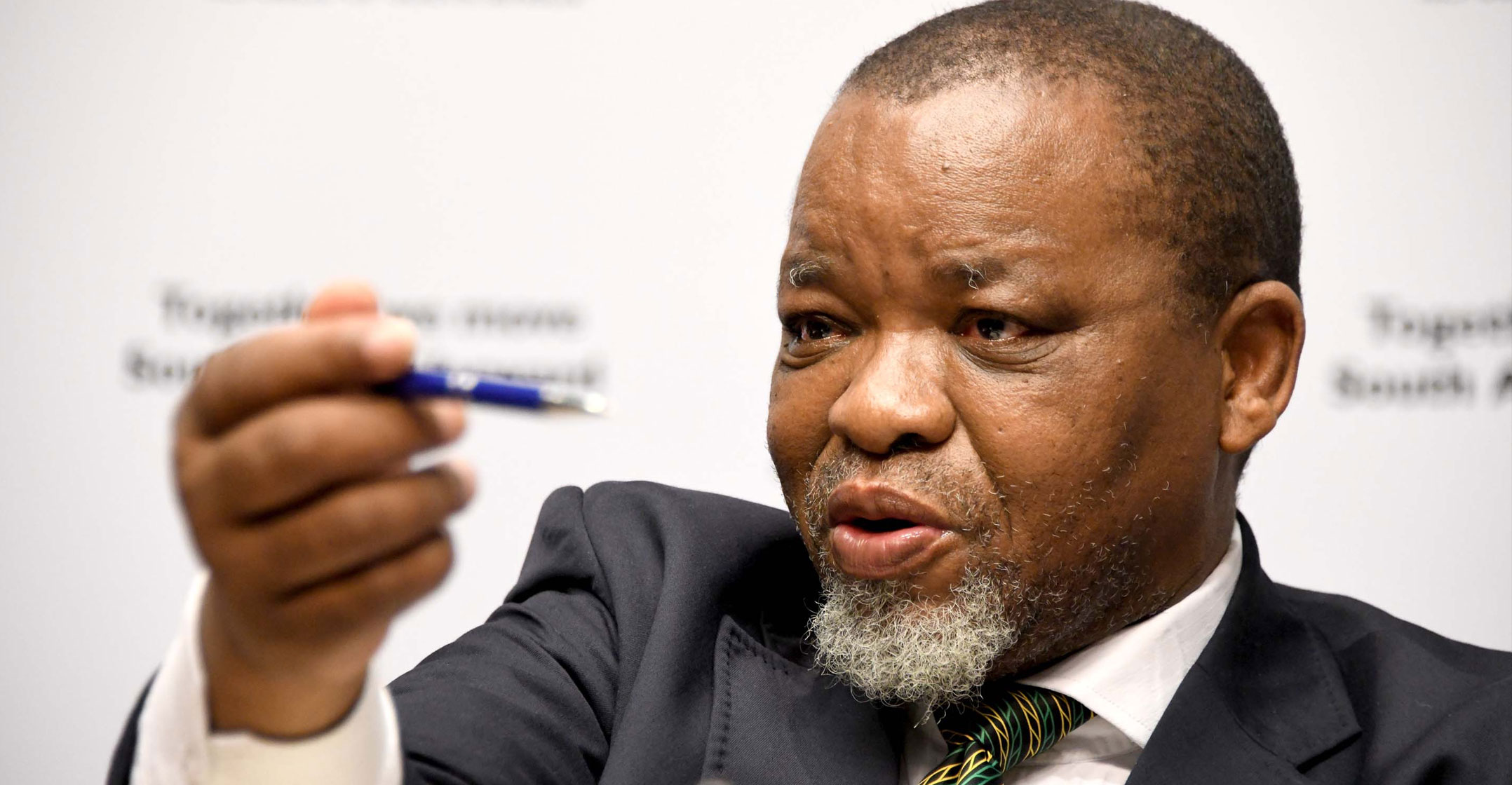
    Gwede Mantashe

    The president also steered clear of controversial energy developments.

    He didn’t say anything about the completion of the massive Kusile coal plant, which together with its twin Medupi, has been bedevilled by massive delays, cost overruns and inexplicable breakdowns of the still new machinery.

    He was also silent on the 1.5GW of new coal plants envisaged under the Integrated Resource Plan, which would normally be expected to be allocated to developers soon. This may be a deliberate effort to play down any ambitions the country may have on this front so that these do not jeopardise R131-billion of foreign grants and loans expected in exchange for adopting a climate-friendly energy development path.

    Also not mentioned were the controversial gas ship emergency power initiative and the refurbishing of the Koeberg nuclear plant.

    Instead, he praised a Northern Cape green hydrogen generation initiative – a storage technology that is mostly envisaged to work in tandem with renewable energy generation – even though this programme is still in the relatively early planning stages.

    The president’s biggest successes in the last year have been in regulatory matters. He eased power production licensing requirements to make it much easier for entities to set up power plants of up to 100MW. This eased a bottleneck that has led to many more mines, municipalities and other private entities taking steps to establish their own power generating capacity.

    To convince the sceptical nation that the energy crisis was being dealt with, the president needed something new

    In his speech, Ramaphosa highlighted that this capacity is projected to reach 4GW for mines and 1.4GW for municipalities. This is considerably higher than would have been envisaged as little as five years ago. This will go some way to bridging the electricity shortfall.

    To convince the sceptical nation that the energy crisis was being dealt with, the president needed something new. To do that, on the day of the address, government released for public comment a draft revised electricity bill. This includes several proposed reforms that would erode the monopoly of the national electricity utility, Eskom.

    The draft bill further establishes the operational framework for new entities that would result from an unbundled Eskom, a process that is expected to reach completion this year.

    Debates on the impact of this new bill and around potential modifications will be prominent in the months to come, and the outcome of this process will decisively shape the future of electricity developments in South Africa.

    In particular, the bill will boost small-scale private electricity production – also referred to as “embedded” generation – and outstrip its contribution projected in the current Integrated Resource Plan. Technological advances in electricity storage are also making it viable to use larger fractions of intermittent solar and wind power than previously anticipated.

    This calls for a redetermination of South Africa’s optimal electricity mix through a new Integrated Resource Plan. The work towards this must start now.The Conversation

    • Written by Hartmut Winkler, professor of physics, University of Johannesburg
    • This article is republished from The Conversation under a Creative Commons licence

    Add TechCentral as a preferred source on GoogleFollow TechCentral on Google NewsGet breaking news on WhatsApp


    Cyril Ramaphosa Eskom Gwede Mantashe Hartmut Winkler
    WhatsApp YouTube
    Share. Facebook Twitter LinkedIn WhatsApp Telegram Email Copy Link
    Previous ArticleNaspers tumbles even as Tencent quashes China crackdown fears
    Next Article All six bidders qualify for next month’s spectrum auction

    Related Posts

    South Africa is behind its neighbours on the plumbing of digital IDs

    South Africa is behind its neighbours on the plumbing of digital IDs

    11 September 2026
    Can an online school produce a scientist? CambriLearn has an independent answer

    Can an online school produce a scientist? CambriLearn has an independent answer

    9 September 2026
    R1.5-billion to switch off the sun

    R1.5-billion to switch off the sun

    7 September 2026
    Company News
    Why businesses are moving n8n onto their own servers - Domains.co.za

    Why businesses are moving n8n onto their own servers

    11 September 2026
    Nitda, NDPC and Galaxy Backbone back CyFrica 2026

    Nitda, NDPC and Galaxy Backbone back CyFrica 2026

    11 September 2026
    Can an online school produce a scientist? CambriLearn has an independent answer

    Can an online school produce a scientist? CambriLearn has an independent answer

    9 September 2026
    Opinion
    The fragile joint in the Capitec machine - Pambos Soteriades

    The R197-billion market the banks can’t reach

    25 August 2026
    South African tech's compounding debt problem - Jannie van Zyl

    Management consulting as we know it is over

    21 August 2026
    South African tech's compounding debt problem - Jannie van Zyl

    The most dangerous customer is the quiet one

    10 August 2026

    Subscribe to Updates

    Get the best South African technology news and analysis delivered to your e-mail inbox every morning.

    Latest Posts
    South Africa is behind its neighbours on the plumbing of digital IDs

    South Africa is behind its neighbours on the plumbing of digital IDs

    11 September 2026
    South Africa to extradite US cyberfraud-gang suspects to US

    South Africa to extradite cyberfraud-gang suspects to US

    11 September 2026
    Newspaper group Caxton deploys AI editors

    Newspaper group Caxton deploys AI copy editors

    11 September 2026
    Why businesses are moving n8n onto their own servers - Domains.co.za

    Why businesses are moving n8n onto their own servers

    11 September 2026
    © 2009 - 2026 NewsCentral Media
    Built and maintained by Chronon
    • Cookie policy (ZA)
    • TechCentral – privacy and Popia

    Type above and press Enter to search. Press Esc to cancel.

    Manage consent

    TechCentral uses cookies to enhance its offerings. Consenting to these technologies allows us to serve you better. Not consenting or withdrawing consent may adversely affect certain features and functions of the website.

    Functional Always active
    The technical storage or access is strictly necessary for the legitimate purpose of enabling the use of a specific service explicitly requested by the subscriber or user, or for the sole purpose of carrying out the transmission of a communication over an electronic communications network.
    Preferences
    The technical storage or access is necessary for the legitimate purpose of storing preferences that are not requested by the subscriber or user.
    Statistics
    The technical storage or access that is used exclusively for statistical purposes. The technical storage or access that is used exclusively for anonymous statistical purposes. Without a subpoena, voluntary compliance on the part of your Internet Service Provider, or additional records from a third party, information stored or retrieved for this purpose alone cannot usually be used to identify you.
    Marketing
    The technical storage or access is required to create user profiles to send advertising, or to track the user on a website or across several websites for similar marketing purposes.
    • Manage options
    • Manage services
    • Manage {vendor_count} vendors
    • Read more about these purposes
    View preferences
    • {title}
    • {title}
    • {title}