Close Menu
TechCentralTechCentral

    Subscribe to the newsletter

    Get the best South African technology news and analysis delivered to your e-mail inbox every morning.

    Facebook X (Twitter) YouTube LinkedIn
    WhatsApp Facebook X (Twitter) LinkedIn YouTube
    TechCentralTechCentral
    • News
      Big Microsoft 365 price increases coming next year

      Big Microsoft price increases coming next year

      5 December 2025
      Vodacom to take control of Safaricom in R36-billion deal - Shameel Joosub

      Vodacom to take control of Safaricom in R36-billion deal

      4 December 2025
      Black Friday goes digital in South Africa as online spending surges to record high

      Black Friday goes digital in South Africa as online spending surges to record high

      4 December 2025
      BYD takes direct aim at Toyota with launch of sub-R500 000 Sealion 5 PHEV

      BYD takes direct aim at Toyota with launch of sub-R500 000 Sealion 5 PHEV

      4 December 2025
      'Get it now': Takealot in new instant deliveries pilot

      ‘Get it now’: Takealot in new instant deliveries pilot

      4 December 2025
    • World
      Amazon and Google launch multi-cloud service for faster connectivity

      Amazon and Google launch multi-cloud service for faster connectivity

      1 December 2025
      Google makes final court plea to stop US breakup

      Google makes final court plea to stop US breakup

      21 November 2025
      Bezos unveils monster rocket: New Glenn 9x4 set to dwarf Saturn V

      Bezos unveils monster rocket: New Glenn 9×4 set to dwarf Saturn V

      21 November 2025
      Tech shares turbocharged by Nvidia's stellar earnings

      Tech shares turbocharged by stellar Nvidia earnings

      20 November 2025
      Config file blamed for Cloudflare meltdown that disrupted the web

      Config file blamed for Cloudflare meltdown that disrupted the web

      19 November 2025
    • In-depth
      Jensen Huang Nvidia

      So, will China really win the AI race?

      14 November 2025
      Valve's Linux console takes aim at Microsoft's gaming empire

      Valve’s Linux console takes aim at Microsoft’s gaming empire

      13 November 2025
      iOCO's extraordinary comeback plan - Rhys Summerton

      iOCO’s extraordinary comeback plan

      28 October 2025
      Why smart glasses keep failing - no, it's not the tech - Mark Zuckerberg

      Why smart glasses keep failing – it’s not the tech

      19 October 2025
      BYD to blanket South Africa with megawatt-scale EV charging network - Stella Li

      BYD to blanket South Africa with megawatt-scale EV charging network

      16 October 2025
    • TCS
      TCS+ | How Cloud on Demand helps partners thrive in the AWS ecosystem - Odwa Ndyaluvane and Xenia Rhode

      TCS+ | How Cloud On Demand helps partners thrive in the AWS ecosystem

      4 December 2025
      TCS | MTN Group CEO Ralph Mupita on competition, AI and the future of mobile

      TCS | Ralph Mupita on competition, AI and the future of mobile

      28 November 2025
      TCS | Dominic Cull on fixing South Africa's ICT policy bottlenecks

      TCS | Dominic Cull on fixing South Africa’s ICT policy bottlenecks

      21 November 2025
      TCS | BMW CEO Peter van Binsbergen on the future of South Africa's automotive industry

      TCS | BMW CEO Peter van Binsbergen on the future of South Africa’s automotive industry

      6 November 2025
      TCS | Why Altron is building an AI factory - Bongani Andy Mabaso

      TCS | Why Altron is building an AI factory in Johannesburg

      28 October 2025
    • Opinion
      Your data, your hardware: the DIY AI revolution is coming - Duncan McLeod

      Your data, your hardware: the DIY AI revolution is coming

      20 November 2025
      Zero Carbon Charge founder Joubert Roux

      The energy revolution South Africa can’t afford to miss

      20 November 2025
      It's time for a new approach to government IT spend in South Africa - Richard Firth

      It’s time for a new approach to government IT spend in South Africa

      19 November 2025
      How South Africa's broken Rica system fuels murder and mayhem - Farhad Khan

      How South Africa’s broken Rica system fuels murder and mayhem

      10 November 2025
      South Africa's AI data centre boom risks overloading a fragile grid - Paul Colmer

      South Africa’s AI data centre boom risks overloading a fragile grid

      30 October 2025
    • Company Hubs
      • Africa Data Centres
      • AfriGIS
      • Altron Digital Business
      • Altron Document Solutions
      • Altron Group
      • Arctic Wolf
      • AvertITD
      • Braintree
      • CallMiner
      • CambriLearn
      • CYBER1 Solutions
      • Digicloud Africa
      • Digimune
      • Domains.co.za
      • ESET
      • Euphoria Telecom
      • Incredible Business
      • iONLINE
      • IQbusiness
      • Iris Network Systems
      • LSD Open
      • NEC XON
      • Netstar
      • Network Platforms
      • Next DLP
      • Ovations
      • Paracon
      • Paratus
      • Q-KON
      • SevenC
      • SkyWire
      • Solid8 Technologies
      • Telit Cinterion
      • Tenable
      • Vertiv
      • Videri Digital
      • Vodacom Business
      • Wipro
      • Workday
      • XLink
    • Sections
      • AI and machine learning
      • Banking
      • Broadcasting and Media
      • Cloud services
      • Contact centres and CX
      • Cryptocurrencies
      • Education and skills
      • Electronics and hardware
      • Energy and sustainability
      • Enterprise software
      • Financial services
      • Information security
      • Internet and connectivity
      • Internet of Things
      • Investment
      • IT services
      • Lifestyle
      • Motoring
      • Public sector
      • Retail and e-commerce
      • Satellite communications
      • Science
      • SMEs and start-ups
      • Social media
      • Talent and leadership
      • Telecoms
    • Events
    • Advertise
    TechCentralTechCentral
    Home » Sections » Information security » Hackers could shut down satellites – or turn them into weapons

    Hackers could shut down satellites – or turn them into weapons

    By The Conversation12 February 2020
    Twitter LinkedIn Facebook WhatsApp Email Telegram Copy Link
    News Alerts
    WhatsApp
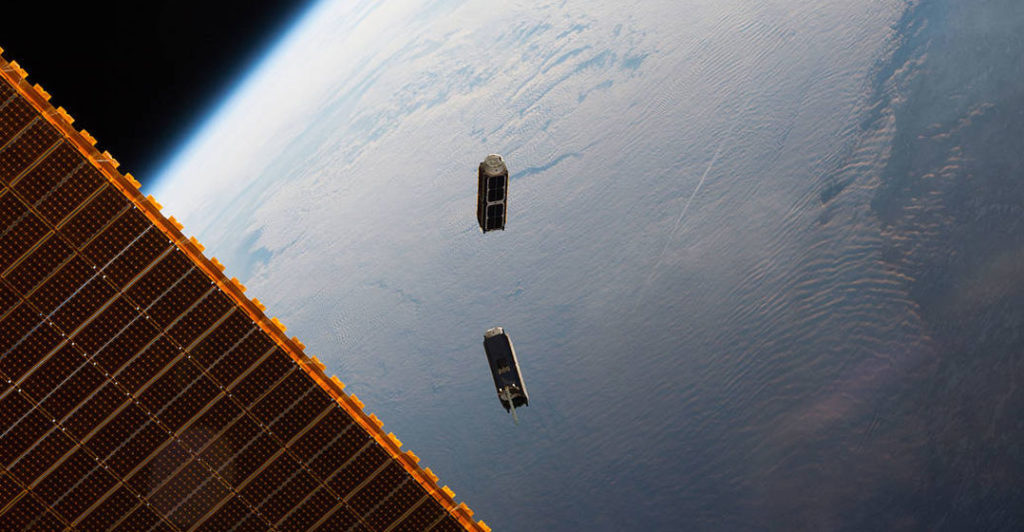
    Two CubeSats, part of a constellation built and operated by Planet Labs to take images of Earth, were launched from the International Space Station on 17 May 2016. Image: Nasa

    Last month, SpaceX became the operator of the world’s largest active satellite constellation. As of the end of January, the company had 242 satellites orbiting the planet with plans to launch 42 000 over the next decade. This is part of its ambitious project to provide Internet access across the globe. The race to put satellites in space is on, with Amazon,com, UK-based OneWeb and other companies chomping at the bit to place thousands of satellites in orbit in the coming months.

    These new satellites have the potential to revolutionise many aspects of everyday life – from bringing Internet access to remote corners of the globe to monitoring the environment and improving global navigation systems. Amid all the fanfare, a critical danger has flown under the radar: the lack of cybersecurity standards and regulations for commercial satellites. As a scholar who studies cyber conflict, I’m keenly aware that this, coupled with satellites’ complex supply chains and layers of stakeholders, leaves them highly vulnerable to cyberattacks.

    If hackers were to take control of these satellites, the consequences could be dire. On the mundane end of scale, hackers could simply shut satellites down, denying access to their services. Hackers could also jam or spoof the signals from satellites, creating havoc for critical infrastructure. This includes electric grids, water networks and transportation systems.

    Makers of these satellites, particularly small CubeSats, use off-the-shelf technology to keep costs low

    Some of these new satellites have thrusters that allow them to speed up, slow down and change direction in space. If hackers took control of these steerable satellites, the consequences could be catastrophic. Hackers could alter the satellites’ orbits and crash them into other satellites or even the International Space Station.

    Makers of these satellites, particularly small CubeSats, use off-the-shelf technology to keep costs low. The wide availability of these components means hackers can analyse them for vulnerabilities. In addition, many of the components draw on open-source technology. The danger here is that hackers could insert back doors and other vulnerabilities into satellites’ software.

    Complicated

    The highly technical nature of these satellites also means multiple manufacturers are involved in building the various components. The process of getting these satellites into space is also complicated, involving multiple companies. Even once they are in space, the organisations that own the satellites often outsource their day-to-day management to other companies. With each additional vendor, the vulnerabilities increase as hackers have multiple opportunities to infiltrate the system.

    Hacking some of these CubeSats may be as simple as waiting for one of them to pass overhead and then sending malicious commands using specialised ground antennas. Hacking more sophisticated satellites might not be that hard either.

    Satellites are typically controlled from ground stations. These stations run computers with software vulnerabilities that can be exploited by hackers. If hackers were to infiltrate these computers, they could send malicious commands to the satellites.

    This scenario played out in 1998 when hackers took control of the US/German Rosat x-ray satellite. They did it by hacking into computers at the Goddard Space Flight Centre in Maryland. The hackers then instructed the satellite to aim its solar panels directly at the sun. This effectively fried its batteries and rendered the satellite useless. The defunct satellite eventually crashed back to Earth in 2011. Hackers could also hold satellites for ransom, as happened in 1999 when hackers took control of the UK’s SkyNet satellites.

    Over the years, the threat of cyberattacks on satellites has become more dire. In 2008, hackers, possibly from China, reportedly took full control of two Nasa satellites, one for about two minutes and the other for about nine minutes. In 2018, another group of Chinese state-backed hackers reportedly launched a sophisticated hacking campaign aimed at satellite operators and defence contractors. Iranian hacking groups have also attempted similar attacks.

    Although the US department of defence and National Security Agency have made some efforts to address space cybersecurity, the pace has been slow. There are currently no cybersecurity standards for satellites and no governing body to regulate and ensure their cybersecurity. Even if common standards could be developed, there are no mechanisms in place to enforce them. This means responsibility for satellite cybersecurity falls to the individual companies that build and operate them.

    As they compete to be the dominant satellite operator, SpaceX and rival companies are under increasing pressure to cut costs

    As they compete to be the dominant satellite operator, SpaceX and rival companies are under increasing pressure to cut costs. There is also pressure to speed up development and production. This makes it tempting for the companies to cut corners in areas like cybersecurity that are secondary to actually getting these satellites in space.

    Even for companies that make a high priority of cybersecurity, the costs associated with guaranteeing the security of each component could be prohibitive. This problem is even more acute for low-cost space missions, where the cost of ensuring cybersecurity could exceed the cost of the satellite itself.

    To compound matters, the complex supply chain of these satellites and the multiple parties involved in their management means it’s often not clear who bears responsibility and liability for cyber breaches. This lack of clarity has bred complacency and hindered efforts to secure these important systems.

    Government involvement

    Some analysts have begun to advocate for strong government involvement in the development and regulation of cybersecurity standards for satellites and other space assets. The US congress could work to adopt a comprehensive regulatory framework for the commercial space sector. For instance, it could pass legislation that requires satellites manufacturers to develop a common cybersecurity architecture.

    It could also mandate the reporting of all cyber breaches involving satellites. There also needs to be clarity on which space-based assets are deemed critical in order to prioritise cybersecurity efforts. Clear legal guidance on who bears responsibility for cyberattacks on satellites will also go a long way to ensuring that the responsible parties take the necessary measures to secure these systems.

    Given the traditionally slow pace of US congressional action, a multi-stakeholder approach involving public-private cooperation may be warranted to ensure cybersecurity standards. Whatever steps government and industry take, it is imperative to act now. It would be a profound mistake to wait for hackers to gain control of a commercial satellite and use it to threaten life, limb and property – here on Earth or in space – before addressing this issue.The Conversation

    • Written by William Akoto, postdoctoral research fellow, University of Denver
    • This article is republished from The Conversation under a Creative Commons licence


    Amazon Nasa SpaceX top
    Subscribe to TechCentral Subscribe to TechCentral
    Share. Facebook Twitter LinkedIn WhatsApp Telegram Email Copy Link
    Previous ArticleCIOs welcome Popi for enforcing data protection
    Next Article Labour, business miss Sona deadline on Eskom pact

    Related Posts

    Black Friday goes digital in South Africa as online spending surges to record high

    Black Friday goes digital in South Africa as online spending surges to record high

    4 December 2025
    Bezos unveils monster rocket: New Glenn 9x4 set to dwarf Saturn V

    Bezos unveils monster rocket: New Glenn 9×4 set to dwarf Saturn V

    21 November 2025
    Starlink risks ceding ground to rivals in South Africa amid licensing battle - Dominic Cull

    Starlink risks ceding ground to rivals in South Africa amid licensing battle

    17 November 2025
    Company News
    AI is not a technology problem - iqbusiness

    AI is not a technology problem – iqbusiness

    5 December 2025
    Telcos are sitting on a data gold mine - but few know what do with it - Phillip du Plessis

    Telcos are sitting on a data gold mine – but few know what do with it

    4 December 2025
    Unlock smarter computing with your surface Copilot+ PC

    Unlock smarter computing with your Surface Copilot+ PC

    4 December 2025
    Opinion
    Your data, your hardware: the DIY AI revolution is coming - Duncan McLeod

    Your data, your hardware: the DIY AI revolution is coming

    20 November 2025
    Zero Carbon Charge founder Joubert Roux

    The energy revolution South Africa can’t afford to miss

    20 November 2025
    It's time for a new approach to government IT spend in South Africa - Richard Firth

    It’s time for a new approach to government IT spend in South Africa

    19 November 2025

    Subscribe to Updates

    Get the best South African technology news and analysis delivered to your e-mail inbox every morning.

    Latest Posts
    Big Microsoft 365 price increases coming next year

    Big Microsoft price increases coming next year

    5 December 2025
    AI is not a technology problem - iqbusiness

    AI is not a technology problem – iqbusiness

    5 December 2025
    Vodacom to take control of Safaricom in R36-billion deal - Shameel Joosub

    Vodacom to take control of Safaricom in R36-billion deal

    4 December 2025
    Black Friday goes digital in South Africa as online spending surges to record high

    Black Friday goes digital in South Africa as online spending surges to record high

    4 December 2025
    © 2009 - 2025 NewsCentral Media
    • Cookie policy (ZA)
    • TechCentral – privacy and Popia

    Type above and press Enter to search. Press Esc to cancel.

    Manage consent

    TechCentral uses cookies to enhance its offerings. Consenting to these technologies allows us to serve you better. Not consenting or withdrawing consent may adversely affect certain features and functions of the website.

    Functional Always active
    The technical storage or access is strictly necessary for the legitimate purpose of enabling the use of a specific service explicitly requested by the subscriber or user, or for the sole purpose of carrying out the transmission of a communication over an electronic communications network.
    Preferences
    The technical storage or access is necessary for the legitimate purpose of storing preferences that are not requested by the subscriber or user.
    Statistics
    The technical storage or access that is used exclusively for statistical purposes. The technical storage or access that is used exclusively for anonymous statistical purposes. Without a subpoena, voluntary compliance on the part of your Internet Service Provider, or additional records from a third party, information stored or retrieved for this purpose alone cannot usually be used to identify you.
    Marketing
    The technical storage or access is required to create user profiles to send advertising, or to track the user on a website or across several websites for similar marketing purposes.
    • Manage options
    • Manage services
    • Manage {vendor_count} vendors
    • Read more about these purposes
    View preferences
    • {title}
    • {title}
    • {title}