

Close Menu
TechCentralTechCentral

    Subscribe to the newsletter

    Get the best South African technology news and analysis delivered to your e-mail inbox every morning.

    Facebook X (Twitter) YouTube LinkedIn
    WhatsApp Facebook X (Twitter) LinkedIn YouTube
    TechCentralTechCentral
    • News
      Digital authoritarianism grows as African states normalise internet blackouts

      Digital authoritarianism grows as African states normalise internet blackouts

      19 December 2025
      Starlink satellite anomaly creates debris in rare orbital mishap

      Starlink satellite anomaly creates debris in rare orbital mishap

      19 December 2025
      TechCentral's South African Newsmakers of 2025

      TechCentral’s South African Newsmakers of 2025

      18 December 2025
      Malatsi buries Post Office's long-dead monopoly

      Malatsi buries Post Office monopoly the market ignored

      18 December 2025
      China races to crack EUV as chip war with the West intensifies

      China races to crack EUV lithography as chip war with the West intensifies

      18 December 2025
    • World
      Trump space order puts the moon back at centre of US, China rivalry - US President Donald Trump

      Trump space order puts the moon back at centre of US, China rivalry

      19 December 2025
      Warner Bros slams the door on Paramount

      Warner Bros slams the door on Paramount

      17 December 2025
      X moves to block bid to revive Twitter brand

      X moves to block bid to revive Twitter brand

      17 December 2025
      Oracle’s AI ambitions face scrutiny on earnings miss

      Oracle’s AI ambitions face scrutiny on earnings miss

      11 December 2025
      China will get Nvidia H200 chips - but not without paying Washington first

      China will get Nvidia H200 chips – but not without paying Washington first

      9 December 2025
    • In-depth
      Black Friday goes digital in South Africa as online spending surges to record high

      Black Friday goes digital in South Africa as online spending surges to record high

      4 December 2025
      Canal+ plays hardball - and DStv viewers feel the pain

      Canal+ plays hardball – and DStv viewers feel the pain

      3 December 2025
      Jensen Huang Nvidia

      So, will China really win the AI race?

      14 November 2025
      Valve's Linux console takes aim at Microsoft's gaming empire

      Valve’s Linux console takes aim at Microsoft’s gaming empire

      13 November 2025
      iOCO's extraordinary comeback plan - Rhys Summerton

      iOCO’s extraordinary comeback plan

      28 October 2025
    • TCS
      TCS+ | Africa's digital transformation - unlocking AI through cloud and culture - Cliff de Wit Accelera Digital Group

      TCS+ | Cloud without culture won’t deliver AI: Accelera’s Cliff de Wit

      12 December 2025
      TCS+ | How Cloud on Demand helps partners thrive in the AWS ecosystem - Odwa Ndyaluvane and Xenia Rhode

      TCS+ | How Cloud On Demand helps partners thrive in the AWS ecosystem

      4 December 2025
      TCS | MTN Group CEO Ralph Mupita on competition, AI and the future of mobile

      TCS | Ralph Mupita on competition, AI and the future of mobile

      28 November 2025
      TCS | Dominic Cull on fixing South Africa's ICT policy bottlenecks

      TCS | Dominic Cull on fixing South Africa’s ICT policy bottlenecks

      21 November 2025
      TCS | BMW CEO Peter van Binsbergen on the future of South Africa's automotive industry

      TCS | BMW CEO Peter van Binsbergen on the future of South Africa’s automotive industry

      6 November 2025
    • Opinion
      Netflix, Warner Bros deal raises fresh headaches for MultiChoice - Duncan McLeod

      Netflix, Warner Bros deal raises fresh headaches for MultiChoice

      5 December 2025
      BIN scans, DDoS and the next cybercrime wave hitting South Africa's banks - Entersekt Gerhard Oosthuizen

      BIN scans, DDoS and the next cybercrime wave hitting South Africa’s banks

      3 December 2025
      Your data, your hardware: the DIY AI revolution is coming - Duncan McLeod

      Your data, your hardware: the DIY AI revolution is coming

      20 November 2025
      Zero Carbon Charge founder Joubert Roux

      The energy revolution South Africa can’t afford to miss

      20 November 2025
      It's time for a new approach to government IT spend in South Africa - Richard Firth

      It’s time for a new approach to government IT spend in South Africa

      19 November 2025
    • Company Hubs
      • Africa Data Centres
      • AfriGIS
      • Altron Digital Business
      • Altron Document Solutions
      • Altron Group
      • Arctic Wolf
      • AvertITD
      • Braintree
      • CallMiner
      • CambriLearn
      • CYBER1 Solutions
      • Digicloud Africa
      • Digimune
      • Domains.co.za
      • ESET
      • Euphoria Telecom
      • Incredible Business
      • iONLINE
      • IQbusiness
      • Iris Network Systems
      • LSD Open
      • NEC XON
      • Netstar
      • Network Platforms
      • Next DLP
      • Ovations
      • Paracon
      • Paratus
      • Q-KON
      • SevenC
      • SkyWire
      • Solid8 Technologies
      • Telit Cinterion
      • Tenable
      • Vertiv
      • Videri Digital
      • Vodacom Business
      • Wipro
      • Workday
      • XLink
    • Sections
      • AI and machine learning
      • Banking
      • Broadcasting and Media
      • Cloud services
      • Contact centres and CX
      • Cryptocurrencies
      • Education and skills
      • Electronics and hardware
      • Energy and sustainability
      • Enterprise software
      • Financial services
      • Information security
      • Internet and connectivity
      • Internet of Things
      • Investment
      • IT services
      • Lifestyle
      • Motoring
      • Public sector
      • Retail and e-commerce
      • Satellite communications
      • Science
      • SMEs and start-ups
      • Social media
      • Talent and leadership
      • Telecoms
    • Events
    • Advertise
    TechCentralTechCentral
    Home » Sections » Banking » High fees keep PayShap stuck in first gear

    High fees keep PayShap stuck in first gear

    PayShap adoption grows, but inconsistent bank fees and limited access still hinder its inclusion ambitions in South Africa.
    By Michael Bowren and Simon Anderssen2 December 2025
    Twitter LinkedIn Facebook WhatsApp Email Telegram Copy Link
    News Alerts
    WhatsApp

    High fees keep PayShap stuck in first gear

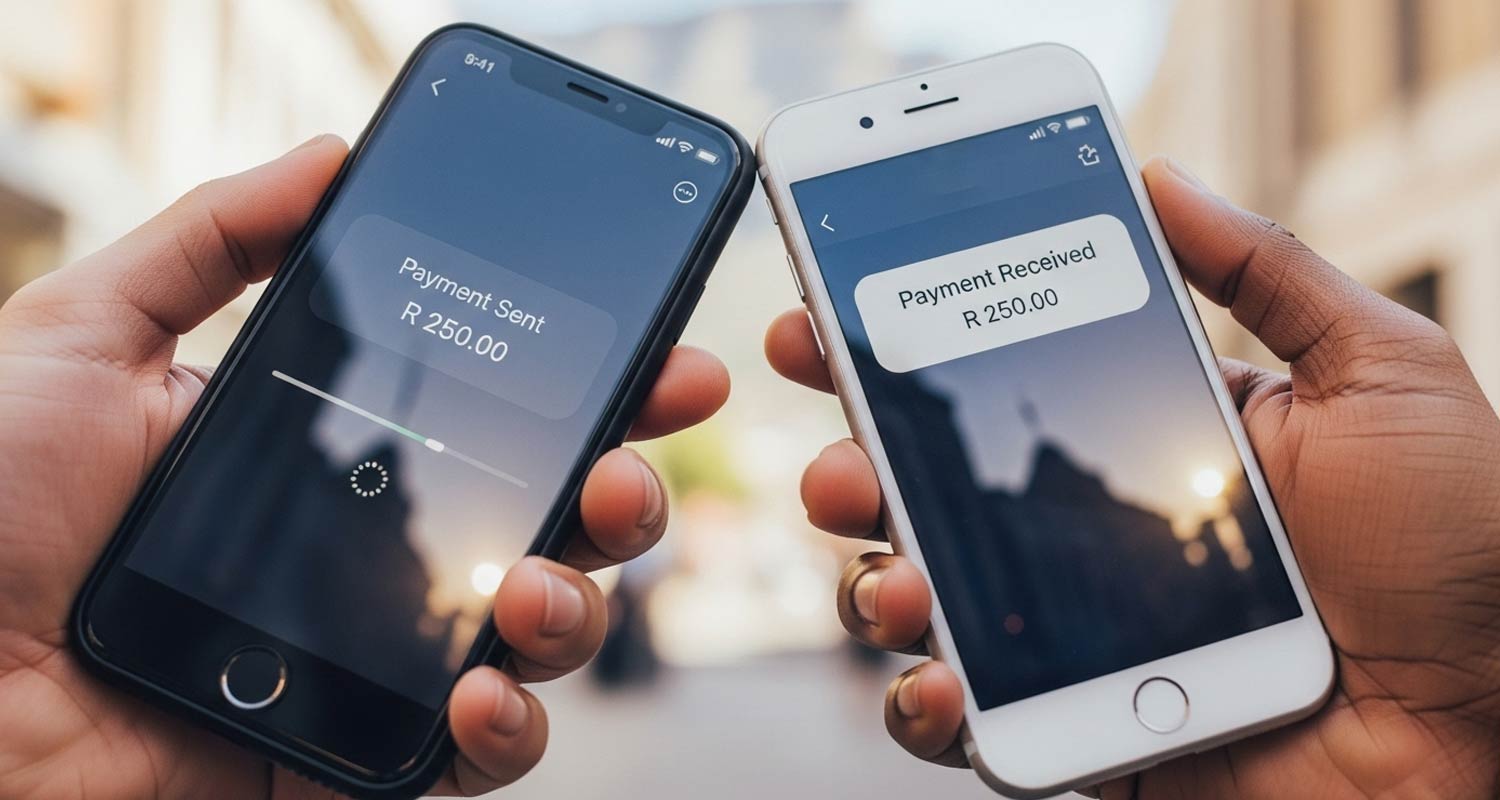
    The start of year found PayShap firmly embedded in any payment conversation. When it launched in 2023, everyone in the landscape was asking: would it scale effectively, would consumers embrace it and would banks fully participate? Now, at the end of 2025, consumer interest has grown. But are transaction volumes as expected.

    Operated by PayInc (formerly BankservAfrica), PayShap has processed more than 461 million transactions worth about R403-billion since its debut. Yet as 2025 closes, there are plenty of discussions around fees, inclusion and bank adoption.

    Finch Technologies and Slant (South African data aggregators) set out to explore these dynamics: how fees differ between banks, why adoption varies so widely and whether PayShap’s core mission – greater inclusion and faster payments with lower costs – is being realised.

    PayShap was designed as a low-cost, real-time payment system, linking users’ phone numbers (ShapIDs) to their bank accounts for simple peer-to-peer transfers. Infrastructure roll-out has been strong: most major banks are on board and transaction volumes continue to rise. But what does the data actually show?

    Using a sample of over 228 000 consumer bank accounts from June, Slant analysed more than 9.8 million transactions across various banks and found 88 000 had a PayShap payment. Here’s what their data found.

    Uptake across banks

    • Absa: 68% of customers used PayShap at least once, contributing 6.9% of total debit transactions.
    • Capitec: 35% of customers used PayShap in June, accounting for just 2% of debit transactions.
    • Discovery Bank: 64% of customers used PayShap, representing 6.1% of debit transactions.
    • Standard Bank: 57% of customers used PayShap at least once a month, yet these transactions made up only 4% of total debit transactions for this bank.

    PayShap adoption is growing, but sustained, frequent usage remains low across all banks.

    Most common PayShap fees and payment amounts per bank

    • Absa: Most common PayShap fee – R7.50, aligned with the communicated consumer fee, with the most common payment amount at R385 – the highest amount by bank.
    • Capitec: Most common fee – R6, slightly above the stated maximum R3 fee; most common payment amount – R350
    • Nedbank: Most common (and highest) fee – R10
    • Standard Bank: Most common fee – R7, consistent with its fee structure; most common payment amount – R300
    Bank Fee Amount
    ABSA R7.50 R385
    Capitec R6 R350
    Nedbank R10 N/A
    Standard Bank R7 R300

    PayShap fee discrepancies

    For some customers, PayShap costs almost nothing – for others, it’s expensive. That matters if this system is meant to serve lower-income users. Some banks may be hesitant because low-cost, instant payments threaten the fees they earn from the very services PayShap could replace.

    Industry insights point to several factors behind these fee variations:

    • Legacy vs real-time rails: Traditional EFTs clear in days, cost banks less and are often free within account bundles. PayShap runs on newer, faster infrastructure, and banks may price that convenience higher.
    • Bank channelling: Some banks, like Absa, have set PayShap as the default despite EFTs being cheaper – raising questions about the motive behind such changes.
    • Wholesale pricing ambiguity: What banks charge customers varies drastically across banks, suggesting limited regulation. Which is why many are asking – is there possibly a wholesale cost difference, or are banks simply recovering roll-out costs, or protecting margins?
    • Varying adoption strategies: Digitally led banks like TymeBank and Capitec try to keep fees low to drive scale, while traditional banks tend to focus on cost recovery and slower pricing shifts.

    The authors, Michael Bowren and Simon Anderssen
    The authors, Michael Bowren and Simon Anderssen

    Is inclusion still the endgame?

    PayShap was developed under the South African Reserve Bank’s Vision 2025 payments modernisation agenda – aiming for simpler payments, easier identifiers (like cellphone-number proxies), less reliance on cash and greater integration of the informal economy.

    But where does that leave the financial inclusion goal? If some banks charge over R50 for larger PayShap transfers, lower-income users may be discouraged from using the rail – defeating its purpose of shifting users away from cash or costly informal transfers. Many informal traders also lack access to banking apps and rely on USSD channels, which remain unavailable for PayShap – a limitation even Standard Bank has acknowledged.

    Ultimately, inclusion hinges on zero or near-zero fees across all banks. Yet customers’ experiences differ widely depending on who they bank with, undermining the idea of a truly universal national payments rail.

    Consumer reluctance

    With the infrastructure live, banks onboard and the promise of instant, low-cost payments clear, why isn’t everyone using PayShap? Simply put: if PayShap costs the same as real-time clearing, why switch?

    • Fee friction: When customers see a charge (for example, R7 or more) compared to a free or cheaper EFT, they’ll choose the lower-cost option.
    • Default-rail confusion: Some banking apps default to PayShap rather than EFT, leading to unexpected fees and user distrust (as seen with Absa).
    • Awareness and trust: Many still rely on cash or EFTs. Education, clearer interfaces and broader channel availability, especially for non-smartphone users, remain gaps.
    • Bank behaviour: If banks set higher PayShap fees or fail to promote it, adoption will lag.
    • Channel limitations: Without USSD or feature-phone access, many informal transactions still default to cash or cards.

    If PayShap is to live up to its mission, banks must revisit pricing, channel availability and customer engagement. The transactional data we’re seeing shows that fees within banks are not always consistent, and for most users PayShap hasn’t yet become the default for instant payments. For the system to succeed, barriers to entry must be reduced so it can truly serve those it was designed for, this might mean Reserve Bank subsidies, price capping or regulations in order to curb banks charging their own desired pricing.

    • The authors are Michael Bowren, co-founder at Finch Technologies, and Simon Anderssen, CEO of Slant



    Finch Technologies PayInc PayShap Reserve Bank Slant South African Reserve Bank
    Subscribe to TechCentral Subscribe to TechCentral
    Share. Facebook Twitter LinkedIn WhatsApp Telegram Email Copy Link
    Previous ArticleSanral dumps magstripes at national toll gates
    Next Article One of South Africa’s largest private industrial solar projects takes shape

    Related Posts

    Standard Bank slashes PayShap fees

    Standard Bank slashes PayShap fees

    2 December 2025
    Reserve Bank flags crypto as a risk to fiscal stability

    Reserve Bank flags crypto as a possible risk to fiscal stability

    27 November 2025
    High fees keep PayShap stuck in first gear

    India’s UPI shows what South Africa’s PayShap could become – if we dare

    29 October 2025
    Company News
    Why TechCentral is the most powerful platform for reaching IT decision makers

    Why TechCentral is the most powerful platform for reaching IT decision makers

    17 December 2025
    Business trends to watch in 2026 - Domains.co.za

    Business trends to watch in 2026

    17 December 2025
    MTN Zambia launches world's first 4G cloud smartphone solution - Huawei

    MTN Zambia launches world’s first 4G cloud smartphone solution

    17 December 2025
    Opinion
    Netflix, Warner Bros deal raises fresh headaches for MultiChoice - Duncan McLeod

    Netflix, Warner Bros deal raises fresh headaches for MultiChoice

    5 December 2025
    BIN scans, DDoS and the next cybercrime wave hitting South Africa's banks - Entersekt Gerhard Oosthuizen

    BIN scans, DDoS and the next cybercrime wave hitting South Africa’s banks

    3 December 2025
    Your data, your hardware: the DIY AI revolution is coming - Duncan McLeod

    Your data, your hardware: the DIY AI revolution is coming

    20 November 2025

    Subscribe to Updates

    Get the best South African technology news and analysis delivered to your e-mail inbox every morning.

    Latest Posts
    Digital authoritarianism grows as African states normalise internet blackouts

    Digital authoritarianism grows as African states normalise internet blackouts

    19 December 2025
    Starlink satellite anomaly creates debris in rare orbital mishap

    Starlink satellite anomaly creates debris in rare orbital mishap

    19 December 2025
    Trump space order puts the moon back at centre of US, China rivalry - US President Donald Trump

    Trump space order puts the moon back at centre of US, China rivalry

    19 December 2025
    TechCentral's South African Newsmakers of 2025

    TechCentral’s South African Newsmakers of 2025

    18 December 2025
    © 2009 - 2025 NewsCentral Media
    • Cookie policy (ZA)
    • TechCentral – privacy and Popia

    Type above and press Enter to search. Press Esc to cancel.

    Manage consent

    TechCentral uses cookies to enhance its offerings. Consenting to these technologies allows us to serve you better. Not consenting or withdrawing consent may adversely affect certain features and functions of the website.

    Functional Always active
    The technical storage or access is strictly necessary for the legitimate purpose of enabling the use of a specific service explicitly requested by the subscriber or user, or for the sole purpose of carrying out the transmission of a communication over an electronic communications network.
    Preferences
    The technical storage or access is necessary for the legitimate purpose of storing preferences that are not requested by the subscriber or user.
    Statistics
    The technical storage or access that is used exclusively for statistical purposes. The technical storage or access that is used exclusively for anonymous statistical purposes. Without a subpoena, voluntary compliance on the part of your Internet Service Provider, or additional records from a third party, information stored or retrieved for this purpose alone cannot usually be used to identify you.
    Marketing
    The technical storage or access is required to create user profiles to send advertising, or to track the user on a website or across several websites for similar marketing purposes.
    • Manage options
    • Manage services
    • Manage {vendor_count} vendors
    • Read more about these purposes
    View preferences
    • {title}
    • {title}
    • {title}