Close Menu
TechCentralTechCentral

    Subscribe to the newsletter

    Get the best South African technology news and analysis delivered to your e-mail inbox every morning.

    Facebook X (Twitter) YouTube LinkedIn
    WhatsApp Facebook X (Twitter) LinkedIn YouTube
    TechCentralTechCentral
    • News
      Cabinet hands the Post Office a board, but not a bailout

      Cabinet hands the Post Office a board, but not a bailout

      5 June 2026
      In South Africa, the bundle is the new battleground

      In South Africa, the bundle is the new battleground

      5 June 2026
      Bash powers TFG online sales as group profit tumbles

      Bash powers TFG online sales as group profit tumbles

      5 June 2026
      Surplus groceries, straight from the browser - Still Good co-founders Lorenzo Parisi and Nabeel Gool

      Surplus groceries, straight from the browser

      5 June 2026
      What happens when AI no longer needs us to improve

      What happens when AI no longer needs us to improve

      5 June 2026
    • World
      Meta takes on OpenAI and Anthropic in enterprise AI

      Meta takes on OpenAI and Anthropic in enterprise AI

      4 June 2026
      AI demand sparks 'chipflation' warning

      AI demand sparks ‘chipflation’ warning

      4 June 2026
      Astronomers discover exoplanets with magnetic fields

      Strange winds reveal magnetic fields on distant ‘hot Jupiters’

      2 June 2026
      AI giant Anthropic files for landmark US listing

      AI giant Anthropic files for landmark US listing

      1 June 2026
      Dell guns for MacBook Neo with low-cost laptop

      Dell guns for MacBook Neo with low-cost laptop

      1 June 2026
    • In-depth
      What Wi-Fi 8 will mean for wireless networks

      What Wi-Fi 8 will mean for wireless networks

      1 June 2026
      Alfa's electric rebel - Alfa Romeo Junior Elettrica Veloce

      Alfa’s electric rebel

      29 April 2026
      Africa switches on as Europe dims the lights

      Africa switches on as Europe dims the lights

      9 April 2026
      The biggest untapped EV market on Earth is hiding in plain sight

      The biggest untapped EV market on Earth is hiding in plain sight

      1 April 2026
      AI, cybersecurity power standout year for Datatec - Jens Montanana

      The R16-billion tech giant hiding in plain sight

      26 March 2026
    • TCS
      TCS | Charge's R1.8-billion bet on an off-grid EV future - Charge chairman Joubert Roux

      TCS | Charge’s R1.8-billion bet on an off-grid EV future

      18 May 2026
      TCS+ | The Up&Up Group on the hidden cost of AI - Jason Harrison

      TCS+ | The Up&Up Group on the hidden cost of AI

      13 May 2026
      Michael Rossouw

      TCS+ | The retirement decision most South Africans get wrong

      6 May 2026
      TCS | The Cape Town start-up listening for TB with AI - Braden van Breda

      TCS | The Cape Town start-up listening for TB with AI

      4 May 2026

      TCS+ | ‘The ISP for ISPs’: Vox’s shift to wholesale aggregator

      20 April 2026
    • Opinion

      Clashing judgments leave South Africa’s crypto law unsettled

      2 June 2026
      The author, Pambos Soteriades

      The trap inside South Africa’s banking MVNO boom

      1 June 2026
      The hidden cost of social media age bans is everyone's privacy - Petrus Potgieter

      The hidden cost of social media age bans is everyone’s privacy

      29 May 2026
      Treasury's crypto crackdown is a betrayal of Mandela's promise - Duncan McLeod

      Treasury’s crypto crackdown is a betrayal of Mandela’s promise

      22 May 2026
      South Africa is sleepwalking into another AI policy failure - Celeste Labuschagne

      South Africa is sleepwalking into another AI policy failure

      20 May 2026
    • Company Hubs
      • 1Stream
      • Africa Data Centres
      • AfriGIS
      • Altron Digital Business
      • Altron Document Solutions
      • Altron Group
      • Arctic Wolf
      • Ascent Technology
      • AvertITD
      • BBD
      • Braintree
      • CallMiner
      • CambriLearn
      • CM Telecom
      • Contactable
      • CYBER1 Solutions
      • Digicloud Africa
      • Digimune
      • Domains.co.za
      • ESET
      • Euphoria Telecom
      • HOSTAFRICA
      • Incredible Business
      • iONLINE
      • IQbusiness
      • Iris Network Systems
      • Kaspersky
      • LSD Open
      • Mitel
      • NEC XON
      • Netstar
      • Network Platforms
      • Next DLP
      • Ovations
      • Paracon
      • Paratus
      • Q-KON
      • SevenC
      • SkyWire
      • Solid8 Technologies
      • Telit Cinterion
      • Telviva
      • Tenable
      • Vertiv
      • Videri Digital
      • Vodacom Business
      • Wipro
      • Workday
      • XLink
    • Sections
      • AI and machine learning
      • Banking
      • Broadcasting and Media
      • Cloud services
      • Contact centres and CX
      • Cryptocurrencies
      • Education and skills
      • Electronics and hardware
      • Energy and sustainability
      • Enterprise software
      • Financial services
      • HealthTech
      • Information security
      • Internet and connectivity
      • Internet of Things
      • Investment
      • IT services
      • Lifestyle
      • Motoring
      • Policy and regulation
      • Public sector
      • Retail and e-commerce
      • Satellite communications
      • Science
      • SMEs and start-ups
      • Social media
      • Talent and leadership
      • Telecoms
    • Events
    • Advertise
    TechCentralTechCentral
    Home » In-depth » How a successful US missile intercept ended the era of nuclear stability

    How a successful US missile intercept ended the era of nuclear stability

    By Agency Staff30 November 2020
    Twitter LinkedIn Facebook WhatsApp Email Telegram Copy Link
    News Alerts
    WhatsApp

    This month, an intercontinental ballistic missile was fired in the general direction of the Hawaiian islands. During its descent a few minutes later, still outside the Earth’s atmosphere, it was struck by another missile that destroyed it.

    With that detonation, the world’s tenuous nuclear balance suddenly threatened to come out of kilter. The danger of atom bombs being used again was already increasing. Now it’s grown once more.

    The ICBM flying over the Pacific was an American dummy designed to test a new kind of interceptor technology. As it flew, satellites spotted it and alerted an Air Force base in Colorado, which in turn communicated with a Navy destroyer positioned northeast of Hawaii. This ship, the USS John Finn, fired its own missile which, in the jargon, hit and killed the incoming one.

    The coming era of questionable deterrence and asymmetric vulnerabilities will be less stable and therefore even more frightening

    At first glimpse, this sort of technological wizardry would seem to be a cause for not only awe but also joy, for it promises to protect the US from missile attacks by North Korea, for example. But in the weird logic of nuclear strategy, a breakthrough intended to make us safer could end up making us less safe.

    That’s because the new interception technology cuts the link between offence and defence that underlies all calculations about nuclear scenarios. Since the Cold War, stability — and thus peace — has been preserved through the macabre reality of mutual assured destruction, or MAD. No nation will launch a first strike if it expects immediate retaliation in kind. A different way of describing MAD is mutual vulnerability.

    Gone

    If one player in this game-theory scenario suddenly gets a shield (these American systems are in fact called Aegis), this mutual vulnerability is gone. Adversaries, in this case mainly Russia but increasingly China, too, must assume that their own deterrent is no longer effective because they may not be able to successfully strike back.

    For this reason, defensive escalation has become almost as controversial as the offensive kind. Russia has been railing against land-based American interceptor systems in places like Eastern Europe and Alaska. But this month’s test was the first in which a ship did the intercepting. This twist means that before long, the US or another nation could protect itself from all sides.

    This new uncertainty complicates a situation that was already becoming fiendishly intricate. The US and Russia, which have about 90% of the world’s nukes, have ditched two arms-control treaties in as many decades. The only one remaining, called New Start, is due to expire on 5 February, a mere 16 days after Joe Biden takes office as president. The Nuclear Non-Proliferation Treaty, which has for 50 years tried to keep nations without nukes from acquiring them, is also in deep trouble, and due to be renegotiated next year. Iran’s intentions remain unknown.

    US President-elect Joe Biden. Image: Gage Skidmore

    At the same time, both the US and Russia are modernising their arsenals, while China is adding to its own as fast as it can. Among the new weapons are nukes carried by hypersonic missiles, which are so fast that the leaders of the target nation only have minutes to decide what’s incoming and how to respond. They also include so-called tactical nukes, with “smaller” (in a very relative sense) payloads that make them more suitable for conventional wars, thus lowering the threshold for their use.

    The risk thus keeps rising that a nuclear war starts by accident, miscalculation or false alarm, especially when factoring in scenarios that involve terrorism, rogue states or conflicts in outer space or cyberspace. In a sort of global protest against this insanity, 84 countries without nukes have signed a Treaty on the Prohibition of Nuclear Weapons, which will take effect next year. But neither the nine nuclear nations nor their closest allies will ever sign it.

    Instead, the existing nuclear powers will interpret news of successful interceptor tests as an impetus for a new arms race. They will make even faster missiles with more decoys and countermeasures, new warheads for more flexible uses in a greater variety of strategic scenarios, and of course their own shields.

    This must stop. And the best-placed world leader to take the initiative in halting the madness is the incoming US president

    This must stop. And the best-placed world leader to take the initiative in halting the madness is the incoming US president. Upon taking office, Biden should immediately propose that the US and Russia roll over New Start for another five years to buy time. He should simultaneously invite China and the other nuclear powers to the table.

    The first goal should be a declaration by all nine that their nukes have the sole purpose of deterrence and will never be used aggressively. They should also give new assurances of security and help to non-nuclear nations, and create new communications protocols for crises. And yes, they must now agree to limit and monitor not only each other’s offensive weapons but also their defences.

    The era of MAD and mutual vulnerability was terrifying but in a surreal way also stable. The coming era of questionable deterrence and asymmetric vulnerabilities will be less stable and therefore even more frightening. Biden will have much in his inbox come January. He better make sure arms control isn’t at the bottom.  — By Andreas Kluth, (c) 2020 Bloomberg LP

    Follow TechCentral on Google News Add TechCentral as your preferred source on Google


    Joe Biden top
    WhatsApp YouTube
    Share. Facebook Twitter LinkedIn WhatsApp Telegram Email Copy Link
    Previous ArticleFull Huawei 5G ban coming next year in the UK
    Next Article How CallMiner is helping African Bank retain and grow its client base

    Related Posts

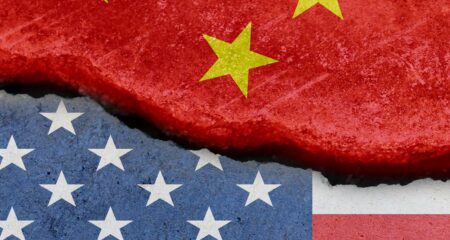
    China vs USA

    Washington plans tougher chip curbs on China

    25 February 2025
    DeepSeek a big test for Meta and its embrace of open-source AI

    DeepSeek is a big test for Meta and its embrace of open-source AI

    29 January 2025

    Trump AI gaffe has Meta scrambling

    26 January 2025
    Company News
    The real hurdle for South Africa's AI voicebots isn't the AI - 1Stream

    The real hurdle for South Africa’s AI voicebots isn’t the AI

    5 June 2026
    The real cloud challenge isn't adoption – it's doing it well

    The real cloud challenge isn’t adoption – it’s doing it well

    5 June 2026
    Payments Live returns to Johannesburg for 2nd edition

    Payments Live returns to Johannesburg for 2nd edition

    4 June 2026
    Opinion

    Clashing judgments leave South Africa’s crypto law unsettled

    2 June 2026
    The author, Pambos Soteriades

    The trap inside South Africa’s banking MVNO boom

    1 June 2026
    The hidden cost of social media age bans is everyone's privacy - Petrus Potgieter

    The hidden cost of social media age bans is everyone’s privacy

    29 May 2026

    Subscribe to Updates

    Get the best South African technology news and analysis delivered to your e-mail inbox every morning.

    Latest Posts
    Cabinet hands the Post Office a board, but not a bailout

    Cabinet hands the Post Office a board, but not a bailout

    5 June 2026
    In South Africa, the bundle is the new battleground

    In South Africa, the bundle is the new battleground

    5 June 2026
    Bash powers TFG online sales as group profit tumbles

    Bash powers TFG online sales as group profit tumbles

    5 June 2026
    Surplus groceries, straight from the browser - Still Good co-founders Lorenzo Parisi and Nabeel Gool

    Surplus groceries, straight from the browser

    5 June 2026
    © 2009 - 2026 NewsCentral Media
    • Cookie policy (ZA)
    • TechCentral – privacy and Popia

    Type above and press Enter to search. Press Esc to cancel.

    Manage consent

    TechCentral uses cookies to enhance its offerings. Consenting to these technologies allows us to serve you better. Not consenting or withdrawing consent may adversely affect certain features and functions of the website.

    Functional Always active
    The technical storage or access is strictly necessary for the legitimate purpose of enabling the use of a specific service explicitly requested by the subscriber or user, or for the sole purpose of carrying out the transmission of a communication over an electronic communications network.
    Preferences
    The technical storage or access is necessary for the legitimate purpose of storing preferences that are not requested by the subscriber or user.
    Statistics
    The technical storage or access that is used exclusively for statistical purposes. The technical storage or access that is used exclusively for anonymous statistical purposes. Without a subpoena, voluntary compliance on the part of your Internet Service Provider, or additional records from a third party, information stored or retrieved for this purpose alone cannot usually be used to identify you.
    Marketing
    The technical storage or access is required to create user profiles to send advertising, or to track the user on a website or across several websites for similar marketing purposes.
    • Manage options
    • Manage services
    • Manage {vendor_count} vendors
    • Read more about these purposes
    View preferences
    • {title}
    • {title}
    • {title}