Close Menu
TechCentralTechCentral

    Subscribe to the newsletter

    Get the best South African technology news and analysis delivered to your e-mail inbox every morning.

    Facebook X (Twitter) YouTube LinkedIn
    WhatsApp Facebook X (Twitter) LinkedIn YouTube
    TechCentralTechCentral
    • News
      Eskom lifts load reduction for 140 000 customers

      Eskom lifts load reduction for 140 000 customers

      8 February 2026
      AI chatbots are coming to Apple CarPlay

      AI chatbots are coming to Apple CarPlay

      8 February 2026
      South Africa's stablecoin silence is becoming a policy failure

      South Africa’s stablecoin silence is becoming a policy failure

      6 February 2026
      Every electric car you can buy in South Africa in early 2026, ranked by price

      Every electric car you can buy in South Africa in early 2026, ranked by price

      6 February 2026
      From stocks to crypto, markets reel as AI doubts grow

      From stocks to crypto, markets reel as AI doubts grow

      6 February 2026
    • World
      Crypto firm accidentally sends R700-billion in bitcoin to its users

      Crypto firm accidentally sends R700-billion in bitcoin to its users

      8 February 2026
      AI won't replace software, says Nvidia CEO amid market rout - Jensen Huang

      AI won’t replace software, says Nvidia CEO amid market rout

      4 February 2026
      Apple acquires audio AI start-up Q.ai

      Apple acquires audio AI start-up Q.ai

      30 January 2026
      SpaceX IPO may be largest in history

      SpaceX IPO may be largest in history

      28 January 2026
      Nvidia throws AI at the weather

      Nvidia throws AI at weather forecasting

      27 January 2026
    • In-depth
      How liberalisation is rewiring South Africa's power sector

      How liberalisation is rewiring South Africa’s power sector

      21 January 2026
      The top-performing South African tech shares of 2025

      The top-performing South African tech shares of 2025

      12 January 2026
      Digital authoritarianism grows as African states normalise internet blackouts

      Digital authoritarianism grows as African states normalise internet blackouts

      19 December 2025
      TechCentral's South African Newsmakers of 2025

      TechCentral’s South African Newsmakers of 2025

      18 December 2025
      Black Friday goes digital in South Africa as online spending surges to record high

      Black Friday goes digital in South Africa as online spending surges to record high

      4 December 2025
    • TCS
      TCS+ | How Cloud On Demand is helping SA businesses succeed in the cloud - Xhenia Rhode, Dion Kalicharan

      TCS+ | Cloud On Demand and Consnet: inside a real-world AWS partner success story

      30 January 2026
      Watts & Wheels S1E3: 'BYD's Corolla Cross challenger'

      Watts & Wheels S1E3: ‘BYD’s Corolla Cross challenger’

      30 January 2026
      Watts & Wheels S1E3: 'BYD's Corolla Cross challenger'

      Watts & Wheels S1E2: ‘China attacks, BMW digs in, Toyota’s sublime supercar’

      23 January 2026

      TCS+ | Why cybersecurity is becoming a competitive advantage for SA businesses

      20 January 2026
      Watts & Wheels S1E3: 'BYD's Corolla Cross challenger'

      Watts & Wheels: S1E1 – ‘William, Prince of Wheels’

      8 January 2026
    • Opinion
      South Africa's skills advantage is being overlooked at home - Richard Firth

      South Africa’s skills advantage is being overlooked at home

      29 January 2026
      Why Elon Musk's Starlink is a 'hard no' for me - Songezo Zibi

      Why Elon Musk’s Starlink is a ‘hard no’ for me

      26 January 2026
      South Africa's new fibre broadband battle - Duncan McLeod

      South Africa’s new fibre broadband battle

      20 January 2026
      AI moves from pilots to production in South African companies - Nazia Pillay SAP

      AI moves from pilots to production in South African companies

      20 January 2026
      South Africa's new fibre broadband battle - Duncan McLeod

      ANC’s attack on Solly Malatsi shows how BEE dogma trumps economic reality

      14 December 2025
    • Company Hubs
      • Africa Data Centres
      • AfriGIS
      • Altron Digital Business
      • Altron Document Solutions
      • Altron Group
      • Arctic Wolf
      • AvertITD
      • Braintree
      • CallMiner
      • CambriLearn
      • CYBER1 Solutions
      • Digicloud Africa
      • Digimune
      • Domains.co.za
      • ESET
      • Euphoria Telecom
      • Incredible Business
      • iONLINE
      • IQbusiness
      • Iris Network Systems
      • LSD Open
      • NEC XON
      • Netstar
      • Network Platforms
      • Next DLP
      • Ovations
      • Paracon
      • Paratus
      • Q-KON
      • SevenC
      • SkyWire
      • Solid8 Technologies
      • Telit Cinterion
      • Tenable
      • Vertiv
      • Videri Digital
      • Vodacom Business
      • Wipro
      • Workday
      • XLink
    • Sections
      • AI and machine learning
      • Banking
      • Broadcasting and Media
      • Cloud services
      • Contact centres and CX
      • Cryptocurrencies
      • Education and skills
      • Electronics and hardware
      • Energy and sustainability
      • Enterprise software
      • Financial services
      • Information security
      • Internet and connectivity
      • Internet of Things
      • Investment
      • IT services
      • Lifestyle
      • Motoring
      • Public sector
      • Retail and e-commerce
      • Satellite communications
      • Science
      • SMEs and start-ups
      • Social media
      • Talent and leadership
      • Telecoms
    • Events
    • Advertise
    TechCentralTechCentral
    Home » In-depth » How Apple alienated Mac loyalists

    How Apple alienated Mac loyalists

    By Agency Staff20 December 2016
    Twitter LinkedIn Facebook WhatsApp Email Telegram Copy Link
    News Alerts
    WhatsApp
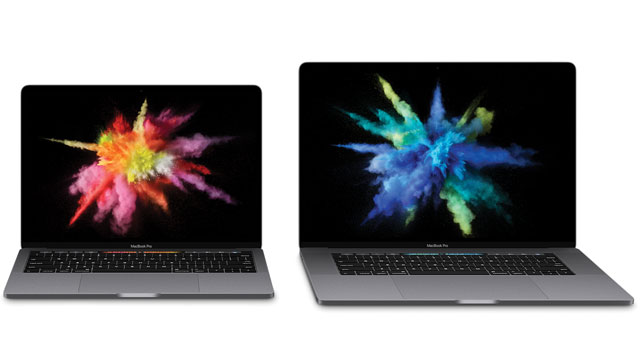
    The new MacBook Pro

    To die-hard fans, Apple’s Macintosh sometimes seems like an afterthought these days.

    Mac upgrades, once a frequent ritual, are few and far between. The Mac Pro, Apple’s marquee computer, hasn’t been refreshed since 2013. The affordable and flexible Mac mini was last upgraded in 2014. And when a new machine does roll out, the results are sometimes underwhelming, if not infuriating, to devotees.

    In October, after more than 500 days without an update, Apple unveiled the new MacBook Pro, with a slimmer design and louder speakers. The laptop garnered mostly favourable reviews from the technology press but grumbles from creative types, a key constituency, who said the device under-performed rival products.

    Interviews with people familiar with Apple’s inner workings reveal that the Mac is getting far less attention than it once did. They say the Mac team has lost clout with the famed industrial design group led by Jony Ive and the company’s software team. They also describe a lack of clear direction from senior management, departures of key people working on Mac hardware and technical challenges that have delayed the roll-out of new computers.

    While the Mac generates about 10% of Apple sales, the company can’t afford to alienate professional designers and other business customers. After all, they helped fuel Apple’s revival in the late 1990s. In a stinging critique, Peter Kirn, founder of a website for music and video creators, wrote: “This is a company with no real vision for what its most creative users actually do with their most advanced machines.”

    If more Mac users switch, the Apple ecosystem will become less sticky — opening the door to people abandoning higher-value products like the iPhone and iPad.

    People now have more options. Microsoft, once derided by Mac loyalists for its clunky, buggy software, offers Windows 10, which provides the tablet-type functionality Apple pioneered with the iPad. Microsoft’s Surface computers offer Apple-esque quality and a well-reviewed creative paint program aimed at the Mac’s audience. Sensing an opportunity, Microsoft called the MacBook Pro a “disappointment” and said more users than ever were switching to its Surface laptops.

    An Apple spokesman declined to comment. However, the company has said the Macintosh remains one of its most important products and denies it takes a back seat to other gadgets.
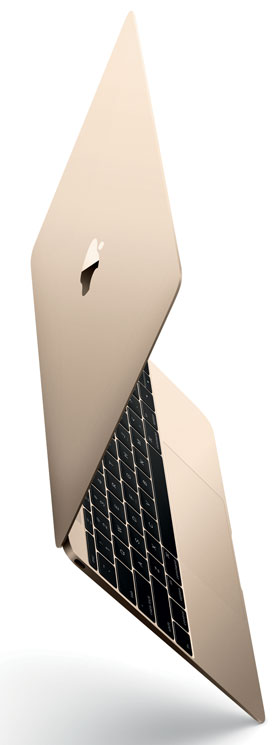
    The ultra-thin MacBook introduced in 2015

    Four years ago at Apple’s annual developer conference, marketing chief Phil Schiller pledged to keep the computer front and centre in the company’s product arsenal. “Nobody turns over their entire line as quickly and completely as we do at Apple,” Schiller said. “We’re really proud of the engineering team and the work they do to do this quick so you can get the exact product you need.” Two years later, the company held a 30th birthday party for the Macintosh, a splashy event that featured a OneRepublic concert at Apple’s Cupertino, California headquarters. The company also created a website celebrating the Mac’s history.

    To be fair, Apple depends on Intel, which still makes key chips for Macs. Like the rest of the PC industry, Apple’s innovation and product cycles are sometimes constrained by when Intel produces new chips — a process that’s getting more difficult.

    Making a laptop stand out is also harder these days. But when Apple has tried to leapfrog the competition, it has fallen short. Take the company’s attempt to create a longer-lasting battery for the MacBook Pro. Apple engineers wanted to use higher-capacity battery packs shaped to the insides of the laptop versus the standard square cells found in most machines. The design would have boosted battery life.

    In the run-up to the MacBook Pro’s planned debut this year, the new battery failed a key test, according to a person familiar with the situation. Rather than delay the launch and risk missing the crucial holiday shopping season, Apple decided to revert to an older design. The change required roping in engineers from other teams to finish the job, meaning work on other Macs languished, the person said. The new laptop didn’t represent a game-changing leap in battery performance, and a software bug misrepresented hours of power remaining. Apple has since removed the meter from the top right-hand corner of the screen.

    In the Mac’s heyday, people working on new models could expect a lot of attention from Ive’s team. Once a week his people would meet with Mac engineers to discuss ongoing projects. Mac engineers brought prototypes to Ive’s studio for review, while his lieutenants would visit the Mac labs to look at early concepts. Those visits have become less frequent since the company began focusing more on more-valuable products like the iPhone and iPad, and the change became even more obvious after the design team’s leadership was shuffled last year, according to a person familiar with the situation.

    In another sign that the company has prioritised the iPhone, Apple re-organised its software engineering department so there’s no longer a dedicated Mac operating system team. There is now just one team, and most of the engineers are iOS first, giving the people working on the iPhone and iPad more power.

    That’s part of a broader shift toward making Macs more like iPhones. Apple prioritises features, like thinness and minimal ports, that sell its iPhones and iPads, which generated about 75% of revenue this year. Those are contrary to professional needs, like maximum computing power. Early prototypes of the 12-inch MacBook used the iPhone’s Lightning connector, although this was ditched for a more standard USB-C port. There was even a gold MacBook Pro planned, but this was shelved because the colour didn’t look good on such a large product.

    The Mac Pro is overdue a refresh to stay current

    In recent years, Apple managers have also become more likely to float two or more competing ideas, meaning designers and engineers must work on more than one concept at a time. In the past, managers pushed a more singular vision. Engineers are now “asked to develop multiple options in hopes that one of them will be shippable”, a person familiar with the matter said.

    When the company was developing the first 12-inch MacBook, Apple tested two primary prototypes. One, known internally as Stealth Fighter, was lighter. The second, a slightly less ambitious design known as Stealth Bomber, was heavier. The lighter model prevailed, but with engineers developing and testing two competing concepts, they had less time to figure out how to cram all the electronics into a thin slab of aluminum that would hold together. In the end, Apple shipped the laptop in 2015, months after its 2014 goal.

    For a 2016 MacBook update, some Apple engineers wanted to add a Touch ID fingerprint scanner and a second USB-C port (which would have made some power users happy). The update instead included a new rose gold color option alongside a standard speed increase.

    The internal turmoil has taken a toll. More than a dozen engineers and managers working on Mac hardware have left for different Apple teams or other companies in the past year and a half, said people familiar with the situation. Some were looking for a less all-consuming work environment, while others felt the future of Mac hardware was unclear in a world of iPhones and iPads.
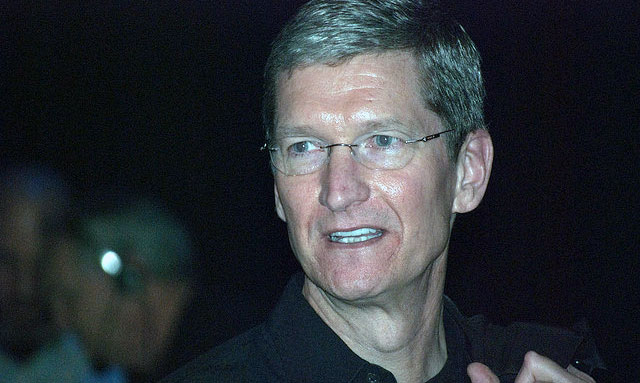
    Tim Cook (image: Mike Deerkoski)

    In 2013, Apple launched a redesigned Mac Pro, a black cylinder with bright white LED lights. It was a powerful desktop machine created partly to cast a halo over the entire Macintosh line-up. The Mac Pro was also the first Apple computer in years to be assembled in the US. Under pressure from politicians to create manufacturing jobs at home, Apple was looking to score political points. The decision caused production headaches though.

    The Mac Pro’s glossy exterior and chrome bevelled edges meant Apple had to make its own manufacturing tools and then train people to run those machines in an assembly plant. This slowed production and constrained Apple’s ability to make enough computers to meet demand.

    Three years on, the Mac Pro is ripe for an upgrade with its chips and connector ports lagging rival products. Because of the earlier challenges, some Apple engineers have raised the possibility of moving production back to Asia, where it’s cheaper and manufacturers have the required skills for ambitious products, according to a person familiar with those internal discussions.

    The political environment is tougher for such a move now. During his campaign, President-elect Donald Trump hammered Apple for building most of its products overseas and since his election he has pushed other companies to keep some jobs in the US.

    Still, Apple hasn’t given up on Macs. In a recent company Q&A session, employees asked whether Mac desktop computers remain strategically important. “We have great desktops in our roadmap. Nobody should worry about that,” CEO Tim Cook said, according to a transcript of the discussion obtained by Bloomberg News.

    The latest MacBook Pro has a “Touch Bar”, a thin touchscreen built into the keyboard that lets users quickly access app shortcuts, change system settings, and pick emojis. The laptop also has Touch ID to speed up online purchases and a giant trackpad for easier gesture control. Apple designers are already exploring standalone keyboards with the touch strip and a fingerprint reader for desktops. Apple will decide whether to release these based on how well the features do on the MacBook Pro.

    Mac fans shouldn’t hold their breath for radical new designs in 2017, though. Instead, the company is preparing modest updates: USB-C ports and a new AMD graphics processor for the iMac, and minor bumps in processing power for the 12-inch MacBook and MacBook Pro. Cue the outrage.  — (c) 2016 Bloomberg LP



    Apple Jony Ive Microsoft Tim Cook
    WhatsApp YouTube Follow on Google News Add as preferred source on Google
    Share. Facebook Twitter LinkedIn WhatsApp Telegram Email Copy Link
    Previous ArticleAll hail Facebook, the copycat king
    Next Article BlackBerry’s making real money again

    Related Posts

    AI chatbots are coming to Apple CarPlay

    AI chatbots are coming to Apple CarPlay

    8 February 2026
    From stocks to crypto, markets reel as AI doubts grow

    From stocks to crypto, markets reel as AI doubts grow

    6 February 2026
    Google goes from laggard to leader in AI

    Google goes from laggard to leader in AI

    5 February 2026
    Company News
    The skills gap is a thinking gap: why South African employers can't find problem solvers

    The skills gap is a thinking gap: why SA employers can’t find problem solvers

    6 February 2026
    Vox Kiwi Wireless: fibre-like broadband for South African homes

    Vox Kiwi Wireless: fibre-like broadband for South African homes

    5 February 2026
    NEC XON achieves an African first with full Fortinet accreditation - Ian Kruger

    NEC XON achieves an African first with full Fortinet accreditation

    5 February 2026
    Opinion
    South Africa's skills advantage is being overlooked at home - Richard Firth

    South Africa’s skills advantage is being overlooked at home

    29 January 2026
    Why Elon Musk's Starlink is a 'hard no' for me - Songezo Zibi

    Why Elon Musk’s Starlink is a ‘hard no’ for me

    26 January 2026
    South Africa's new fibre broadband battle - Duncan McLeod

    South Africa’s new fibre broadband battle

    20 January 2026

    Subscribe to Updates

    Get the best South African technology news and analysis delivered to your e-mail inbox every morning.

    Latest Posts
    Eskom lifts load reduction for 140 000 customers

    Eskom lifts load reduction for 140 000 customers

    8 February 2026
    Crypto firm accidentally sends R700-billion in bitcoin to its users

    Crypto firm accidentally sends R700-billion in bitcoin to its users

    8 February 2026
    AI chatbots are coming to Apple CarPlay

    AI chatbots are coming to Apple CarPlay

    8 February 2026
    South Africa's stablecoin silence is becoming a policy failure

    South Africa’s stablecoin silence is becoming a policy failure

    6 February 2026
    © 2009 - 2026 NewsCentral Media
    • Cookie policy (ZA)
    • TechCentral – privacy and Popia

    Type above and press Enter to search. Press Esc to cancel.

    Manage consent

    TechCentral uses cookies to enhance its offerings. Consenting to these technologies allows us to serve you better. Not consenting or withdrawing consent may adversely affect certain features and functions of the website.

    Functional Always active
    The technical storage or access is strictly necessary for the legitimate purpose of enabling the use of a specific service explicitly requested by the subscriber or user, or for the sole purpose of carrying out the transmission of a communication over an electronic communications network.
    Preferences
    The technical storage or access is necessary for the legitimate purpose of storing preferences that are not requested by the subscriber or user.
    Statistics
    The technical storage or access that is used exclusively for statistical purposes. The technical storage or access that is used exclusively for anonymous statistical purposes. Without a subpoena, voluntary compliance on the part of your Internet Service Provider, or additional records from a third party, information stored or retrieved for this purpose alone cannot usually be used to identify you.
    Marketing
    The technical storage or access is required to create user profiles to send advertising, or to track the user on a website or across several websites for similar marketing purposes.
    • Manage options
    • Manage services
    • Manage {vendor_count} vendors
    • Read more about these purposes
    View preferences
    • {title}
    • {title}
    • {title}