Close Menu
TechCentralTechCentral

    Subscribe to the newsletter

    Get the best South African technology news and analysis delivered to your e-mail inbox every morning.

    Facebook X (Twitter) YouTube LinkedIn
    WhatsApp Facebook X (Twitter) LinkedIn YouTube
    TechCentralTechCentral
    • News
      Mastercard bets billions on the tech that could eat its lunch - Prakriti Singh

      Mastercard bets billions on the tech that could eat its lunch

      21 July 2026
      From care homes to production lines, the robots are coming

      From care homes to production lines, the robots are coming

      21 July 2026
      Remote work in South Africa hits record high

      Remote work in South Africa hits record high

      21 July 2026
      China weighs blocking the West from its best AI

      China weighs blocking the West from its best AI

      21 July 2026
      Openserve hits back in fibre ISP row

      Openserve hits back in fibre ISP row

      20 July 2026
    • World
      Meta AI will now tell parents if their teen is in crisis

      Meta AI will now tell parents if their teen is in crisis

      17 July 2026
      IBM shares crash 25% as AI upends software spending - Arvind Krishna

      IBM shares crash 25% as AI upends software spending

      15 July 2026
      Jony Ive's first OpenAI device: an AI smart speaker - Jony Ive and Sam Altman

      Jony Ive’s first OpenAI device: an AI smart speaker

      15 July 2026
      Stripe, Advent in talks to buy PayPal for $53-billion

      Stripe, Advent in talks to buy PayPal for $53-billion

      15 July 2026
      Memory crisis sends smartphone market into steep decline

      Memory crisis sends smartphone market into steep decline

      13 July 2026
    • In-depth
      The plan to stop AI from breaking the world - Google DeepMind CEO Demis Hassabis. Image: John Sears

      The plan to stop AI from breaking the world

      16 July 2026
      The internet has a Strait of Hormuz problem

      The internet has a Strait of Hormuz problem

      15 July 2026
      AI boom sparks rally, frenzy and fear

      AI boom sparks rally, frenzy and fear

      11 June 2026
      Every plug-in hybrid on sale in South Africa, ranked by price - Lamborghini Temerario

      Every plug-in hybrid on sale in South Africa, ranked by price

      7 June 2026
      What Wi-Fi 8 will mean for wireless networks

      What Wi-Fi 8 will mean for wireless networks

      1 June 2026
    • TCS
      Watts & Wheels S1E7: 'Ferrari's EV breaks the internet'

      Watts & Wheels S1E7: ‘Ferrari’s EV breaks the internet’

      8 July 2026
      TCS+ | How Tracker is turning vehicle data into business strategy - Silvia Schollenberger

      TCS+ | How Tracker is turning vehicle data into business strategy

      1 July 2026
      TCS+ | IBM Bob: an AI-powered 'development partner' for the enterprise - David Spurway

      TCS+ | IBM Bob: an AI-powered development partner for the enterprise

      30 June 2026
      Watts & Wheels S1E6: 'A flawless Alfa and a bakkie that divides'

      Watts & Wheels S1E6: ‘A flawless Alfa and a bakkie that divides’

      17 June 2026
      Watts & Wheels S1E6: 'A flawless Alfa and a bakkie that divides'

      Watts & Wheels S1E5: ‘A Bentley of the bush and a car that swims’

      8 June 2026
    • Opinion
      Selling vapour is corporate suicide in slow motion - Jannie van Zyl

      Selling vapour is corporate suicide in slow motion

      16 July 2026
      Brazil's online gambling crackdown is a lesson for South Africa

      How Amazon outmanoeuvred Starlink in South Africa

      15 July 2026
      The Popia problem with agentic AI - Herman Haasbroek

      The Popia problem with agentic AI

      14 July 2026
      The author, Fanie van Rooyen

      South Africa can still catch the AI wave – here’s how

      7 July 2026
      The author, Fanie van Rooyen

      The AI utopia South Africa can’t afford

      1 July 2026
    • Company Hubs
      • 1Stream
      • Africa Data Centres
      • AfriGIS
      • Altron Digital Business
      • Altron Document Solutions
      • Altron Group
      • Arctic Wolf
      • Ascent Technology
      • AvertITD
      • BBD
      • Braintree
      • CallMiner
      • CambriLearn
      • CM Telecom
      • Contactable
      • CYBER1 Solutions
      • Digicloud Africa
      • Digimune
      • Domains.co.za
      • ESET
      • Euphoria Telecom
      • HOSTAFRICA
      • Incredible Business
      • iONLINE
      • IQbusiness
      • Iris Network Systems
      • Kaspersky
      • LSD Open
      • Mitel
      • NEC XON
      • Netstar
      • Network Platforms
      • Next DLP
      • Ovations
      • Paracon
      • Paratus
      • Q-KON
      • SevenC
      • SkyWire
      • Solid8 Technologies
      • Telit Cinterion
      • Telviva
      • Tenable
      • Vertiv
      • Videri Digital
      • Vodacom Business
      • Wipro
      • Workday
      • XLink
    • Sections
      • AI and machine learning
      • Banking
      • Broadcasting and Media
      • Cloud services
      • Contact centres and CX
      • Cryptocurrencies
      • Education and skills
      • Electronics and hardware
      • Energy and sustainability
      • Enterprise software
      • Financial services
      • HealthTech
      • Information security
      • Internet and connectivity
      • Internet of Things
      • Investment
      • IT services
      • Lifestyle
      • Policy and regulation
      • Public sector
      • Retail and e-commerce
      • Satellite communications
      • Science
      • SMEs and start-ups
      • Social media
      • Talent and leadership
      • Telecoms
      • Watts & Wheels
    • Events
    • Advertise
    TechCentralTechCentral
    Home » Sections » Energy and sustainability » How Eskom went from zero to unlikely hero
    How Eskom went from zero to unlikely hero

    How Eskom went from zero to unlikely hero

    By Paul Burkhardt28 October 2024

    Aslina Wines, an independent winemaker located among the rolling vineyards of Stellenbosch, counts a large generator among its most valuable inventory. It relied on the machine to stay up and running during the worst of South Africa’s power cuts, which affected the country 332 days last year. The vintner was lucky. As the blackouts grew increasingly severe, suppliers without generators “took a hard knock”, said Bradwin Persent, Aslina’s operations and logistics coordinator, as did many of the country’s struggling small businesses.

    Then, in March, the outages suddenly stopped. Even as the southern hemisphere descended into winter, when electric heaters and early sunsets drive up demand, Eskom, the troubled state-owned utility that generates most of South Africa’s energy, managed to keep the lights on.

    It’s now been seven months and counting since the country’s last episode of load shedding. Persent is pleased with the streak but has no plans to get rid of the generator. “We’re happy,” he said, “but we’re not relaxed.”

    Across the country, the proliferation of solar panels, a popular alternative to relying on Eskom, eased stress on the grid

    For years, chronic power outages have hobbled South Africa. First implemented in 2008, they cost the economy up to R899-million/day, according to central bank estimates, and were a big reason why the ANC lost its majority in elections last June. Attempts to fix the corruption-gutted utility have failed over the years — a sweeping privatisation plan collapsed; an effort to add generation capacity dragged out and never fully materialised; and inside power stations, theft and sabotage became more audacious.

    Now the situation appears to be stabilising. The effects of recent and longstanding reforms have radically improved employee morale, according to experts, analysts and officials, which has made all the difference in helping Eskom get back on its feet. The decision to delay the retirement of three coal-fired power plants also played a big role.

    That move “brought confidence”, said Malekutu Bizzah Motubatse, chair of the National Union of Mineworkers’ Highveld region, where most of Eskom’s coal plants are located. “Government has managed to listen to us.”

    Debt relief plan

    Eskom’s recovery started to draw attention from March, when week after week passed without blackouts. That happened to be when Dan Marokane took over as the company’s new CEO. He drew support from labour early on by calling to fix broken power stations and revamp the company’s management structure — a break with previous leadership, whose focus had been on the transition from coal.

    At the same time, a R250-billion debt relief plan went into effect. Across the country, the proliferation of solar panels, a popular alternative to relying on Eskom, eased stress on the grid. Coal theft declined as the mineral’s price fell. Power plants were given permission to send parts back to their original manufacturers for repairs, resulting in more reliable operations.

    Read: Eskom diesel use soared in September

    Efforts to clamp down on crime also paid off. While the government of former President Jacob Zuma plundered the utility’s bank accounts, small-scale sabotage and theft grew rampant at power stations. Contractors were known to steal and resell parts multiple times, and thieves would replace entire truckloads of coal with rocks. Yet between April and August of this year, a joint effort between the police, national prosecutor’s office, revenue service and a special investigating unit reduced crime by 28% compared to the same period a year prior.
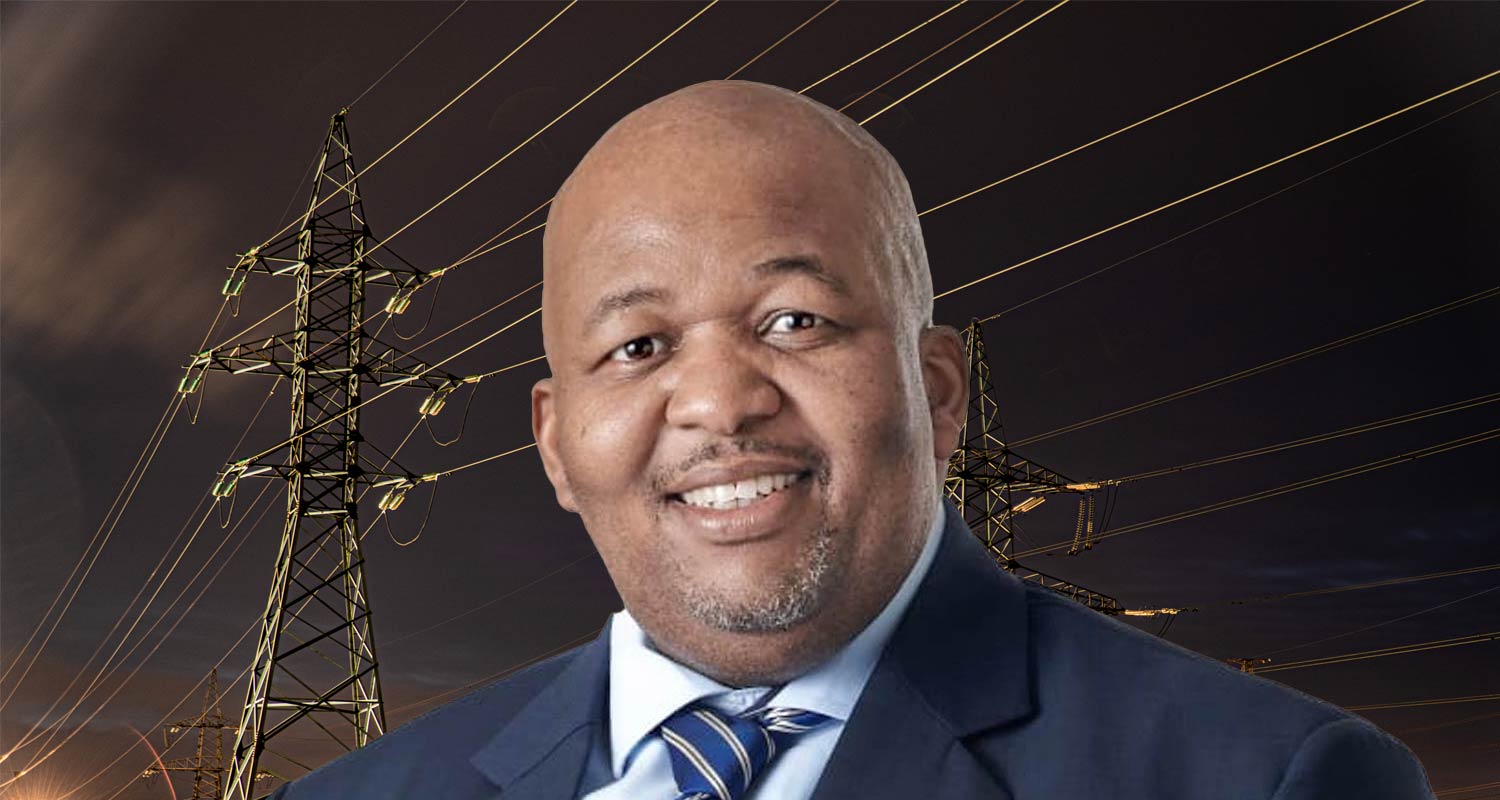
    Eskom CEO Dan Marokane
    Eskom CEO Dan Marokane

    The efforts of law enforcement and the courts have produced “phenomenal” results, said Lumkile Mondi, an economist at the University of the Witwatersrand, who has written extensively on Eskom.

    It’s been a long time since Eskom employees had reason for optimism. Not only was the company publicly villainised every time the lights went out, but workers were also expected to function under nearly impossible circumstances. Stations conducting major repairs had parts held up in convoluted processes, performance-related bonuses were suspended for years and intimidation linked to corruption was common.

    During a tour of Eskom’s power stations last year amid record power outages, electricity minister Kgosientsho Ramokgopa recognised that employees were simply not being valued. “Before you could get to the engineering questions you could see that there are issues of culture there, how people are beaten down and just essentially told they’re incapable,” he recalled during a briefing in Cape Town.

    With the blackouts at least paused, South Africa’s economy is projected to grow more than 1% this year

    A group of German consultants brought in by the government to assess the situation came to the same conclusion. “The current crisis can only be overcome in the power plants,” the Vgbe Energy-led report stated, describing stations manned by unmotivated workers and training programmes that were forgotten or neglected.

    With working conditions improved and the blackouts at least paused, South Africa’s economy is projected to grow more than 1% this year, which could help reduce the country’s 33.5% unemployment rate — among the worst globally. It could also help boost the coalition government that took power this summer after the ANC lost its majority.

    Mixed reactions

    Analysts have had mixed reactions to the utility’s recovery. Eskom’s performance “has exceeded our expectations”, said Raine Adams, an analyst at fund manager Allan Gray. Chiedza Madzima, head of operational risk research for BMI-Fitch Solutions, described the company as “painting a bright picture for now”. But, she caveated, the utility isn’t expected to return to pre-pandemic production levels until 2027, and that’s only if it gets robust support from Transnet, the state logistics firm struggling with its own financial and operational problems, and if it manages to lay 14 000km of transmission lines, a prospect she described as “very improbable”.

    Despite the challenges, Marokane, the new CEO, is looking beyond damage control and towards expansion. Eskom is currently searching for an executive to head its new clean energy division, and the utility anticipates bringing another 2.5GW online by March, Marokane said, the equivalent of one small to medium-sized power station.

    Read: IT veteran Len de Villiers named as Eskom CIO

    For now, employees are hopeful, said Motubatse, the union leader. Getting through winter without power cuts for the first time in five years was a triumph, he said, and one that underscored the importance of the coal stations. Stating his group’s “full confidence” in Eskom’s board and CEO, he struck a note of optimism. “We believe that these are the glory days for Eskom.”  — Additional reporting by S’thembile Cele and Janice Kew, (c) 2024 Bloomberg LP

    Get breaking news from TechCentral on WhatsApp. Sign up here

    Don’t miss:

    Eskom call for 36% price hike blamed on politics

    Follow TechCentral on Google News Add TechCentral as your preferred source on Google


    Dan Marokane Eskom Kgosientsho Ramokgopa Malekutu Bizzah Motubatse
    WhatsApp YouTube
    Share. Facebook Twitter LinkedIn WhatsApp Telegram Email Copy Link
    Previous ArticleOnline sales a bright spot in bleak Pick n Pay results
    Next Article Joburg accuses councillors of ‘spreading lies’ on solar installations

    Related Posts

    Eskom quashes Koeberg contamination reports

    Eskom scrambles to quash Koeberg contamination reports

    19 July 2026
    Eskom appoints group executive for renewable energy - Rivoningo Mnisi

    Eskom Green cleared for take-off

    16 July 2026
    Trading rules near as Eskom tools up to compete - Dan Marokane

    Trading rules near as Eskom tools up to compete

    13 July 2026
    Company News
    Cloud adoption is done. Execution is the new frontier - Cloud on Demand

    Cloud adoption is done. Execution is the new frontier

    21 July 2026
    Data poisoning in AI models: what businesses need to know - Domains.co.za

    Data poisoning in AI models: what businesses need to know

    21 July 2026
    The AI-led industrial revolution has begun - CallMiner Bruce McMahon

    The AI-led industrial revolution has begun

    20 July 2026
    Opinion
    Selling vapour is corporate suicide in slow motion - Jannie van Zyl

    Selling vapour is corporate suicide in slow motion

    16 July 2026
    Brazil's online gambling crackdown is a lesson for South Africa

    How Amazon outmanoeuvred Starlink in South Africa

    15 July 2026
    The Popia problem with agentic AI - Herman Haasbroek

    The Popia problem with agentic AI

    14 July 2026

    Subscribe to Updates

    Get the best South African technology news and analysis delivered to your e-mail inbox every morning.

    Latest Posts
    Mastercard bets billions on the tech that could eat its lunch - Prakriti Singh

    Mastercard bets billions on the tech that could eat its lunch

    21 July 2026
    From care homes to production lines, the robots are coming

    From care homes to production lines, the robots are coming

    21 July 2026
    Cloud adoption is done. Execution is the new frontier - Cloud on Demand

    Cloud adoption is done. Execution is the new frontier

    21 July 2026
    Data poisoning in AI models: what businesses need to know - Domains.co.za

    Data poisoning in AI models: what businesses need to know

    21 July 2026
    © 2009 - 2026 NewsCentral Media
    Built and maintained by Chronon
    • Cookie policy (ZA)
    • TechCentral – privacy and Popia

    Type above and press Enter to search. Press Esc to cancel.

    Manage consent

    TechCentral uses cookies to enhance its offerings. Consenting to these technologies allows us to serve you better. Not consenting or withdrawing consent may adversely affect certain features and functions of the website.

    Functional Always active
    The technical storage or access is strictly necessary for the legitimate purpose of enabling the use of a specific service explicitly requested by the subscriber or user, or for the sole purpose of carrying out the transmission of a communication over an electronic communications network.
    Preferences
    The technical storage or access is necessary for the legitimate purpose of storing preferences that are not requested by the subscriber or user.
    Statistics
    The technical storage or access that is used exclusively for statistical purposes. The technical storage or access that is used exclusively for anonymous statistical purposes. Without a subpoena, voluntary compliance on the part of your Internet Service Provider, or additional records from a third party, information stored or retrieved for this purpose alone cannot usually be used to identify you.
    Marketing
    The technical storage or access is required to create user profiles to send advertising, or to track the user on a website or across several websites for similar marketing purposes.
    • Manage options
    • Manage services
    • Manage {vendor_count} vendors
    • Read more about these purposes
    View preferences
    • {title}
    • {title}
    • {title}