Close Menu
TechCentralTechCentral

    Subscribe to the newsletter

    Get the best South African technology news and analysis delivered to your e-mail inbox every morning.

    Facebook X (Twitter) YouTube LinkedIn
    WhatsApp Facebook X (Twitter) LinkedIn YouTube
    TechCentralTechCentral
    • News
      Liquid dodges debt crunch - at a hefty price - Hardy Pemhiwa

      Liquid dodges debt crunch – at a hefty price

      21 April 2026
      Microsoft slashes Xbox Game Pass prices in big strategy shift

      Microsoft slashes Xbox Game Pass prices in big strategy shift

      21 April 2026
      Naspers stalwart Steve Pacak passes away

      Naspers stalwart Steve Pacak passes away

      21 April 2026
      Why AI chatbots are a legal liability waiting to happen - Ahmore Burger-Smidt

      Why AI chatbots are a legal liability waiting to happen

      21 April 2026
      South African tech juniors squeezed as AI reshapes hiring

      South African tech juniors squeezed as AI reshapes hiring

      21 April 2026
    • World
      More organic compounds detected on Mars - Nasa Curiosity rover

      More organic compounds detected on Mars

      21 April 2026
      Adobe bets on AI agents to fend off cheaper rivals

      Adobe bets on AI agents to fend off cheaper rivals

      16 April 2026
      Google poised to lose ad crown to Meta

      Google poised to lose ad crown to Meta

      14 April 2026
      Grand Theft Data - hackers hit Rockstar Games - Grand Theft Auto

      Grand Theft Data – hackers hit Rockstar Games

      14 April 2026
      UK PM Keir Starmer declares war on doomscrolling

      UK PM Keir Starmer declares war on doomscrolling

      13 April 2026
    • In-depth
      Africa switches on as Europe dims the lights

      Africa switches on as Europe dims the lights

      9 April 2026
      The biggest untapped EV market on Earth is hiding in plain sight

      The biggest untapped EV market on Earth is hiding in plain sight

      1 April 2026
      The R18-billion tech giant hiding in plain sight - Jens Montanana

      The R16-billion tech giant hiding in plain sight

      26 March 2026
      The last generation of coders

      The last generation of coders

      18 February 2026
      Sentech is in dire straits

      Sentech is in dire straits

      10 February 2026
    • TCS

      TCS+ | ‘The ISP for ISPs’: Vox’s shift to wholesale aggregator

      20 April 2026
      TCS | Werner Lindemann on how AI is rewriting the infosec rulebook

      TCS | Werner Lindemann on how AI is rewriting the infosec rulebook

      15 April 2026
      TCS | Donovan Marsh on AI and the future of filmmaking

      TCS | Donovan Marsh on AI and the future of filmmaking

      7 April 2026
      TCS+ | Vodacom Business moves to crack the SME tech gap - Andrew Fulton, Sannesh Beharie

      TCS+ | Vodacom Business moves to crack the SME tech gap

      7 April 2026
      TCS | MTN's Divysh Joshi on the strategy behind Pi - Divyesh Joshi

      TCS | MTN’s Divyesh Joshi on the strategy behind Pi

      1 April 2026
    • Opinion
      The conflict of interest at the heart of PayShap's slow adoption - Cheslyn Jacobs

      The conflict of interest at the heart of PayShap’s slow adoption

      26 March 2026
      South Africa's energy future hinges on getting wheeling right - Aishah Gire

      South Africa’s energy future hinges on getting wheeling right

      10 March 2026
      Hold the doom: the case for a South African comeback - Duncan McLeod

      Apple just dropped a bomb on the Windows world

      5 March 2026
      R230-million in the bag for Endeavor's third Harvest Fund - Alison Collier

      VC’s centre of gravity is shifting – and South Africa is in the frame

      3 March 2026
      Hold the doom: the case for a South African comeback - Duncan McLeod

      Hold the doom: the case for a South African comeback

      26 February 2026
    • Company Hubs
      • 1Stream
      • Africa Data Centres
      • AfriGIS
      • Altron Digital Business
      • Altron Document Solutions
      • Altron Group
      • Arctic Wolf
      • Ascent Technology
      • AvertITD
      • BBD
      • Braintree
      • CallMiner
      • CambriLearn
      • CYBER1 Solutions
      • Digicloud Africa
      • Digimune
      • Domains.co.za
      • ESET
      • Euphoria Telecom
      • HOSTAFRICA
      • Incredible Business
      • iONLINE
      • IQbusiness
      • Iris Network Systems
      • Kaspersky
      • LSD Open
      • Mitel
      • NEC XON
      • Netstar
      • Network Platforms
      • Next DLP
      • Ovations
      • Paracon
      • Paratus
      • Q-KON
      • SevenC
      • SkyWire
      • Solid8 Technologies
      • Telit Cinterion
      • Telviva
      • Tenable
      • Vertiv
      • Videri Digital
      • Vodacom Business
      • Wipro
      • Workday
      • XLink
    • Sections
      • AI and machine learning
      • Banking
      • Broadcasting and Media
      • Cloud services
      • Contact centres and CX
      • Cryptocurrencies
      • Education and skills
      • Electronics and hardware
      • Energy and sustainability
      • Enterprise software
      • Financial services
      • HealthTech
      • Information security
      • Internet and connectivity
      • Internet of Things
      • Investment
      • IT services
      • Lifestyle
      • Motoring
      • Policy and regulation
      • Public sector
      • Retail and e-commerce
      • Satellite communications
      • Science
      • SMEs and start-ups
      • Social media
      • Talent and leadership
      • Telecoms
    • Events
    • Advertise
    TechCentralTechCentral
    Home » Sections » Motoring » How Tesla defined a new era for the global car industry

    How Tesla defined a new era for the global car industry

    By Agency Staff22 July 2020
    Twitter LinkedIn Facebook WhatsApp Email Telegram Copy Link
    News Alerts
    WhatsApp
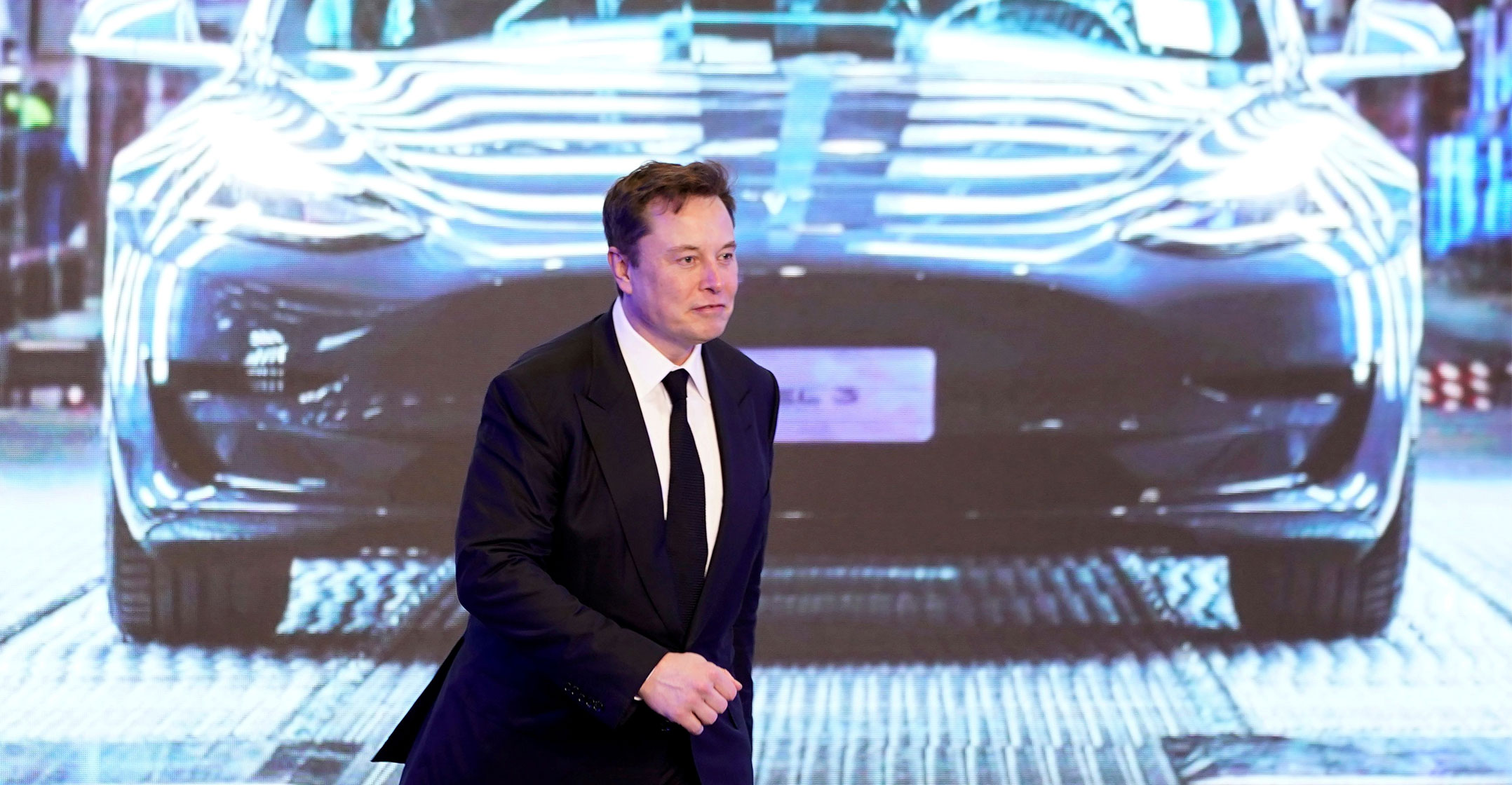
    Elon Musk. Aly Song/Reuters

    Tesla’s rapid rise to become the world’s most valuable car maker could mark the start of a new era for the global auto industry, defined by a Silicon Valley approach to software that is overtaking old-school manufacturing know-how.

    Tesla’s ascent took many investors by surprise. But executives at Daimler, the parent company of Mercedes-Benz, had a close-up view starting in 2009 of how Tesla and its CEO, Elon Musk, were taking a new approach to building vehicles that challenged the established system.

    Daimler, which bears the name of the man who invented the modern car 134 years ago, bought a nearly 10% Tesla stake in May 2009 in a deal which provided a US$50-million lifeline for the struggling start-up.

    The investment gave Mercedes engineers an inside view of how Musk was willing to launch technology that wasn’t perfect

    That investment gave Mercedes engineers an inside view of how Musk was willing to launch technology that wasn’t perfect, and then repeatedly upgrade it, using smartphone style over-the-air updates, paying little regard to early profitability.

    Mercedes engineers helped Tesla develop its Model S luxury sedan in exchange for access to Tesla’s partially hand-assembled battery packs, but in 2014 Daimler decided to sell its stake amid doubts Tesla’s approach could be industrialised at scale.

    Tesla would go on to pioneer new approaches in manufacturing, designs in software and electronic architecture which enable it to introduce innovations faster than rivals, leaving analysts to draw comparisons with Apple.

    Collision of old and new

    Three people directly involved with the Mercedes side of the collaboration said the brief partnership highlighted the collision of old and new engineering cultures: the German obsession with long-term safety and control, which rewarded evolution, and the Silicon Valley car maker’s experimental approach which embraced radical thinking and fast innovation.

    “Elon Musk has been walking on the edge of a razor blade in terms of the aggression with which he pushes some technologies,” said a former Mercedes engineer who worked on the partnership.

    By contrast, Mercedes and other established automakers are still not comfortable about releasing a new technology, such as partially automated driving, without years of testing.
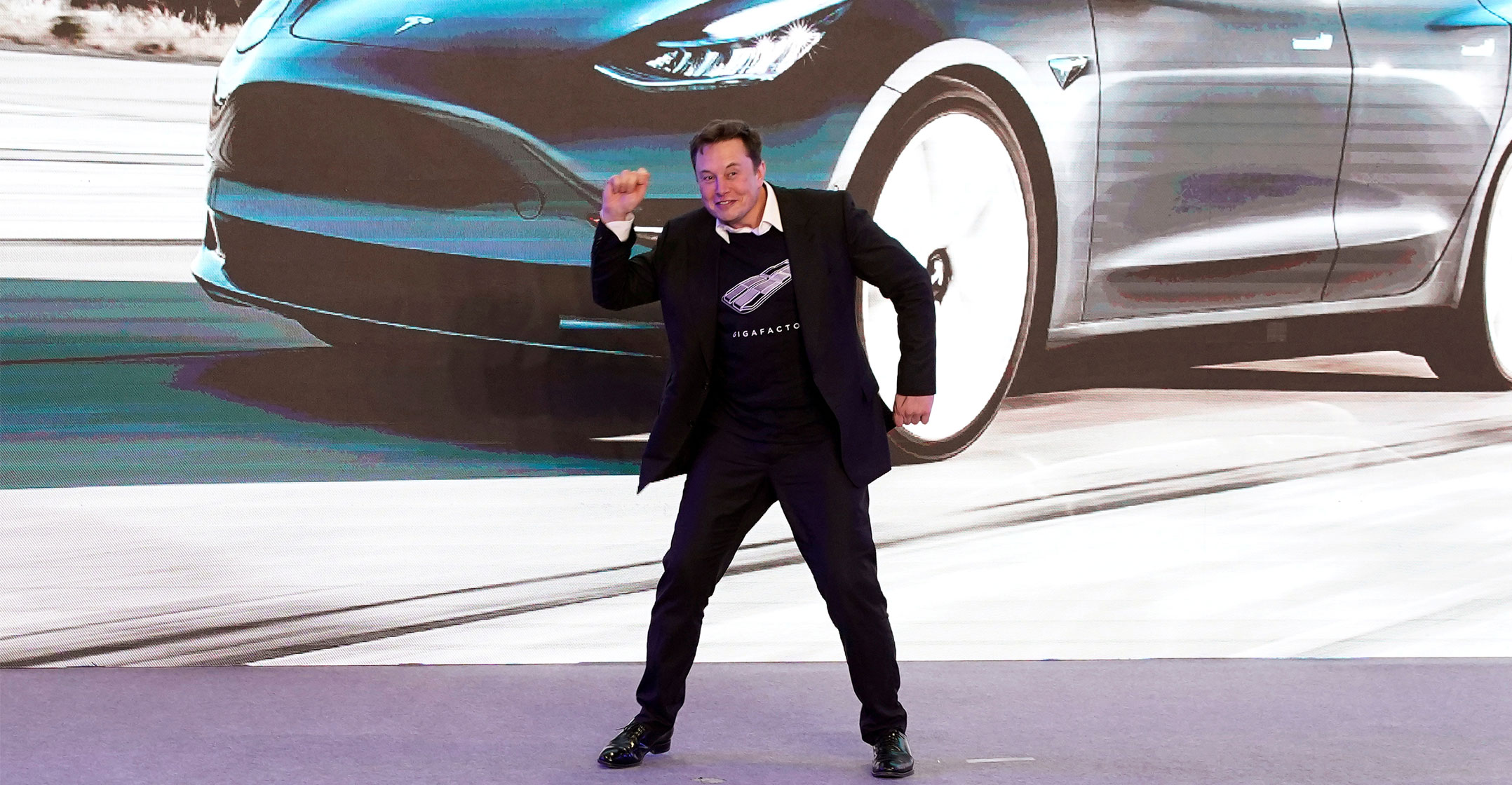
    Musk hamming it up on stage in Shanghai in January 2020. Aly Song/Reuters

    Investors favour the Tesla model, in an industry undergoing fundamental and dizzying change even though the US car maker will face an onslaught of competing electric vehicles from established automakers during the next few years.

    They are putting their money on Musk and his company, even though Mercedes-Benz alone sold 935 089 cars in the first half of 2020, dwarfing the 179 050 delivered by Tesla in the same period.

    Today, Tesla is worth nearly $304.6-billion, more than six times Daimler’s $47.7-billion market capitalisation.

    Daimler and Tesla began collaborating after Mercedes engineers, who were developing a second-generation electric Smart car, bought a Tesla Roadster. They were impressed by the way Tesla packaged batteries, so arranged a visit to Silicon Valley to meet Musk in January 2009 and ordered a thousand battery packs.

    German engineers found that Tesla engineers had not done long-term stress tests on its battery.

    The collaboration expanded. At a joint press conference in the Mercedes-Benz museum in Stuttgart in May 2009, Tesla said the partnership would “accelerate bringing our Tesla Model S to production and ensure that it is a superlative vehicle”.

    For its part, Mercedes wanted to use Tesla’s batteries to power an electric version of its compact Mercedes-Benz B-Class. The Tesla Model S would hit the road in 2012. An electric B-Class arrived in showrooms two years later.

    Despite having batteries supplied by Tesla, the Mercedes had a shorter operating range after Daimler engineers configured the B-class more conservatively to address their concerns about long-term battery degradation and the risk of overheating, a second Daimler staffer who worked on the joint projects said.

    ‘Lastenheft’

    German engineers found that Tesla engineers had not done long-term stress tests on its battery. “We had to devise our own programme of stress tests,” the second Daimler engineer said.

    Before starting production of a new car, Daimler engineers specify a “Lastenheft” — a blueprint laying out the properties of each component for suppliers. Significant changes cannot be made once the design is frozen.

    “This is also the way you can guarantee that we will be profitable during mass production. Tesla was not as concerned about this aspect,” the second Daimler source said.

    Daimler’s engineers suggested the underbody of the Model S needed reinforcing to prevent debris from the road puncturing a battery pack, the first Daimler engineer said.
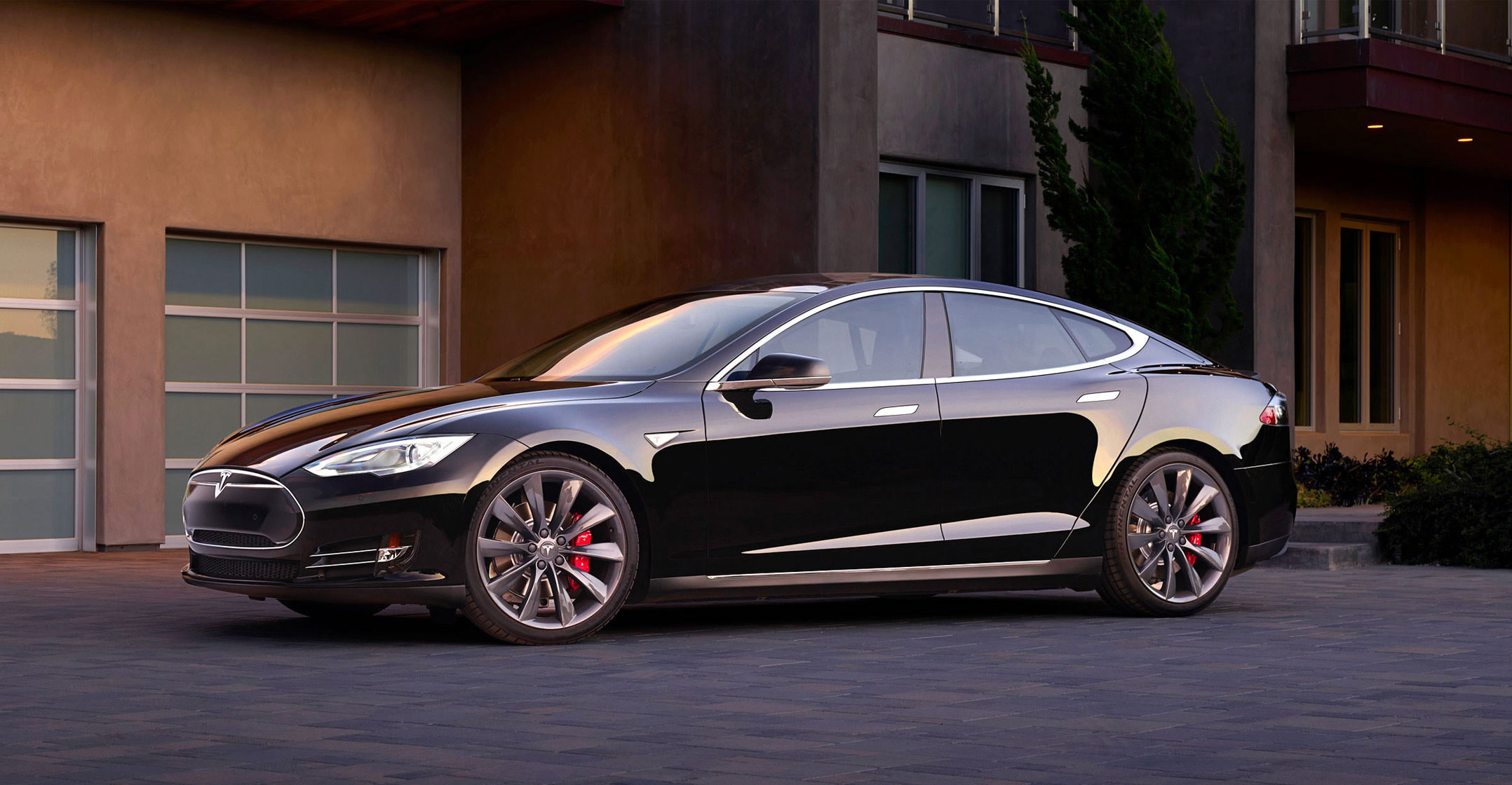
    A Tesla Model S

    To quash doubts about safety and security, following a series of battery fires, Tesla raised the ride height of its vehicles, using an over-the-air update, and a few months later, in March 2014, said it would add a triple underbody shield to new Model S cars and offered to retrofit existing cars.

    Musk was able to make adjustments quickly thanks to Tesla’s ability to burn through more cash during development. “At Mercedes you can make such adjustments every three years at best,” the engineer said.

    The Model S, a four-door electric sedan would go on to outsell the flagship Mercedes-Benz S-Class in the US in May 2013, and outstrip S-Class deliveries globally by 2017.

    Making mistakes along the way does not come with a big penalty. But failure to try to innovate at all … comes with a big penalty. You will be fired

    Musk’s relentless focus on innovation explains, in part, why he has disrupted the traditional auto world. In an interview at the 2020 Air Warfare Symposium, published on YouTube, he was asked about the importance of innovation among his employees.

    “We certainly need those that do advanced engineering to be innovative,” Musk said. “The incentive structure is set up … such that innovation is rewarded. Making mistakes along the way does not come with a big penalty. But failure to try to innovate at all … comes with a big penalty. You will be fired.”

    Established automakers are playing catch-up to Tesla, designing their own software operating systems and dedicated electric cars.

    Mercedes will release its EQS next year — a four-door limousine built on a dedicated electric vehicle platform, with an operating range of 700km. A new version of the Mercedes S-Class, which will have combustion and hybrid powertrains and semi-autonomous driver assistance systems, is due this year.

    Restructuring costs

    From an investor perspective, traditional players face billions of dollars in restructuring costs as they transform product lines and factories to move away from internal combustion technology

    “No one is going to give an OEM (established automaker) a five-year window to say … you can totally retool your business, and I am going to buy in and fund this journey,” said Mark Wakefield, co-leader of automotive and industrials practice at consulting firm AlixPartners.

    Start-ups, however, get time from investors to learn, make mistakes and grow, he added.

    Investors are betting on Tesla’s ability to scale up manufacturing just as they once backed Toyota, which defined the auto industry’s last era with its mastery of highly efficient, high-quality lean production.
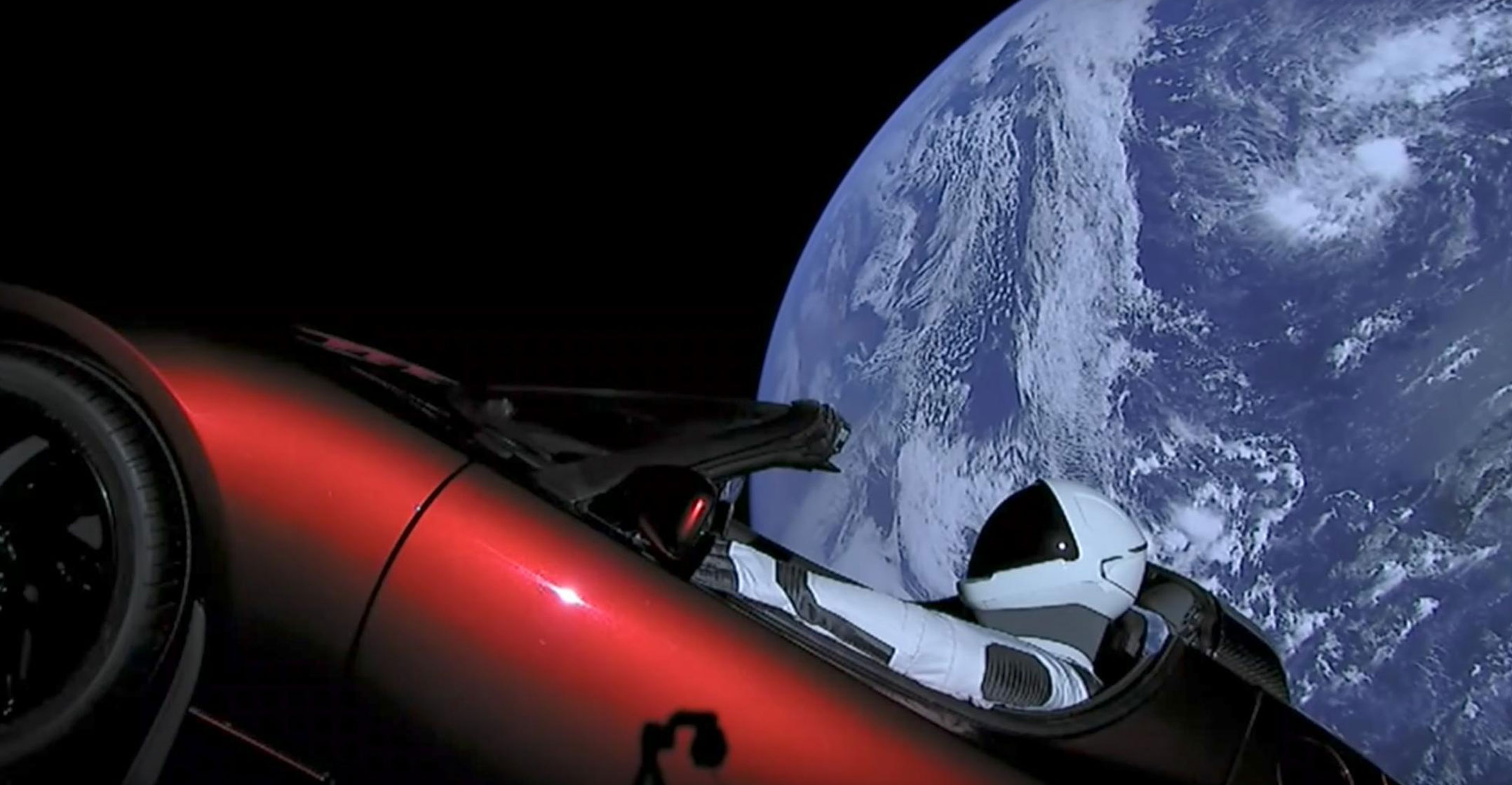
    Tesla in space

    Toyota overtook the market capitalisation of former industry leader General Motors in 1996, though it wasn’t until 2008 that it sold more vehicles than its Detroit rival.

    The Japanese giant also cultivated ties with Tesla, with the US start-up helping it design an electrified RAV4 compact sports utility vehicle under a 2010 deal.

    Toyota was impressed by the speed with which Tesla came up with the new design, but ultimately decided Tesla’s methods were not suitable for mass production by a mainstream manufacturer when Toyota’s standards for product quality and durability were applied, two company insiders familiar with the partnership said.

    Toyota said the joint project involved cooperation on the development of electric cars, parts and production system.

    Toyota overtook the market capitalisation of former industry leader General Motors in 1996

    “Toyota accomplished what the project set out to achieve, and it ended in October 2014 after Tesla delivered roughly 2 500 electric powertrain systems over three years” for an electrified RAV4 crossover SUVs, a spokeswoman said.

    Both the Toyota and Daimler collaborations were agreed before the Volkswagen emissions-cheating scandal in 2015, which prompted a global regulatory backlash and forced car makers to step up investments in electric cars.

    “That was all before dieselgate, which changed the economics of electric and combustion-engined cars,” a senior Daimler manager said. “Tesla has a lead. Let’s see if they can scale up.”  — Reported by Edward Taylor, Nori Shirouzu and Joe White, with additional reporting by Paul Lienert, (c) 2020 Reuters


    Follow TechCentral on Google News Add TechCentral as your preferred source on Google


    Daimler Elon Musk Mercedes-Benz Tesla top Toyota
    WhatsApp YouTube
    Share. Facebook Twitter LinkedIn WhatsApp Telegram Email Copy Link
    Previous ArticleSlack accuses Microsoft of dominance abuse in antitrust complaint
    Next Article Telkom wants you off DSL – and as fast as possible

    Related Posts

    Amazon ramps up satellite war with $11.6-billion Globalstar buy

    Amazon ramps up satellite war with $11.6-billion Globalstar buy

    15 April 2026
    Musk hurls expletives at senior SA diplomat in Starlink row - Elon Musk, Clayson Monyela

    Musk hurls expletives at senior SA diplomat in Starlink row

    12 April 2026
    Wall Street strains to justify SpaceX's $1.75-trillion price tag

    Wall Street strains to justify SpaceX’s $1.75-trillion price tag

    12 April 2026
    Company News
    Why retail's future is digital - but still physical - NEC XON

    Why the future of retail is digital – but still physical

    21 April 2026
    Africa's AI dream needs bricks and gigawatts - Gary Galolo, head of technology, media, and telecommunications and digital infrastructure finance at Nedbank CIB

    Africa’s AI dream needs bricks and gigawatts

    21 April 2026
    Fibre: the backbone of South Africa's digital health ecosystem - Mweb

    Fibre: the backbone of South Africa’s digital health ecosystem

    16 April 2026
    Opinion
    The conflict of interest at the heart of PayShap's slow adoption - Cheslyn Jacobs

    The conflict of interest at the heart of PayShap’s slow adoption

    26 March 2026
    South Africa's energy future hinges on getting wheeling right - Aishah Gire

    South Africa’s energy future hinges on getting wheeling right

    10 March 2026
    Hold the doom: the case for a South African comeback - Duncan McLeod

    Apple just dropped a bomb on the Windows world

    5 March 2026

    Subscribe to Updates

    Get the best South African technology news and analysis delivered to your e-mail inbox every morning.

    Latest Posts
    Liquid dodges debt crunch - at a hefty price - Hardy Pemhiwa

    Liquid dodges debt crunch – at a hefty price

    21 April 2026
    Microsoft slashes Xbox Game Pass prices in big strategy shift

    Microsoft slashes Xbox Game Pass prices in big strategy shift

    21 April 2026
    Naspers stalwart Steve Pacak passes away

    Naspers stalwart Steve Pacak passes away

    21 April 2026
    Why AI chatbots are a legal liability waiting to happen - Ahmore Burger-Smidt

    Why AI chatbots are a legal liability waiting to happen

    21 April 2026
    © 2009 - 2026 NewsCentral Media
    • Cookie policy (ZA)
    • TechCentral – privacy and Popia

    Type above and press Enter to search. Press Esc to cancel.

    Manage consent

    TechCentral uses cookies to enhance its offerings. Consenting to these technologies allows us to serve you better. Not consenting or withdrawing consent may adversely affect certain features and functions of the website.

    Functional Always active
    The technical storage or access is strictly necessary for the legitimate purpose of enabling the use of a specific service explicitly requested by the subscriber or user, or for the sole purpose of carrying out the transmission of a communication over an electronic communications network.
    Preferences
    The technical storage or access is necessary for the legitimate purpose of storing preferences that are not requested by the subscriber or user.
    Statistics
    The technical storage or access that is used exclusively for statistical purposes. The technical storage or access that is used exclusively for anonymous statistical purposes. Without a subpoena, voluntary compliance on the part of your Internet Service Provider, or additional records from a third party, information stored or retrieved for this purpose alone cannot usually be used to identify you.
    Marketing
    The technical storage or access is required to create user profiles to send advertising, or to track the user on a website or across several websites for similar marketing purposes.
    • Manage options
    • Manage services
    • Manage {vendor_count} vendors
    • Read more about these purposes
    View preferences
    • {title}
    • {title}
    • {title}