Close Menu
TechCentralTechCentral

    Subscribe to the newsletter

    Get the best South African technology news and analysis delivered to your e-mail inbox every morning.

    Facebook X (Twitter) YouTube LinkedIn
    WhatsApp Facebook X (Twitter) LinkedIn YouTube
    TechCentralTechCentral
    • News
      Nvidia's biggest customers are becoming its biggest threat - Jensen Huang

      Nvidia’s best customers are becoming its biggest threat

      30 August 2026
      Nasa launches telescope that will map two billion galaxies

      Nasa launches telescope that will map two billion galaxies

      30 August 2026
      Chinese car makers go after South Africa's EV and bakkie buyers

      Chinese car makers go after South Africa’s EV and bakkie buyers

      30 August 2026
      South African talk radio is now searchable - Locl.co.za

      South African talk radio is now searchable

      28 August 2026
      JSE-listed ICT firm suspended for not paying its own dividend

      JSE-listed ICT firm suspended for not paying its own dividend

      28 August 2026
    • World
      AI-generated music banned from Australian charts

      AI-generated music banned from Australian charts

      26 August 2026
      Traders brace for a R4.5-trillion swing in Nvidia's value

      Traders brace for a R4.5-trillion swing in Nvidia’s value

      25 August 2026
      Russia building its own Starlink - and faster than expected - Vadym Skibitskyi

      Russia building its own Starlink – and faster than expected

      11 August 2026
      Meta AI will now tell parents if their teen is in crisis

      Meta AI will now tell parents if their teen is in crisis

      17 July 2026
      IBM shares crash 25% as AI upends software spending - Arvind Krishna

      IBM shares crash 25% as AI upends software spending

      15 July 2026
    • In-depth
      Google DeepMind CEO Demis Hassabis. Image: John Sears

      The plan to stop AI from breaking the world

      16 July 2026
      The internet has a Strait of Hormuz problem

      The internet has a Strait of Hormuz problem

      15 July 2026
      AI boom sparks rally, frenzy and fear

      AI boom sparks rally, frenzy and fear

      11 June 2026
      Every plug-in hybrid on sale in South Africa, ranked by price - Lamborghini Temerario

      Every plug-in hybrid on sale in South Africa, ranked by price

      7 June 2026
      What Wi-Fi 8 will mean for wireless networks

      What Wi-Fi 8 will mean for wireless networks

      1 June 2026
    • TCS
      Watts & Wheels S1E8: 'Tesla lands in Africa, just not here'

      Watts & Wheels S1E8: ‘Tesla lands in Africa, just not here’

      24 August 2026
      Meet the CIO | Discovery's Derek Wilcocks on AI, guardrails and growth

      Meet the CIO | Derek Wilcocks on how AI personalised Vitality

      13 August 2026
      TCS | Money just became native to the internet - Steven Boykey Sidley

      TCS | Money just became native to the internet – Steven Boykey Sidley

      12 August 2026
      TCS+ | Specops' Darren James on continuous trust in an AI world

      TCS+ | Specops’ Darren James on continuous trust in an AI world

      7 August 2026
      TCS+ | How AI is turning hardware into a subscription service - Shane van der Merwe Merchant West

      TCS+ | How AI is turning hardware into a subscription service

      6 August 2026
    • Opinion
      The fragile joint in the Capitec machine - Pambos Soteriades

      The R197-billion market the banks can’t reach

      25 August 2026
      South African tech's compounding debt problem - Jannie van Zyl

      Management consulting as we know it is over

      21 August 2026
      South African tech's compounding debt problem - Jannie van Zyl

      The most dangerous customer is the quiet one

      10 August 2026
      South African tech's compounding debt problem - Jannie van Zyl

      South African tech’s compounding debt problem

      29 July 2026
      The fragile joint in the Capitec machine - Pambos Soteriades

      Best network, worst vibes: the puzzle of SA telecoms

      20 July 2026
    • Company Hubs
      • 1Stream
      • Africa Data Centres
      • AfriGIS
      • Altron Digital Business
      • Altron Document Solutions
      • Altron Group
      • Arctic Wolf
      • Ascent Technology
      • AvertITD
      • BBD
      • Braintree
      • CallMiner
      • CambriLearn
      • CM.com
      • Contactable
      • CYBER1 Solutions
      • Digicloud Africa
      • Digimune
      • Domains.co.za
      • ESET
      • Euphoria Telecom
      • HOSTAFRICA
      • Incredible Business
      • iONLINE
      • IQbusiness
      • Iris Network Systems
      • Kaspersky
      • LSD Open
      • Mitel
      • NEC XON
      • Netstar
      • Network Platforms
      • Next DLP
      • Ovations
      • Paracon
      • Paratus
      • Q-KON
      • SevenC
      • SkyWire
      • Solid8 Technologies
      • Telit Cinterion
      • Telviva
      • Tenable
      • Vertiv
      • Videri Digital
      • Vodacom Business
      • Vox
      • Wipro
      • Workday
      • XLink
    • Sections
      • AI and machine learning
      • Banking
      • Broadcasting and Media
      • Cloud services
      • Contact centres and CX
      • Cryptocurrencies
      • Education and skills
      • Electronics and hardware
      • Energy and sustainability
      • Enterprise software
      • Financial services
      • HealthTech
      • Information security
      • Internet and connectivity
      • Internet of Things
      • Investment
      • IT services
      • Lifestyle
      • Policy and regulation
      • Public sector
      • Retail and e-commerce
      • Satellite communications
      • Science
      • SMEs and start-ups
      • Social media
      • Talent and leadership
      • Telecoms
      • Watts & Wheels
    • Events
    • Advertise
    TechCentralTechCentral
    Home » Sections » Electronics and hardware » How to fix a water-damaged phone (no rice needed)

    How to fix a water-damaged phone (no rice needed)

    By The Conversation9 April 2021
    Twitter LinkedIn Facebook WhatsApp Email Telegram Copy Link
    News Alerts
    WhatsApp

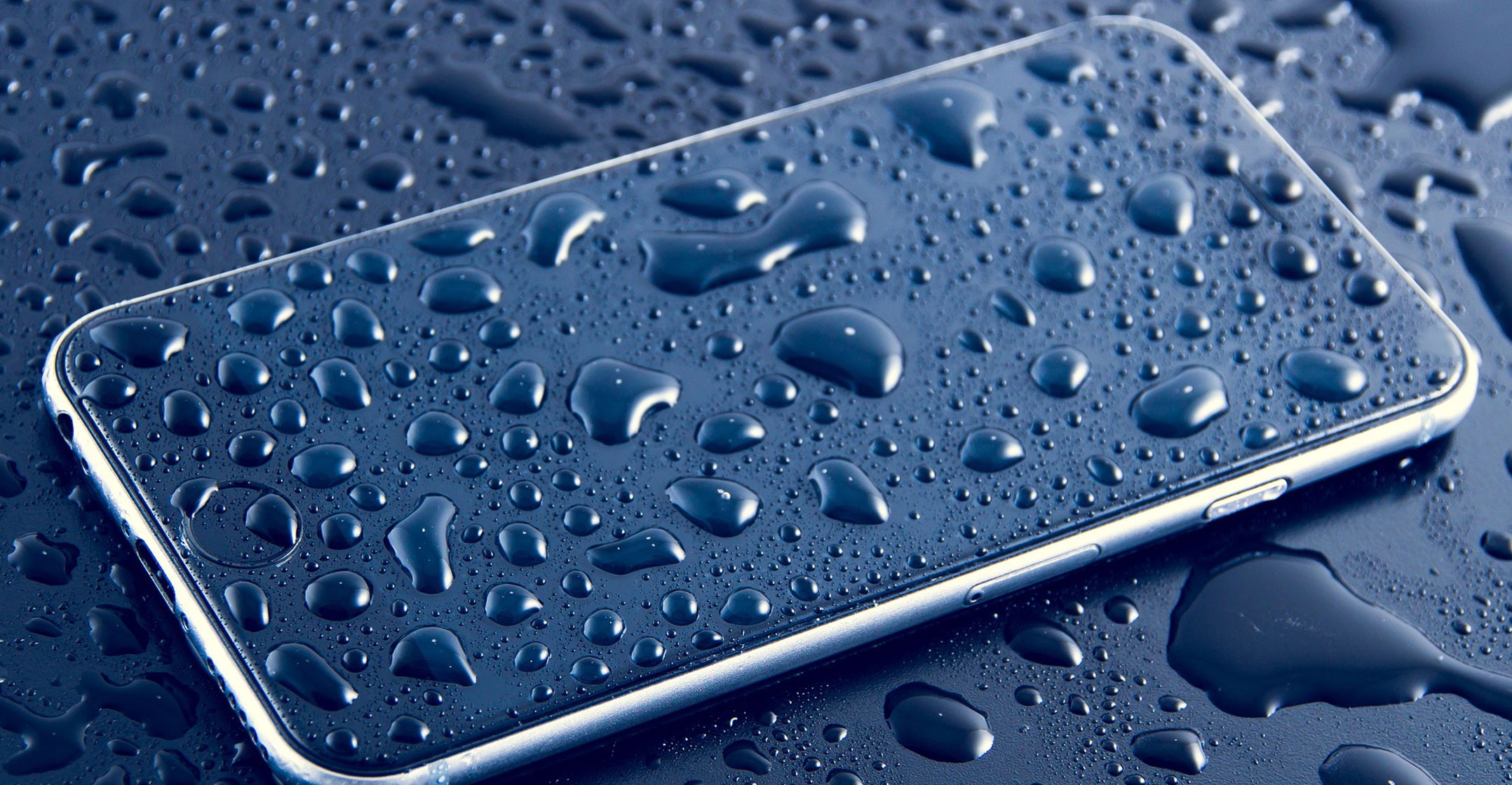
    If you’ve ever got your phone wet in the rain, dropped it in water or spilt liquid over it, you’re not alone. One study suggests 25% of smartphone users have damaged their smartphone with water or some other kind of liquid.

    While new phones are advertised as “water resistant”, this doesn’t mean they are waterproof, or totally immune to water. Water resistance just implies the device can handle some exposure to water before substantial damage occurs.

    The water resistance of phones is rated by an “ingress protection” code, commonly called an IP rating. Simply, an electrical device’s IP rating refers to its effectiveness against intrusions from solids and liquids.

    Phone manufacturers carry out their IP testing in fresh water and Apple recommends devices not be submerged in liquids of any kind

    The rating includes two numbers. The first demonstrates protection against solids such as dust, while the second indicates resistance to liquids, specifically water.

    A phone that has a rating of IP68 has a solid object protection of 6 (full protection from dust, dirt and sand) and a liquid protection of 8 (protected from immersion in water to a depth of more than one metre) — although, for the latter, manufacturers are responsible for defining the exact depth and time.

    The popular iPhone 12 and Samsung Galaxy S21 phones both have a rating of IP68. However, regarding exposure to water, the iPhone 12 has a permissible immersion depth of a maximum of 6m for 30 minutes, whereas the Galaxy 21’s immersion limit is up to 1.5m, also for 30 minutes.

    Ocean bad

    While IP ratings indicate the water-repellent nature of phones, taking most phones for a swim will land you in deep trouble. The salt content in oceans and swimming pools can corrode your device and cost you a hefty replacement.

    Moreover, phone manufacturers carry out their IP testing in fresh water and Apple recommends devices not be submerged in liquids of any kind.

    Luckily, water resistant phones are generally able to survive smaller liquid volumes, such as from a glass tipping over.

    Exposure to water is something manufacturers have in mind when designing phones. Most Apple and Samsung phones come with a liquid contact/damage indicator strip located inside the Sim card tray. This is used to check for liquid damage that may be causing a device to malfunction. An indicator strip that comes in contact with liquid loses its usual colour and becomes discoloured and smudgy. A discoloured strip usually renders your phone ineligible for a standard manufacturer warranty.

    If you have any of the more recent smartphones from Apple or Samsung, then your device will be able to detect liquid or moisture in its charging port and will warn you with an alert. This notification only goes away once the port is dry.

    But what should you do if this dreadful pop-up presents itself?

    Firstly, do not put your phone in a container of rice. It’s a myth that rice helps in drying out your phone. Instead, follow these steps:

    • Turn off the device immediately and don’t press any buttons.
    • If your phone is water resistant and you’ve spilt or submerged it in a liquid other than water, both Apple and Samsung recommend rinsing it off by submerging it in still tap water (but not under a running tap, which could cause damage).
    • Wipe the phone dry with paper towels or a soft cloth.
    • Gently shake the device to remove water from the charging ports, but avoid vigorous shaking as this could further spread the liquid inside.
    • Remove the Sim card.
    • Use a compressed aerosol air duster to blow the water out if you have one. Avoid using a hot blow dryer as the heat can wreck the rubber seals and damage the screen.
    • Dry out the phone (and especially the ports) in front of a fan.
    • Leave your phone in an airtight container full of silica gel packets (those small packets you get inside new shoes and bags), or another drying agent. These help absorb the moisture.
    • Do not charge the phone until you are certain it’s dry. Charging a device with liquid still inside it, or in the ports, can cause further damage. Apple suggests waiting at least five hours once a phone appears dry before charging it (or until the alert disappears).

    If the above steps don’t help and you’re still stuck with a seemingly dead device, don’t try opening the phone yourself. You’re better off taking it to a professional.The Conversation

    • Written by Ritesh Chugh, senior lecturer in information systems and analysis, CQUniversity Australia
    • This article is republished from The Conversation under a Creative Commons licence

    Follow TechCentral on Google News Add TechCentral as your preferred source on Google


    Apple Samsung top
    WhatsApp YouTube
    Share. Facebook Twitter LinkedIn WhatsApp Telegram Email Copy Link
    Previous ArticleUS blacklists seven Chinese supercomputing firms
    Next Article LinkedIn says some user data extracted and posted for sale

    Related Posts

    Forget the iPhone: Apple's real next act is your home

    Forget the iPhone: Apple’s real next act is your home

    27 August 2026
    The new Mac mini

    Apple’s new Mac mini chases the home AI agent boom

    26 August 2026
    Your iPhone is about to get a massive upgrade

    Your iPhone is about to get a massive upgrade

    18 August 2026
    Company News
    The stuff that doesn't fit on the quote - Graham Millar SevenC

    The stuff that doesn’t fit on the quote

    28 August 2026
    Can you trust the AI speaking to your customers? - 1Stream

    Can you trust the AI speaking to your customers?

    27 August 2026
    Telviva launches Viva, a digital agent built for South African businesses - Telviva CEO David Meintjes

    Telviva launches Viva, a digital agent built for South African businesses

    27 August 2026
    Opinion
    The fragile joint in the Capitec machine - Pambos Soteriades

    The R197-billion market the banks can’t reach

    25 August 2026
    South African tech's compounding debt problem - Jannie van Zyl

    Management consulting as we know it is over

    21 August 2026
    South African tech's compounding debt problem - Jannie van Zyl

    The most dangerous customer is the quiet one

    10 August 2026

    Subscribe to Updates

    Get the best South African technology news and analysis delivered to your e-mail inbox every morning.

    Latest Posts
    Nvidia's biggest customers are becoming its biggest threat - Jensen Huang

    Nvidia’s best customers are becoming its biggest threat

    30 August 2026
    Nasa launches telescope that will map two billion galaxies

    Nasa launches telescope that will map two billion galaxies

    30 August 2026
    Chinese car makers go after South Africa's EV and bakkie buyers

    Chinese car makers go after South Africa’s EV and bakkie buyers

    30 August 2026
    South African talk radio is now searchable - Locl.co.za

    South African talk radio is now searchable

    28 August 2026
    © 2009 - 2026 NewsCentral Media
    Built and maintained by Chronon
    • Cookie policy (ZA)
    • TechCentral – privacy and Popia

    Type above and press Enter to search. Press Esc to cancel.

    Manage consent

    TechCentral uses cookies to enhance its offerings. Consenting to these technologies allows us to serve you better. Not consenting or withdrawing consent may adversely affect certain features and functions of the website.

    Functional Always active
    The technical storage or access is strictly necessary for the legitimate purpose of enabling the use of a specific service explicitly requested by the subscriber or user, or for the sole purpose of carrying out the transmission of a communication over an electronic communications network.
    Preferences
    The technical storage or access is necessary for the legitimate purpose of storing preferences that are not requested by the subscriber or user.
    Statistics
    The technical storage or access that is used exclusively for statistical purposes. The technical storage or access that is used exclusively for anonymous statistical purposes. Without a subpoena, voluntary compliance on the part of your Internet Service Provider, or additional records from a third party, information stored or retrieved for this purpose alone cannot usually be used to identify you.
    Marketing
    The technical storage or access is required to create user profiles to send advertising, or to track the user on a website or across several websites for similar marketing purposes.
    • Manage options
    • Manage services
    • Manage {vendor_count} vendors
    • Read more about these purposes
    View preferences
    • {title}
    • {title}
    • {title}