Close Menu
TechCentralTechCentral

    Subscribe to the newsletter

    Get the best South African technology news and analysis delivered to your e-mail inbox every morning.

    Facebook X (Twitter) YouTube LinkedIn
    WhatsApp Facebook X (Twitter) LinkedIn YouTube
    TechCentralTechCentral
    • News
      Africa's most popular phones have a tracking problem

      Africa’s most popular phones have a tracking problem

      24 July 2026
      Vodacom taps UJ, AWS to build its AI talent pipeline - Vodacom Group CEO Shameel Joosub

      Vodacom taps UJ, AWS to build its AI talent pipeline

      24 July 2026
      Intel is back in the game - Intel CEO Lip-Bu Tan. Laure Andrillon/Reuters

      Intel is back in the game

      24 July 2026
      Fat bonuses at Telkom despite group missing own targets - Serame Taukobong

      Fat bonuses at Telkom despite group missing own targets

      23 July 2026
      Massive changes coming to Amazon Prime Video - Jeff Bezos

      Massive changes coming to Amazon Prime Video

      23 July 2026
    • World
      Meta AI will now tell parents if their teen is in crisis

      Meta AI will now tell parents if their teen is in crisis

      17 July 2026
      IBM shares crash 25% as AI upends software spending - Arvind Krishna

      IBM shares crash 25% as AI upends software spending

      15 July 2026
      Jony Ive's first OpenAI device: an AI smart speaker - Jony Ive and Sam Altman

      Jony Ive’s first OpenAI device: an AI smart speaker

      15 July 2026
      Stripe, Advent in talks to buy PayPal for $53-billion

      Stripe, Advent in talks to buy PayPal for $53-billion

      15 July 2026
      Memory crisis sends smartphone market into steep decline

      Memory crisis sends smartphone market into steep decline

      13 July 2026
    • In-depth
      The plan to stop AI from breaking the world - Google DeepMind CEO Demis Hassabis. Image: John Sears

      The plan to stop AI from breaking the world

      16 July 2026
      The internet has a Strait of Hormuz problem

      The internet has a Strait of Hormuz problem

      15 July 2026
      AI boom sparks rally, frenzy and fear

      AI boom sparks rally, frenzy and fear

      11 June 2026
      Every plug-in hybrid on sale in South Africa, ranked by price - Lamborghini Temerario

      Every plug-in hybrid on sale in South Africa, ranked by price

      7 June 2026
      What Wi-Fi 8 will mean for wireless networks

      What Wi-Fi 8 will mean for wireless networks

      1 June 2026
    • TCS
      TCS | How Optasia lends billions to people banks can't see - Salvador Anglada

      TCS | How Optasia lends billions to people banks can’t see

      23 July 2026
      The rands-and-cents case for electric trucks - William Kelly Watts & Wheels with Wills

      The rands-and-cents case for electric trucks

      20 July 2026
      Watts & Wheels S1E7: 'Ferrari's EV breaks the internet'

      Watts & Wheels S1E7: ‘Ferrari’s EV breaks the internet’

      8 July 2026
      TCS | Pick n Pay's Enrico Ferigolli on Penny, the AI that shops for you

      TCS | Pick n Pay’s Enrico Ferigolli on Penny, the AI that shops for you

      2 July 2026
      TCS+ | How Tracker is turning vehicle data into business strategy - Silvia Schollenberger

      TCS+ | How Tracker is turning vehicle data into business strategy

      1 July 2026
    • Opinion
      Selling vapour is corporate suicide in slow motion - Jannie van Zyl

      Selling vapour is corporate suicide in slow motion

      16 July 2026
      Brazil's online gambling crackdown is a lesson for South Africa

      How Amazon outmanoeuvred Starlink in South Africa

      15 July 2026
      The Popia problem with agentic AI - Herman Haasbroek

      The Popia problem with agentic AI

      14 July 2026
      The author, Fanie van Rooyen

      South Africa can still catch the AI wave – here’s how

      7 July 2026
      The author, Fanie van Rooyen

      The AI utopia South Africa can’t afford

      1 July 2026
    • Company Hubs
      • 1Stream
      • Africa Data Centres
      • AfriGIS
      • Altron Digital Business
      • Altron Document Solutions
      • Altron Group
      • Arctic Wolf
      • Ascent Technology
      • AvertITD
      • BBD
      • Braintree
      • CallMiner
      • CambriLearn
      • CM Telecom
      • Contactable
      • CYBER1 Solutions
      • Digicloud Africa
      • Digimune
      • Domains.co.za
      • ESET
      • Euphoria Telecom
      • HOSTAFRICA
      • Incredible Business
      • iONLINE
      • IQbusiness
      • Iris Network Systems
      • Kaspersky
      • LSD Open
      • Mitel
      • NEC XON
      • Netstar
      • Network Platforms
      • Next DLP
      • Ovations
      • Paracon
      • Paratus
      • Q-KON
      • SevenC
      • SkyWire
      • Solid8 Technologies
      • Telit Cinterion
      • Telviva
      • Tenable
      • Vertiv
      • Videri Digital
      • Vodacom Business
      • Vox
      • Wipro
      • Workday
      • XLink
    • Sections
      • AI and machine learning
      • Banking
      • Broadcasting and Media
      • Cloud services
      • Contact centres and CX
      • Cryptocurrencies
      • Education and skills
      • Electronics and hardware
      • Energy and sustainability
      • Enterprise software
      • Financial services
      • HealthTech
      • Information security
      • Internet and connectivity
      • Internet of Things
      • Investment
      • IT services
      • Lifestyle
      • Policy and regulation
      • Public sector
      • Retail and e-commerce
      • Satellite communications
      • Science
      • SMEs and start-ups
      • Social media
      • Talent and leadership
      • Telecoms
      • Watts & Wheels
    • Events
    • Advertise
    TechCentralTechCentral
    Home » Sections » Information security » How worried should South Africans be about Covid-19 cellphone tracing?

    How worried should South Africans be about Covid-19 cellphone tracing?

    By The Conversation28 April 2020
    Twitter LinkedIn Facebook WhatsApp Email Telegram Copy Link
    News Alerts
    WhatsApp

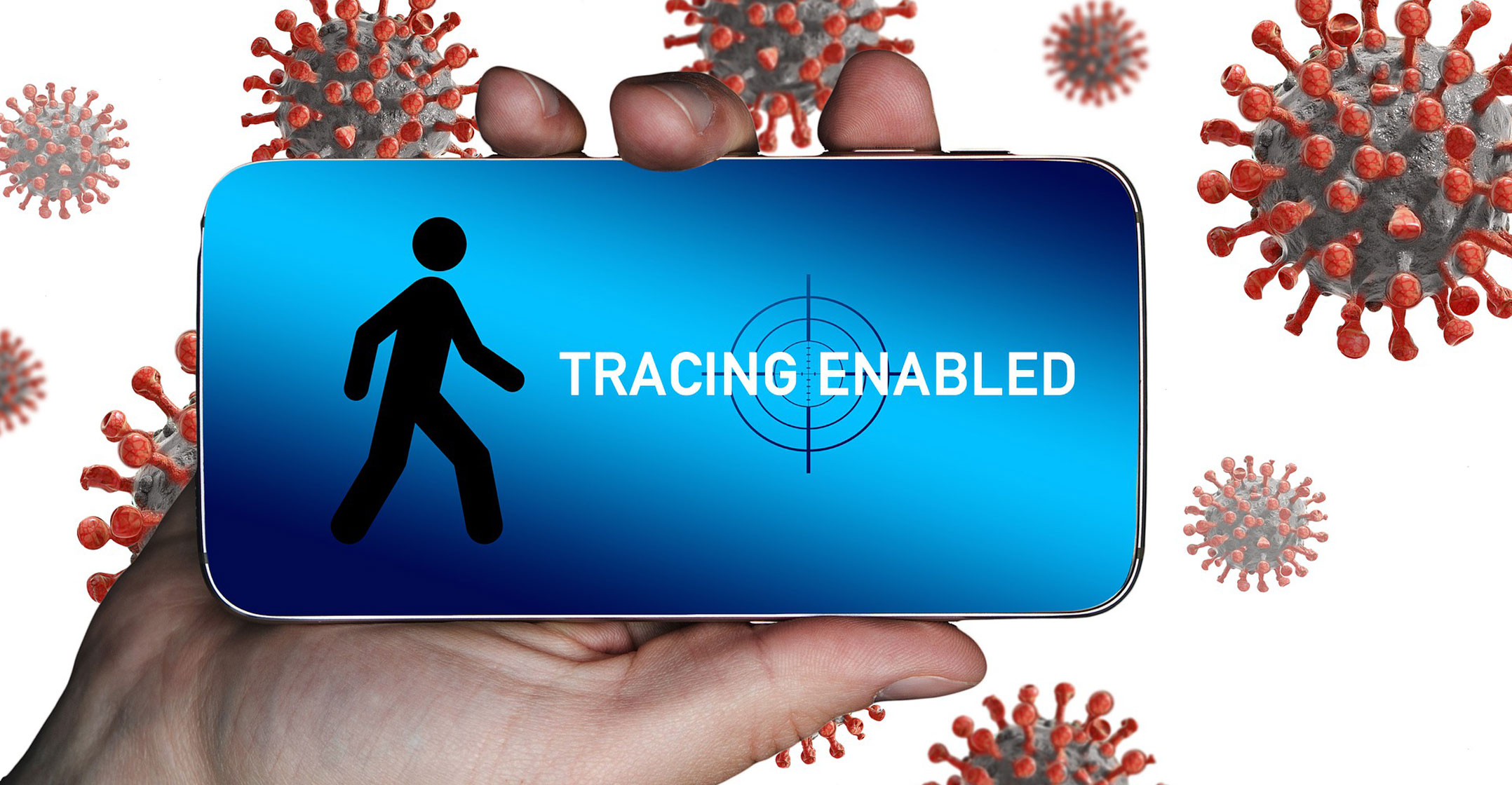
    Tracking people infected with Covid-19 has become an important weapon in global responses to combating the virus. Using geolocation, mobile technology offers a simple solution for tracing people possibly exposed to Covid-19. With big data analytics there is the potential for tracking the pandemic’s spread, and employing analytics to forecast future patterns of contagion.

    But at what cost? These are exceptional times calling for extraordinary measures. But do they justify the wholesale sacrifice of our rights? Concerns loom large across the globe. More than 100 civil society signatories and intergovernmental organisations have already warned as much in a joint letter.

    The mobile phone industry is reportedly exploring the creation of a global data-sharing system that could track individuals around the world. For now, however, monitoring appears to be happening at national level.

    South Africa has joined several governments in passing regulations that allow the collection and storage of data from mobile companies

    South Africa has joined several governments in passing regulations that allow the collection and storage of data from mobile companies. It has also appointed a former constitutional court justice, Kate O’Regan, as the Covid-19 judge. Her job will be to oversee data collection for the country’s contact-tracing database led by the director-general of health, Dr Anban Pillay.

    The appointment of O’Regan indicates that the country is taking seriously concerns about the risks that monitoring can pose for human rights. Nevertheless, concerns remain about the ability of the judge (or parliament, which ultimately has oversight) to ensure that data, once collected, is not abused.

    Best practices

    A set of principles and best practices have emerged internationally to guide data collection in disaster conditions. These include that:

    • Measures are transparent and accountable;
    • The limitations of rights are proportional to the harms they are intended to prevent or limit;
    • Data collection is minimised and time constrained;
    • Data is retained for research or public-use purposes and unused personal data is destroyed;
    • Data is anonymised in such a way that individuals cannot be re-identified; and
    • Third-party sharing both within and outside of government is prevented.

    However, South Africa’s data protection framework is not yet in place. Large parts of the Protection of Personal Information Act have not yet come into force. The Office of the Information Regulator has been established. And three years ago advocate Pansy Tlakula was appointed chair. But key sections of the act are not in play. Thus, her powers to act are constrained.

    There is synchronicity, however, between the principles and requirements of the Covid-19 regulations, and the lawful data processing principles the act describes.

    The regulator has issued guidelines for the collection of data to manage and curb the spread of Covid-19. These guidelines are contained in the Disaster Management Act (regulations). And she has called for proactive compliance by responsible parties when processing personal information of data subjects who have been tested for, or are infected with, Covid-19.

    The guidelines confirm the powers of the state to conduct mass surveillance of both Covid-19 carriers, and potential carriers, through the sharing of data by mobile operators. They also include reference to some of the privacy touchstones in data collection, particularly when consent is not obtained.

    Amendments to the disaster management regulations empower the director-general of health to direct, without prior notice, an electronic communications service provider to provide him with information for the Covid-19 tracing database to facilitate Covid-19 monitoring.

    Big questions remain about the practical realities of ensuring that data remains secure, especially considering the department’s own tenuous history in this regard

    But these powers are circumscribed.

    The regulations allow for the collection of location data of any person (and their personal identifiers) reasonably suspected to have contracted Covid-19, or that may have come into contact with someone who has. The commencement date is 5 March 2020.

    The contents of the communication may not be intercepted by the director-general – or anyone else.

    The regulations state that the department of health will keep the information “confidential”. But big questions remain about the practical realities of ensuring that data remains secure, especially considering the department’s own tenuous history in relation to data protection.

    The regulations empower the director-general to instruct a mobile operator to provide the information mentioned. But the actual modalities of the data collection by the health department is less clear — particularly how the data is collected and transmitted to the database securely.

    Limited collection

    For instance, once a request for the data from an operator is made and provided to the director-general, who will receive the information to inform the contacts? Who will ensure they are tested?

    Importantly, the regulations limit the collection of data only to the purpose of addressing, preventing or combating the spread of Covid-19. The data collected may only be disclosed by authorised persons for this purpose.

    The director-general is required to file weekly reports stating the number, names and details of all persons whose location or movements were obtained to the designated judge. This will contribute to the oversight of collection. It will also go some way to constraining data collection to what’s strictly necessary.

    The duration of data collection is circumscribed and terminates with the end of the national state of disaster

    The duration of data collection is circumscribed and terminates with the end of the national state of disaster. And within six weeks of it lapsing, the director-general is required to file a report with the Covid-19 judge detailing steps taken to de-identify the data. This includes providing notifications to every person whose information was obtained.

    The regulations require that all information on the Covid-19 tracing database, which has not been de-identified, be destroyed once the state of disaster has ended. But de-identification is not defined. This is a major concern, given the very real possibility of re-identification with the use of other publicly available, or hacked, databases.

    These measures go some way to safeguarding South Africans’ individual rights while acting in the public interest to contain the virus.

    But the regulations could be improved by:

    • Requiring that data subjects be informed as soon as they are tracked, but no later than six weeks after the termination of the state of disaster;
    • Explicitly empowering the judge to appoint technical experts to assist her in reviewing the use of data. This could include helping to ensure its security;
    • Explicitly giving the judge access to the database and the data supplied by the cellular providers to verify reporting. This could also assist in monitoring security and other data processing protection measures;
    • Requiring immediate notification of all compromises of privacy or security of the data to the persons whose data is compromised; and
    • Clearly prescribing data processing standards that respect the principles set out in the act.The Conversation

    Written by Alison Gillwald, adjunct professor, Nelson Mandela School of Public Governance, University of Cape Town; Andrew Rens, senior research fellow, Research ICT Africa, American University; Anri van der Spuy, PhD researcher, London School of Economics and Political Science; and Gabriella Razzano, lawyer and researcher, London School of Economics and Political Science

    • This article is republished from The Conversation under a Creative Commons licence.

    Follow TechCentral on Google News Add TechCentral as your preferred source on Google


    Allison Gillwald Andrew Rens Kate O'Regan top
    WhatsApp YouTube
    Share. Facebook Twitter LinkedIn WhatsApp Telegram Email Copy Link
    Previous ArticleBackspace: ‘E-commerce’
    Next Article Telkom in intriguing move to open the copper local loop

    Related Posts

    18GW in unplanned breakdowns cripple Eskom

    2 November 2021

    Nersa kicks the Karpowership can down the road

    13 September 2021

    If you think South African load shedding is bad, try Zimbabwe’s

    13 September 2021
    Company News
    Why Europe is turning to South Africa for cross-border innovation - BBD Software

    Why Europe is turning to South Africa for cross-border innovation

    24 July 2026
    Green dashboards, stalled change: the CIO's blind spot - Change Logic Marchant van den Heever

    Green dashboards, stalled change: the CIO’s blind spot

    24 July 2026
    Why Africa's cloud needs more than one path - Africa Data Centres

    Why Africa’s cloud needs more than one path

    23 July 2026
    Opinion
    Selling vapour is corporate suicide in slow motion - Jannie van Zyl

    Selling vapour is corporate suicide in slow motion

    16 July 2026
    Brazil's online gambling crackdown is a lesson for South Africa

    How Amazon outmanoeuvred Starlink in South Africa

    15 July 2026
    The Popia problem with agentic AI - Herman Haasbroek

    The Popia problem with agentic AI

    14 July 2026

    Subscribe to Updates

    Get the best South African technology news and analysis delivered to your e-mail inbox every morning.

    Latest Posts
    Africa's most popular phones have a tracking problem

    Africa’s most popular phones have a tracking problem

    24 July 2026
    Vodacom taps UJ, AWS to build its AI talent pipeline - Vodacom Group CEO Shameel Joosub

    Vodacom taps UJ, AWS to build its AI talent pipeline

    24 July 2026
    Intel is back in the game - Intel CEO Lip-Bu Tan. Laure Andrillon/Reuters

    Intel is back in the game

    24 July 2026
    Why Europe is turning to South Africa for cross-border innovation - BBD Software

    Why Europe is turning to South Africa for cross-border innovation

    24 July 2026
    © 2009 - 2026 NewsCentral Media
    Built and maintained by Chronon
    • Cookie policy (ZA)
    • TechCentral – privacy and Popia

    Type above and press Enter to search. Press Esc to cancel.

    Manage consent

    TechCentral uses cookies to enhance its offerings. Consenting to these technologies allows us to serve you better. Not consenting or withdrawing consent may adversely affect certain features and functions of the website.

    Functional Always active
    The technical storage or access is strictly necessary for the legitimate purpose of enabling the use of a specific service explicitly requested by the subscriber or user, or for the sole purpose of carrying out the transmission of a communication over an electronic communications network.
    Preferences
    The technical storage or access is necessary for the legitimate purpose of storing preferences that are not requested by the subscriber or user.
    Statistics
    The technical storage or access that is used exclusively for statistical purposes. The technical storage or access that is used exclusively for anonymous statistical purposes. Without a subpoena, voluntary compliance on the part of your Internet Service Provider, or additional records from a third party, information stored or retrieved for this purpose alone cannot usually be used to identify you.
    Marketing
    The technical storage or access is required to create user profiles to send advertising, or to track the user on a website or across several websites for similar marketing purposes.
    • Manage options
    • Manage services
    • Manage {vendor_count} vendors
    • Read more about these purposes
    View preferences
    • {title}
    • {title}
    • {title}