Close Menu
TechCentralTechCentral

    Subscribe to the newsletter

    Get the best South African technology news and analysis delivered to your e-mail inbox every morning.

    Facebook X (Twitter) YouTube LinkedIn
    WhatsApp Facebook X (Twitter) LinkedIn YouTube
    TechCentralTechCentral
    • News
      Why South Africa is MTN's most complicated market - Ferdi Moolman

      Why South Africa is MTN’s most complicated market

      16 September 2026
      Octotel and MetroFibre merger is on the table - Trevor van Zyl

      Octotel and MetroFibre merger is on the table

      16 September 2026
      Why Chinese cars are pretty now

      Chinese car design: how China won South Africa’s showrooms

      16 September 2026
      Delegates attend a recent financial presentation at Safaricom's headquarters in Nairobi, Kenya. Monicah Mwangi/Reuters

      Kenya to appeal ruling that unwound Vodacom’s Safaricom deal

      16 September 2026
      Meta to the AI industry: slow down without us - Mark Zuckerberg

      Meta to the AI industry: slow down without us

      16 September 2026
    • World
      'This is not circular': Jensen Huang defends $3.5-billion MediaTek deal

      ‘This is not circular’: Jensen Huang defends $3.5-billion MediaTek deal

      2 September 2026
      AI-generated music banned from Australian charts

      AI-generated music banned from Australian charts

      26 August 2026
      Traders brace for a R4.5-trillion swing in Nvidia's value

      Traders brace for a R4.5-trillion swing in Nvidia’s value

      25 August 2026
      Russia building its own Starlink - and faster than expected - Vadym Skibitskyi

      Russia building its own Starlink – and faster than expected

      11 August 2026
      Meta AI will now tell parents if their teen is in crisis

      Meta AI will now tell parents if their teen is in crisis

      17 July 2026
    • In-depth
      Google DeepMind CEO Demis Hassabis. Image: John Sears

      The plan to stop AI from breaking the world

      16 July 2026
      The internet has a Strait of Hormuz problem

      The internet has a Strait of Hormuz problem

      15 July 2026
      AI boom sparks rally, frenzy and fear

      AI boom sparks rally, frenzy and fear

      11 June 2026
      Every plug-in hybrid on sale in South Africa, ranked by price - Lamborghini Temerario

      Every plug-in hybrid on sale in South Africa, ranked by price

      7 June 2026
      What Wi-Fi 8 will mean for wireless networks

      What Wi-Fi 8 will mean for wireless networks

      1 June 2026
    • TCS
      TCS | Octotel's Trevor van Zyl on the fibre merger question

      TCS | Octotel’s Trevor van Zyl on the MetroFibre merger question

      16 September 2026
      Meet the CIO | Shoprite's Chris Shortt on what a supermarket becomes

      Meet the CIO | Shoprite’s Chris Shortt on what a supermarket becomes

      9 September 2026
      Rubicon's EV charging network is profitable - and growing fast - Watts & Wheels

      Rubicon’s EV charging network is profitable – and growing fast

      8 September 2026
      Winstone Jordaan on building a national EV charging network

      Winstone Jordaan on building a national EV charging network

      2 September 2026
      Watts & Wheels S1E8: 'Tesla lands in Africa, just not here'

      Watts & Wheels S1E8: ‘Tesla lands in Africa, just not here’

      24 August 2026
    • Opinion
      The end is nigh, and the shares go on sale in October - Duncan McLeod

      The end is nigh, and the shares go on sale in October

      14 September 2026
      The fragile joint in the Capitec machine - Pambos Soteriades

      The R197-billion market the banks can’t reach

      25 August 2026
      South African tech's compounding debt problem - Jannie van Zyl

      Management consulting as we know it is over

      21 August 2026
      South African tech's compounding debt problem - Jannie van Zyl

      The most dangerous customer is the quiet one

      10 August 2026
      South African tech's compounding debt problem - Jannie van Zyl

      South African tech’s compounding debt problem

      29 July 2026
    • Company Hubs
      • 1Stream
      • Africa Data Centres
      • AfriGIS
      • Altron Digital Business
      • Altron Document Solutions
      • Altron Group
      • Arctic Wolf
      • Ascent Technology
      • AvertITD
      • BBD
      • Braintree
      • CallMiner
      • CambriLearn
      • CM.com
      • Contactable
      • CYBER1 Solutions
      • Digicloud Africa
      • Digimune
      • Domains.co.za
      • ESET
      • Euphoria Telecom
      • HOSTAFRICA
      • Incredible Business
      • iONLINE
      • IQbusiness
      • Iris Network Systems
      • Kaspersky
      • LSD Open
      • Mitel
      • NEC XON
      • Netstar
      • Network Platforms
      • Next DLP
      • Ovations
      • Paracon
      • Paratus
      • Q-KON
      • SevenC
      • SkyWire
      • Solid8 Technologies
      • Telit Cinterion
      • Telviva
      • Tenable
      • Vertiv
      • Videri Digital
      • Vodacom Business
      • Vox
      • Wipro
      • Workday
      • XLink
    • Sections
      • AI and machine learning
      • Banking
      • Broadcasting and Media
      • Cloud services
      • Contact centres and CX
      • Cryptocurrencies
      • Education and skills
      • Electronics and hardware
      • Energy and sustainability
      • Enterprise software
      • Financial services
      • HealthTech
      • Information security
      • Internet and connectivity
      • Internet of Things
      • Investment
      • IT services
      • Lifestyle
      • Policy and regulation
      • Public sector
      • Retail and e-commerce
      • Satellite communications
      • Science
      • SMEs and start-ups
      • Social media
      • Talent and leadership
      • Telecoms
      • Watts & Wheels
    • Events
    • Advertise
    TechCentralTechCentral
    Home » Sections » Telecoms » Huawei founder defiant in face of existential threat

    Huawei founder defiant in face of existential threat

    By Agency Staff27 May 2019
    Twitter LinkedIn Facebook WhatsApp Email Telegram Copy Link
    Get breaking news on WhatsApp

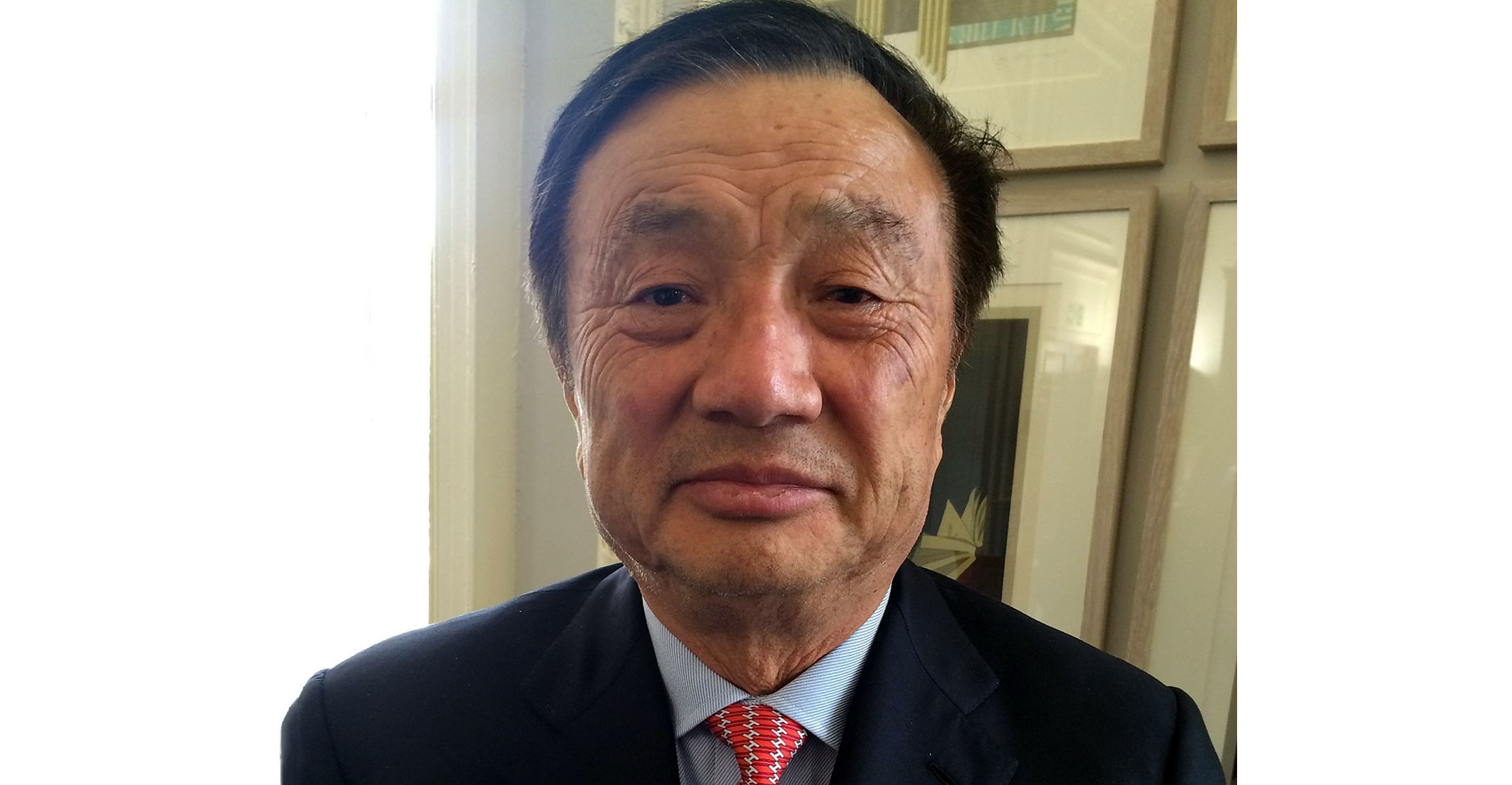
    Huawei founder Ren Zhengfei

    Huawei founder Ren Zhengfei struck a defiant tone in the face of US sanctions that threaten his company’s very survival.

    In an interview with Bloomberg Television, the billionaire founder of China’s largest technology company conceded that Trump administration export curbs will cut into a two-year lead Huawei had painstakingly built over rivals like Ericsson and Nokia. But the company will either ramp up its own chip supply or find alternatives to keep its edge in smartphones and 5G.

    The US on 17 May blacklisted Huawei — which it accuses of aiding Beijing in espionage — and cut it off from the US software and components it needs to make its products. The ban hamstrings the world’s largest provider of networking gear and number-two smartphone vendor, just as it was preparing to vault to the forefront of global technology. It’s rocking chip makers from America to Europe as the global supply chain comes under threat. The ban could also disrupt the roll-out of 5G wireless globally, undermining a standard that’s touted as the foundation of everything from autonomous cars to robot surgery.

    If China shut down all the Apple plants, the US would get very upset. This is a similar kind of move

    Ren maintained Huawei had the capability to devise its own solutions — given time. It’s been designing its own chips for years, which it now uses in many of its own smartphones. It’s even developing its own operating software to run phones and servers. The CEO, however, deflected questions about how quickly Huawei can ramp up those internal replacement endeavours. Failure could dent the fast-growing consumer business and even kill emergent efforts such as cloud servers.

    “That depends on how fast our repairmen are able to fix the plane,” said Ren, who appeared at ease in a white jacket over a pink shirt, making light of questions about his company’s plight. “No matter what materials they use, be it metal, cloth or paper, the aim is to keep the plane in the sky.”

    Recluse to media maven

    Ren has gone from recluse to media maven in the span of months as he fights to save the US$100-billion company he founded. The 74-year-old billionaire emerged from virtual seclusion after the arrest of eldest daughter and chief financial officer Meng Wanzhou as part of a broader probe of Huawei. He’s since become a central figure in a US-Chinese conflict that’s potentially the most important episode to shape world affairs since the collapse of the Soviet Union. As Ren said in January, when the world’s biggest economies battle for dominion, nothing in their way will survive. His company is a “sesame seed” between twin great powers, he said.

    “This may bring one of China’s national champions to its knees,’’ said Chris Lane, an analyst at Sanford C Bernstein & Co. “If China shut down all the Apple plants, the US would get very upset. This is a similar kind of move.”

    “The US is not the international police.”
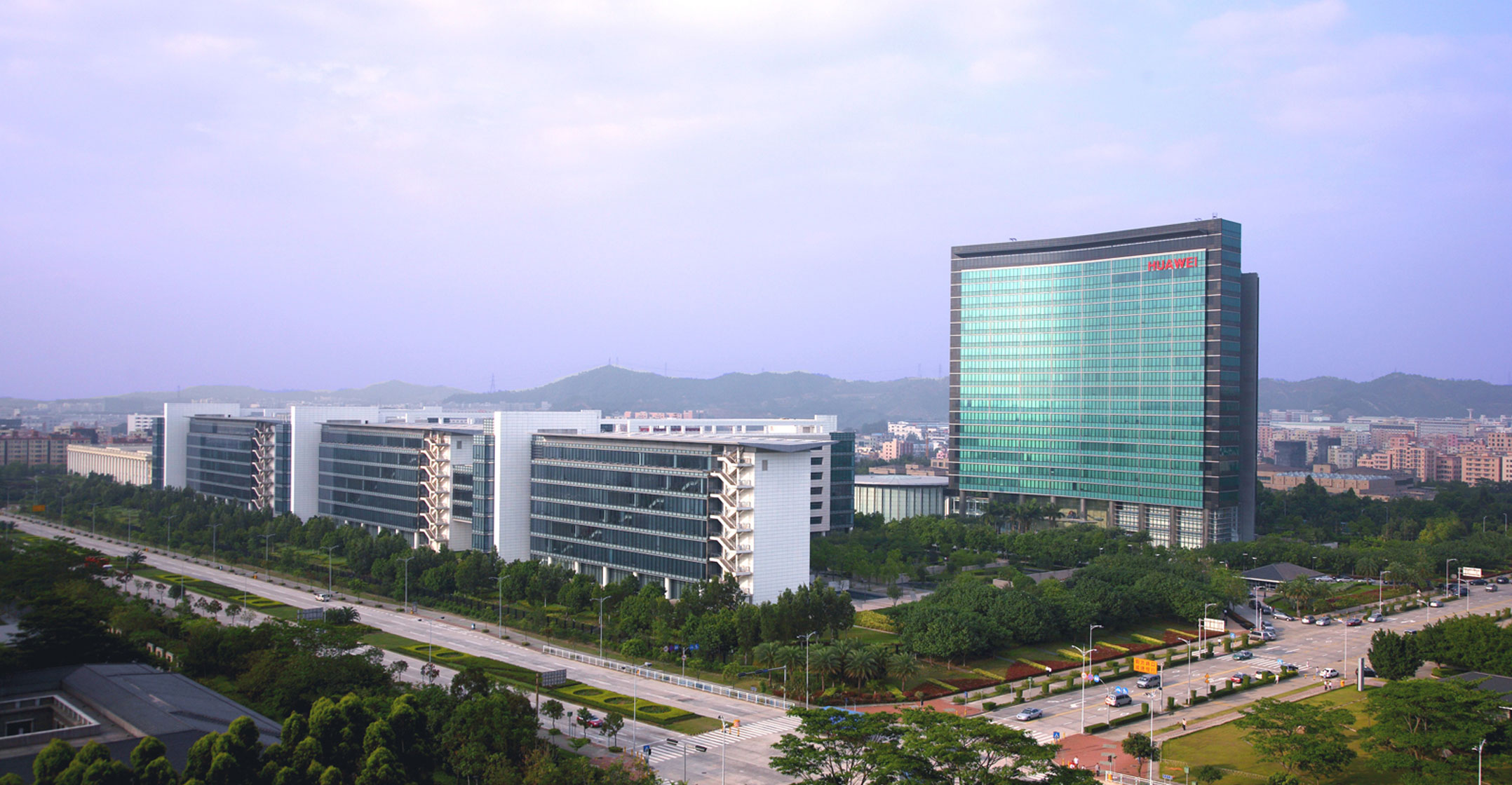
    Ren has had much to deal with of late. His company finds itself increasingly under fire, besieged by a US effort to get key allies to ban its equipment. The US assault helped crystallise fears about Huawei’s growing clout in areas from wireless infrastructure and semiconductors to consumer gadgets.

    Then came the blacklist. Huawei appears to have anticipated this possibility since at least mid-2018, when similar sanctions threatened to sink rival ZTE. Huawei is said to have stockpiled enough chips and other vital components to keep its business running at least three months.

    “We have made some really good chips,” said Ren, a legendary figure in his home country thanks to the way he built Huawei from scratch into a global powerhouse. “Being able to grow in the toughest battle environment, that just reflects how great we are.”

    If Trump calls, I will ignore him, then to whom can he negotiate with? If he calls me, I may not answer.

    Last week, Trump said Huawei could become part of a US-Chinese trade deal, stirring speculation it was a bargaining chip in sensitive negotiations. But Ren said he wasn’t a politician. “It’s a big joke,” he scoffed. “How are we related to China-US trade?”

    If Trump calls, “I will ignore him, then to whom can he negotiate with? If he calls me, I may not answer. But he doesn’t have my number.”

    In fact, Ren pulled no punches in going after a man he labelled “a great president” just months prior. “I see his tweets and think it’s laughable because they’re self-contradictory,” he quipped. “How did he become a master of the art of the deal?”

    Beijing itself isn’t without options. Some speculate China might retaliate against the ban of Huawei — which may widen to include some of its most promising AI firms — by in turn barring America’s largest corporations from its own markets. Apple could relinquish nearly a third of its profit if China banned its products, Goldman Sachs analysts estimate.

    ‘First to protest’

    Ren said he would object to any such move against his American rival.

    “That will not happen, first of all. And second of all, if that happens, I’ll be the first to protest,” Ren said in the interview. “Apple is my teacher, it’s in the lead. As a student, why go against my teacher? Never.”

    At the heart of Trump’s campaign is suspicion that Huawei aids Beijing in espionage while spearheading China’s ambitions to become a technology superpower. It’s been accused for years of stealing intellectual property in lawsuits filed by American companies from Cisco Systems and Motorola to T-Mobile US. Critics say such theft helped Huawei vault into the upper echelons of technology — but Ren laughed off that premise.

    “I stole the American technologies from tomorrow. The US doesn’t even have those technologies,” he said. “We are ahead of the US. If we were behind, there would be no need for Trump to strenuously attack us.”
    Ren’s easy demeanor belies the way he’s consistently shunned attention. The army engineer-turned-entrepreneur has this year turned in a command performance in the public spotlight, particularly for someone who’s rarely spoken to foreign media since he created Huawei. The re-emergence of the reclusive CEO — who before January last spoke with foreign media in 2015 — underscores the depth of the attacks on Huawei, the largest symbol of China’s growing technological might. Ren again waved off speculation his company is in any way beholden to the Communist Party, though he’s declared his loyalty ultimately lies with the country’s ruling body.

    US lawmakers aren’t convinced. That’s why the US commerce department cut off the flow of American technology — from chips to software and everything in between.

    Even if the US wants to buy our products in the future, I may not sell to them. There’s no need for a negotiation

    An iconic figure in Chinese business circles, the billionaire remains a uniquely placed voice in a conflict that will help define the global landscape. Ren, who says he survived the chaos of the Cultural Revolution thanks in part to his much sought-after expertise in high-precision tools, remains a big believer that Huawei’s technology will win the day.

    His company today generates more sales than Internet giants Alibaba Group and Tencent combined. In 2018, Huawei overtook Apple in smartphone sales, a triumph that burnished his tech credentials. His quotes adorn the walls of the food court at Huawei’s sprawling campus on the outskirts of the southern metropolis of Shenzhen, and employees still speak of him in reverent tones. The company’s 2018 report shows he has a 1.14% stake, giving him a net worth of $2-billion, according to the Bloomberg Billionaires Index.

    Ren, who survived Mao Zedong’s great famine to found Huawei in 1987 with 21 000 yuan, said Huawei will do whatever it takes to survive. It will ignore the noise while doing its business the best it can. Meanwhile, the pressure is bound to take a toll. At one point during the interview, Ren’s unflappable demeanor cracked — if only for a minute.

    “The US has never bought products from us,” he said, bristling. “Even if the US wants to buy our products in the future, I may not sell to them. There’s no need for a negotiation.”  — (c) 2019 Bloomberg LP

    Add TechCentral as a preferred source on GoogleFollow TechCentral on Google NewsGet breaking news on WhatsApp


    Huawei Meng Wanzhou Ren Zhengfei top
    WhatsApp YouTube
    Share. Facebook Twitter LinkedIn WhatsApp Telegram Email Copy Link
    Previous ArticleXi seeks global tech co-operation after US blocks Huawei
    Next Article MTN ‘co-operating fully’ in latest Nigeria probe

    Related Posts

    So, who exactly will buy Apple's R50 000 iPhone Duo

    Why Apple can’t tell you who its R50 000 iPhone is for

    11 September 2026
    US in move to counter Huawei in Africa

    US in move to counter Huawei in Africa

    11 September 2026
    From foldgate to the iPhone Duo: the strange history of folding phones

    From foldgate to the iPhone Duo: the strange history of folding phones

    10 September 2026
    Company News
    Asus ExpertBook P5 G2 packs AI performance into a 1.27kg laptop

    ASUS ExpertBook P5 G2 packs AI performance into a 1.27kg laptop

    15 September 2026
    Inside the 2026 Rising Star judging week

    Inside the 2026 Rising Star judging week

    15 September 2026
    SA20 launches schools derby series with rain as title sponsor

    SA20 launches schools derby series with rain as title sponsor

    14 September 2026
    Opinion
    The end is nigh, and the shares go on sale in October - Duncan McLeod

    The end is nigh, and the shares go on sale in October

    14 September 2026
    The fragile joint in the Capitec machine - Pambos Soteriades

    The R197-billion market the banks can’t reach

    25 August 2026
    South African tech's compounding debt problem - Jannie van Zyl

    Management consulting as we know it is over

    21 August 2026

    Subscribe to Updates

    Get the best South African technology news and analysis delivered to your e-mail inbox every morning.

    Latest Posts
    Why South Africa is MTN's most complicated market - Ferdi Moolman

    Why South Africa is MTN’s most complicated market

    16 September 2026
    Octotel and MetroFibre merger is on the table - Trevor van Zyl

    Octotel and MetroFibre merger is on the table

    16 September 2026
    TCS | Octotel's Trevor van Zyl on the fibre merger question

    TCS | Octotel’s Trevor van Zyl on the MetroFibre merger question

    16 September 2026
    Why Chinese cars are pretty now

    Chinese car design: how China won South Africa’s showrooms

    16 September 2026
    © 2009 - 2026 NewsCentral Media
    Built and maintained by Chronon
    • Cookie policy (ZA)
    • TechCentral – privacy and Popia

    Type above and press Enter to search. Press Esc to cancel.

    Manage consent

    TechCentral uses cookies to enhance its offerings. Consenting to these technologies allows us to serve you better. Not consenting or withdrawing consent may adversely affect certain features and functions of the website.

    Functional Always active
    The technical storage or access is strictly necessary for the legitimate purpose of enabling the use of a specific service explicitly requested by the subscriber or user, or for the sole purpose of carrying out the transmission of a communication over an electronic communications network.
    Preferences
    The technical storage or access is necessary for the legitimate purpose of storing preferences that are not requested by the subscriber or user.
    Statistics
    The technical storage or access that is used exclusively for statistical purposes. The technical storage or access that is used exclusively for anonymous statistical purposes. Without a subpoena, voluntary compliance on the part of your Internet Service Provider, or additional records from a third party, information stored or retrieved for this purpose alone cannot usually be used to identify you.
    Marketing
    The technical storage or access is required to create user profiles to send advertising, or to track the user on a website or across several websites for similar marketing purposes.
    • Manage options
    • Manage services
    • Manage {vendor_count} vendors
    • Read more about these purposes
    View preferences
    • {title}
    • {title}
    • {title}