Close Menu
TechCentralTechCentral

    Subscribe to the newsletter

    Get the best South African technology news and analysis delivered to your e-mail inbox every morning.

    Facebook X (Twitter) YouTube LinkedIn
    WhatsApp Facebook X (Twitter) LinkedIn YouTube
    TechCentralTechCentral
    • News
      South Africa's stablecoin silence is becoming a policy failure

      South Africa’s stablecoin silence is becoming a policy failure

      6 February 2026
      Every electric car you can buy in South Africa in early 2026, ranked by price

      Every electric car you can buy in South Africa in early 2026, ranked by price

      6 February 2026
      From stocks to crypto, markets reel as AI doubts grow

      From stocks to crypto, markets reel as AI doubts grow

      6 February 2026
      South Africa deepens China ties as US trade tensions escalate

      South Africa deepens China ties as US trade tensions escalate

      6 February 2026
      Big changes at Lesaka as Bank Zero deal nears completion - Lincoln Mali

      Big changes at Lesaka as Bank Zero deal nears completion

      6 February 2026
    • World
      AI won't replace software, says Nvidia CEO amid market rout - Jensen Huang

      AI won’t replace software, says Nvidia CEO amid market rout

      4 February 2026
      Apple acquires audio AI start-up Q.ai

      Apple acquires audio AI start-up Q.ai

      30 January 2026
      SpaceX IPO may be largest in history

      SpaceX IPO may be largest in history

      28 January 2026
      Nvidia throws AI at the weather

      Nvidia throws AI at weather forecasting

      27 January 2026
      Debate erupts over value of in-flight Wi-Fi

      Debate erupts over value of in-flight Wi-Fi

      26 January 2026
    • In-depth
      How liberalisation is rewiring South Africa's power sector

      How liberalisation is rewiring South Africa’s power sector

      21 January 2026
      The top-performing South African tech shares of 2025

      The top-performing South African tech shares of 2025

      12 January 2026
      Digital authoritarianism grows as African states normalise internet blackouts

      Digital authoritarianism grows as African states normalise internet blackouts

      19 December 2025
      TechCentral's South African Newsmakers of 2025

      TechCentral’s South African Newsmakers of 2025

      18 December 2025
      Black Friday goes digital in South Africa as online spending surges to record high

      Black Friday goes digital in South Africa as online spending surges to record high

      4 December 2025
    • TCS
      TCS+ | How Cloud On Demand is helping SA businesses succeed in the cloud - Xhenia Rhode, Dion Kalicharan

      TCS+ | Cloud On Demand and Consnet: inside a real-world AWS partner success story

      30 January 2026
      Watts & Wheels S1E3: 'BYD's Corolla Cross challenger'

      Watts & Wheels S1E3: ‘BYD’s Corolla Cross challenger’

      30 January 2026
      Watts & Wheels S1E3: 'BYD's Corolla Cross challenger'

      Watts & Wheels S1E2: ‘China attacks, BMW digs in, Toyota’s sublime supercar’

      23 January 2026

      TCS+ | Why cybersecurity is becoming a competitive advantage for SA businesses

      20 January 2026
      Watts & Wheels S1E3: 'BYD's Corolla Cross challenger'

      Watts & Wheels: S1E1 – ‘William, Prince of Wheels’

      8 January 2026
    • Opinion
      South Africa's skills advantage is being overlooked at home - Richard Firth

      South Africa’s skills advantage is being overlooked at home

      29 January 2026
      Why Elon Musk's Starlink is a 'hard no' for me - Songezo Zibi

      Why Elon Musk’s Starlink is a ‘hard no’ for me

      26 January 2026
      South Africa's new fibre broadband battle - Duncan McLeod

      South Africa’s new fibre broadband battle

      20 January 2026
      AI moves from pilots to production in South African companies - Nazia Pillay SAP

      AI moves from pilots to production in South African companies

      20 January 2026
      South Africa's new fibre broadband battle - Duncan McLeod

      ANC’s attack on Solly Malatsi shows how BEE dogma trumps economic reality

      14 December 2025
    • Company Hubs
      • Africa Data Centres
      • AfriGIS
      • Altron Digital Business
      • Altron Document Solutions
      • Altron Group
      • Arctic Wolf
      • AvertITD
      • Braintree
      • CallMiner
      • CambriLearn
      • CYBER1 Solutions
      • Digicloud Africa
      • Digimune
      • Domains.co.za
      • ESET
      • Euphoria Telecom
      • Incredible Business
      • iONLINE
      • IQbusiness
      • Iris Network Systems
      • LSD Open
      • NEC XON
      • Netstar
      • Network Platforms
      • Next DLP
      • Ovations
      • Paracon
      • Paratus
      • Q-KON
      • SevenC
      • SkyWire
      • Solid8 Technologies
      • Telit Cinterion
      • Tenable
      • Vertiv
      • Videri Digital
      • Vodacom Business
      • Wipro
      • Workday
      • XLink
    • Sections
      • AI and machine learning
      • Banking
      • Broadcasting and Media
      • Cloud services
      • Contact centres and CX
      • Cryptocurrencies
      • Education and skills
      • Electronics and hardware
      • Energy and sustainability
      • Enterprise software
      • Financial services
      • Information security
      • Internet and connectivity
      • Internet of Things
      • Investment
      • IT services
      • Lifestyle
      • Motoring
      • Public sector
      • Retail and e-commerce
      • Satellite communications
      • Science
      • SMEs and start-ups
      • Social media
      • Talent and leadership
      • Telecoms
    • Events
    • Advertise
    TechCentralTechCentral
    Home » In-depth » Icann and the future of the Internet

    Icann and the future of the Internet

    By The Conversation14 August 2015
    Twitter LinkedIn Facebook WhatsApp Email Telegram Copy Link
    News Alerts
    WhatsApp

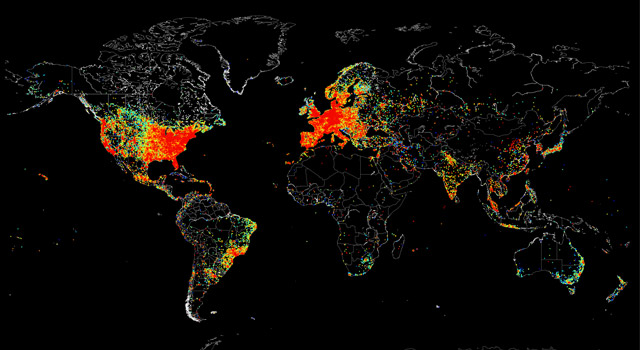
    Pinged-the-Internet-640

    The Internet today is far bigger and more inextricably linked to our daily lives than its creators in the 1970s and 1980s could have imagined. So perhaps it is not surprising that some of the structures put in place decades ago may have failed to keep pace with its rapid evolution.

    Chief of these is perhaps the nonprofit organisation Icann, the Internet Corporation for Assigned Names and Numbers. Icann is responsible for the key roles of assigning the unique Internet protocol (IP) addresses that locate individual websites on the Net, and managing the domain name system (DNS), which translates the human-readable Web addresses we type into IP addresses (such as 192.68.0.1). Its policy decisions have an important impact on the Internet’s evolution, for example the recent expansion of top-level domain names.

    However, since Icann was established in 1998, its contractual links with the US department of commerce have led to criticism of a perceived US and Anglo-centric bias. Controversies such as the original rejection of the .xxx domain name for pornography led to criticism that the US had too much sway over Icann’s decisions, and calls for Icann to disassociate itself from the US, or be replaced with a truly independent, global agency, increased.

    Icann’t remain so US centric
    The Icann-US government relationship has been steadily renegotiated, first in a 2009 Affirmation of Commitments that released Icann from direct government control but allowed continued influence over certain activities such as the key function of issuing IP addresses.

    This accelerated after Edward Snowden revealed the extent of global US surveillance, which led to a group of core Internet organisations releasing the Montevideo Statement on the Future of Internet Cooperation in 2013, calling for the speedy de-Americanisation of Icann’s functions and the creation of a more global, equitable basis for Internet governance. That Icann’s own president and CEO Fadi Chehadé was among the signatories is thought to have spurred the US government on to pass the bipartisan Domain Openness Through Continued Oversight Matters (Dotcom) Act in June 2015.

    Congress now has a short window in which to approve the transition plans and temporarily extend the current agreement, if needed, past the expiry date of 30 September.

    website-URL-640

    Breaking up is hard to do
    What next? Icann is to transfer its functions to a multistakeholder organisation — a power-sharing agreement between governments, civil society, the private sector and other interested parties. This is a worthy approach but a firm guiding hand is needed to ensure the whole enterprise does not become a talking shop unable to make any decisions.

    An Icann Transition Coordination Group has been set up to manage the transition, and a 199-page final transition proposal is open for public comment until 8 September.

    However, the true complexity of this process has become apparent. Due to the overwhelming number of interested parties wanting a role in proceedings, it is unlikely any agreement will be reached by the deadline.

    Uncharted waters
    Under the proposals, Icann’s IP address-assigning functions would be contracted out to a separate entity, overseen by staff drawn from domain name registries, with powers to make changes. There will also be an Iana review process that, as a last resort, could recommend that the contract be terminated. Anyone with a reasonable claim to be involved can be, and this way oversight is shared by a range of groups in a process that should provide balance.

    Crucially, there is no direct role for any government or intergovernmental body, with the only route of influence through the Governmental Advisory Committee, which has around 140 governments as members and 30 intergovernmental organisations as observers and advises the Icann board on wider policy issues. Like Icann, this committee has also drawn criticism for being a mouthpiece of western governments. However, any pressure applied by governments will come up against the slow-moving behemoth that is Icann’s internal procedures, which require consensus from many advisory and technical committees.

    Another body expected to assert its influence is the International Telecommunication Union, the UN’s IT and telecoms agency. While it is a specialist organisation composed of many commercial and nongovernmental expert groups, like the UN it is a member-state organisation. In the past, the union has been put forward as a body that could fulfil Icann’s governance functions, moving away from perceived western-centrism. But as a body comprised of national government members, greater involvement could lead to a more “top-down” form of Internet control subject to the whims of international relations between members and their national and commercial interests.

    Icann has many flaws, but its lengthy, measured deliberations have guided the Internet in its evolution to its current state as an open, interoperable, worldwide network. The alternatives could be so much more damaging to the essential need for the Internet to remain open and transparently governed. The proposals put forward would maintain elements of this; whether Icann’s restructure will be resistant to political pressure remains to be seen.The Conversation

    • Catherine Easton is lecturer at the Law School at Lancaster University
    • This article was originally published on The Conversation


    Catherine Easton Iana Icann ITU
    WhatsApp YouTube Follow on Google News Add as preferred source on Google
    Share. Facebook Twitter LinkedIn WhatsApp Telegram Email Copy Link
    Previous ArticleCCTV system hits crime hard in Jo’burg CBD
    Next Article Probe launched into contract price hikes

    Related Posts

    Ships like Orange Marine's Sophie Germaine are sent out to repair cable breaks when they occur

    Nigeria leads global summit to protect submarine cables from sabotage

    28 February 2025
    MTN Group hires Mike Silber in senior regulatory role

    MTN Group hires Mike Silber in senior regulatory role

    28 March 2024
    6G

    6G is coming – and it could change everything

    13 February 2024
    Company News
    The skills gap is a thinking gap: why South African employers can't find problem solvers

    The skills gap is a thinking gap: why SA employers can’t find problem solvers

    6 February 2026
    Vox Kiwi Wireless: fibre-like broadband for South African homes

    Vox Kiwi Wireless: fibre-like broadband for South African homes

    5 February 2026
    NEC XON achieves an African first with full Fortinet accreditation - Ian Kruger

    NEC XON achieves an African first with full Fortinet accreditation

    5 February 2026
    Opinion
    South Africa's skills advantage is being overlooked at home - Richard Firth

    South Africa’s skills advantage is being overlooked at home

    29 January 2026
    Why Elon Musk's Starlink is a 'hard no' for me - Songezo Zibi

    Why Elon Musk’s Starlink is a ‘hard no’ for me

    26 January 2026
    South Africa's new fibre broadband battle - Duncan McLeod

    South Africa’s new fibre broadband battle

    20 January 2026

    Subscribe to Updates

    Get the best South African technology news and analysis delivered to your e-mail inbox every morning.

    Latest Posts
    South Africa's stablecoin silence is becoming a policy failure

    South Africa’s stablecoin silence is becoming a policy failure

    6 February 2026
    Every electric car you can buy in South Africa in early 2026, ranked by price

    Every electric car you can buy in South Africa in early 2026, ranked by price

    6 February 2026
    From stocks to crypto, markets reel as AI doubts grow

    From stocks to crypto, markets reel as AI doubts grow

    6 February 2026
    South Africa deepens China ties as US trade tensions escalate

    South Africa deepens China ties as US trade tensions escalate

    6 February 2026
    © 2009 - 2026 NewsCentral Media
    • Cookie policy (ZA)
    • TechCentral – privacy and Popia

    Type above and press Enter to search. Press Esc to cancel.

    Manage consent

    TechCentral uses cookies to enhance its offerings. Consenting to these technologies allows us to serve you better. Not consenting or withdrawing consent may adversely affect certain features and functions of the website.

    Functional Always active
    The technical storage or access is strictly necessary for the legitimate purpose of enabling the use of a specific service explicitly requested by the subscriber or user, or for the sole purpose of carrying out the transmission of a communication over an electronic communications network.
    Preferences
    The technical storage or access is necessary for the legitimate purpose of storing preferences that are not requested by the subscriber or user.
    Statistics
    The technical storage or access that is used exclusively for statistical purposes. The technical storage or access that is used exclusively for anonymous statistical purposes. Without a subpoena, voluntary compliance on the part of your Internet Service Provider, or additional records from a third party, information stored or retrieved for this purpose alone cannot usually be used to identify you.
    Marketing
    The technical storage or access is required to create user profiles to send advertising, or to track the user on a website or across several websites for similar marketing purposes.
    • Manage options
    • Manage services
    • Manage {vendor_count} vendors
    • Read more about these purposes
    View preferences
    • {title}
    • {title}
    • {title}