Close Menu
TechCentralTechCentral

    Subscribe to the newsletter

    Get the best South African technology news and analysis delivered to your e-mail inbox every morning.

    Facebook X (Twitter) YouTube LinkedIn
    WhatsApp Facebook X (Twitter) LinkedIn YouTube
    TechCentralTechCentral
    • News
      Here comes the next wave of Chinese AI models

      Here comes the next wave of Chinese AI models

      12 February 2026
      Jumia aims for profit as it fends off Chinese rivals

      Jumia aims for profit as it fends off Chinese rivals

      12 February 2026
      Broadband Infraco in limbo

      Broadband Infraco in limbo

      11 February 2026
      Home affairs' R10 ID fee is forcing companies to rethink identity verification

      Standard Bank joins smart ID push with fee-free launch

      11 February 2026
      Zscaler assets seized from South African data centres

      Zscaler assets seized from South African data centres

      11 February 2026
    • World
      EU regulators take aim at WhatsApp

      EU regulators take aim at WhatsApp

      9 February 2026
      Musk hits brakes on Mars mission

      Musk hits brakes on Mars mission

      9 February 2026
      Crypto firm accidentally sends R700-billion in bitcoin to its users

      Crypto firm accidentally sends R700-billion in bitcoin to its users

      8 February 2026
      AI won't replace software, says Nvidia CEO amid market rout - Jensen Huang

      AI won’t replace software, says Nvidia CEO amid market rout

      4 February 2026
      Apple acquires audio AI start-up Q.ai

      Apple acquires audio AI start-up Q.ai

      30 January 2026
    • In-depth
      How liberalisation is rewiring South Africa's power sector

      How liberalisation is rewiring South Africa’s power sector

      21 January 2026
      The top-performing South African tech shares of 2025

      The top-performing South African tech shares of 2025

      12 January 2026
      Digital authoritarianism grows as African states normalise internet blackouts

      Digital authoritarianism grows as African states normalise internet blackouts

      19 December 2025
      TechCentral's South African Newsmakers of 2025

      TechCentral’s South African Newsmakers of 2025

      18 December 2025
      Black Friday goes digital in South Africa as online spending surges to record high

      Black Friday goes digital in South Africa as online spending surges to record high

      4 December 2025
    • TCS
      Watts & Wheels S1E4: 'We drive an electric Uber'

      Watts & Wheels S1E4: ‘We drive an electric Uber’

      10 February 2026
      TCS+ | How Cloud On Demand is helping SA businesses succeed in the cloud - Xhenia Rhode, Dion Kalicharan

      TCS+ | Cloud On Demand and Consnet: inside a real-world AWS partner success story

      30 January 2026
      Watts & Wheels S1E4: 'We drive an electric Uber'

      Watts & Wheels S1E3: ‘BYD’s Corolla Cross challenger’

      30 January 2026
      Watts & Wheels S1E4: 'We drive an electric Uber'

      Watts & Wheels S1E2: ‘China attacks, BMW digs in, Toyota’s sublime supercar’

      23 January 2026

      TCS+ | Why cybersecurity is becoming a competitive advantage for SA businesses

      20 January 2026
    • Opinion
      South Africa's skills advantage is being overlooked at home - Richard Firth

      South Africa’s skills advantage is being overlooked at home

      29 January 2026
      Why Elon Musk's Starlink is a 'hard no' for me - Songezo Zibi

      Why Elon Musk’s Starlink is a ‘hard no’ for me

      26 January 2026
      South Africa's new fibre broadband battle - Duncan McLeod

      South Africa’s new fibre broadband battle

      20 January 2026
      AI moves from pilots to production in South African companies - Nazia Pillay SAP

      AI moves from pilots to production in South African companies

      20 January 2026
      South Africa's new fibre broadband battle - Duncan McLeod

      ANC’s attack on Solly Malatsi shows how BEE dogma trumps economic reality

      14 December 2025
    • Company Hubs
      • Africa Data Centres
      • AfriGIS
      • Altron Digital Business
      • Altron Document Solutions
      • Altron Group
      • Arctic Wolf
      • AvertITD
      • Braintree
      • CallMiner
      • CambriLearn
      • CYBER1 Solutions
      • Digicloud Africa
      • Digimune
      • Domains.co.za
      • ESET
      • Euphoria Telecom
      • Incredible Business
      • iONLINE
      • IQbusiness
      • Iris Network Systems
      • LSD Open
      • Mitel
      • NEC XON
      • Netstar
      • Network Platforms
      • Next DLP
      • Ovations
      • Paracon
      • Paratus
      • Q-KON
      • SevenC
      • SkyWire
      • Solid8 Technologies
      • Telit Cinterion
      • Tenable
      • Vertiv
      • Videri Digital
      • Vodacom Business
      • Wipro
      • Workday
      • XLink
    • Sections
      • AI and machine learning
      • Banking
      • Broadcasting and Media
      • Cloud services
      • Contact centres and CX
      • Cryptocurrencies
      • Education and skills
      • Electronics and hardware
      • Energy and sustainability
      • Enterprise software
      • Financial services
      • Information security
      • Internet and connectivity
      • Internet of Things
      • Investment
      • IT services
      • Lifestyle
      • Motoring
      • Public sector
      • Retail and e-commerce
      • Satellite communications
      • Science
      • SMEs and start-ups
      • Social media
      • Talent and leadership
      • Telecoms
    • Events
    • Advertise
    TechCentralTechCentral
    Home » Sections » AI and machine learning » Intel $20-billion chip grant exposes US weakness

    Intel $20-billion chip grant exposes US weakness

    The US has neither the workforce capability nor the regulatory regime to keep up in the semiconductor race.
    By Agency Staff25 March 2024
    Twitter LinkedIn Facebook WhatsApp Email Telegram Copy Link
    News Alerts
    WhatsApp
    US President Joe Biden

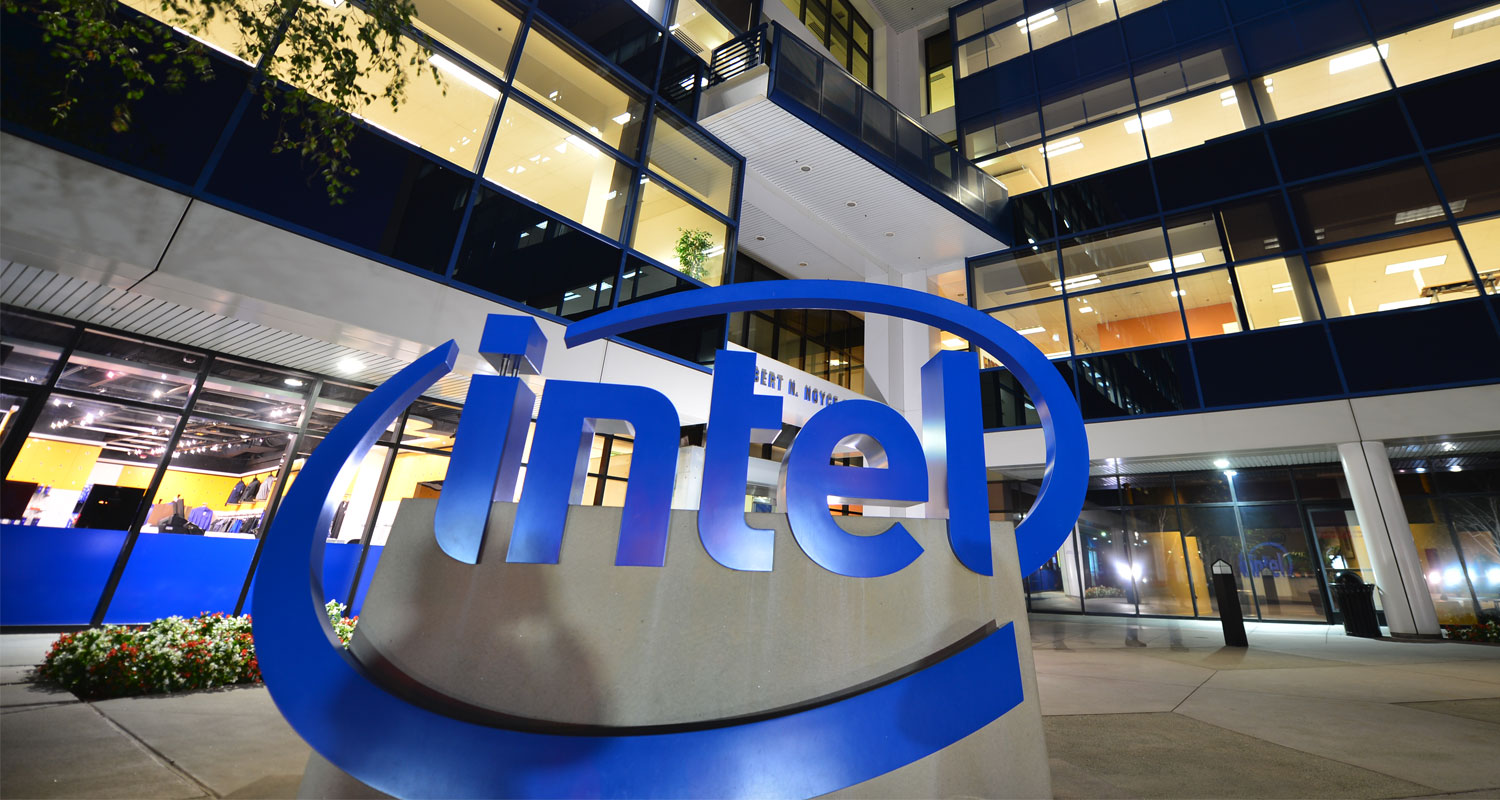
    Intel is receiving US$20-billion in grants and loans to help finance the expansion of its production capacity in the US, becoming the largest beneficiary by far of the 2022 Chips and Science Act, the cornerstone of President Joe Biden’s plan to reverse a decades-long decline in the US’s share of global semiconductor output.

    The White House is already trotting out this award on the campaign trail as proof that its policies are working for America, but the reality is that the conditions attached to it just underscores the country’s competitive disadvantages. And while global demand for chips is trending sharply higher, primarily due to breakthroughs in artificial intelligence, the US has neither the workforce capability nor the regulatory regime to keep up.

    Chip makers are on course to add about 115 000 jobs by 2030, the Semiconductor Industry Association said in July, citing a survey it commissioned, but based on current degree completion rates, about 58% of those projected positions may go unfilled. Even US commerce secretary Gina Raimondo warned in December that US efforts to build out the domestic semiconductor industry could be delayed by years because of the standard environmental reviews.

    TSMC halted construction on a $40-billion facility in Arizona because of a dispute with the local pipe-fitters union

    To qualify for the grants associated with the Chips Act, recipients must not only expand production capacity in the US but do so in a way that advances the Biden administration’s larger agenda, from increasing the representation of marginalised workers in the tech industry to coordinating with organised labour on their workforce development plans. Such goals may be worthwhile, but they increase manufacturing costs and make expanding production risky.

    In the case of Intel, the Santa Clara, California-based company won’t get all of the funding right away. The money may take years to be disbursed and will be contingent upon Intel meeting production goals and other benchmarks. It’s telling that Intel’s shares are little changed since mid-February, when it was revealed that the company was in talks for the funds even as the broader equity markets have soared.

    Risky proposition

    The world’s largest chip manufacturer, Taiwan’s TSMC, halted construction on a $40-billion facility in Arizona because of a dispute with the local pipe-fitters union. TSMC, as the company is known, negotiated with the union for six months before reaching a settlement that allowed construction to proceed. TSMC executives told investors the plant would cost four times as much to build in the US as it would have in Taiwan, mainly due to higher labour and regulatory costs. And back in July, the company’s executives said among the several challenges it faced was a shortage of skilled workers. “We are working on improving this by sending skilled technical workers from Taiwan to the US,” chairman Mark Liu said on a conference call at the time to discuss earnings.

    The possibility of labour disputes, permitting delays and other cost overruns clearly makes building facilities in the US a riskier proposition for chip makers. That means that the impressive surge in construction spending on new factories, which has doubled under Biden, may sputter. America’s cost competitiveness is, if anything, deteriorating, and when the government money runs out, manufacturers may again turn to Asia or other locales where labour is cheap and regulations are low to expand production. Even now, most of Nvidia’s advanced chips are made in Taiwan.

    Read: China blocks use of AMD, Intel in government PCs

    That’s a shame because the America’s dominance in AI development means that semiconductors will become even more critical to the US economy, and the risks associated with dependence on imported chips will become even more severe. The US accounts for 34% of global chip demand but only 12% of global supply. The consequences of this imbalance were apparent in 2021 when a worldwide chip shortage during the pandemic brought US car manufacturing to a halt.
    Some event that leads to another shortage in the future could threaten US leadership in AI. The top AI companies — OpenAI, Microsoft, Google and Anthropic — and Nvidia, the dominant chip maker for AI systems, are all based in America. This is disconcerting given the assessment commissioned by the state department that AI development by US adversaries poses a significant national security threat.

    So, rather than job creation, national security should have guided the Biden administration’s implementation of and messaging around the Chips Act. Had it done so, the administration could make the case that the sustained expansion of semiconductor manufacturing capacity takes precedence over other economic policy objectives. As things stand, the Chips Act will likely deliver a one-time surge in US production of semiconductors but no lasting reversal of America’s declining share of global output.  — Robert Burgess and Karl W Smith, (c) 2024 Bloomberg LP

    Get breaking news alerts from TechCentral on WhatsApp


    Gina Raimondo Intel Joe Biden TSMC
    WhatsApp YouTube Follow on Google News Add as preferred source on Google
    Share. Facebook Twitter LinkedIn WhatsApp Telegram Email Copy Link
    Previous ArticleRegulators target Big Tech
    Next Article Nigeria naira woes slam MTN

    Related Posts

    Investors can't get enough of ASML

    Investors can’t get enough of ASML

    27 January 2026
    Intel takes another hit - Intel CEO Lip-Bu Tan. Laure Andrillon/Reuters

    Intel takes another hit

    23 January 2026
    Taiwan, US strike strategic AI and chip supply-chain pact - TSMC

    Taiwan, US strike strategic AI and chip supply-chain pact

    20 January 2026
    Company News
    How NEC XON tackled identity risk for a major telco - Michael de Neuilly Rice

    How NEC XON tackled identity risk for a major telco

    11 February 2026

    Why Acer is the strategic choice for South Africa’s educational future

    11 February 2026
    Fyndae is building Africa's human verification layer for community security and collaboration

    Fyndae wants to turn lost-item recovery into Africa’s trust infrastructure

    11 February 2026
    Opinion
    South Africa's skills advantage is being overlooked at home - Richard Firth

    South Africa’s skills advantage is being overlooked at home

    29 January 2026
    Why Elon Musk's Starlink is a 'hard no' for me - Songezo Zibi

    Why Elon Musk’s Starlink is a ‘hard no’ for me

    26 January 2026
    South Africa's new fibre broadband battle - Duncan McLeod

    South Africa’s new fibre broadband battle

    20 January 2026

    Subscribe to Updates

    Get the best South African technology news and analysis delivered to your e-mail inbox every morning.

    Latest Posts
    Here comes the next wave of Chinese AI models

    Here comes the next wave of Chinese AI models

    12 February 2026
    Jumia aims for profit as it fends off Chinese rivals

    Jumia aims for profit as it fends off Chinese rivals

    12 February 2026
    Broadband Infraco in limbo

    Broadband Infraco in limbo

    11 February 2026
    Home affairs' R10 ID fee is forcing companies to rethink identity verification

    Standard Bank joins smart ID push with fee-free launch

    11 February 2026
    © 2009 - 2026 NewsCentral Media
    • Cookie policy (ZA)
    • TechCentral – privacy and Popia

    Type above and press Enter to search. Press Esc to cancel.

    Manage consent

    TechCentral uses cookies to enhance its offerings. Consenting to these technologies allows us to serve you better. Not consenting or withdrawing consent may adversely affect certain features and functions of the website.

    Functional Always active
    The technical storage or access is strictly necessary for the legitimate purpose of enabling the use of a specific service explicitly requested by the subscriber or user, or for the sole purpose of carrying out the transmission of a communication over an electronic communications network.
    Preferences
    The technical storage or access is necessary for the legitimate purpose of storing preferences that are not requested by the subscriber or user.
    Statistics
    The technical storage or access that is used exclusively for statistical purposes. The technical storage or access that is used exclusively for anonymous statistical purposes. Without a subpoena, voluntary compliance on the part of your Internet Service Provider, or additional records from a third party, information stored or retrieved for this purpose alone cannot usually be used to identify you.
    Marketing
    The technical storage or access is required to create user profiles to send advertising, or to track the user on a website or across several websites for similar marketing purposes.
    • Manage options
    • Manage services
    • Manage {vendor_count} vendors
    • Read more about these purposes
    View preferences
    • {title}
    • {title}
    • {title}