Close Menu
TechCentralTechCentral

    Subscribe to the newsletter

    Get the best South African technology news and analysis delivered to your e-mail inbox every morning.

    Facebook X (Twitter) YouTube LinkedIn
    WhatsApp Facebook X (Twitter) LinkedIn YouTube
    TechCentralTechCentral
    • News
      Mythos forces South African banks onto high alert - Graham Lee

      Mythos forces South African banks onto high alert

      23 April 2026
      Free calls, dead voice and Shameel Joosub's Spanish ghost

      Free calls, dead voice and Shameel Joosub’s Spanish ghost

      22 April 2026
      Capitec CEO Graham Lee

      Capitec blows up MVNO pricing with free on-net calls

      22 April 2026
      Eskom developing bitcoin mining plan but needs Nersa's nod - Agnes Mlambo

      Eskom developing bitcoin mining plan but needs Nersa’s nod

      22 April 2026
      Capitec bets big on AI - and keeps hiring

      Capitec bets big on AI – and keeps hiring

      22 April 2026
    • World
      More organic compounds detected on Mars - Nasa Curiosity rover

      More organic compounds detected on Mars

      21 April 2026
      Adobe bets on AI agents to fend off cheaper rivals

      Adobe bets on AI agents to fend off cheaper rivals

      16 April 2026
      Google poised to lose ad crown to Meta

      Google poised to lose ad crown to Meta

      14 April 2026
      Grand Theft Data - hackers hit Rockstar Games - Grand Theft Auto

      Grand Theft Data – hackers hit Rockstar Games

      14 April 2026
      UK PM Keir Starmer declares war on doomscrolling

      UK PM Keir Starmer declares war on doomscrolling

      13 April 2026
    • In-depth
      Africa switches on as Europe dims the lights

      Africa switches on as Europe dims the lights

      9 April 2026
      The biggest untapped EV market on Earth is hiding in plain sight

      The biggest untapped EV market on Earth is hiding in plain sight

      1 April 2026
      The R18-billion tech giant hiding in plain sight - Jens Montanana

      The R16-billion tech giant hiding in plain sight

      26 March 2026
      The last generation of coders

      The last generation of coders

      18 February 2026
      Sentech is in dire straits

      Sentech is in dire straits

      10 February 2026
    • TCS

      TCS+ | ‘The ISP for ISPs’: Vox’s shift to wholesale aggregator

      20 April 2026
      TCS | Werner Lindemann on how AI is rewriting the infosec rulebook

      TCS | Werner Lindemann on how AI is rewriting the infosec rulebook

      15 April 2026
      TCS | Donovan Marsh on AI and the future of filmmaking

      TCS | Donovan Marsh on AI and the future of filmmaking

      7 April 2026
      TCS+ | Vodacom Business moves to crack the SME tech gap - Andrew Fulton, Sannesh Beharie

      TCS+ | Vodacom Business moves to crack the SME tech gap

      7 April 2026
      TCS | MTN's Divysh Joshi on the strategy behind Pi - Divyesh Joshi

      TCS | MTN’s Divyesh Joshi on the strategy behind Pi

      1 April 2026
    • Opinion
      The conflict of interest at the heart of PayShap's slow adoption - Cheslyn Jacobs

      The conflict of interest at the heart of PayShap’s slow adoption

      26 March 2026
      South Africa's energy future hinges on getting wheeling right - Aishah Gire

      South Africa’s energy future hinges on getting wheeling right

      10 March 2026
      Hold the doom: the case for a South African comeback - Duncan McLeod

      Apple just dropped a bomb on the Windows world

      5 March 2026
      R230-million in the bag for Endeavor's third Harvest Fund - Alison Collier

      VC’s centre of gravity is shifting – and South Africa is in the frame

      3 March 2026
      Hold the doom: the case for a South African comeback - Duncan McLeod

      Hold the doom: the case for a South African comeback

      26 February 2026
    • Company Hubs
      • 1Stream
      • Africa Data Centres
      • AfriGIS
      • Altron Digital Business
      • Altron Document Solutions
      • Altron Group
      • Arctic Wolf
      • Ascent Technology
      • AvertITD
      • BBD
      • Braintree
      • CallMiner
      • CambriLearn
      • CYBER1 Solutions
      • Digicloud Africa
      • Digimune
      • Domains.co.za
      • ESET
      • Euphoria Telecom
      • HOSTAFRICA
      • Incredible Business
      • iONLINE
      • IQbusiness
      • Iris Network Systems
      • Kaspersky
      • LSD Open
      • Mitel
      • NEC XON
      • Netstar
      • Network Platforms
      • Next DLP
      • Ovations
      • Paracon
      • Paratus
      • Q-KON
      • SevenC
      • SkyWire
      • Solid8 Technologies
      • Telit Cinterion
      • Telviva
      • Tenable
      • Vertiv
      • Videri Digital
      • Vodacom Business
      • Wipro
      • Workday
      • XLink
    • Sections
      • AI and machine learning
      • Banking
      • Broadcasting and Media
      • Cloud services
      • Contact centres and CX
      • Cryptocurrencies
      • Education and skills
      • Electronics and hardware
      • Energy and sustainability
      • Enterprise software
      • Financial services
      • HealthTech
      • Information security
      • Internet and connectivity
      • Internet of Things
      • Investment
      • IT services
      • Lifestyle
      • Motoring
      • Policy and regulation
      • Public sector
      • Retail and e-commerce
      • Satellite communications
      • Science
      • SMEs and start-ups
      • Social media
      • Talent and leadership
      • Telecoms
    • Events
    • Advertise
    TechCentralTechCentral
    Home » Sections » Electronics and hardware » Intel’s plight signals a changing of the guard in chips

    Intel’s plight signals a changing of the guard in chips

    Two East Asian companies have built more robust businesses and their scale now threatens to bury the competition.
    By Agency Staff3 February 2023
    Twitter LinkedIn Facebook WhatsApp Email Telegram Copy Link
    News Alerts
    WhatsApp

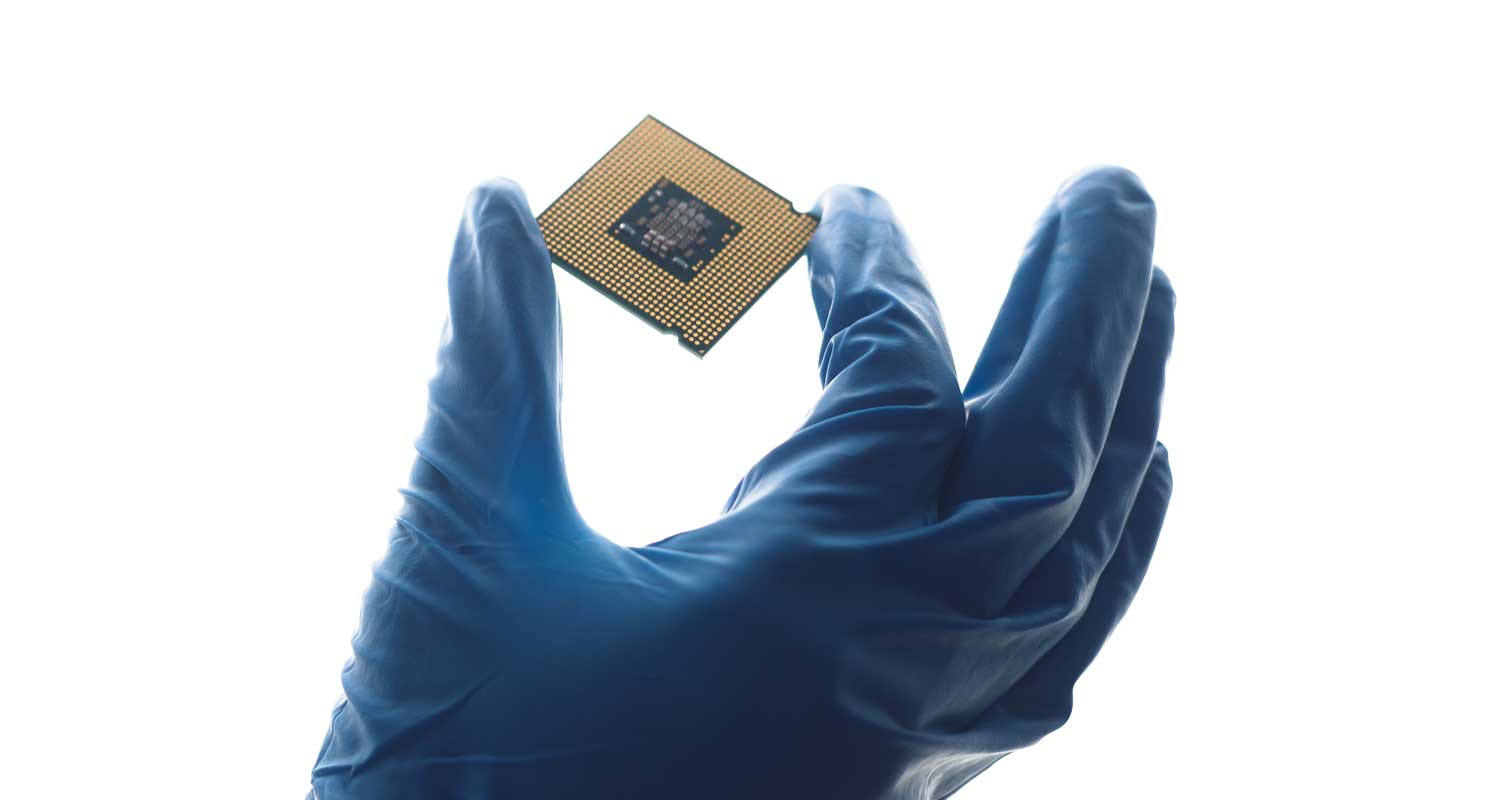
    From Intel to SK Hynix, some of the world’s largest semiconductor makers stunned investors with brutal losses heading into 2023. But two Asian companies — Taiwan’s TSMC and South Korea’s Samsung Electronics — navigated the turmoil with greater agility, underlining a changing of the guard.

    “Astonishingly bad,” Bernstein analyst Stacy Rasgon said of the performance at Intel, a company that once set the pace for the entire chip industry. South Korea’s Hynix posted the largest loss in its history and vowed to slash output, capital expenditure and other costs in a bid to recover.

    Meanwhile, TSMC reported surging earnings and, while acknowledging some weakness in demand, predicted it would boost revenue again in 2023. The Taiwanese company overtook Intel as the leading producer of advanced logic chips and pulled in almost US$13-billion more in revenue than its US rival. Samsung also fared much better than its peers, and flaunted its success by promising to maintain capital spending while all of its rivals retreat.

    TSMC has proven so skilled at crafting bespoke chips that no other chip maker has a chance of closing the gap anytime soon

    The reality is that the two East Asian companies have built more robust businesses and their scale now threatens to bury the competition. TSMC has proven so skilled at crafting bespoke chips for customers like Apple and Nvidia that no other chip maker has a chance of closing the gap anytime soon. Samsung, the closest to matching TSMC’s manufacturing prowess, has used that advantage to lap rivals like Hynix and Micron Technology in the memory-chip business.

    Semiconductor industry downturns vary in length and severity, but bigger companies typically weather them better. That is proving true again. Makers of everything from smartphones to PCs and industrial equipment built up too much inventory, and as a result have cut orders. They hit the brakes much faster than suppliers could rein in production, causing price declines and a costly lurch to slow factory output.

    Meanwhile, Samsung, the world’s largest chip maker by revenue, had a horrible fourth quarter. Revenue at its semiconductor unit fell 24% from the same period a year ago and operating income plunged to a fraction of where it had been just three months earlier. Still, it was able to scrape together a profit, when smaller rivals Western Digital, Micron and Hynix all reported losses.

    Bleeding

    “Samsung makes positive cash flow, while rivals are bleeding cash,” said Marcello Ahn, portfolio manager at Quad Investment Management. “When the memory industry enters the next up-cycle, Samsung’s cost base will be much lower than others and its margin will be higher.”

    In memory in particular, being able to spread the massive costs of running chip plants over a greater volume of products shipped helps make operations more cost effective.

    TSMC has caught and passed Intel quicker than even the most optimistic analysts had predicted. Revenue at the Taiwanese company whose plants serve many of the world’s biggest firms with outsourced production surged 33% last year while Intel’s declined 20%. It offers many of Intel’s competitors and customers the most advanced production available.

    In the chip industry, leadership isn’t just measured in market share and revenue. More than in perhaps any other business, production technology is vital to the performance of semiconductors. Being able to use the very latest techniques and equipment gives chip makers not just better costs, but the ability to produce chips they can sell at a higher price because they’re more capable.

    Intel, the company that dominated semiconductors for decades — and whose products gave Silicon Valley its name — got its position partly via an aggressive use of the brutal economics of the industry. Executives would tell investors that spending heavily on new plants, equipment, and research and design — particularly when earnings were under pressure — was the best use of company resources. The logic was that when the next period of strong demand came along, Intel would be in a better position to capitalise than competitors who backed off and allowed their production to stagnate.
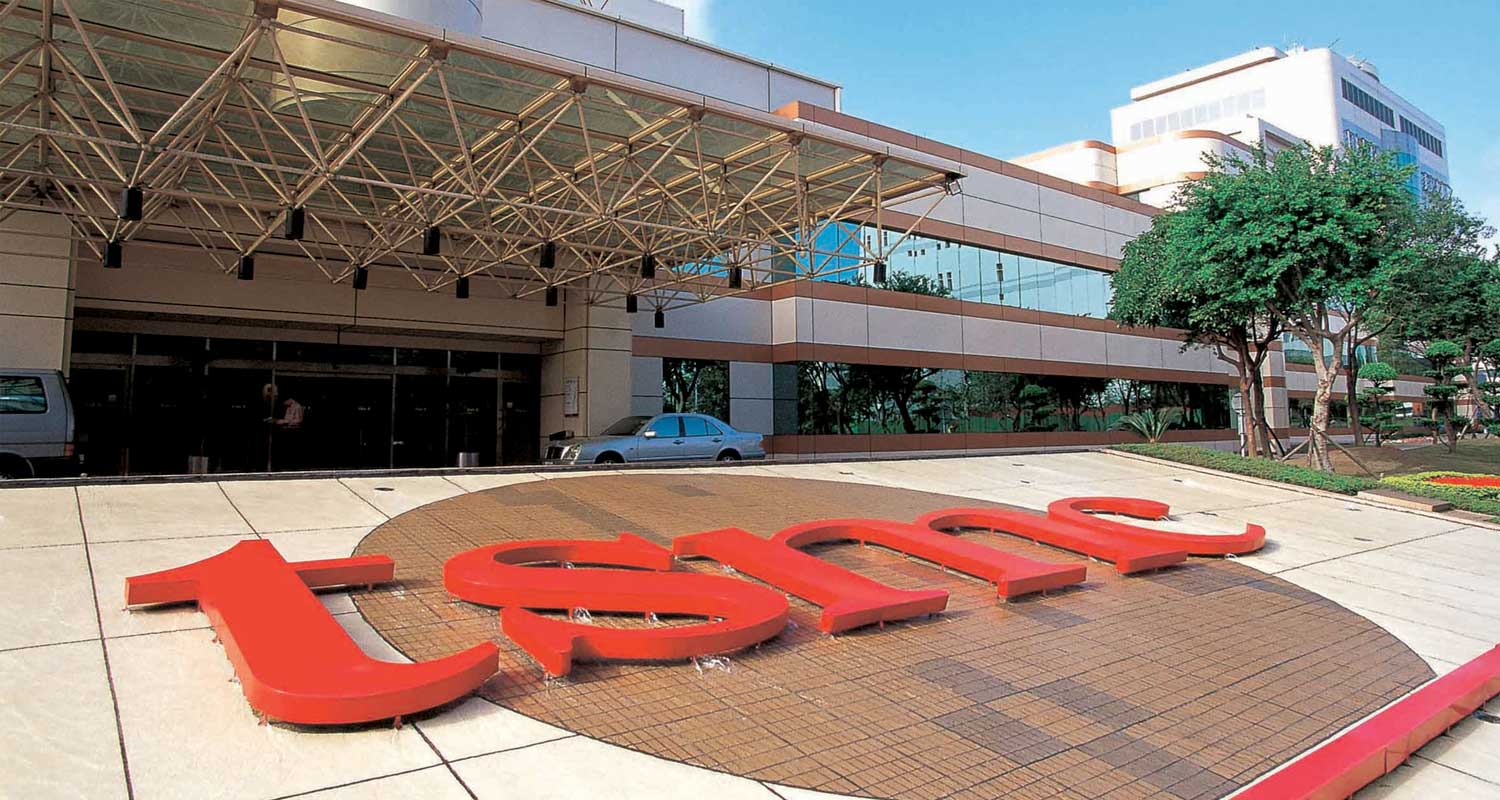
    TSMC … the new king of chips

    Both of Intel’s East Asian rivals have taken a page out of that playbook. TSMC is planning to lay out as much as $36-billion on capital expenditure this year, which would be more than analysts projected. Earlier this week Samsung also defied pressure to scale back investment, and said it would spend at a similar level to 2022, when it poured about $39-billion into upgrading production and building facilities.

    Intel, which decided not to give projections for this year, said it’s targeting “capex intensity” of about 35% of revenue. Analysts estimate Intel’s revenue will be about $51-billion this year, indicating its budget will be much smaller than either TSMC or Samsung’s.

    In memory chips, where Samsung gets most of its semiconductor revenue, budget cuts for 2023 are also planned at Micron, Hynix and Western Digital, which operates a joint venture for production with Japan’s Kioxia Holdings.

    While TSMC’s aggressive spending plans may put more pressure on Intel, it’s likely good news for a swathe of companies across the electronics industry and beyond. Many of them have leveraged TSMC’s capabilities to create and manufacture new products, where they’d previously have struggled to supplant Intel chips. Apple is the most notable example, with its Silicon chips for iPhones and Mac computers fabricated exclusively by TSMC.

    Read: TSMC tops estimates, bucking trend as industry cools

    AMD, which for most of its existence has struggled in Intel’s shadow, uses TSMC to manufacture its server and PC processors and graphics chips. The company now gets more revenue per quarter than it was bringing in annually as recently as 2017. In the fourth quarter, AMD’s data centre business posted a sales increase of 42% from a year earlier. Intel, meanwhile, saw its data centre and artificial intelligence business fall 33%.

    Read: TSMC starts mass production of 3nm chips

    “We are in the early innings of a historical/generational shift in compute power in Silicon Valley,” Rosenblatt Securities analyst Hans Mosesmann wrote in response to that divergence of results.

    Read: Stumbling Intel says it will recover its balance

    Qualcomm, the biggest maker of smartphone chips and a TSMC and Samsung manufacturing customer, showed signs of success in its push into new businesses in the December quarter, when revenue from its automotive and connected devices divisions helped offset a slump in mobile phone demand.  — Ian King and Sohee Kim, (c) 2023 Bloomberg LP

    Get TechCentral’s daily newsletter

    Follow TechCentral on Google News Add TechCentral as your preferred source on Google


    AMD Apple Intel Qualcomm Samsung TSMC
    WhatsApp YouTube
    Share. Facebook Twitter LinkedIn WhatsApp Telegram Email Copy Link
    Previous ArticleTCS Impact Series | Cybersecurity: not sure which direction to move?
    Next Article Tech is poised to disrupt the music industry – all over again

    Related Posts

    RAM price relief? SK Hynix plans $13-billion Korean fab

    RAM price relief? SK Hynix plans $13-billion Korean fab

    22 April 2026
    John Ternus and the battle for Apple's soul

    John Ternus and the battle for Apple’s soul

    21 April 2026
    Amazon ramps up satellite war with $11.6-billion Globalstar buy

    Amazon ramps up satellite war with $11.6-billion Globalstar buy

    15 April 2026
    Company News
    How AnyDesk is redefining remote access for African enterprises

    How AnyDesk is redefining remote access for African enterprises

    22 April 2026
    Centracom's Pindrop takes the pain out of wholesale fibre

    Centracom’s Pindrop takes the pain out of wholesale fibre

    22 April 2026
    Conversational AI is rewriting the customer service playbook - CallMiner

    Conversational AI is rewriting the customer service playbook

    22 April 2026
    Opinion
    The conflict of interest at the heart of PayShap's slow adoption - Cheslyn Jacobs

    The conflict of interest at the heart of PayShap’s slow adoption

    26 March 2026
    South Africa's energy future hinges on getting wheeling right - Aishah Gire

    South Africa’s energy future hinges on getting wheeling right

    10 March 2026
    Hold the doom: the case for a South African comeback - Duncan McLeod

    Apple just dropped a bomb on the Windows world

    5 March 2026

    Subscribe to Updates

    Get the best South African technology news and analysis delivered to your e-mail inbox every morning.

    Latest Posts
    Mythos forces South African banks onto high alert - Graham Lee

    Mythos forces South African banks onto high alert

    23 April 2026
    Free calls, dead voice and Shameel Joosub's Spanish ghost

    Free calls, dead voice and Shameel Joosub’s Spanish ghost

    22 April 2026
    Capitec CEO Graham Lee

    Capitec blows up MVNO pricing with free on-net calls

    22 April 2026
    Eskom developing bitcoin mining plan but needs Nersa's nod - Agnes Mlambo

    Eskom developing bitcoin mining plan but needs Nersa’s nod

    22 April 2026
    © 2009 - 2026 NewsCentral Media
    • Cookie policy (ZA)
    • TechCentral – privacy and Popia

    Type above and press Enter to search. Press Esc to cancel.

    Manage consent

    TechCentral uses cookies to enhance its offerings. Consenting to these technologies allows us to serve you better. Not consenting or withdrawing consent may adversely affect certain features and functions of the website.

    Functional Always active
    The technical storage or access is strictly necessary for the legitimate purpose of enabling the use of a specific service explicitly requested by the subscriber or user, or for the sole purpose of carrying out the transmission of a communication over an electronic communications network.
    Preferences
    The technical storage or access is necessary for the legitimate purpose of storing preferences that are not requested by the subscriber or user.
    Statistics
    The technical storage or access that is used exclusively for statistical purposes. The technical storage or access that is used exclusively for anonymous statistical purposes. Without a subpoena, voluntary compliance on the part of your Internet Service Provider, or additional records from a third party, information stored or retrieved for this purpose alone cannot usually be used to identify you.
    Marketing
    The technical storage or access is required to create user profiles to send advertising, or to track the user on a website or across several websites for similar marketing purposes.
    • Manage options
    • Manage services
    • Manage {vendor_count} vendors
    • Read more about these purposes
    View preferences
    • {title}
    • {title}
    • {title}