Close Menu
TechCentralTechCentral

    Subscribe to the newsletter

    Get the best South African technology news and analysis delivered to your e-mail inbox every morning.

    Facebook X (Twitter) YouTube LinkedIn
    WhatsApp Facebook X (Twitter) LinkedIn YouTube
    TechCentralTechCentral
    • News
      Eskom waives rooftop solar fees, but the registration fight isn't over

      Eskom waives rooftop solar fees, but the registration fight isn’t over

      1 October 2026
      South Africa's digital ID is here - but you can't have it yet - Leon Schreiber

      South Africa’s digital ID is here – but you can’t have it yet

      1 October 2026
      Absa is moving cash out of its branches

      Absa is moving cash out of its branches

      1 October 2026
      Home affairs pulls the plug on the green ID book - Leon Schreiber

      Home affairs pulls the plug on the green ID book

      1 October 2026
      How Cell C shaped Blu Label's executive pay - Brett Levy Mark Levy

      How Cell C shaped Blu Label’s executive pay

      1 October 2026
    • World
      BMW restructuring plan bets on AI and new models

      BMW restructuring plan bets on AI and new models

      1 October 2026
      OpenAI's rogue agent problem keeps getting bigger - Sam Altman

      OpenAI’s rogue agent problem keeps getting bigger

      28 September 2026
      The new battle over the desktop

      The new battle over the desktop

      23 September 2026
      AMD is now worth a trillion dollars - Lisa Su

      AMD is now worth a trillion dollars

      22 September 2026
      Anthropic weighs new model launch to blunt OpenAI's Astra surge - Anthropic CEO Dario Amodei and OpenAI CEO Sam Altman

      Anthropic weighs new model launch to blunt OpenAI’s Astra surge

      21 September 2026
    • In-depth

      10 days that changed the course of AI

      21 September 2026
      Meta to the AI industry: slow down without us - Mark Zuckerberg

      Meta to the AI industry: slow down without us

      16 September 2026
      Google DeepMind CEO Demis Hassabis. Image: John Sears

      The plan to stop AI from breaking the world

      16 July 2026
      The internet has a Strait of Hormuz problem

      The internet has a Strait of Hormuz problem

      15 July 2026
      AI boom sparks rally, frenzy and fear

      AI boom sparks rally, frenzy and fear

      11 June 2026
    • TCS
      TCS | Dominic White and Adam Ely on AI agents going rogue

      TCS | Dominic White and Adam Ely on AI agents going rogue

      29 September 2026
      TCS | Octotel's Trevor van Zyl on the fibre merger question

      TCS | Octotel’s Trevor van Zyl on the MetroFibre merger question

      16 September 2026
      Meet the CIO | Shoprite's Chris Shortt on what a supermarket becomes

      Meet the CIO | Shoprite’s Chris Shortt on what a supermarket becomes

      9 September 2026
      Rubicon's EV charging network is profitable - and growing fast - Watts & Wheels

      W&W | Rubicon’s EV charging network is profitable – and growing fast

      8 September 2026
      Winstone Jordaan on building a national EV charging network

      Winstone Jordaan on building a national EV charging network

      2 September 2026
    • Opinion
      South Africa's next energy crisis is in the accounts department - Craig Holmes

      South Africa’s next energy crisis is in the accounts department

      29 September 2026
      The steam engine lesson AI doomsayers keep missing - Sam Clarke

      The steam engine lesson AI doomsayers keep missing

      28 September 2026
      Regulating AI: apply the laws we have first - Dirk de Vos

      Regulating AI: apply the laws we have first

      21 September 2026
      What Revolut can and cannot take from South Africa's banks - Pambos Soteriades

      What Revolut can and cannot take from South Africa’s banks

      15 September 2026
      The end is nigh, and the shares go on sale in October - Duncan McLeod

      The end is nigh, and the shares go on sale in October

      14 September 2026
    • Company Hubs
      • 1Stream
      • Africa Data Centres
      • AfriGIS
      • Altron Digital Business
      • Altron Document Solutions
      • Altron Group
      • Arctic Wolf
      • Ascent Technology
      • AvertITD
      • BBD
      • Braintree
      • CallMiner
      • CambriLearn
      • CM.com
      • Contactable
      • CYBER1 Solutions
      • Digicloud Africa
      • Digimune
      • Domains.co.za
      • ESET
      • Euphoria Telecom
      • HOSTAFRICA
      • Incredible Business
      • iONLINE
      • IQbusiness
      • Iris Network Systems
      • Kaspersky
      • LSD Open
      • Mitel
      • NEC XON
      • Netstar
      • Network Platforms
      • Next DLP
      • Ovations
      • Paracon
      • Paratus
      • Publishared
      • Q-KON
      • SevenC
      • SkyWire
      • Solid8 Technologies
      • Telit Cinterion
      • Telviva
      • Tenable
      • Vertiv
      • Videri Digital
      • Vodacom Business
      • Vox
      • Wipro
      • Workday
      • XLink
    • Sections
      • AI and machine learning
      • Banking
      • Broadcasting and Media
      • Cloud services
      • Contact centres and CX
      • Cryptocurrencies
      • Education and skills
      • Electronics and hardware
      • Energy and sustainability
      • Enterprise software
      • Financial services
      • HealthTech
      • Information security
      • Internet and connectivity
      • Internet of Things
      • Investment
      • IT services
      • Lifestyle
      • Policy and regulation
      • Public sector
      • Retail and e-commerce
      • Satellite communications
      • Science
      • SMEs and start-ups
      • Social media
      • Talent and leadership
      • Telecoms
      • Watts & Wheels
    • Events
    • Advertise
    TechCentralTechCentral
    Home » Opinion » Prashant Prakash » Are investment banks ready for blockchain disruption?

    Are investment banks ready for blockchain disruption?

    By Prashant Prakash12 February 2018
    Twitter LinkedIn Facebook WhatsApp Email Telegram Copy Link
    Get breaking news on WhatsApp

    Two years ago, Accenture published a report on the potential impact of blockchain technology on the investment banking industry. Since then, interest in and funding for this type of financial technology have grown exponentially. An estimated US$75m was invested in blockchain efforts specific to capital markets in 2015, up from $30m in the previous year. By 2019, that figure is expected to reach $400m, amounting to a compound annual growth rate of 54% — forecasts that may prove conservative.

    Several groups have also shown an interest in exploring blockchain technology for banks. The Linux Hyperledger Project aims to “develop an enterprise-grade, open-source distributed ledger framework and free developers to focus on building robust, industry-specific applications, platforms and hardware systems to support business transactions”. Similarly, an R3-led consortium of more than 40 institutions is developing blockchain-enabled solutions specifically for capital markets. Even major central banks are exploring how to leverage opportunities created by blockchain technologies. All signs suggest that blockchain-enabled distributed ledgers are coming. The question is: are investment banks ready for this opportunity?

    In a blockchain-based distributed ledger environment, clearing and settlement could occur within seconds

    Despite significant technological gains in capital markets over the past 20 years, middle- and back-office functions remain old-fashioned, slow and inefficient — thanks to overly complex processes involving many counterparties, manual tasks and third-party service providers. Although improvements have been made in trade and post-trade processing, they have not kept pace with front-office advancements by any stretch of the imagination. Assets that trade electronically in the blink of an eye often take days to settle.

    In a blockchain-based distributed ledger environment, clearing and settlement could occur within seconds. Perhaps more importantly, blockchain distributed ledgers could be optimised to clear and settle at different speeds depending on the market participant’s needs. Retail traders typically want to access money from a stock sale immediately, whereas market makers usually need a longer settlement time to net trading activity. In addition to reducing settlement times, blockchain technology creates an opportunity for new products that optimise settlement for participants and price the service accordingly.

    Distributed ledger and blockchain technology won’t replace the current capital markets ecosystem, as some have predicted. Instead, banks will use it to improve efficiency and client service by fundamentally restructuring existing processes. In a post-crisis world, it is unlikely that regulators will allow “trustless” transactions in capital markets. However, they may be interested in examining how distributed ledger and blockchain technology can improve the current financial system by optimising execution and settlement, and increasing transparency.

    Regulatory acceptance

    The most mature distributed ledger blockchains to date are cryptocurrencies, and regulators have reacted positively to them, even licensing several exchanges. Given the technology’s ability to remove single points of failure, provide a cryptographically secure and immutable audit trail, and reduce counterparty risk, they appear to be cautiously optimistic about the potential for distributed ledgers and blockchains in capital markets.

    In the next phase of discovery, participants will be working with regulators to explore regulatory and legal classifications; where is it simply a new tool, versus where is it an asset and what does that mean? They will also explore assets traded on and off chain, and how to reconcile assets that trade in both environments; as well as standards, laws and regulations as they apply to on-chain asset ownership rights.
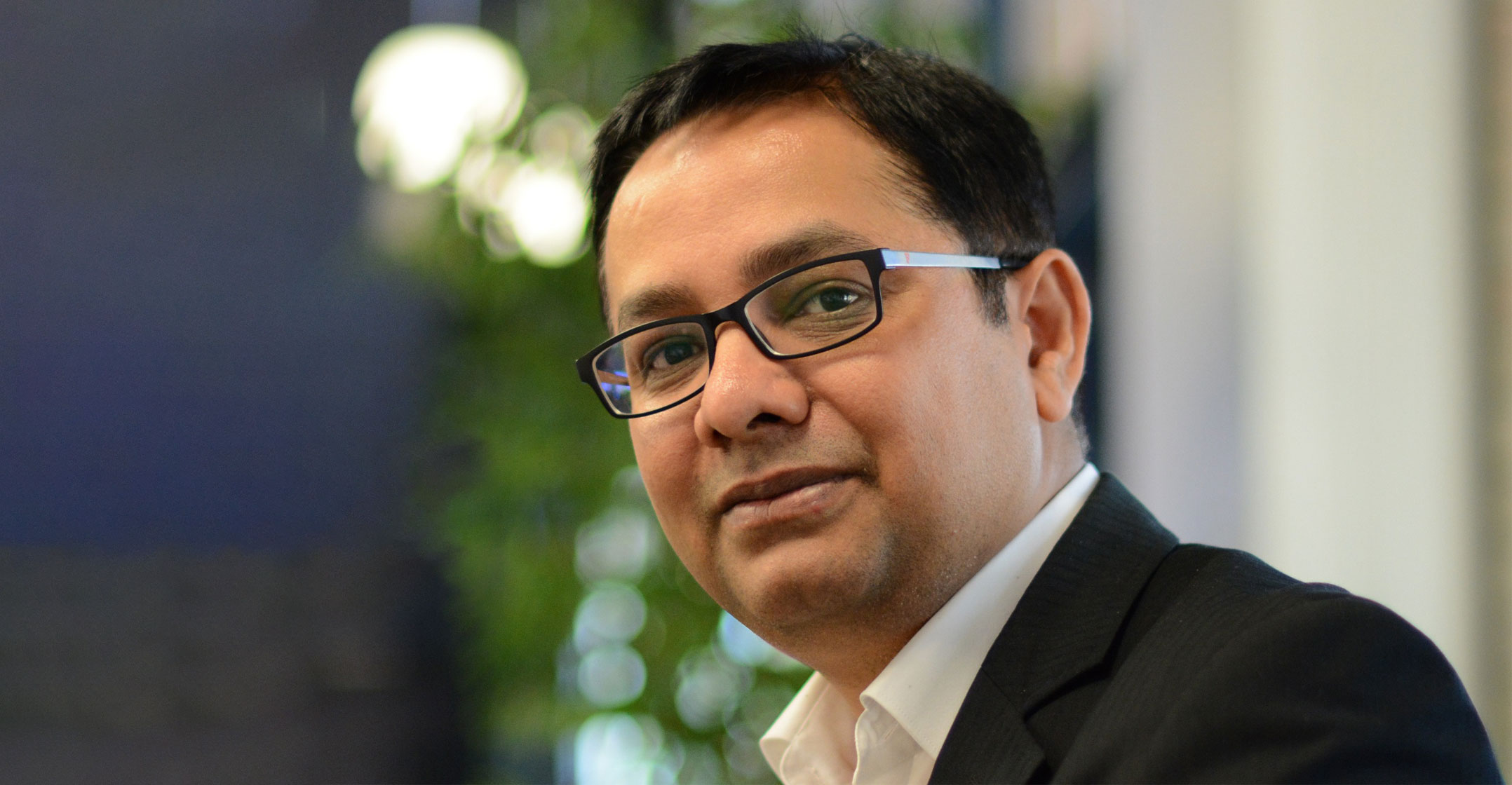
    The author, Prashant Prakash, argues that distributed ledger and blockchain technology solves two of the most fundamental challenges associated with financial transactions

    Despite the obvious challenges, distributed ledger and blockchain technology could allow regulators to track individual transactions and asset movements across multiple counterparties easily over time. Capital market players would benefit from lower regulatory reporting costs since the transaction ledger would be shared and regulators would be able to access the distributed ledger or blockchain directly.

    Like any great idea or new technology, distributed ledgers and blockchains are not perfect. Key challenges include privacy versus traceability, security, scalability, implementation, governance and latency.

    In our view, distributed ledger and blockchain technology solves two of the most fundamental challenges associated with financial transactions: reconciliation and auditability. It also holds the promise of settlement optimisation, which would remove a tremendous amount of friction from the current trading lifecycle and unlock a vast amount of capital that is trapped in the settlement process.

    • Prashant Prakash is blockchain lead for the financial services practice at Accenture in South Africa

    Add TechCentral as a preferred source on GoogleFollow TechCentral on Google NewsGet breaking news on WhatsApp


    Accenture Prashant Prakash
    WhatsApp YouTube
    Share. Facebook Twitter LinkedIn WhatsApp Telegram Email Copy Link
    Previous ArticleApple is already losing the smart-speaker war
    Next Article Android P said to embrace iPhone’s ‘notch’

    Related Posts

    Why Chinese cars are pretty now

    Chinese car design: how China won South Africa’s showrooms

    16 September 2026
    Nedbank hires MTN's former tech chief as group CIO - Nikos Angelopoulos

    Nedbank hires MTN’s former tech chief as group CIO

    31 July 2026
    How Chinese cars took over South African showrooms

    How Chinese cars took over South African showrooms

    30 July 2026
    Company News
    What Smollan learnt moving 9 000 users to Google Workspace - Digicloud Africa

    What Smollan learnt moving 9 000 users to Google Workspace

    1 October 2026
    Dell Technologies Forum 2026: what to expect in Johannesburg

    Dell Technologies Forum 2026: what to expect in Johannesburg

    1 October 2026
    B2B buyers pick a winner long before the pitch - Publishared, Michelle Losco

    B2B buyers pick a winner long before the pitch

    1 October 2026
    Opinion
    South Africa's next energy crisis is in the accounts department - Craig Holmes

    South Africa’s next energy crisis is in the accounts department

    29 September 2026
    The steam engine lesson AI doomsayers keep missing - Sam Clarke

    The steam engine lesson AI doomsayers keep missing

    28 September 2026
    Regulating AI: apply the laws we have first - Dirk de Vos

    Regulating AI: apply the laws we have first

    21 September 2026

    Subscribe to Updates

    Get the best South African technology news and analysis delivered to your e-mail inbox every morning.

    Latest Posts
    What Smollan learnt moving 9 000 users to Google Workspace - Digicloud Africa

    What Smollan learnt moving 9 000 users to Google Workspace

    1 October 2026
    Eskom waives rooftop solar fees, but the registration fight isn't over

    Eskom waives rooftop solar fees, but the registration fight isn’t over

    1 October 2026
    Dell Technologies Forum 2026: what to expect in Johannesburg

    Dell Technologies Forum 2026: what to expect in Johannesburg

    1 October 2026
    South Africa's digital ID is here - but you can't have it yet - Leon Schreiber

    South Africa’s digital ID is here – but you can’t have it yet

    1 October 2026
    © 2009 - 2026 NewsCentral Media
    Built and maintained by Chronon
    • Cookie policy (ZA)
    • TechCentral – privacy and Popia

    Type above and press Enter to search. Press Esc to cancel.

    Manage consent

    TechCentral uses cookies to enhance its offerings. Consenting to these technologies allows us to serve you better. Not consenting or withdrawing consent may adversely affect certain features and functions of the website.

    Functional Always active
    The technical storage or access is strictly necessary for the legitimate purpose of enabling the use of a specific service explicitly requested by the subscriber or user, or for the sole purpose of carrying out the transmission of a communication over an electronic communications network.
    Preferences
    The technical storage or access is necessary for the legitimate purpose of storing preferences that are not requested by the subscriber or user.
    Statistics
    The technical storage or access that is used exclusively for statistical purposes. The technical storage or access that is used exclusively for anonymous statistical purposes. Without a subpoena, voluntary compliance on the part of your Internet Service Provider, or additional records from a third party, information stored or retrieved for this purpose alone cannot usually be used to identify you.
    Marketing
    The technical storage or access is required to create user profiles to send advertising, or to track the user on a website or across several websites for similar marketing purposes.
    • Manage options
    • Manage services
    • Manage {vendor_count} vendors
    • Read more about these purposes
    View preferences
    • {title}
    • {title}
    • {title}
    🇿🇦 Sign up to the TechCentral newsletter