Close Menu
TechCentralTechCentral

    Subscribe to the newsletter

    Get the best South African technology news and analysis delivered to your e-mail inbox every morning.

    Facebook X (Twitter) YouTube LinkedIn
    WhatsApp Facebook X (Twitter) LinkedIn YouTube
    TechCentralTechCentral
    • News
      ICT is becoming the centre of gravity at Reunert - Anthonie de Beer and Rob Godlonton

      ICT is becoming the centre of gravity at Reunert

      6 August 2026
      Why Discovery is going slow on AI coding agents - Derek Wilcocks

      Why Discovery is going slow on AI coding agents

      6 August 2026
      Google's Gemini leadership team has left the building - Demis Hassabis

      Google’s Gemini leadership team has left the building

      6 August 2026
      SpaceX shares keep sliding - Elon Musk

      SpaceX shares keep sliding

      6 August 2026
      Solly Malatsi stakes South Africa's AI future on staying neutral

      Solly Malatsi stakes South Africa’s AI future on staying neutral

      5 August 2026
    • World
      Meta AI will now tell parents if their teen is in crisis

      Meta AI will now tell parents if their teen is in crisis

      17 July 2026
      IBM shares crash 25% as AI upends software spending - Arvind Krishna

      IBM shares crash 25% as AI upends software spending

      15 July 2026
      Jony Ive's first OpenAI device: an AI smart speaker - Jony Ive and Sam Altman

      Jony Ive’s first OpenAI device: an AI smart speaker

      15 July 2026
      Stripe, Advent in talks to buy PayPal for $53-billion

      Stripe, Advent in talks to buy PayPal for $53-billion

      15 July 2026
      Memory crisis sends smartphone market into steep decline

      Memory crisis sends smartphone market into steep decline

      13 July 2026
    • In-depth
      The plan to stop AI from breaking the world - Google DeepMind CEO Demis Hassabis. Image: John Sears

      The plan to stop AI from breaking the world

      16 July 2026
      The internet has a Strait of Hormuz problem

      The internet has a Strait of Hormuz problem

      15 July 2026
      AI boom sparks rally, frenzy and fear

      AI boom sparks rally, frenzy and fear

      11 June 2026
      Every plug-in hybrid on sale in South Africa, ranked by price - Lamborghini Temerario

      Every plug-in hybrid on sale in South Africa, ranked by price

      7 June 2026
      What Wi-Fi 8 will mean for wireless networks

      What Wi-Fi 8 will mean for wireless networks

      1 June 2026
    • TCS
      TCS+ | How AI is turning hardware into a subscription service - Shane van der Merwe Merchant West

      TCS+ | How AI is turning hardware into a subscription service

      6 August 2026
      TCS+ | Why South African workers must become supervisors of digital labour - Accelera Digital Group Cliff de Wit

      TCS+ | Why South African workers must become supervisors of digital labour

      31 July 2026
      TCS | Rapid deployment rules can't work without municipalities: ACT - Nomvuyiso Batyi

      TCS | Icasa’s rules skip the real bottleneck: ACT

      30 July 2026
      TCS+ | iStore Business on why Apple makes sense for SMEs - Sudesh Pillay and Tamia Nontsikelelo

      TCS+ | iStore Business on why Apple makes sense for SMEs

      30 July 2026
      TCS+ | A smarter approach to cloud for South African businesses - Joel Chacko and Jonathan Oaker

      TCS+ | A smarter approach to cloud for South African businesses

      28 July 2026
    • Opinion
      The author, Jannie van Zyl

      Selling vapour is corporate suicide in slow motion

      16 July 2026
      Brazil's online gambling crackdown is a lesson for South Africa

      How Amazon outmanoeuvred Starlink in South Africa

      15 July 2026
      The Popia problem with agentic AI - Herman Haasbroek

      The Popia problem with agentic AI

      14 July 2026
      The author, Fanie van Rooyen

      South Africa can still catch the AI wave – here’s how

      7 July 2026
      The author, Fanie van Rooyen

      The AI utopia South Africa can’t afford

      1 July 2026
    • Company Hubs
      • 1Stream
      • Africa Data Centres
      • AfriGIS
      • Altron Digital Business
      • Altron Document Solutions
      • Altron Group
      • Arctic Wolf
      • Ascent Technology
      • AvertITD
      • BBD
      • Braintree
      • CallMiner
      • CambriLearn
      • CM Telecom
      • Contactable
      • CYBER1 Solutions
      • Digicloud Africa
      • Digimune
      • Domains.co.za
      • ESET
      • Euphoria Telecom
      • HOSTAFRICA
      • Incredible Business
      • iONLINE
      • IQbusiness
      • Iris Network Systems
      • Kaspersky
      • LSD Open
      • Mitel
      • NEC XON
      • Netstar
      • Network Platforms
      • Next DLP
      • Ovations
      • Paracon
      • Paratus
      • Q-KON
      • SevenC
      • SkyWire
      • Solid8 Technologies
      • Telit Cinterion
      • Telviva
      • Tenable
      • Vertiv
      • Videri Digital
      • Vodacom Business
      • Vox
      • Wipro
      • Workday
      • XLink
    • Sections
      • AI and machine learning
      • Banking
      • Broadcasting and Media
      • Cloud services
      • Contact centres and CX
      • Cryptocurrencies
      • Education and skills
      • Electronics and hardware
      • Energy and sustainability
      • Enterprise software
      • Financial services
      • HealthTech
      • Information security
      • Internet and connectivity
      • Internet of Things
      • Investment
      • IT services
      • Lifestyle
      • Policy and regulation
      • Public sector
      • Retail and e-commerce
      • Satellite communications
      • Science
      • SMEs and start-ups
      • Social media
      • Talent and leadership
      • Telecoms
      • Watts & Wheels
    • Events
    • Advertise
    TechCentralTechCentral
    Home » Sections » Telecoms » ‘It’s hell’: Mobile networks face load shedding nightmare

    ‘It’s hell’: Mobile networks face load shedding nightmare

    Mobile operators including Vodacom, MTN and Telkom, are scrambling to ensure their networks stay up and running.
    By Nqobile Dludla5 April 2023
    Twitter LinkedIn Facebook WhatsApp Email Telegram Copy Link
    News Alerts
    WhatsApp

    On a recent Friday morning north of Johannesburg, the head of South Africa’s largest telecommunications company surveyed the arsenal of backup systems keeping just one of his 15 000 network towers online amid the worst power cuts on record.

    A diesel generator. Solar panels. A bank of expensive backup batteries, theft-proofed within a block of concrete.   “Our costs have gone through the roof,” lamented Sitho Mdlalose, MD of Vodacom South Africa.

    As the national power grid crumbles, leaving South Africans in the dark for up to 10 hours a day, mobile operators including Vodacom, MTN and majority state-owned Telkom are scrambling to ensure their networks stay up and running.

    New clients can’t call me… That means no money is going to come into my business

    They’re spending millions to install solar panels, batteries and are even trialling wind turbines, while targeting deals with independent power producers to supplement struggling state-owned utility Eskom’s increasingly unreliable output, three company executives said in interviews.

    Overall, the power crisis and logistical constraints are expected to erase two percentage points from economic growth this year, according to the South African Reserve Bank governor.

    Mary-Jane Mphahlele, an attorney who also runs a small travel agency in the city of Polokwane, experiences that lost economic activity every time the power is cut.  “New clients can’t call me… That means no money is going to come into my business,” the 29-year-old said. “It’s hell.”

    As they battle to simply mitigate the worsening crisis, telecoms companies have seen operating costs balloon. Vodacom and MTN executives said they’re having to divert capital away from much-needed network upgrades and 5G roll-outs.

    Regulatory blockages

    Meanwhile, they said government regulations are blocking potential solutions, such as sharing backup power infrastructure with their competitors, and revealed they’re lobbying authorities to help ease the pain.

    “Government and business must jointly seize this moment,” MTN Group CEO Ralph Mupita told investors last month. “If we do not act as a country, for sure we risk becoming a failed nation state.”

    South Africa’s power crunch — the product of years of corruption, a failure to add generating capacity, chronic breakdowns and under-exploited renewables capacity — has hobbled the economy and sparked public anger.

    Read: MTN takes R695-million hit from load shedding

    President Cyril Ramaphosa in February declared a national state of disaster, calling the crisis an existential threat to South Africa’s social fabric.

    Power outages have cost South Africa’s number-two operator MTN some R640-million in service revenue in the past year, forcing it to downgrade its medium-term margin target.
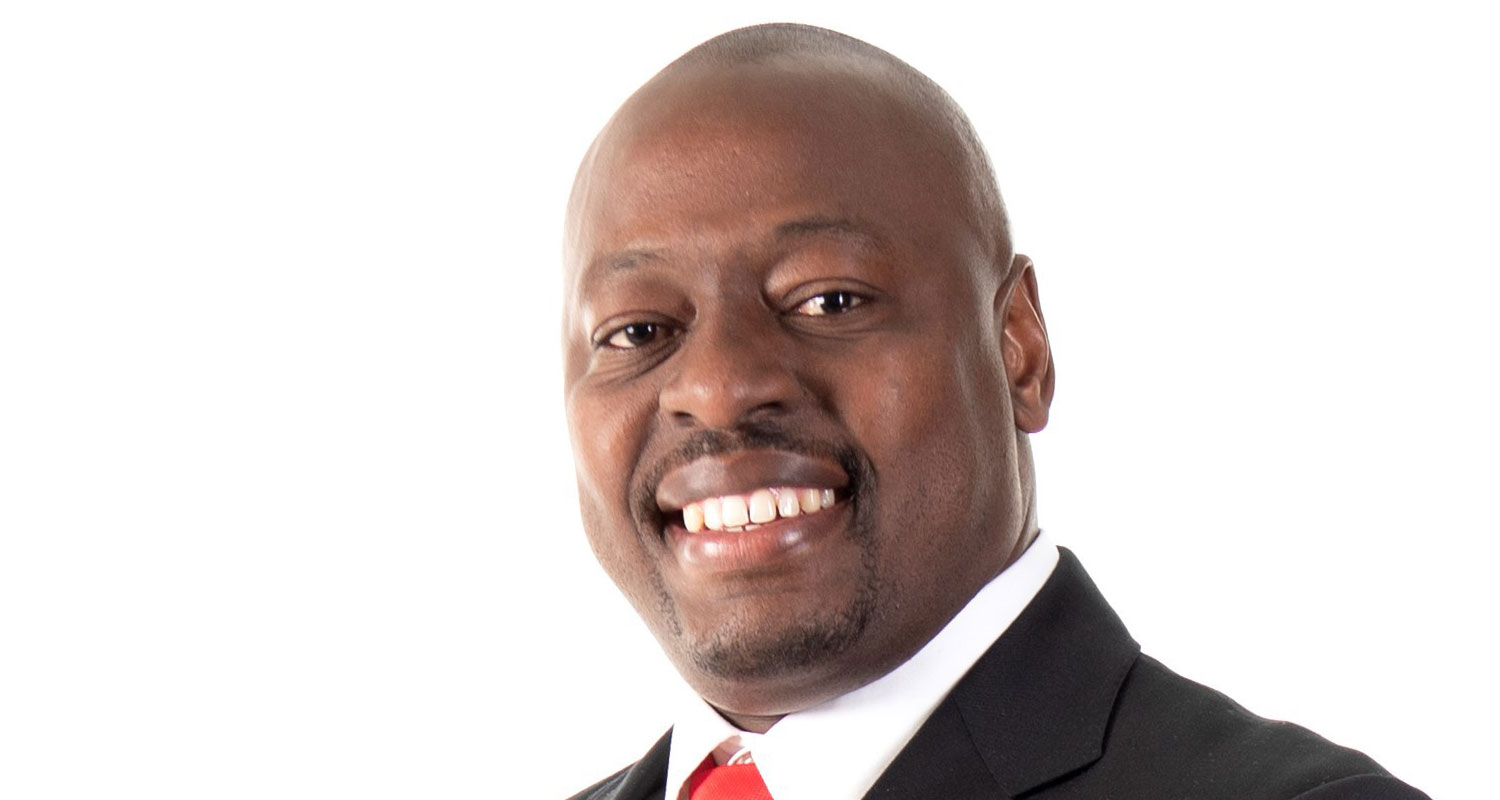
    Vodacom South Africa MD Sitho Mdlalose

    Telkom has incurred over R150-million in additional costs in its third quarter ended December 2022 alone.  Vodacom — majority owned by London-listed Vodafone Group — is spending well over R300-million/year on incremental costs, including fuel, battery replacements, repairs and security, Mdlalose said.

    While most network towers in South Africa are equipped with a battery for backup power, more advanced systems are less common. MTN, for example, has 12 900 towers in South Africa but only around 3 000 diesel generators and solar panels at a few pilot sites.

    Companies concentrate those extra resources on high-revenue sites, mainly in larger metro areas, officials said. But even city residents struggle when hours-long outages outlast backup measures.

    Read: Load shedding sends business confidence over a cliff

    “You just have to wait for the electricity to come back or move around town to get network,” said lawyer and businesswoman Mphahlele.

    MTN is deploying capital expenditure of about R9-billion in South Africa, with most going towards rolling out longer-lasting batteries and diesel generators, CEO Mupita told reporters last month. Telkom is deploying energy solutions to over 200 key sites. Vodacom is also expanding battery use and installing solar panels at sites where space allows, Mdlalose said.

    We’ll probably slow down on advanced capex-related portfolios like accelerating 5G

    But it’s a zero sum game forcing other important projects onto the back burner.  “We’ll probably slow down on advanced capex-related portfolios like accelerating 5G,” MTN Group chief financial officer Tsholofelo Molefe said.

    Vodacom expects to slow its rural network drive and redirect those funds to backup power rollouts. That risks delaying South Africa’s pivot to the digital economy and could leave rural areas, which already suffer from sparse coverage, lagging even further behind.

    The challenges aren’t simply financial. As telecoms firms ramp up their efforts, criminal gangs are doing the same, targeting newly installed generators and batteries and stealing fuel.

    Read: ANC blames everyone but itself for load shedding

    At a tower site shared by Vodacom and MTN in Soweto, a large township south of Johannesburg, thieves recently bashed through concrete to make off with cables, radio transmitter processors and an air conditioner. Mdlalose said Vodacom sees between 600 and 700 such attacks every month and is losing around 5 500 batteries annually to theft.

    MTN did not share data on its overall losses to criminal activity but said it’s witnessed a sharp rise in incidents, including cable and battery theft. It will begin placing some battery systems inside concrete bunkers.

    MTN Group chief financial officer Tsholofelo Molefe

    With the costs mounting, mobile operators are turning to the government for help.

    MTN is seeking a temporary relaxation of visa regulations to bring in foreign technicians including from Nigeria, where towers are heavily reliant upon diesel generators, Mupita told MTN’s investors.

    It’s also seeking clarity on whether the state of disaster permits mobile operators to allow each other to freely roam across networks to avoid dropped calls, MTN’s CFO Molefe said. That could bypass lengthy approval processes and avoid limitations on locations where roaming is permitted and which spectrum bands companies can roam on.

    Telcos also want the same fuel rebates enjoyed by the agriculture and mining sectors, according to Nomvuyiso Batyi, CEO of the Association of Comms and Technology. And they’re seeking to save on costs by jointly purchasing and operating backup power equipment, she and Vodacom’s Mdlalose added.

    Read: Load shedding is killing 5G in South Africa

    The regulatory body that oversees the sector said it was considering measures “to ameliorate the impact of load-shedding on service provision, economic activity, and social well-being”. And the government’s Competition Commission said the trade, industry & competition minister Ebrahim Patel was considering public input as his department drafts exemptions for power users under the state of the disaster.

    The final regulations, which Vodacom’s Mdlalose considers a lifeline for the industry, have yet to be published.  “Frankly if we’re not allowed to do that it would be a real tragedy,” he said. “This is a national crisis.”  — (c) 2023 Reuters

    Get TechCentral’s daily newsletter

    Follow TechCentral on Google News Add TechCentral as your preferred source on Google


    Competition Commission Ebrahim Patel Icasa MTN MTN South Africa Nomvuyiso Batyi Ralph Mupita Sitho Mdlalose Telkom Tsholofelo Molefe Vodacom Vodacom South Africa
    WhatsApp YouTube
    Share. Facebook Twitter LinkedIn WhatsApp Telegram Email Copy Link
    Previous ArticleTreasury withdraws Eskom exemption on dodgy spending
    Next Article TCS | MetroFibre CEO on the township broadband opportunity

    Related Posts

    Capitec agrees to open Capitec Pay to rivals in Walletdoc deal

    Capitec agrees to open Capitec Pay to rivals in Walletdoc deal

    5 August 2026
    Icasa promises business as usual through strike

    Icasa promises business as usual through strike

    5 August 2026
    Starlink wants to be your next mobile operator

    Starlink wants to be your next mobile operator

    5 August 2026
    Company News
    What a cloud review reveals about how a company actually runs - LSD Open

    What a cloud review reveals about how a company actually runs

    6 August 2026
    Manufacturing from a garage is now a realistic business plan - MaxLaser

    Manufacturing from a garage is now a realistic business plan

    6 August 2026
    South Africa agrees on a shared language for location - AfriGIS

    South Africa agrees on a shared language for location

    5 August 2026
    Opinion
    The author, Jannie van Zyl

    Selling vapour is corporate suicide in slow motion

    16 July 2026
    Brazil's online gambling crackdown is a lesson for South Africa

    How Amazon outmanoeuvred Starlink in South Africa

    15 July 2026
    The Popia problem with agentic AI - Herman Haasbroek

    The Popia problem with agentic AI

    14 July 2026

    Subscribe to Updates

    Get the best South African technology news and analysis delivered to your e-mail inbox every morning.

    Latest Posts
    ICT is becoming the centre of gravity at Reunert - Anthonie de Beer and Rob Godlonton

    ICT is becoming the centre of gravity at Reunert

    6 August 2026
    Why Discovery is going slow on AI coding agents - Derek Wilcocks

    Why Discovery is going slow on AI coding agents

    6 August 2026
    Google's Gemini leadership team has left the building - Demis Hassabis

    Google’s Gemini leadership team has left the building

    6 August 2026
    SpaceX shares keep sliding - Elon Musk

    SpaceX shares keep sliding

    6 August 2026
    © 2009 - 2026 NewsCentral Media
    Built and maintained by Chronon
    • Cookie policy (ZA)
    • TechCentral – privacy and Popia

    Type above and press Enter to search. Press Esc to cancel.

    Manage consent

    TechCentral uses cookies to enhance its offerings. Consenting to these technologies allows us to serve you better. Not consenting or withdrawing consent may adversely affect certain features and functions of the website.

    Functional Always active
    The technical storage or access is strictly necessary for the legitimate purpose of enabling the use of a specific service explicitly requested by the subscriber or user, or for the sole purpose of carrying out the transmission of a communication over an electronic communications network.
    Preferences
    The technical storage or access is necessary for the legitimate purpose of storing preferences that are not requested by the subscriber or user.
    Statistics
    The technical storage or access that is used exclusively for statistical purposes. The technical storage or access that is used exclusively for anonymous statistical purposes. Without a subpoena, voluntary compliance on the part of your Internet Service Provider, or additional records from a third party, information stored or retrieved for this purpose alone cannot usually be used to identify you.
    Marketing
    The technical storage or access is required to create user profiles to send advertising, or to track the user on a website or across several websites for similar marketing purposes.
    • Manage options
    • Manage services
    • Manage {vendor_count} vendors
    • Read more about these purposes
    View preferences
    • {title}
    • {title}
    • {title}