Close Menu
TechCentralTechCentral

    Subscribe to the newsletter

    Get the best South African technology news and analysis delivered to your e-mail inbox every morning.

    Facebook X (Twitter) YouTube LinkedIn
    WhatsApp Facebook X (Twitter) LinkedIn YouTube
    TechCentralTechCentral
    • News
      Nedbank hires MTN's former tech chief as group CIO - Nikos Angelopoulos

      Nedbank hires MTN’s former tech chief as group CIO

      31 July 2026
      Eskom's diesel bill falls 86% as breakdowns hit eight-year low

      Eskom’s diesel bill falls 86% as breakdowns hit eight-year low

      31 July 2026
      Ramaphosa signs off on taking the grid away from Eskom

      Ramaphosa signs off on taking the grid away from Eskom

      31 July 2026
      Microsoft just had the biggest day in stock market history

      Microsoft just had the biggest day in stock market history

      31 July 2026
      MTN Nigeria's growth engine stalled in second quarter - Karl Toriola

      MTN Nigeria’s growth engine stalled in second quarter

      31 July 2026
    • World
      Meta AI will now tell parents if their teen is in crisis

      Meta AI will now tell parents if their teen is in crisis

      17 July 2026
      IBM shares crash 25% as AI upends software spending - Arvind Krishna

      IBM shares crash 25% as AI upends software spending

      15 July 2026
      Jony Ive's first OpenAI device: an AI smart speaker - Jony Ive and Sam Altman

      Jony Ive’s first OpenAI device: an AI smart speaker

      15 July 2026
      Stripe, Advent in talks to buy PayPal for $53-billion

      Stripe, Advent in talks to buy PayPal for $53-billion

      15 July 2026
      Memory crisis sends smartphone market into steep decline

      Memory crisis sends smartphone market into steep decline

      13 July 2026
    • In-depth
      The plan to stop AI from breaking the world - Google DeepMind CEO Demis Hassabis. Image: John Sears

      The plan to stop AI from breaking the world

      16 July 2026
      The internet has a Strait of Hormuz problem

      The internet has a Strait of Hormuz problem

      15 July 2026
      AI boom sparks rally, frenzy and fear

      AI boom sparks rally, frenzy and fear

      11 June 2026
      Every plug-in hybrid on sale in South Africa, ranked by price - Lamborghini Temerario

      Every plug-in hybrid on sale in South Africa, ranked by price

      7 June 2026
      What Wi-Fi 8 will mean for wireless networks

      What Wi-Fi 8 will mean for wireless networks

      1 June 2026
    • TCS
      TCS+ | Why South African workers must become supervisors of digital labour - Accelera Digital Group Cliff de Wit

      TCS+ | Why South African workers must become supervisors of digital labour

      31 July 2026
      TCS | Rapid deployment rules can't work without municipalities: ACT - Nomvuyiso Batyi

      TCS | Icasa’s rules skip the real bottleneck: ACT

      30 July 2026
      TCS+ | iStore Business on why Apple makes sense for SMEs - Sudesh Pillay and Tamia Nontsikelelo

      TCS+ | iStore Business on why Apple makes sense for SMEs

      30 July 2026
      TCS+ | A smarter approach to cloud for South African businesses - Joel Chacko and Jonathan Oaker

      TCS+ | A smarter approach to cloud for South African businesses

      28 July 2026
      TCS | How Optasia lends billions to people banks can't see - Salvador Anglada

      TCS | How Optasia lends billions to people banks can’t see

      23 July 2026
    • Opinion
      The author, Jannie van Zyl

      Selling vapour is corporate suicide in slow motion

      16 July 2026
      Brazil's online gambling crackdown is a lesson for South Africa

      How Amazon outmanoeuvred Starlink in South Africa

      15 July 2026
      The Popia problem with agentic AI - Herman Haasbroek

      The Popia problem with agentic AI

      14 July 2026
      The author, Fanie van Rooyen

      South Africa can still catch the AI wave – here’s how

      7 July 2026
      The author, Fanie van Rooyen

      The AI utopia South Africa can’t afford

      1 July 2026
    • Company Hubs
      • 1Stream
      • Africa Data Centres
      • AfriGIS
      • Altron Digital Business
      • Altron Document Solutions
      • Altron Group
      • Arctic Wolf
      • Ascent Technology
      • AvertITD
      • BBD
      • Braintree
      • CallMiner
      • CambriLearn
      • CM Telecom
      • Contactable
      • CYBER1 Solutions
      • Digicloud Africa
      • Digimune
      • Domains.co.za
      • ESET
      • Euphoria Telecom
      • HOSTAFRICA
      • Incredible Business
      • iONLINE
      • IQbusiness
      • Iris Network Systems
      • Kaspersky
      • LSD Open
      • Mitel
      • NEC XON
      • Netstar
      • Network Platforms
      • Next DLP
      • Ovations
      • Paracon
      • Paratus
      • Q-KON
      • SevenC
      • SkyWire
      • Solid8 Technologies
      • Telit Cinterion
      • Telviva
      • Tenable
      • Vertiv
      • Videri Digital
      • Vodacom Business
      • Vox
      • Wipro
      • Workday
      • XLink
    • Sections
      • AI and machine learning
      • Banking
      • Broadcasting and Media
      • Cloud services
      • Contact centres and CX
      • Cryptocurrencies
      • Education and skills
      • Electronics and hardware
      • Energy and sustainability
      • Enterprise software
      • Financial services
      • HealthTech
      • Information security
      • Internet and connectivity
      • Internet of Things
      • Investment
      • IT services
      • Lifestyle
      • Policy and regulation
      • Public sector
      • Retail and e-commerce
      • Satellite communications
      • Science
      • SMEs and start-ups
      • Social media
      • Talent and leadership
      • Telecoms
      • Watts & Wheels
    • Events
    • Advertise
    TechCentralTechCentral
    Home » Sections » Electronics and hardware » It’s Jensen’s world now

    It’s Jensen’s world now

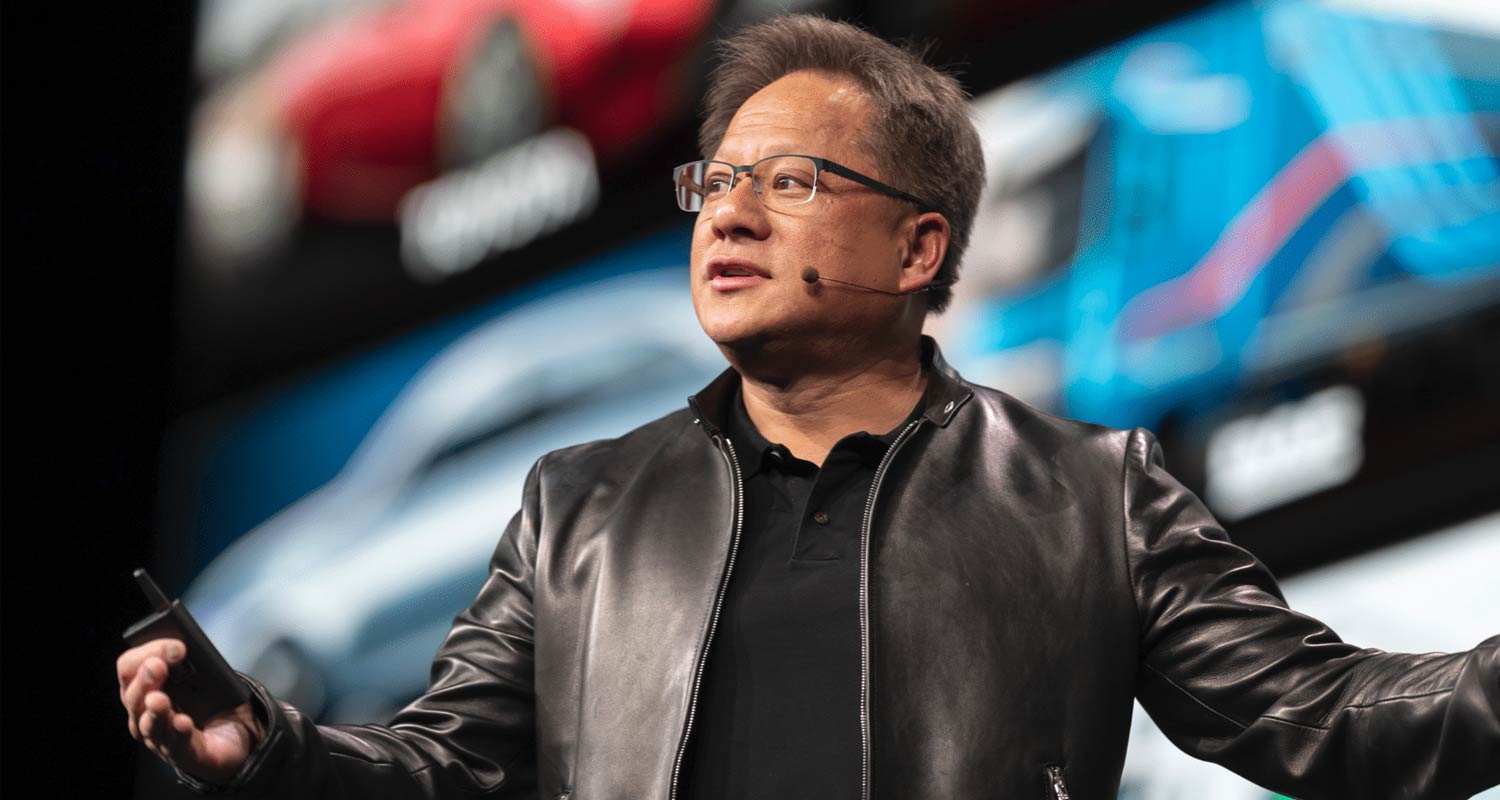
    Jensen Huang wasn’t on the official Computex 2024 programme in Taipei this week, but he didn’t need to be.
    By Agency Staff6 June 2024
    Twitter LinkedIn Facebook WhatsApp Email Telegram Copy Link
    News Alerts
    WhatsApp
    Nvidia CEO Jensen Huang. Image: Nvidia

    Jensen Huang wasn’t on the official Computex 2024 programme, but he didn’t need to be.

    The Nvidia billionaire led an unprecedented cast of tech glitterati to the world’s biggest computing conference this week in Taiwan, where he effortlessly upstaged the likes of Intel CEO Pat Gelsinger — without a single official keynote or session.

    From packing a 4 000-seat sports stadium to paparazzi-fuelled night-market jaunts, the leather jacket-clad CEO and his US$3-trillion company drew the largest audiences and biggest entourages. As icing on the cake, the 61-year-old this week joined the likes of Elon Musk in a select group of business chieftains worth at least $100-billion, riding a $315-billion Nvidia market rally over three frantic days.

    This year’s buzz centred on AI PCs. The only problem is, no one can quite agree on what they are

    “Someone coined the term Jensanity, and that’s exactly what it’s been,” said Dan Nystedt, an analyst at TriOrient Investments.

    Yet observers who navigate past Nvidia’s (very large) wake can spot trends that may in time determine the direction in which AI evolves around the world. This year, “AI PCs” mushroomed across the cavernous show floors; hitherto unknown Taiwanese names became stars; Microsoft software was ubiquitous in presentations and exhibition booths; and many tech honchos studiously avoided talking China, sanctions or politics.

    Here’s what we learned at the largest Computex ever.

    It’s Jensen’s world now

    Nvidia’s star grew even more ascendant this week, thanks to its dominant share of the market for the high-end accelerators used to train AI.

    Huang was easy to spot on the show floor at all times — observers could literally tell where he was from the cheering, chanting and visible, moving mass of people that track the CEO wherever he goes. When not touring the booths, he hosted dinners for CEOs and cameo-ed at partner events. He signed Super Micro servers, journalists’ laptops and — in a video that went viral — one young lady’s chest.

    Many credit Huang’s company for putting Taiwan and Computex on the map. Just a year ago, the co-founder urged one audience of Taiwanese students to “run, don’t walk” to embrace AI. This year, Huang was racing so hard he didn’t get breakfast one day until 3.30pm when he munched on a turkey sandwich — onstage while speaking to the crowd.

    Nvidia today commands an ecosystem of software, hardware and solutions that rivals from AMD to Intel are trying hard to break up or replicate. But one little understood fact about Nvidia is that its success hinges in no small part on the hundreds of companies that together make AI possible — many of them based in Taiwan.

    Taiwan sent a message with this year’s raucous Computex: if you want AI, you need Taiwan.
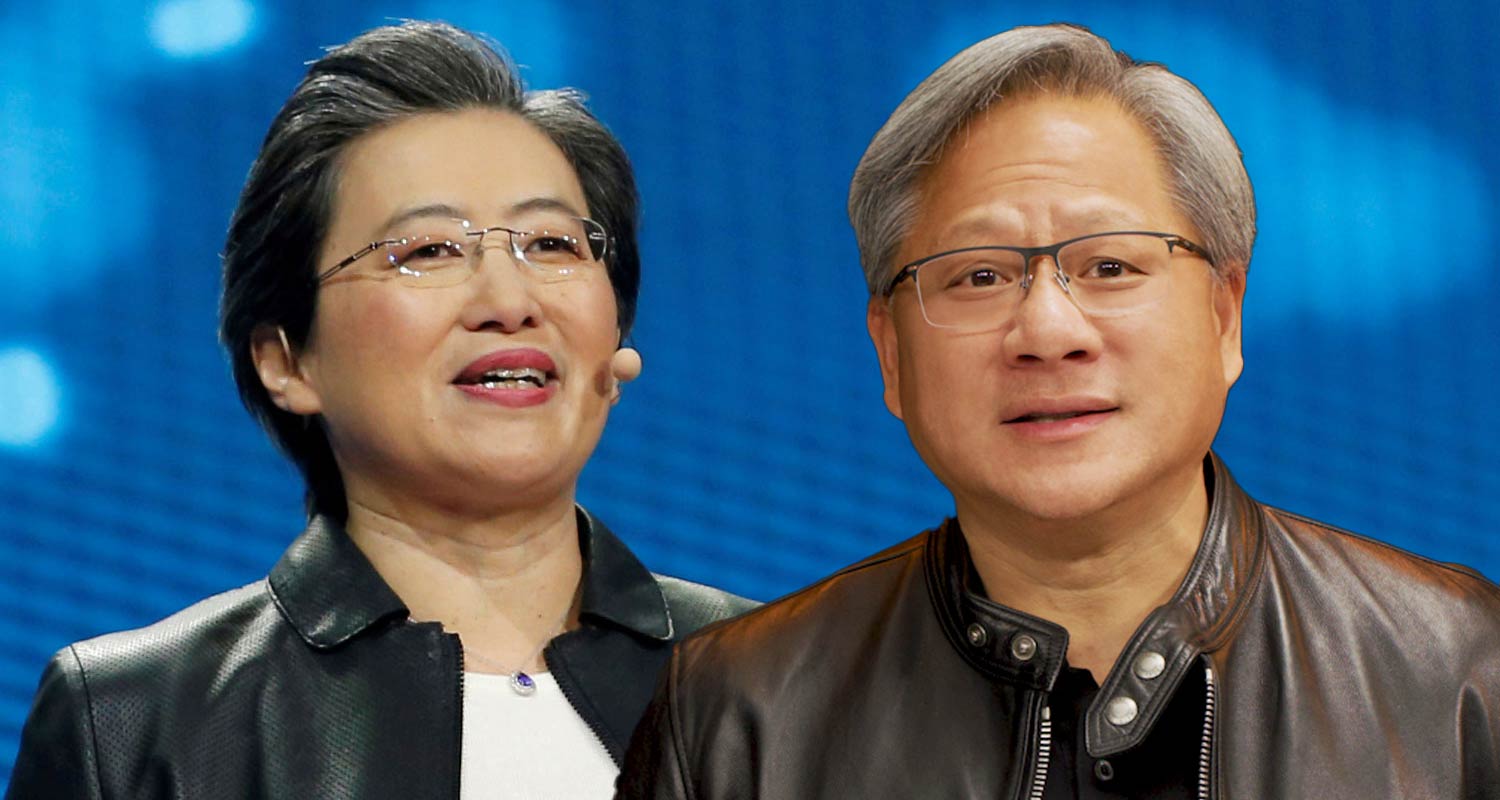
    AMD’s Lisa Su and Nvidia’s Jensen Huang

    Taiwan Semiconductor Manufacturing Co made the island a compulsory stop for governments around the world trying to secure chips. But there’s more to AI than just the chip: motherboards, modules, servers, cooling systems and more are all mostly designed and initially made in Taiwan. More than nine-tenths of the world’s AI-capable servers are made by the island’s firms, Bloomberg Intelligence’s Steven Tseng estimates, operating out of factories spanning Mexico to Malaysia.

    As the world rushes to build out data centres to cope with the AI rush, that supply chain is coming into focus. That’s why this week the marquee names actively courted the bosses of companies like Wiwynn, Quanta Computer, Inventec, Pegatron and more. Most of those are barely known outside of Taiwan. Yet Jensen Huang, AMD’s Lisa Su and Intel’s Gelsinger were just a few of the bigwigs who toured their booths, signed their hardware and took their bosses out to dinner. Huang in his press conference called them the “unsung heroes”.

    Read: Nvidia tops Apple in market value

    “What Jensen is doing — running around with all these people — is a sign that the Taiwan electronic components and server-maker ecosystems hold a key position in the global supply chain. When companies start building things, they are still going to the Taiwanese first because of longstanding working relationships and the one-stop shop that Taiwan offers,” said Jon Yu, an analyst and founder of the Asianometry YouTube channel. “The system integrators then make many of the critical decisions on components that make or break whole companies.”

    Among the many things Taiwanese companies specialise in is the design and fabrication of laptops. Which brings us to…

    What the heck is an AI PC?

    This year’s buzz centred on AI PCs. The only problem is, no one can quite agree on what they are.

    From Qualcomm’s Cristiano Amon to AMD’s Lisa Su, just about every executive extolled the benefits of having AI computations performed on the laptop — the edge — rather than via a remote cloud server. But things get squishy after that.

    “Everyone’s got their own definition of AI PCs, and that’s to promote their products,” Johnson Hua, a senior manager of marketing at Kioxia, said frankly.

    A Gigabyte Technology representative argued such a device must have a motherboard that supports the latest components (spoiler alert: Gigabyte makes motherboards). Asustek Computer said it’s a device that helps people work more efficiently. It should have the latest generation CPU, Acer says. Thing is, much of that sounds pretty much exactly like a high-end laptop.
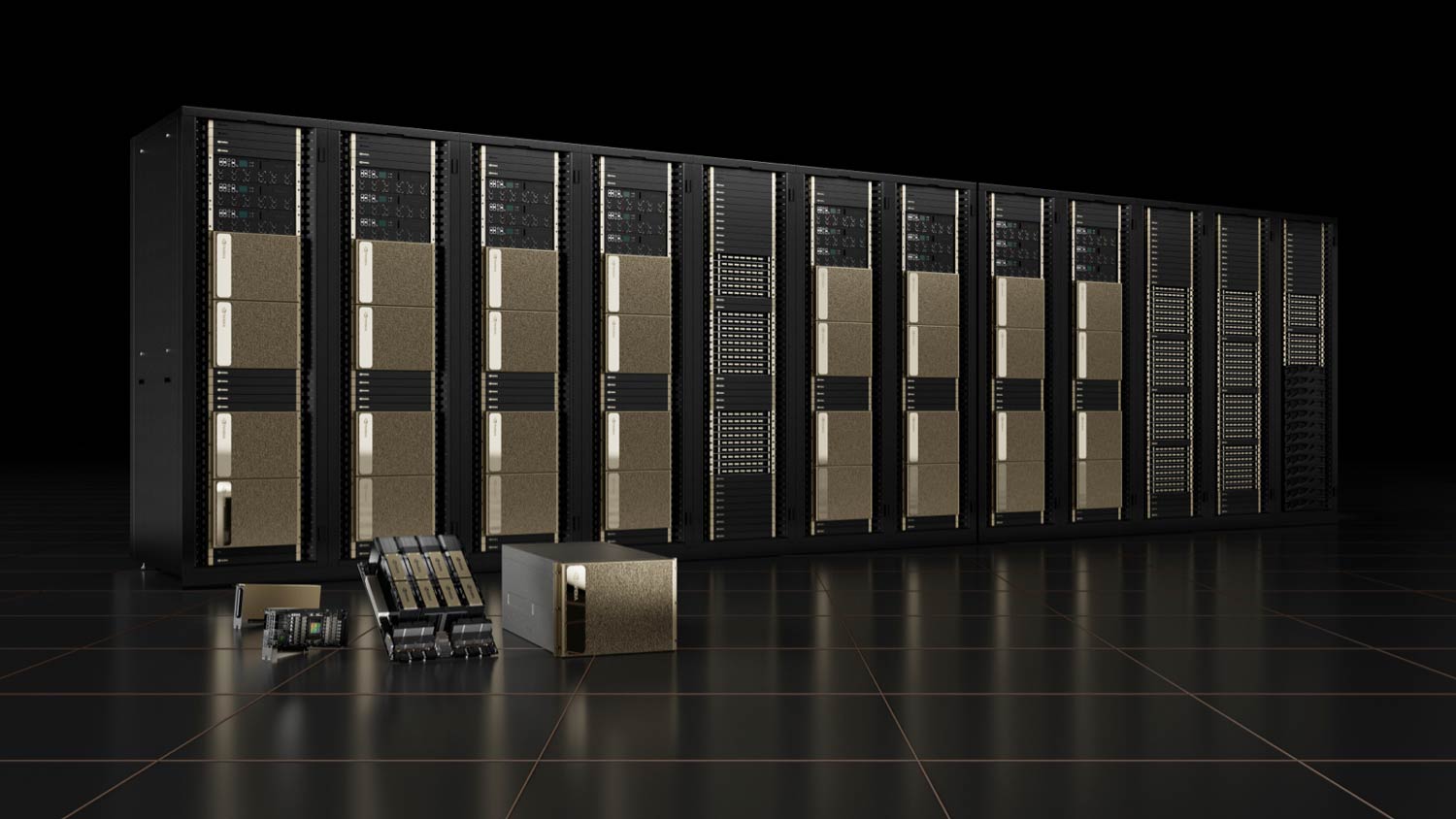
    Insatiable demand: the Nvidia H100 family of data centre products. Image: Nvidia

    Wesley Kuo, CEO of Nvidia-backed cloud-based AI services firm Ubitus, said the concept was “a joke”. It will take years for a device to run “acceptable native AI”.

    Case in point: Shao Yu, an Asus product manager, said she couldn’t demonstrate some of the functions because the venue’s internet was too slow.

    No politics please, we’re tech

    Geopolitical uncertainty has been a dominant topic at conferences around the world. In Taipei, every mention drew either the evil eye or a nervous laugh and brush-off.

    Just weeks ago, the People’s Liberation Army held military exercises around the island after its new president’s inauguration. Around the show floor, the topic of China rarely came up, even though it’s a deciding factor in local elections and arguably one of the biggest priorities for a Washington administration seeking to shore up the US lead in high technology.

    At Computex, it might as well all be a fever dream. At a media Q&A, Huang asked for a “happy” last question. The lucky local journalist who got picked chose to ask about geopolitics. The reporter “is not well. As the last question before we all leave, she would like to ask about geopolitical stuff,” Huang said, miming displeasure.

    Farewell, PC

    Microsoft is the unseen guiding hand behind this exuberant celebration of tech. Windows chief Pavan Davuluri did the rounds as a guest speaker at the major keynote events. CEO Satya Nadella gave video endorsements to each chip-making partner. And Qualcomm’s CEO wore white takkies prominently sporting Microsoft’s Copilot logo.
    If there was any coherence to the message coming out from competing companies, it came from Microsoft. The Windows maker is betting billions on ushering in a new AI age.

    The excitement around AI is understandable given the PC market has been either flat or in decline for close to a decade. One thing everyone in Taipei this week could agree on — the industry was entering uncharted territory, with uncertain outcomes for all. “This is the most consequential time of our careers,” Gelsinger said.  — Vlad Savov, Jane Lanhee Lee and Takashi Mochizuki, (c) 2024 Bloomberg LP

    Read next: Intel CEO fires back at Nvidia in AI chips battle

    Follow TechCentral on Google News Add TechCentral as your preferred source on Google


    AMD Intel Jensanity Jensen Huang Lisa Su Nvidia Pat Gelsinger Qualcomm
    WhatsApp YouTube
    Share. Facebook Twitter LinkedIn WhatsApp Telegram Email Copy Link
    Previous ArticleSpaceX’s Starship survives return to Earth
    Next Article Magda Wierzycka slams Discovery over ‘data breach’

    Related Posts

    Microsoft just had the biggest day in stock market history

    Microsoft just had the biggest day in stock market history

    31 July 2026
    Intel is back in the game - Intel CEO Lip-Bu Tan. Laure Andrillon/Reuters

    Intel is back in the game

    24 July 2026
    From care homes to production lines, the robots are coming

    From care homes to production lines, the robots are coming

    21 July 2026
    Company News
    Domains.co.za launches self-hosted n8n VPS hosting

    Domains.co.za launches self-hosted n8n VPS hosting

    31 July 2026
    Smarter.tech '26 shows why smarter technology begins with context - Obsidian Systems

    Context is the missing piece in enterprise AI: Obsidian

    31 July 2026
    Huawei launches 12 intelligent transport solutions in South Africa - Sam Tang

    Huawei launches 12 intelligent transport solutions in South Africa

    30 July 2026
    Opinion
    The author, Jannie van Zyl

    Selling vapour is corporate suicide in slow motion

    16 July 2026
    Brazil's online gambling crackdown is a lesson for South Africa

    How Amazon outmanoeuvred Starlink in South Africa

    15 July 2026
    The Popia problem with agentic AI - Herman Haasbroek

    The Popia problem with agentic AI

    14 July 2026

    Subscribe to Updates

    Get the best South African technology news and analysis delivered to your e-mail inbox every morning.

    Latest Posts
    Nedbank hires MTN's former tech chief as group CIO - Nikos Angelopoulos

    Nedbank hires MTN’s former tech chief as group CIO

    31 July 2026
    Eskom's diesel bill falls 86% as breakdowns hit eight-year low

    Eskom’s diesel bill falls 86% as breakdowns hit eight-year low

    31 July 2026
    Ramaphosa signs off on taking the grid away from Eskom

    Ramaphosa signs off on taking the grid away from Eskom

    31 July 2026
    TCS+ | Why South African workers must become supervisors of digital labour - Accelera Digital Group Cliff de Wit

    TCS+ | Why South African workers must become supervisors of digital labour

    31 July 2026
    © 2009 - 2026 NewsCentral Media
    Built and maintained by Chronon
    • Cookie policy (ZA)
    • TechCentral – privacy and Popia

    Type above and press Enter to search. Press Esc to cancel.

    Manage consent

    TechCentral uses cookies to enhance its offerings. Consenting to these technologies allows us to serve you better. Not consenting or withdrawing consent may adversely affect certain features and functions of the website.

    Functional Always active
    The technical storage or access is strictly necessary for the legitimate purpose of enabling the use of a specific service explicitly requested by the subscriber or user, or for the sole purpose of carrying out the transmission of a communication over an electronic communications network.
    Preferences
    The technical storage or access is necessary for the legitimate purpose of storing preferences that are not requested by the subscriber or user.
    Statistics
    The technical storage or access that is used exclusively for statistical purposes. The technical storage or access that is used exclusively for anonymous statistical purposes. Without a subpoena, voluntary compliance on the part of your Internet Service Provider, or additional records from a third party, information stored or retrieved for this purpose alone cannot usually be used to identify you.
    Marketing
    The technical storage or access is required to create user profiles to send advertising, or to track the user on a website or across several websites for similar marketing purposes.
    • Manage options
    • Manage services
    • Manage {vendor_count} vendors
    • Read more about these purposes
    View preferences
    • {title}
    • {title}
    • {title}