

Close Menu
TechCentralTechCentral

    Subscribe to the newsletter

    Get the best South African technology news and analysis delivered to your e-mail inbox every morning.

    Facebook X (Twitter) YouTube LinkedIn
    WhatsApp Facebook X (Twitter) LinkedIn YouTube
    TechCentralTechCentral
    • News
      Vodacom to take control of Safaricom in R36-billion deal - Shameel Joosub

      Vodacom to take control of Safaricom in R36-billion deal

      4 December 2025
      Black Friday goes digital in South Africa as online spending surges to record high

      Black Friday goes digital in South Africa as online spending surges to record high

      4 December 2025
      BYD takes direct aim at Toyota with launch of sub-R500 000 Sealion 5 PHEV

      BYD takes direct aim at Toyota with launch of sub-R500 000 Sealion 5 PHEV

      4 December 2025
      'Get it now': Takealot in new instant deliveries pilot

      ‘Get it now’: Takealot in new instant deliveries pilot

      4 December 2025
      What South Africans searched for most in 2025

      What South Africans searched for most in 2025, according to Google

      4 December 2025
    • World
      Amazon and Google launch multi-cloud service for faster connectivity

      Amazon and Google launch multi-cloud service for faster connectivity

      1 December 2025
      Google makes final court plea to stop US breakup

      Google makes final court plea to stop US breakup

      21 November 2025
      Bezos unveils monster rocket: New Glenn 9x4 set to dwarf Saturn V

      Bezos unveils monster rocket: New Glenn 9×4 set to dwarf Saturn V

      21 November 2025
      Tech shares turbocharged by Nvidia's stellar earnings

      Tech shares turbocharged by stellar Nvidia earnings

      20 November 2025
      Config file blamed for Cloudflare meltdown that disrupted the web

      Config file blamed for Cloudflare meltdown that disrupted the web

      19 November 2025
    • In-depth
      Jensen Huang Nvidia

      So, will China really win the AI race?

      14 November 2025
      Valve's Linux console takes aim at Microsoft's gaming empire

      Valve’s Linux console takes aim at Microsoft’s gaming empire

      13 November 2025
      iOCO's extraordinary comeback plan - Rhys Summerton

      iOCO’s extraordinary comeback plan

      28 October 2025
      Why smart glasses keep failing - no, it's not the tech - Mark Zuckerberg

      Why smart glasses keep failing – it’s not the tech

      19 October 2025
      BYD to blanket South Africa with megawatt-scale EV charging network - Stella Li

      BYD to blanket South Africa with megawatt-scale EV charging network

      16 October 2025
    • TCS
      TCS+ | How Cloud on Demand helps partners thrive in the AWS ecosystem - Odwa Ndyaluvane and Xenia Rhode

      TCS+ | How Cloud On Demand helps partners thrive in the AWS ecosystem

      4 December 2025
      TCS | MTN Group CEO Ralph Mupita on competition, AI and the future of mobile

      TCS | Ralph Mupita on competition, AI and the future of mobile

      28 November 2025
      TCS | Dominic Cull on fixing South Africa's ICT policy bottlenecks

      TCS | Dominic Cull on fixing South Africa’s ICT policy bottlenecks

      21 November 2025
      TCS | BMW CEO Peter van Binsbergen on the future of South Africa's automotive industry

      TCS | BMW CEO Peter van Binsbergen on the future of South Africa’s automotive industry

      6 November 2025
      TCS | Why Altron is building an AI factory - Bongani Andy Mabaso

      TCS | Why Altron is building an AI factory in Johannesburg

      28 October 2025
    • Opinion
      Your data, your hardware: the DIY AI revolution is coming - Duncan McLeod

      Your data, your hardware: the DIY AI revolution is coming

      20 November 2025
      Zero Carbon Charge founder Joubert Roux

      The energy revolution South Africa can’t afford to miss

      20 November 2025
      It's time for a new approach to government IT spend in South Africa - Richard Firth

      It’s time for a new approach to government IT spend in South Africa

      19 November 2025
      How South Africa's broken Rica system fuels murder and mayhem - Farhad Khan

      How South Africa’s broken Rica system fuels murder and mayhem

      10 November 2025
      South Africa's AI data centre boom risks overloading a fragile grid - Paul Colmer

      South Africa’s AI data centre boom risks overloading a fragile grid

      30 October 2025
    • Company Hubs
      • Africa Data Centres
      • AfriGIS
      • Altron Digital Business
      • Altron Document Solutions
      • Altron Group
      • Arctic Wolf
      • AvertITD
      • Braintree
      • CallMiner
      • CambriLearn
      • CYBER1 Solutions
      • Digicloud Africa
      • Digimune
      • Domains.co.za
      • ESET
      • Euphoria Telecom
      • Incredible Business
      • iONLINE
      • IQbusiness
      • Iris Network Systems
      • LSD Open
      • NEC XON
      • Netstar
      • Network Platforms
      • Next DLP
      • Ovations
      • Paracon
      • Paratus
      • Q-KON
      • SevenC
      • SkyWire
      • Solid8 Technologies
      • Telit Cinterion
      • Tenable
      • Vertiv
      • Videri Digital
      • Vodacom Business
      • Wipro
      • Workday
      • XLink
    • Sections
      • AI and machine learning
      • Banking
      • Broadcasting and Media
      • Cloud services
      • Contact centres and CX
      • Cryptocurrencies
      • Education and skills
      • Electronics and hardware
      • Energy and sustainability
      • Enterprise software
      • Financial services
      • Information security
      • Internet and connectivity
      • Internet of Things
      • Investment
      • IT services
      • Lifestyle
      • Motoring
      • Public sector
      • Retail and e-commerce
      • Satellite communications
      • Science
      • SMEs and start-ups
      • Social media
      • Talent and leadership
      • Telecoms
    • Events
    • Advertise
    TechCentralTechCentral
    Home » Opinion » Liberalisation, not regulation, will promote competition in comms

    Liberalisation, not regulation, will promote competition in comms

    Attempts to monitor and control the entire market actively stifle competition, reduce quality, raise prices and hamstring technological progress.
    By Ivo Vegter22 August 2022
    Twitter LinkedIn Facebook WhatsApp Email Telegram Copy Link
    News Alerts
    WhatsApp
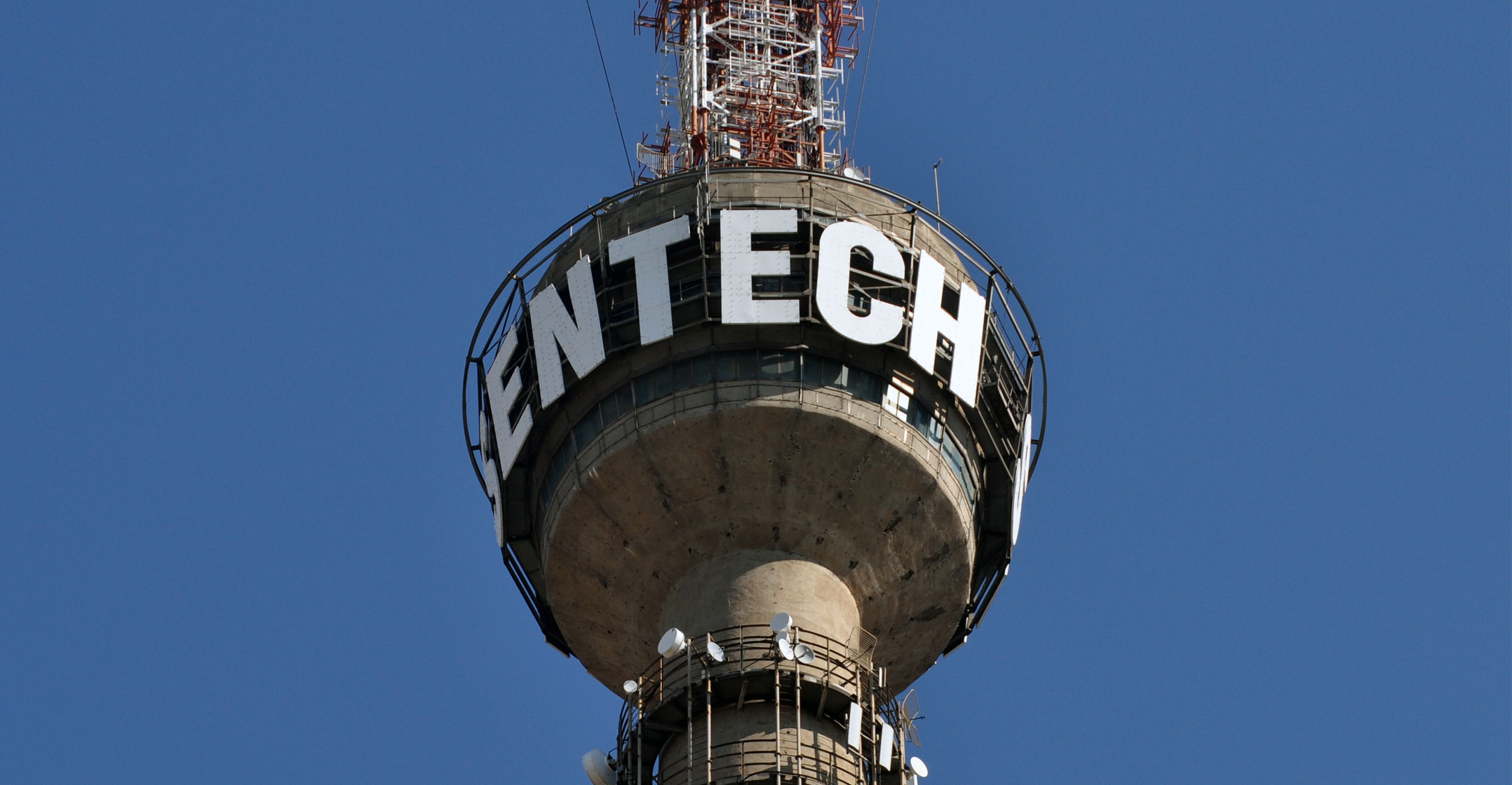
    The Sentech transmitter in Auckland Park, Johannesburg

    This Friday and next Monday, communications regulator Icasa will host public hearings on its market inquiry into signal distribution service in South Africa.

    Signal distribution companies and their clients, including Sentech, the SABC, MultiChoice, eMedia and Primedia, have all submitted comments in support of their own interests.

    The purpose of the inquiry is to assess the state of competition in signal distribution services and determine whether the signal distribution services value chain may warrant regulation.

    The discussion paper could have contained one line: “Sentech has a monopoly on signal distribution. What to do?”

    The purpose of competition is not to accommodate rivals. The purpose of competition is to crush them

    Instead, there are 48 turgid pages trying to define and regulate every tiny cog in the entire industry.

    If this sounds like central planning, you’d be correct. The law accords the regulator broad powers to place restrictions on market participants, supposedly in the interests of healthy competition. If any party is too successful, for example, the regulator is expected to cut them down to size. If any party is less successful, the regulator is expected to cut their rivals down to size.

    The ideal market structure, in the eyes of the government, is one in which several participants control minority shares of the market, no participants control more than half, and small participants are always viable and successful.

    Even though dominant players in the market largely achieved their success because of myopic market intervention in the past which restricted competition, it is nonsensical to think that a regulator can, to use the words of the regulator itself, “identify and define relevant markets in the provision of signal distribution services, determine the effectiveness of competition in the relevant markets, determine licensees with significant market power, and identify suitable pro-competitive remedies where competition is found to be ineffective”.

    Fluid and ever-changing

    This is not how free markets work. Markets are fluid. Technology is ever-changing. Business models are overtaken by hungry competitors. New entrants threaten incumbents. Competition changes markets.

    The purpose of competition is not to establish a happy equilibrium between competitors, in which each has a “fair share” of the market. The purpose of competition is to be better at providing goods or services than your rivals, and so earn as large a share of the market as possible. The purpose of competition is not to accommodate rivals. The purpose of competition is to crush them.

    This is not necessarily a bad thing. A dominant participant in a market may occupy that position because it really does offer the best combination of price and quality for its customers. It may also be better placed to invest in the research and development needed to improve on its products, which it would do in response to competitive threats from smaller rivals.

    The notion that a regulator can define a market in a static manner, and then manipulate it so that there is “effective competition” within that artificially defined market, is absurd.

    No single entity, whether they’re a market participant or a regulator, can ever have all the information necessary to determine which products and services are needed or wanted by consumers, and by which means those products and services might best be produced. This is the economic calculation problem, in a nutshell.

    Read: SABC and e.tv accuse Sentech of price gouging

    Government may think that a multi-year “market inquiry” can provide that information, but even if it offers a painfully comprehensive snapshot of how the market operates at a given point in time, that snapshot will be outdated before the ink has dried on any policies based upon it.

    Reading the submissions from various stakeholders – consumers of these services being notably absent – gives a good overview of the inadequacy of the regulator’s approach.

    Read: Sentech gets a bad signal (paywall)

    Sentech wants the entire discussion document and market inquiry to be withdrawn, since it says there are a host of other policy, regulatory and other processes that already cover most of the ground.

    Just the list of such processes underscores the byzantine complexity of trying to regulate just one economic sector: “1) Draft white paper on audio and audio-visual content services policy framework; 2) Digital sound broadcasting regulations; 3) Broadcasting digital migration policy; 4) Digital migration regulations; 5) Promotion of diversity and competition on digital terrestrial television regulations; 6) Terrestrial broadcasting frequency plan 2013; 7) Restacking process; 8) State-owned entity rationalisation process; and 9) Facilities-leasing regulations.”

    The real reason Sentech doesn’t like the inquiry is, of course, that it is the monopoly provider of signal distribution services, and it can charge whatever it likes.

    The SABC, unsurprisingly, is unhappy with Sentech’s pricing. In addition, it says that regulations hamper competition by being far too specific and not neutral to the underlying technology.

    eMedia complains that this market inquiry should have happened more than a decade ago, and that the failure of the regulator to act has caused broadcasters financial harm by permitting Sentech to abuse its monopoly.

    The author, Ivo Vegter, argues that there should be far less regulation to promote competition

    Primedia points out that although the discussion document claims there are “low barriers to entry” into the managed transmission services market by which radio broadcasts are distributed, the fact that Sentech continues to enjoy a monopoly even though other licensees are in principle entitled to offer competing services, proves that this is not true.

    MultiChoice points out that the discussion document conflates transmission technologies and retail audio-visual services, and further conflates market activities when it imposes obligations upon signal distributors to carry public broadcaster channels when this is in fact a function of broadcasting services.

    It also repeats an old complaint against streaming services, which use the Internet to distribute audio-visual content.

    The discussion document dismisses such services entirely, when it says: “Today in South Africa, the majority of end users receive radio and television via terrestrial networks or by satellite. The authority (Icasa) notes that there are some end users that access broadcasting content over alternative delivery platforms such as using broadband connections (such as streaming services…) and using existing mobile networks. However, the authority’s view is that these alternative technology platforms are not considered as signal distribution.”

    Read: SABC heads to commission in fees fight with Sentech

    MultiChoice argues, rightly so, that streaming services constitute direct competition to broadcasters, and that the Internet, by analogy, constitutes direct competition to signal distributors. Any audio-visual content provider can opt to deliver services via the Internet, instead of via signal distributors, at any time.

    Furthermore, those end users who do use these services, even if in the minority, also constitute the most profitable end of the market, are rapidly growing in number, and largely overlap with the market that can afford MultiChoice’s own services.

    Read: Internet will ‘fundamentally change’ our industry: MultiChoice

    The company has previously (during an entirely separate inquiry into subscription broadcasting services) lobbied for regulations to be imposed on streaming services like Netflix, in order to level the competitive playing field.

    ‘If you look at the [streaming] players, they are unregulated; they don’t have to have a licence, they don’t have to produce local content, they don’t have to employ anybody in this country, and they don’t have to pay any taxes,” the company’s CEO, Calvo Mawela, told ITWeb in 2019.

    It is clear from the discussion document and the industry responses that the legal requirement for the government to define markets and market segments in order to impose regulations that promote competition results in absurdities. No single entity, least of all the regulator, can understand market dynamics well enough, and act timeously enough, to actually improve that market. The heavy layers of regulation also reduce the flexibility of regulated entities to adapt to changes in technology and market demand.

    Attempts to monitor and control the entire market actively stifle competition, reduce quality, raise prices and hamstring technological progress. Regulating to promote competition is a contradiction in terms. The regulator should deregulate to promote competition.

    • Ivo Vegter, a former technology journalist and a columnist for the Institute for Race Relations, writes in defence of free markets and individual liberty. This article was commissioned by the Free Market Foundation. The views expressed in the article are the author’s and are not necessarily shared by the members of the foundation or by TechCentral



    eMedia eMedia Holdings Icasa Ivo Vegter MultiChoice SABC Sentech
    Subscribe to TechCentral Subscribe to TechCentral
    Share. Facebook Twitter LinkedIn WhatsApp Telegram Email Copy Link
    Previous ArticleEthereum overhaul risks creating a new class of crypto kingpins
    Next Article Vodafone continues to offload assets: Hungary deal reached

    Related Posts

    Canal+ plays hardball - and DStv viewers feel the pain

    Canal+ plays hardball – and DStv viewers feel the pain

    3 December 2025
    Channel blackout looms at DStv as Warner Bros talks hit deadlock

    Channel blackout looms at DStv as Warner Bros talks hit deadlock

    1 December 2025
    Canal+ moves to stem slide in DStv subscribers

    Canal+ moves to stem slide in DStv subscribers

    1 December 2025
    Company News
    AI is not a technology problem - iqbusiness

    AI is not a technology problem – iqbusiness

    5 December 2025
    Telcos are sitting on a data gold mine - but few know what do with it - Phillip du Plessis

    Telcos are sitting on a data gold mine – but few know what do with it

    4 December 2025
    Unlock smarter computing with your surface Copilot+ PC

    Unlock smarter computing with your Surface Copilot+ PC

    4 December 2025
    Opinion
    Your data, your hardware: the DIY AI revolution is coming - Duncan McLeod

    Your data, your hardware: the DIY AI revolution is coming

    20 November 2025
    Zero Carbon Charge founder Joubert Roux

    The energy revolution South Africa can’t afford to miss

    20 November 2025
    It's time for a new approach to government IT spend in South Africa - Richard Firth

    It’s time for a new approach to government IT spend in South Africa

    19 November 2025

    Subscribe to Updates

    Get the best South African technology news and analysis delivered to your e-mail inbox every morning.

    Latest Posts
    AI is not a technology problem - iqbusiness

    AI is not a technology problem – iqbusiness

    5 December 2025
    Vodacom to take control of Safaricom in R36-billion deal - Shameel Joosub

    Vodacom to take control of Safaricom in R36-billion deal

    4 December 2025
    Black Friday goes digital in South Africa as online spending surges to record high

    Black Friday goes digital in South Africa as online spending surges to record high

    4 December 2025
    BYD takes direct aim at Toyota with launch of sub-R500 000 Sealion 5 PHEV

    BYD takes direct aim at Toyota with launch of sub-R500 000 Sealion 5 PHEV

    4 December 2025
    © 2009 - 2025 NewsCentral Media
    • Cookie policy (ZA)
    • TechCentral – privacy and Popia

    Type above and press Enter to search. Press Esc to cancel.

    Manage consent

    TechCentral uses cookies to enhance its offerings. Consenting to these technologies allows us to serve you better. Not consenting or withdrawing consent may adversely affect certain features and functions of the website.

    Functional Always active
    The technical storage or access is strictly necessary for the legitimate purpose of enabling the use of a specific service explicitly requested by the subscriber or user, or for the sole purpose of carrying out the transmission of a communication over an electronic communications network.
    Preferences
    The technical storage or access is necessary for the legitimate purpose of storing preferences that are not requested by the subscriber or user.
    Statistics
    The technical storage or access that is used exclusively for statistical purposes. The technical storage or access that is used exclusively for anonymous statistical purposes. Without a subpoena, voluntary compliance on the part of your Internet Service Provider, or additional records from a third party, information stored or retrieved for this purpose alone cannot usually be used to identify you.
    Marketing
    The technical storage or access is required to create user profiles to send advertising, or to track the user on a website or across several websites for similar marketing purposes.
    • Manage options
    • Manage services
    • Manage {vendor_count} vendors
    • Read more about these purposes
    View preferences
    • {title}
    • {title}
    • {title}