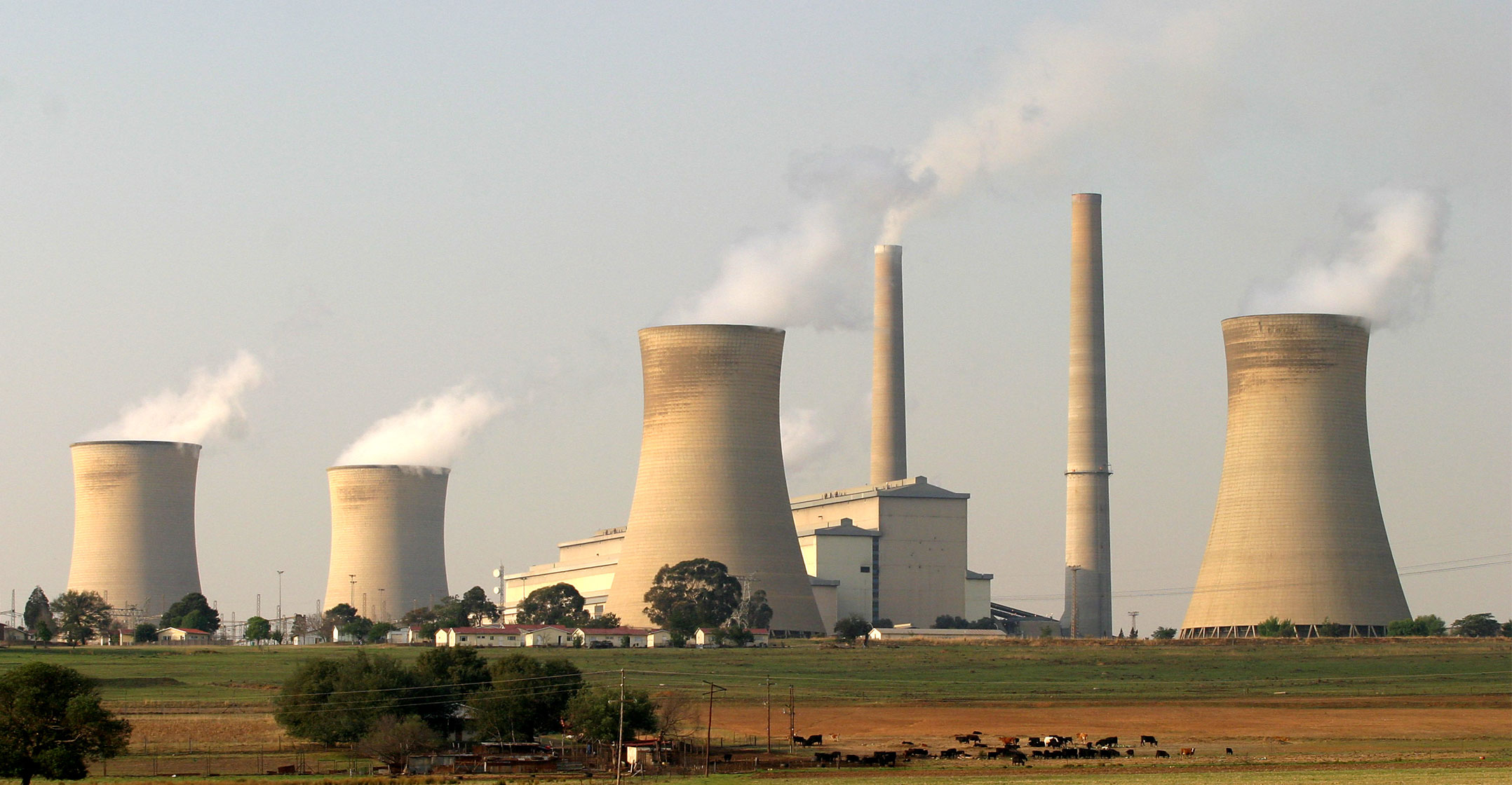
Close Menu
TechCentralTechCentral

    Subscribe to the newsletter

    Get the best South African technology news and analysis delivered to your e-mail inbox every morning.

    Facebook X (Twitter) YouTube LinkedIn
    WhatsApp Facebook X (Twitter) LinkedIn YouTube
    TechCentralTechCentral
    • News
      MTN to buy back its own towers in R35-billion deal - Ralph Mupita

      MTN to buy back its own cellular towers in R35-billion deal

      17 February 2026
      Icasa gears up for South Africa's next big spectrum auction - Tshiamo Maluleka-Disemelo

      Icasa gears up for South Africa’s next big spectrum auction

      17 February 2026
      Not enough: Eskom unions spurn above-inflation wage offer

      Not enough: Eskom unions spurn above-inflation wage offer

      17 February 2026
      SA firms turn to automated dispatch as crime perception soars

      SA firms turn to automated dispatch as crime perception soars

      17 February 2026
      Blu Label lands energy trading licence from Nersa - Mark Levy

      Blu Label lands electricity trading licence from Nersa

      17 February 2026
    • World
      More drama in Warner Bros tug of war

      More drama in Warner Bros tug of war

      17 February 2026
      Russia bans WhatsApp

      Russia bans WhatsApp

      12 February 2026
      EU regulators take aim at WhatsApp

      EU regulators take aim at WhatsApp

      9 February 2026
      Musk hits brakes on Mars mission

      Musk hits brakes on Mars mission

      9 February 2026
      Crypto firm accidentally sends R700-billion in bitcoin to its users

      Crypto firm accidentally sends R700-billion in bitcoin to its users

      8 February 2026
    • In-depth
      How liberalisation is rewiring South Africa's power sector

      How liberalisation is rewiring South Africa’s power sector

      21 January 2026
      The top-performing South African tech shares of 2025

      The top-performing South African tech shares of 2025

      12 January 2026
      Digital authoritarianism grows as African states normalise internet blackouts

      Digital authoritarianism grows as African states normalise internet blackouts

      19 December 2025
      TechCentral's South African Newsmakers of 2025

      TechCentral’s South African Newsmakers of 2025

      18 December 2025
      Black Friday goes digital in South Africa as online spending surges to record high

      Black Friday goes digital in South Africa as online spending surges to record high

      4 December 2025
    • TCS
      Watts & Wheels S1E4: 'We drive an electric Uber'

      Watts & Wheels S1E4: ‘We drive an electric Uber’

      10 February 2026
      TCS+ | How Cloud On Demand is helping SA businesses succeed in the cloud - Xhenia Rhode, Dion Kalicharan

      TCS+ | Cloud On Demand and Consnet: inside a real-world AWS partner success story

      30 January 2026
      Watts & Wheels S1E4: 'We drive an electric Uber'

      Watts & Wheels S1E3: ‘BYD’s Corolla Cross challenger’

      30 January 2026
      Watts & Wheels S1E4: 'We drive an electric Uber'

      Watts & Wheels S1E2: ‘China attacks, BMW digs in, Toyota’s sublime supercar’

      23 January 2026

      TCS+ | Why cybersecurity is becoming a competitive advantage for SA businesses

      20 January 2026
    • Opinion
      A million reasons monopolies don't work - Duncan McLeod

      A million reasons monopolies don’t work

      10 February 2026
      The author, Business Leadership South Africa CEO Busi Mavuso

      Eskom unbundling U-turn threatens to undo hard-won electricity gains

      9 February 2026
      South Africa's skills advantage is being overlooked at home - Richard Firth

      South Africa’s skills advantage is being overlooked at home

      29 January 2026
      Why Elon Musk's Starlink is a 'hard no' for me - Songezo Zibi

      Why Elon Musk’s Starlink is a ‘hard no’ for me

      26 January 2026
      A million reasons monopolies don't work - Duncan McLeod

      South Africa’s new fibre broadband battle

      20 January 2026
    • Company Hubs
      • Africa Data Centres
      • AfriGIS
      • Altron Digital Business
      • Altron Document Solutions
      • Altron Group
      • Arctic Wolf
      • AvertITD
      • Braintree
      • CallMiner
      • CambriLearn
      • CYBER1 Solutions
      • Digicloud Africa
      • Digimune
      • Domains.co.za
      • ESET
      • Euphoria Telecom
      • Incredible Business
      • iONLINE
      • IQbusiness
      • Iris Network Systems
      • LSD Open
      • Mitel
      • NEC XON
      • Netstar
      • Network Platforms
      • Next DLP
      • Ovations
      • Paracon
      • Paratus
      • Q-KON
      • SevenC
      • SkyWire
      • Solid8 Technologies
      • Telit Cinterion
      • Tenable
      • Vertiv
      • Videri Digital
      • Vodacom Business
      • Wipro
      • Workday
      • XLink
    • Sections
      • AI and machine learning
      • Banking
      • Broadcasting and Media
      • Cloud services
      • Contact centres and CX
      • Cryptocurrencies
      • Education and skills
      • Electronics and hardware
      • Energy and sustainability
      • Enterprise software
      • Financial services
      • Information security
      • Internet and connectivity
      • Internet of Things
      • Investment
      • IT services
      • Lifestyle
      • Motoring
      • Public sector
      • Retail and e-commerce
      • Satellite communications
      • Science
      • SMEs and start-ups
      • Social media
      • Talent and leadership
      • Telecoms
    • Events
    • Advertise
    TechCentralTechCentral
    Home » Sections » Energy and sustainability » Load shedding: Difficult few months lie ahead for South Africa

    Load shedding: Difficult few months lie ahead for South Africa

    By Staff Reporter5 January 2021
    Twitter LinkedIn Facebook WhatsApp Email Telegram Copy Link
    News Alerts
    WhatsApp

    Eskom has taken Unit One of Koeberg offline earlier than planned for scheduled maintenance after “an increasing leak rate was observed on one of three steam generators”.

    The unit had been scheduled to be taken offline for refuelling and routine maintenance starting in February. Eskom says it expects the unit “to return to service during May 2021”.

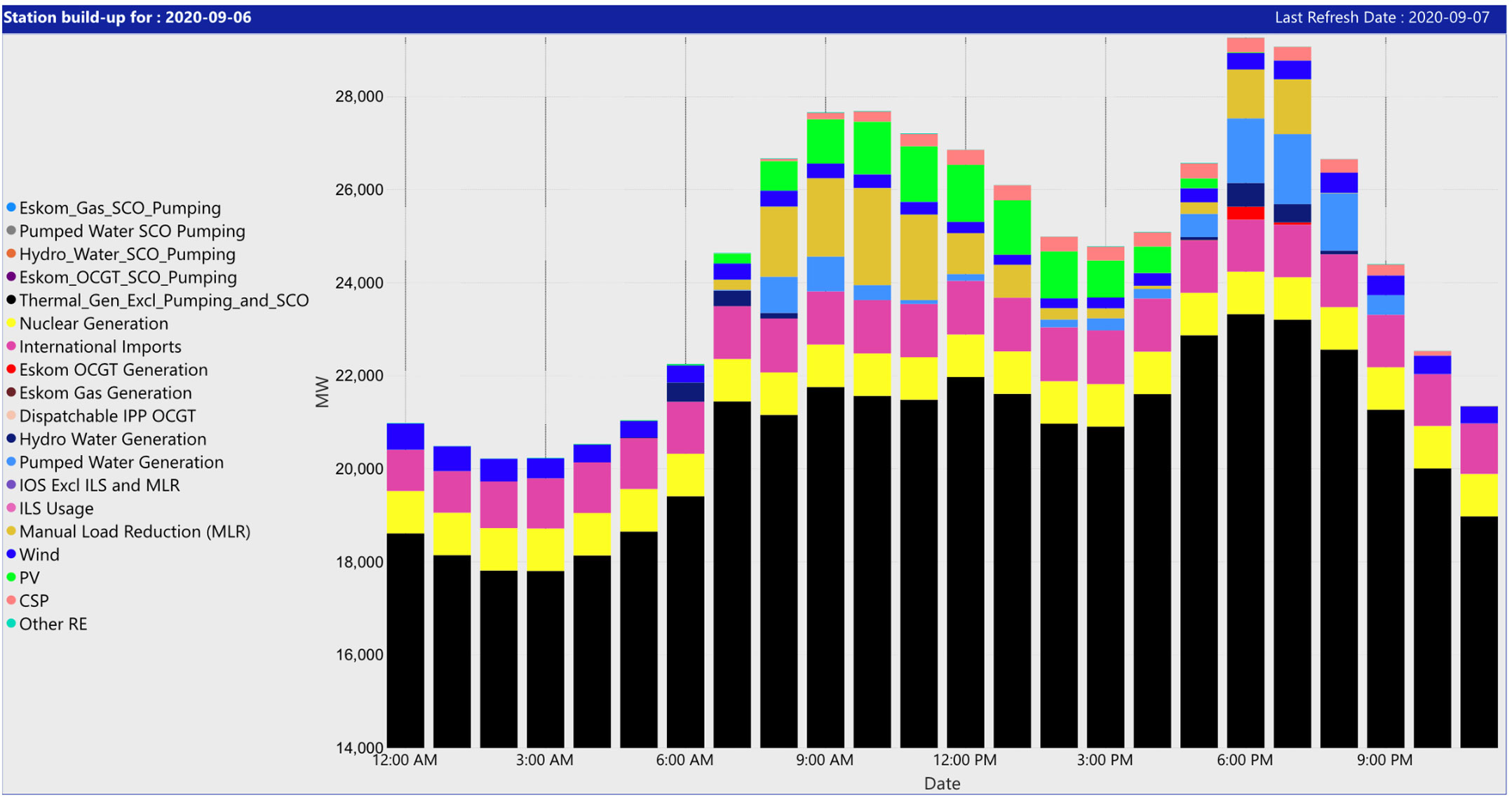
    Koeberg supplies stable and predictable baseload power generation of just more than 1.8GW, which halved after 6pm on Sunday evening when the unit was taken offline (yellow in the chart below). Of concern is the fact that it now has to replace the about 900MW shortfall, especially during the evening peak.

    Source: Eskom

    It continues to use pumped storage schemes — designed for peak periods — for baseload power generation. On Sunday, for example, it used these to generate between 500MW and 1.8GW throughout the day. Once Koeberg 1 was removed from the grid, the usage of these peaked at 2 071MW (at 7pm). Pumped storage schemes are net consumers of power in that they use more electricity to operate than each unit of power they produce. This is what makes them such effective peaking plants – “excess” power is used to pump water uphill overnight when demand is low.

    Last week — historically the lowest-demand period of the year (lockdown level 5, excluded) — the utility was forced to implement stage 2 load shedding overnight. It said this was to “preserve its emergency generation reserves”. From its publicly available dashboards, it is clear that Eskom simply did not have sufficient headroom overnight to use baseload power to replenish its pumped storage schemes (which it was using to augment baseload power throughout the day).
    Source: Eskom

    From its unplanned outage dashboard, it is clear that these outages spiked from around the 9GW level towards 12GW between 28 December and 30 December. It would typically be able to cope with this number of plant breakdowns (and partial losses), but it has deliberately ramped up planned maintenance to the highest level in at least a year. A total in excess of 9GW of capacity was taken out of service last week as the utility continues to catch up on maintenance which was simply not done in past years.

    As plant breakdowns spiked, from its own data one can see that Eskom was forced into using its open-cycle gas turbines (OCGTs) overnight on Monday (28 December). Usage of these peaked at more than 1.3GW before it made the call to implement load shedding. During the evening peak on 29 December, it also made use of interruptible load supply (ILS) where it cut nearly 700MW from its large industrial customers. It did this again during the evening peaks on 30 and 31 December. On 30 December, it called on the independent operators of gas peaking plants to augment supply (in addition to its own OCGT usage of around 1GW).

    Eskom has been relying on approximately 1GW of so-called ‘non-commercial generation’ capacity since 23 December

    Of further concern is that Eskom has been relying on approximately 1GW (and as much as 1.3GW) of so-called “non-commercial generation” capacity since 23 December. These are units at Kusile (Units 2 and 3) and Medupi (Unit 1) that are not yet in commercial operation. In the week prior, it used none of these units. The two Kusile units are slated to achieve commercial operation this month (Unit 2, 800MW) and in March (Unit 3, 800MW) which will go some way to alleviating the generation shortfall. However, all of this capacity is not actually available. The utility identified design defects at both new power plants in November 2018 and work has begun to remedy these.

    Now, with the 900MW shortfall from taking the one unit at Koeberg offline, Eskom will be forced into recalculating its generation plan. It always planned on having these additional units available in early 2021 (plus this doesn’t really change the supply picture as it has been able to call on these units in a similar way to other plants in its fleet).

    Only two levers

    It really only has two levers to work with: Some planned maintenance can be deferred (although this is partly why the utility has such an unreliable coal fleet to begin with), and it can use emergency OCGTs to meet peak demand.

    This is the balancing act it will need to perform for the coming weeks as demand ramps up from the 25GW/26GW level now towards 29GW by mid-month. By the end of this week, those figures are already forecast to be between 26GW and 27GW (the difference between so-called residual demand and contracted demand is made up by renewables).

    Before the forced Koeberg outage, Eskom’s official three-month outlook looked manageable. In its planned risk level, with unplanned outages of 12GW plus a 2.2GW operating reserve, it may be slightly short at certain peaks in the week. It is able to work around this with its available emergency generation resources (pumped storage schemes, its own OCGTs as well as IPP diesel/gas peaking plants and ILS).

    Source: Eskom system status report for week 52 of 2020

    The only way Eskom avoids load shedding is to give itself more headroom (by doing less planned maintenance, which is unlikely) or by ensuring (read: hoping) that it can keep unplanned breakdowns well below the 12GW level. We’ll know whether it’s chosen the former once its weekly system status reports for this week and next are published.

    It’s going to be difficult few months.

    • This article was originally published on Moneyweb and is used here with permission

    Eskom top
    WhatsApp YouTube Follow on Google News Add as preferred source on Google
    Share. Facebook Twitter LinkedIn WhatsApp Telegram Email Copy Link
    Previous ArticleSatellite alerts seen helping fight deforestation in Africa
    Next Article Bitcoin at record above $35 000 as wild price swings resume

    Related Posts

    Not enough: Eskom unions spurn above-inflation wage offer

    Not enough: Eskom unions spurn above-inflation wage offer

    17 February 2026
    Blu Label lands energy trading licence from Nersa - Mark Levy

    Blu Label lands electricity trading licence from Nersa

    17 February 2026
    Nersa blunder triggers sharper electricity tariff increases

    Nersa blunder triggers sharper electricity tariff increases

    9 February 2026
    Company News
    Scaling modern, data-driven farming across Africa - Chris Duvenage

    Scaling modern, data-driven farming across Africa

    17 February 2026
    Why getting your small business online costs less than you think

    Why getting your small business online costs less than you think

    17 February 2026
    Oni-Tel set to reinvigorate dark fibre in South Africa

    Oni-Tel set to reinvigorate dark fibre in South Africa

    17 February 2026
    Opinion
    A million reasons monopolies don't work - Duncan McLeod

    A million reasons monopolies don’t work

    10 February 2026
    The author, Business Leadership South Africa CEO Busi Mavuso

    Eskom unbundling U-turn threatens to undo hard-won electricity gains

    9 February 2026
    South Africa's skills advantage is being overlooked at home - Richard Firth

    South Africa’s skills advantage is being overlooked at home

    29 January 2026

    Subscribe to Updates

    Get the best South African technology news and analysis delivered to your e-mail inbox every morning.

    Latest Posts
    MTN to buy back its own towers in R35-billion deal - Ralph Mupita

    MTN to buy back its own cellular towers in R35-billion deal

    17 February 2026
    Icasa gears up for South Africa's next big spectrum auction - Tshiamo Maluleka-Disemelo

    Icasa gears up for South Africa’s next big spectrum auction

    17 February 2026
    Not enough: Eskom unions spurn above-inflation wage offer

    Not enough: Eskom unions spurn above-inflation wage offer

    17 February 2026
    More drama in Warner Bros tug of war

    More drama in Warner Bros tug of war

    17 February 2026
    © 2009 - 2026 NewsCentral Media
    • Cookie policy (ZA)
    • TechCentral – privacy and Popia

    Type above and press Enter to search. Press Esc to cancel.

    Manage consent

    TechCentral uses cookies to enhance its offerings. Consenting to these technologies allows us to serve you better. Not consenting or withdrawing consent may adversely affect certain features and functions of the website.

    Functional Always active
    The technical storage or access is strictly necessary for the legitimate purpose of enabling the use of a specific service explicitly requested by the subscriber or user, or for the sole purpose of carrying out the transmission of a communication over an electronic communications network.
    Preferences
    The technical storage or access is necessary for the legitimate purpose of storing preferences that are not requested by the subscriber or user.
    Statistics
    The technical storage or access that is used exclusively for statistical purposes. The technical storage or access that is used exclusively for anonymous statistical purposes. Without a subpoena, voluntary compliance on the part of your Internet Service Provider, or additional records from a third party, information stored or retrieved for this purpose alone cannot usually be used to identify you.
    Marketing
    The technical storage or access is required to create user profiles to send advertising, or to track the user on a website or across several websites for similar marketing purposes.
    • Manage options
    • Manage services
    • Manage {vendor_count} vendors
    • Read more about these purposes
    View preferences
    • {title}
    • {title}
    • {title}