Close Menu
TechCentralTechCentral

    Subscribe to the newsletter

    Get the best South African technology news and analysis delivered to your e-mail inbox every morning.

    Facebook X (Twitter) YouTube LinkedIn
    WhatsApp Facebook X (Twitter) LinkedIn YouTube
    TechCentralTechCentral
    • News
      Vuyani Jarana: Mobile coverage masks a deeper broadband failure

      Vuyani Jarana: Mobile coverage masks a deeper broadband failure

      30 January 2026
      SABC Plus to flight Microsoft AI training videos

      SABC Plus to flight Microsoft AI training videos

      30 January 2026
      Fibre ducts

      Fibre industry consolidation in KZN

      30 January 2026
      Watts & Wheels S1E3: 'BYD's Corolla Cross challenger'

      Watts & Wheels S1E3: ‘BYD’s Corolla Cross challenger’

      30 January 2026
      What ordinary South Africans really think of AI

      What ordinary South Africans really think of AI

      30 January 2026
    • World
      Apple acquires audio AI start-up Q.ai

      Apple acquires audio AI start-up Q.ai

      30 January 2026
      SpaceX IPO may be largest in history

      SpaceX IPO may be largest in history

      28 January 2026
      Nvidia throws AI at the weather

      Nvidia throws AI at weather forecasting

      27 January 2026
      Debate erupts over value of in-flight Wi-Fi

      Debate erupts over value of in-flight Wi-Fi

      26 January 2026
      Intel takes another hit - Intel CEO Lip-Bu Tan. Laure Andrillon/Reuters

      Intel takes another hit

      23 January 2026
    • In-depth
      How liberalisation is rewiring South Africa's power sector

      How liberalisation is rewiring South Africa’s power sector

      21 January 2026
      The top-performing South African tech shares of 2025

      The top-performing South African tech shares of 2025

      12 January 2026
      Digital authoritarianism grows as African states normalise internet blackouts

      Digital authoritarianism grows as African states normalise internet blackouts

      19 December 2025
      TechCentral's South African Newsmakers of 2025

      TechCentral’s South African Newsmakers of 2025

      18 December 2025
      Black Friday goes digital in South Africa as online spending surges to record high

      Black Friday goes digital in South Africa as online spending surges to record high

      4 December 2025
    • TCS
      TCS+ | How Cloud On Demand is helping SA businesses succeed in the cloud - Xhenia Rhode, Dion Kalicharan

      TCS+ | Cloud On Demand and Consnet: inside a real-world AWS partner success story

      30 January 2026
      Watts & Wheels S1E3: 'BYD's Corolla Cross challenger'

      Watts & Wheels S1E2: ‘China attacks, BMW digs in, Toyota’s sublime supercar’

      23 January 2026

      TCS+ | Why cybersecurity is becoming a competitive advantage for SA businesses

      20 January 2026
      Watts & Wheels S1E3: 'BYD's Corolla Cross challenger'

      Watts & Wheels: S1E1 – ‘William, Prince of Wheels’

      8 January 2026
      TCS+ | Africa's digital transformation - unlocking AI through cloud and culture - Cliff de Wit Accelera Digital Group

      TCS+ | Cloud without culture won’t deliver AI: Accelera’s Cliff de Wit

      12 December 2025
    • Opinion
      South Africa's skills advantage is being overlooked at home - Richard Firth

      South Africa’s skills advantage is being overlooked at home

      29 January 2026
      Why Elon Musk's Starlink is a 'hard no' for me - Songezo Zibi

      Why Elon Musk’s Starlink is a ‘hard no’ for me

      26 January 2026
      South Africa's new fibre broadband battle - Duncan McLeod

      South Africa’s new fibre broadband battle

      20 January 2026
      AI moves from pilots to production in South African companies - Nazia Pillay SAP

      AI moves from pilots to production in South African companies

      20 January 2026
      South Africa's new fibre broadband battle - Duncan McLeod

      ANC’s attack on Solly Malatsi shows how BEE dogma trumps economic reality

      14 December 2025
    • Company Hubs
      • Africa Data Centres
      • AfriGIS
      • Altron Digital Business
      • Altron Document Solutions
      • Altron Group
      • Arctic Wolf
      • AvertITD
      • Braintree
      • CallMiner
      • CambriLearn
      • CYBER1 Solutions
      • Digicloud Africa
      • Digimune
      • Domains.co.za
      • ESET
      • Euphoria Telecom
      • Incredible Business
      • iONLINE
      • IQbusiness
      • Iris Network Systems
      • LSD Open
      • NEC XON
      • Netstar
      • Network Platforms
      • Next DLP
      • Ovations
      • Paracon
      • Paratus
      • Q-KON
      • SevenC
      • SkyWire
      • Solid8 Technologies
      • Telit Cinterion
      • Tenable
      • Vertiv
      • Videri Digital
      • Vodacom Business
      • Wipro
      • Workday
      • XLink
    • Sections
      • AI and machine learning
      • Banking
      • Broadcasting and Media
      • Cloud services
      • Contact centres and CX
      • Cryptocurrencies
      • Education and skills
      • Electronics and hardware
      • Energy and sustainability
      • Enterprise software
      • Financial services
      • Information security
      • Internet and connectivity
      • Internet of Things
      • Investment
      • IT services
      • Lifestyle
      • Motoring
      • Public sector
      • Retail and e-commerce
      • Satellite communications
      • Science
      • SMEs and start-ups
      • Social media
      • Talent and leadership
      • Telecoms
    • Events
    • Advertise
    TechCentralTechCentral
    Home » In-depth » Microsoft closer to quantum computer based on elusive particle

    Microsoft closer to quantum computer based on elusive particle

    By Agency Staff29 March 2018
    Twitter LinkedIn Facebook WhatsApp Email Telegram Copy Link
    News Alerts
    WhatsApp
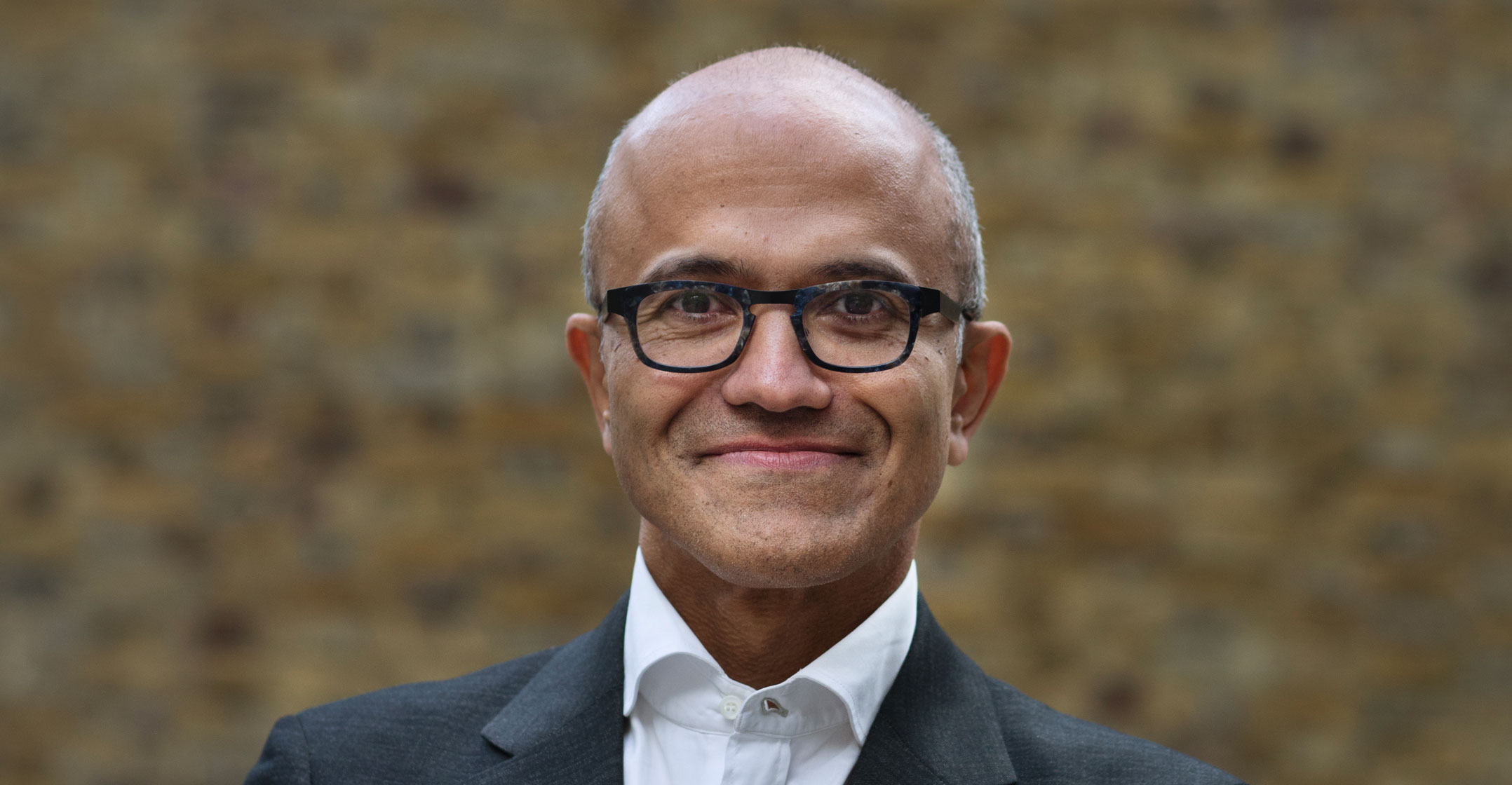
    Microsoft CEO Satya Nadella

    At Microsoft’s Dutch research facility at the Delft University of Technology, several large cylindrical metal tubes hang from the ceiling.

    Each tube — a dilution refrigerator used to cool circuits down to temperatures colder than deep space — costs more than US$500 000, and has helped Microsoft’s researchers create an elusive subatomic particle that the company hopes will serve as the building block of its effort to create commercially viable quantum computers.

    The scientists say they have clear evidence of the creation of Majorana fermions — an elementary particle that its own anti-particle — in a tiny wire that is composed of both semiconducting and superconducting materials, according to research published in the journal Nature on Wednesday.

    The unique properties of these fermions means that they could be used to create quantum computers with much lower error rates than the designs being trialled by rival companies

    The unique properties of these fermions means that they could be used to create quantum computers with much lower error rates than the designs being trialled by rival companies such as IBM and Google, which are also racing to bring quantum computers to market. Currently, those other designs produce too many errors in their calculations to be useful for practical applications, such as the ability to create new chemical catalysts or break the most popular forms of encryption.

    Microsoft will now attempt to braid these tiny fermions to create qubits — the fundamental calculating hardware used in quantum computers. Satya Nadella, Microsoft’s CEO, has said that quantum computing is one of three breakthrough technologies — the others are artificial intelligence and augmented reality — that will be critical to the future of the company. Microsoft hopes to eventually rent time on quantum computers to businesses through its cloud computing network.

    So far, Microsoft’s efforts have trailed some of its competitors. D-Wave Systems in 2011 became the first company to sell a quantum computer, although its technology can only perform a certain subset of mathematical problems. Google and IBM have machines that are thought to be close to achieving “quantum supremacy” — the ability to tackle a problem too complex to solve on any standard supercomputer.

    Microsoft, in contrast, hasn’t yet managed to create a working qubit.

    Significant resources

    The company has devoted significant resources to prove that it can use Majorana fermions to build a less error-prone — and thus potentially more useful — machine. The existence of particles that would also contain their own anti-particle was postulated by Italian theoretical physicist Ettore Majorana in 1937. But researchers only observed evidence suggesting the unique fermions actually existed in 2012. But, as the Microsoft researchers write in Nature, data from these earlier experiments “were noisy”, leading sceptics to speculate that they could be caused by other phenomena. In the new paper, the Microsoft scientists offer much clearer data that, the company says, should silence any remaining doubters.

    The US tech company has assembled a globe-spanning team of scientists for its quantum effort, working at labs in the US, the Netherlands, Denmark and Australia. It has also put one of its most experienced executives, Todd Holmdahl, who previously delivered both the Xbox game console and the HoloLens augmented reality goggles, in charge of the project. Holmdahl said in an interview with Bloomberg in November that Microsoft would have a quantum computer on the market within five years.

    It’s harder to get accurate measurements at higher magnetic energies. So far we haven’t seen evidence of this transition to topological phase

    At Delft, Leo Kouwenhoven, a physicist who now works as the principal researcher for the company, gave a tour of the lab, which is also shared by academics working on several different approaches to building a quantum computer — including a rival team that is funded by Intel. Microsoft soon plans to move into an entire wing of a different building as it scales up its quantum computing project.

    Next to a few of the fridges are giant metal doughnuts — 68kg magnets that the Microsoft team is using to try to create the braiding, essential for their qubits to be less error prone. The magnets, Kouwenhoven admits, are a double-edged sword, as their size and weight also make the experiments more difficult to run. He said Microsoft believes the calculations of its quantum computer — assuming it actually manages to create one — will be between 1 000 and 10 000 times more accurate than what existing machines have been able to achieve.

    Kouwenhoven said it is his group’s goal to have produced a working qubit using Majorana fermions by the end of this year. On the floor above where the refrigerators are installed, young graduate students sit at computers analysing colourful graphic displays that show what is happening inside the circuitry deep within the refrigerator. Kouwenhoven stops to ask if one if he has been able to see indications of Majorana fermions braiding as they have ramped up the power of their magnets. “No,” the student shakes his head. Kouwenhoven shrugs. “It’s harder to get accurate measurements at higher magnetic energies,” he says. “So far we haven’t seen evidence of this transition to topological phase.” Theory, Kouwenhoven knows, is on his side. But, as Microsoft’s rivals push ahead with commercialisation of quantum computers based on different technology, time may not be.  — Reported by Jeremy Kahn, (c) 2018 Bloomberg LP



    Google IBM Intel Leo Kouwenhoven Microsoft top
    WhatsApp YouTube Follow on Google News Add as preferred source on Google
    Share. Facebook Twitter LinkedIn WhatsApp Telegram Email Copy Link
    Previous ArticleFacebook to limit use of data brokers for ads
    Next Article Octotel to double down on Cape Town fibre expansion

    Related Posts

    SABC Plus to flight Microsoft AI training videos

    SABC Plus to flight Microsoft AI training videos

    30 January 2026
    What ordinary South Africans really think of AI

    What ordinary South Africans really think of AI

    30 January 2026
    Cloud adoption the weak link in SA's digital government push: Microsoft - Vukani Mngxati

    Cloud adoption the weak link in SA’s digital government push: Microsoft

    29 January 2026
    Company News
    Huawei turns 25 in South Africa, celebrates with major device discounts

    Huawei turns 25 in South Africa, celebrates with major device discounts

    30 January 2026
    Phishing has not disappeared, but it has grown up - KnowBe4

    Phishing has not disappeared, but it has grown up

    30 January 2026
    Smartphone affordability: South Africa's new economic divide - PayJoy

    Smartphone affordability: South Africa’s new economic divide

    29 January 2026
    Opinion
    South Africa's skills advantage is being overlooked at home - Richard Firth

    South Africa’s skills advantage is being overlooked at home

    29 January 2026
    Why Elon Musk's Starlink is a 'hard no' for me - Songezo Zibi

    Why Elon Musk’s Starlink is a ‘hard no’ for me

    26 January 2026
    South Africa's new fibre broadband battle - Duncan McLeod

    South Africa’s new fibre broadband battle

    20 January 2026

    Subscribe to Updates

    Get the best South African technology news and analysis delivered to your e-mail inbox every morning.

    Latest Posts
    Vuyani Jarana: Mobile coverage masks a deeper broadband failure

    Vuyani Jarana: Mobile coverage masks a deeper broadband failure

    30 January 2026
    TCS+ | How Cloud On Demand is helping SA businesses succeed in the cloud - Xhenia Rhode, Dion Kalicharan

    TCS+ | Cloud On Demand and Consnet: inside a real-world AWS partner success story

    30 January 2026
    Huawei turns 25 in South Africa, celebrates with major device discounts

    Huawei turns 25 in South Africa, celebrates with major device discounts

    30 January 2026
    SABC Plus to flight Microsoft AI training videos

    SABC Plus to flight Microsoft AI training videos

    30 January 2026
    © 2009 - 2026 NewsCentral Media
    • Cookie policy (ZA)
    • TechCentral – privacy and Popia

    Type above and press Enter to search. Press Esc to cancel.

    Manage consent

    TechCentral uses cookies to enhance its offerings. Consenting to these technologies allows us to serve you better. Not consenting or withdrawing consent may adversely affect certain features and functions of the website.

    Functional Always active
    The technical storage or access is strictly necessary for the legitimate purpose of enabling the use of a specific service explicitly requested by the subscriber or user, or for the sole purpose of carrying out the transmission of a communication over an electronic communications network.
    Preferences
    The technical storage or access is necessary for the legitimate purpose of storing preferences that are not requested by the subscriber or user.
    Statistics
    The technical storage or access that is used exclusively for statistical purposes. The technical storage or access that is used exclusively for anonymous statistical purposes. Without a subpoena, voluntary compliance on the part of your Internet Service Provider, or additional records from a third party, information stored or retrieved for this purpose alone cannot usually be used to identify you.
    Marketing
    The technical storage or access is required to create user profiles to send advertising, or to track the user on a website or across several websites for similar marketing purposes.
    • Manage options
    • Manage services
    • Manage {vendor_count} vendors
    • Read more about these purposes
    View preferences
    • {title}
    • {title}
    • {title}