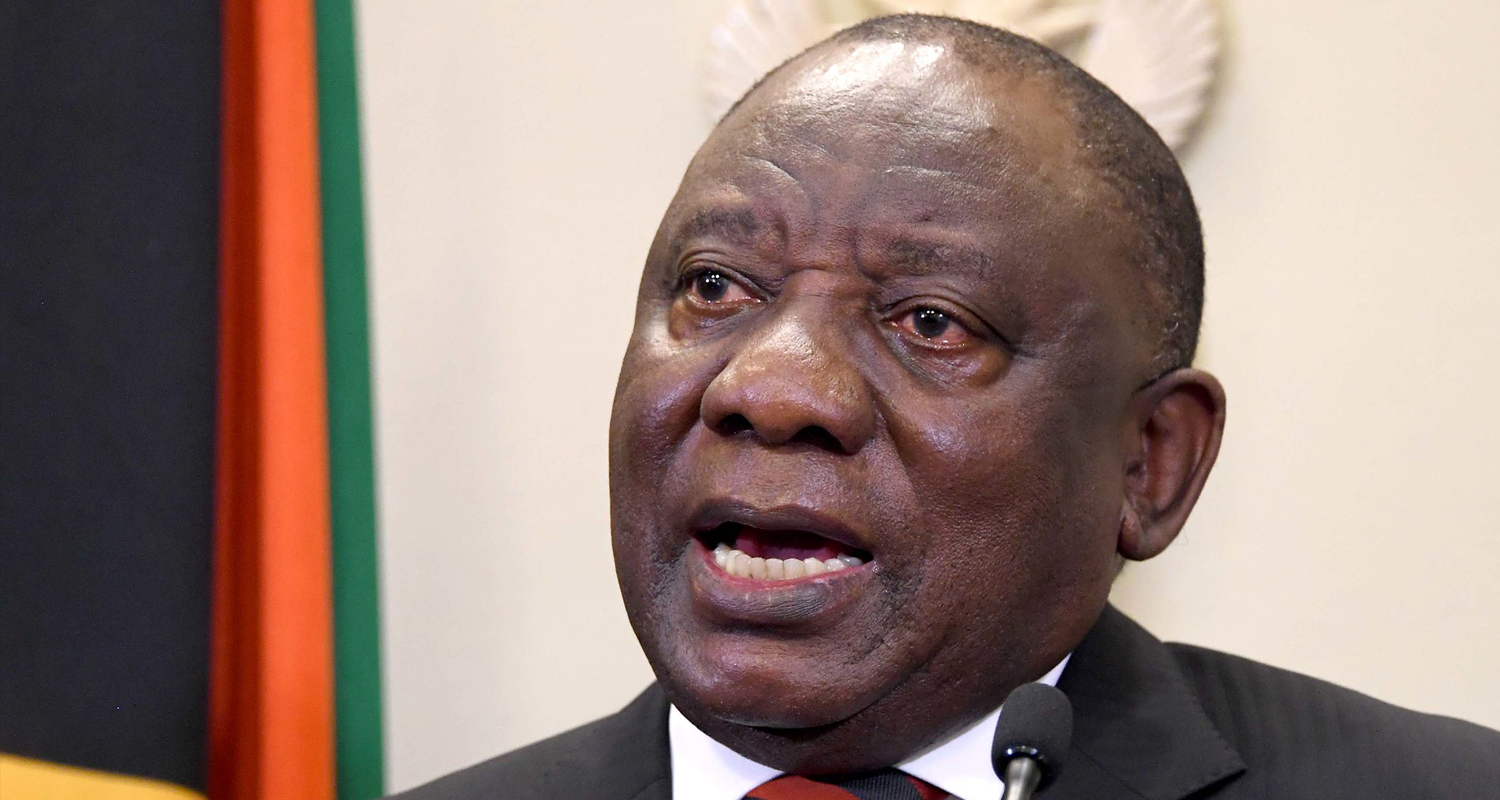
President Cyril Ramaphosa on Monday announced government’s intention to implement various “bold, courageous and decisive actions to close the electricity gap” in South Africa and bring an end to load shedding. Webber Wentzel experts unpack the legal and practical considerations of five key interventions proposed.
1. New generation capacity
Ramaphosa announced that Eskom is taking active steps to add new generation capacity to the grid on an urgent basis. The following noteworthy steps are proposed in order to procure new generation capacity:
i) Surplus capacity bought from generators with excess power
As an immediate measure, Eskom will buy surplus capacity from existing independent power producers (IPPs), mines and other private entities that generate excess power. This will be beneficial for entities that have built projects with excess capacity which can be sold to Eskom.
If Eskom purchases this electricity while the current legislative regime is in place, a determination in terms of section 34 of the Electricity Regulation Act (ERA) will need to be issued. This section states that the minister will identify the procurer and whether or not a procurement process should be followed for that purchase. It remains to be seen how the surplus capacity will be procured and whether or not a procurement process will be required, or whether the section 34 determination will deviate from such a requirement. It is also unclear how the tariff will be determined for the purchase of surplus capacity, especially if no procurement process is followed.
ii) Acceleration of IPP procurement programmes
Some 2.6GW of capacity has been procured through bid window 5 of the Renewable Energy IPP Procurement Programme (REIPPPP), which should add capacity to the grid from early 2024. Efforts are being made to ensure that all bid window 5 projects commence construction as scheduled. These efforts include taking a pragmatic approach to local content requirements (which have been a major difficulty for the bid window 5 projects due to a lack of the requisite manufacturing capacity in the local market) and prioritising the need to build new capacity as quickly as possible.
Clarity is required on what this “pragmatic approach” might entail. Any change to the bid window 5 local content requirements may be subject to legal challenge by unsuccessful bidders on the basis that it results in the procurement process being unfair because it benefits the preferred bidders to the detriment of both unsuccessful bidders or entities that failed to submit a bid as a result of the specified onerous local content requirements. A mitigating factor may be that the relaxation of these requirements would open the door for any such bidders to participate in a less stringent bid window 6.
Some 2GW of capacity has been procured through the Risk Mitigation IPPP Procurement Programme (RMIPPPP). The majority of RMIPPPP projects are struggling to reach financial close, with only three of the 18 selected projects having reached financial close to date. Financial close for RMIPPPP has also been repeatedly postponed from the original date of 31 July 2021. It is noted that no government efforts were specifically mentioned to ensure that RMIPPPP capacity is realised, and it is unclear whether or not government has any plans to prioritise addressing the challenges facing the RMIPPPP projects.
 Ramaphosa has announced that the generation capacity to be procured through REIPPPP bid window 6 will be doubled from 2.6GW to 5.2GW. This significant increase in the bid window 6 generation capacity raises some practical issues:
- The bid submission date for bid window 6 is currently 11 August 2022, which is just under three weeks away from the time of writing. It is not clear whether bidders can expect an extension of the bid submission date, although an extension may not be necessary as previous rounds have been oversubscribed in terms of the megawatts bid.
- As matters stand, only bidders registered under bid window 6 would be entitled to bid projects into bid window 6. New bidders would therefore be excluded from participating in bid window 6 at this stage because they are not registered bidders. It is not clear at this stage whether the department of mineral resources & energy will re-open registration under bid window 6.
- The Eskom network in the Northern Cape faces capacity constraints, with bidders across the various programmes competing for budget quotes on a first come, first served basis. It is unclear whether or not there are any plans or strategies in place to increase the capacity of the Eskom network, particularly in the Northern Cape.
iii) Power purchased from the SAPP
Eskom will purchase power from neighbouring countries, such as Zambia and Botswana, that have excess electricity capacity, through the Southern African Power Pool (SAPP). We note that Eskom is already a member of the SAPP.
If a cross-border project is intended prior to the enactment of new legislation, then there must be due regard of the requirements in regulations 6(4) and 8 of the electricity regulations on new generation capacity (as issued in terms of ERA). These require, among other things, that the minister needs to be satisfied (when issuing a section 34 determination for a cross border project) that adequate agreements, memoranda of understanding or arrangements are in place or will be in place between government and the relevant foreign government or international organisation, as are necessary to enable that cross border project.
iv) Procurement of battery storage and gas-fired power
Eskom will be constructing its first solar and battery storage projects at Komati, Majuba, Lethabo and several other power stations. This will result in over 500 MW being added to the grid. By storing excess power for a later time when it is most needed through battery storage technologies, the grid is able to deploy that power to address demand during peak periods.
A request for proposals for battery storage capacity will be released by September this year, and a further request for proposals for gas power will follow. There was no mention of new coal, nuclear or hydro procurement in the president’s address.
 2. Easing of distributed generation regulations and new legislation
In June 2021, the licensing requirement for generation projects up to 100MW was removed. Ramaphosa has now announced the complete removal of the licensing requirement for embedded generation. This will incentivise further private investment in electricity generation and reduce the lead times to commence construction of projects. While these projects will not require licences, all new generation projects will still have to register with energy regulator Nersa, comply with environmental legislation, and meet technical requirements for grid connection. Although this development is welcomed, some practical concerns arise that will need to be clarified by Nersa:
- The reference to “embedded generation” by the president creates some uncertainty because it is a term that is understood differently in different contexts. For example, it is not clear whether wheeling projects are included or not within this term.
- A question arises about transitional arrangements. What happens to projects that are envisaged to be above the 100MW threshold and have already submitted licence applications to Nersa? Will these applications be carried through, or will they be converted into registration applications? Nersa will need to consider any changes in law in assessing the approach to such projects.
Special legislation will be tabled with parliament on an expedited basis to address the legal and regulatory obstacles to new generation capacity, for a limited period. In the meantime, government will waive or streamline certain regulatory requirements where it is possible to do so within existing legislation. The following has been proposed:
- Reduction of the regulatory requirements for solar projects in areas of low and medium environmental sensitivity.
- Expansion of Eskom power lines and substations without needing to get environmental authorisation in areas of low and medium sensitivity and within the strategic electricity corridors.
- Establishment of a single point of entry for all energy project applications, to ensure co-ordination of approval processes across government.
- Departments and entities are reviewing all existing timeframes to ensure that all applications are processed on an urgent basis.
To meaningfully address legal and regulatory obstacles, the “special legislation” will also need to other regulatory and permitting requirements and provide a regime for how these can be expedited. These include the following:
- Environmental and land consents, such as environmental authorisations, water use licences, heritage consents, agricultural consents, building plan approvals, etc.
- Ministerial approvals in terms of the Subdivision of Agricultural Land Act for the long-term letting or sale of portions of agricultural land.
- Section 53 consents in terms of the Mineral and Petroleum Resources Development Act for use of land surface.
- Local municipal requirements regarding land use (zoning) as well as general compliance with municipal by-laws (such as those relating to water).
- Appeals and review proceedings, including how objections and appeals can be dealt with in an expedited manner.
3. Incentivising investment in rooftop solar through feed-in tariffs
Government has acknowledged the potential for households and businesses to install rooftop solar solutions and to connect this power to the grid. To incentivise greater uptake of rooftop solar, Eskom will develop rules and a pricing structure, known as a “feed-in tariff”, for all commercial and residential installations on its network. This means that those who have installed solar panels in their homes or businesses will be able to sell surplus power to Eskom. There are some complexities here as most of these installations occur within municipal distribution systems rather than Eskom’s transmission systems. It is unclear at this point the extent to which municipalities have bought into this regime and it will be interesting to see what proposals are made to deal with issues of net metering and billing within the municipal system.
 4. Improving the performance of Eskom’s power stations
To address the red tape around buying spares and equipment to effect critical repairs at power stations, it was announced that Eskom’s budget for critical maintenance will be increased over the next 12 months. Eskom is actively recruiting skilled personnel, who will work towards reinstating world-class operating and maintenance procedures.
We suspect Eskom will be relying on emergency procurement procedures which allow deviation from the ordinary requirements to have to go through a competitive tender process in order to buy spares and equipment on an urgent basis. This is something which is self-evidently open to abuse and has the potential to be a vehicle for corruption and looting of this increased budget allocation. It remains to be seen what structural mechanisms will be put in place to ensure that the by-passing of the ordinary processes, with their associated protections, does not result in abuse.
5. The fundamental transformation of the electricity sector
National treasury is finalising a sustainable solution to Eskom’s R400-billion, and the minister of finance, Enoch Godongwana, will outline how this matter will be dealt with in the October mini-budget speech. Government will use climate funding provided through the Just Energy Transition Partnership to invest in the grid and will also repurpose power stations that have reached the end of their lives.
Government has previously announced that the restructuring of Eskom will result in the establishments of three entities, namely an electricity generation entity, an electricity transmission entity and an electricity distribution entity. Eskom has already established an independent transmission company and is on track to separate its generation and distribution businesses by the end of 2022. It will soon be appointing boards for the transmission and generation entities. The grid will remain state owned, despite these interventions. The unbundling of Eskom and the broader reforms to establish a competitive electricity market will allow more generators, both private and state-owned, to compete on an equal footing.
Broader reforms to establish a competitive electricity market will be expedited through the finalisation of the amendment of ERA to promote private sector investment. The second amendment bill to ERA was published in February 2022 and the department of energy has been engaging with various stakeholders to incorporate comments and release an amended bill later in 2022. To ensure that these measures are implemented in a co-ordinated manner, President Ramaphosa has established a National Energy Crisis Committee which is chaired by the director-general in the presidency and brings together all the departments and entities involved in the provision of electricity.
Conclusion
The Government interventions proposed by Ramaphosa to address South Africa’s electricity supply crisis are very positive and long overdue. The implementation of these measures will be critical to rescue South Africans and their economy from the ravages of the ongoing load shedding and lead them towards sustainable economic growth and well-being.
- The authors of all this article, all from Webber Wentzel, are: Jason van der Poel (partner), Mzukisi Kota (partner), Hielien Venter (partner), Aviva Hoekstra (associate) and Emma Bleeker (trainee attorney)
Click here for more South African tech news