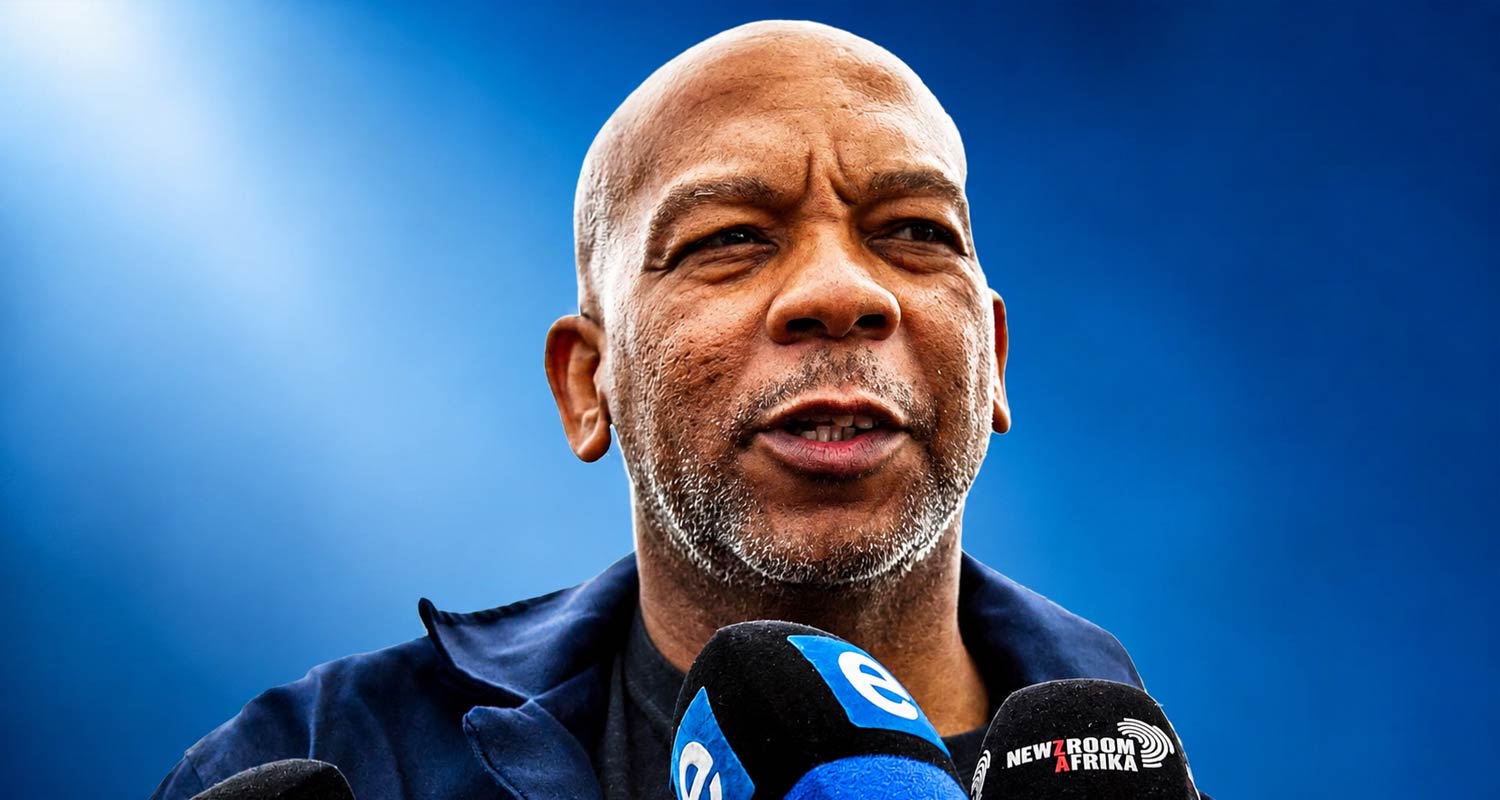
Energy minister Kgosientsho Ramokgopa has warned that rushing South Africa’s wholesale electricity market could collapse the economy, saying Johannesburg would be cut off if the market were running today.
“If the wholesale electricity market were in place today, Johannesburg would be off,” Ramokgopa said at a recent lecture at Wits Business School.
He put the city’s monthly electricity bill at about R1.7-billion, so two skipped payments would leave R3.4-billion unpaid. In a wholesale market, he said, “you will not give electricity to someone who doesn’t pay. So it means the Joburg residents are collateral damage.”
Joburg began defaulting on its Eskom account in October 2023, arguing that it had been overbilled. It settled R5.26-billion in overdue debt in August after the utility threatened to interrupt supply.
Ramokgopa told students he had come “more as a scholar” and that some of his remarks “are not government policy”. He did not flag his comments on the market as personal views.
The planned South African Wholesale Electricity Market, or Sawem, will let generators trade their power, strike bilateral deals or sell to the National Transmission Company South Africa (NTCSA), while distributors choose between a central purchasing agency and other sellers. Ramokgopa called it “very complex”.
“I do caution that the speed with which we enter that market must be measured,” he said.
‘An oncoming train’
He criticised a national habit of being “always in a hurry to do things”, noting that others had been running markets for a decade, “but we want to surpass them”.
“There’s a light there at the end of the tunnel, and it’s not because you are getting out of the tunnel. It’s an oncoming train, and we’re still proceeding,” he said. Moving into the market is “littered with danger”, he said. “In fact, you can collapse the South African economy.
“We’ll get there, but at the pace that we can afford.”
Sawem was originally due to open on 1 April 2026 but slipped to the third quarter. It is now due to begin operating in April 2027.
New market players, including those trading bilaterally, will also have to help fund free electricity for poor households, Ramokgopa said. He argued that Eskom should not carry the subsidy on its own.
“We give people electricity for free, the poor in this country. So, it’s not the responsibility just of Eskom,” he said. “You can enter into a bilateral, but we are going to get you on the wheeling. There will be a fee that is meant for the social outcome. So, it’s not like free market in the true sense of free market.”
He did not say how large the fee would be.
He also wants Eskom freed from the approvals that slow it down so it can compete with the private sector, where a board can approve purchases by round-robin resolution, signed by directors without a meeting. At Eskom, with the Public Finance Management Act, the board and the minister to satisfy, the same decision could take four months, he said. “Let the games begin, but the rules must be the same for everyone.”
Power left on the table
On regional trade, Ramokgopa said connected neighbours face a deficit of about 6GW, while South Africa has an average surplus of about 4GW. A rough calculation by his team showed the country had lost about R49-billion in potential revenue over a year, he said.
Government plans to strengthen regional interconnectors to export the surplus, but only once local demand and headroom for economic growth have been secured.
“Before we think of exporting the electrons, we must be satisfied that we are able to meet our own demand,” he said. – (c) 2026 NewsCentral Media