Close Menu
TechCentralTechCentral

    Subscribe to the newsletter

    Get the best South African technology news and analysis delivered to your e-mail inbox every morning.

    Facebook X (Twitter) YouTube LinkedIn
    WhatsApp Facebook X (Twitter) LinkedIn YouTube
    TechCentralTechCentral
    • News
      Home affairs opens visa fast lane - with tech talent a top priority

      Home affairs opens visa fast lane – with tech talent a top priority

      21 July 2026
      Skills authority to probe MICT Seta leadership crisis - Buti Manamela

      Skills authority to probe MICT Seta leadership crisis

      21 July 2026
      Mastercard bets billions on the tech that could eat its lunch - Prakriti Singh

      Mastercard bets billions on the tech that could eat its lunch

      21 July 2026
      From care homes to production lines, the robots are coming

      From care homes to production lines, the robots are coming

      21 July 2026
      Remote work in South Africa hits record high

      Remote work in South Africa hits record high

      21 July 2026
    • World
      Meta AI will now tell parents if their teen is in crisis

      Meta AI will now tell parents if their teen is in crisis

      17 July 2026
      IBM shares crash 25% as AI upends software spending - Arvind Krishna

      IBM shares crash 25% as AI upends software spending

      15 July 2026
      Jony Ive's first OpenAI device: an AI smart speaker - Jony Ive and Sam Altman

      Jony Ive’s first OpenAI device: an AI smart speaker

      15 July 2026
      Stripe, Advent in talks to buy PayPal for $53-billion

      Stripe, Advent in talks to buy PayPal for $53-billion

      15 July 2026
      Memory crisis sends smartphone market into steep decline

      Memory crisis sends smartphone market into steep decline

      13 July 2026
    • In-depth
      The plan to stop AI from breaking the world - Google DeepMind CEO Demis Hassabis. Image: John Sears

      The plan to stop AI from breaking the world

      16 July 2026
      The internet has a Strait of Hormuz problem

      The internet has a Strait of Hormuz problem

      15 July 2026
      AI boom sparks rally, frenzy and fear

      AI boom sparks rally, frenzy and fear

      11 June 2026
      Every plug-in hybrid on sale in South Africa, ranked by price - Lamborghini Temerario

      Every plug-in hybrid on sale in South Africa, ranked by price

      7 June 2026
      What Wi-Fi 8 will mean for wireless networks

      What Wi-Fi 8 will mean for wireless networks

      1 June 2026
    • TCS
      Watts & Wheels S1E7: 'Ferrari's EV breaks the internet'

      Watts & Wheels S1E7: ‘Ferrari’s EV breaks the internet’

      8 July 2026
      TCS+ | How Tracker is turning vehicle data into business strategy - Silvia Schollenberger

      TCS+ | How Tracker is turning vehicle data into business strategy

      1 July 2026
      TCS+ | IBM Bob: an AI-powered 'development partner' for the enterprise - David Spurway

      TCS+ | IBM Bob: an AI-powered development partner for the enterprise

      30 June 2026
      Watts & Wheels S1E6: 'A flawless Alfa and a bakkie that divides'

      Watts & Wheels S1E6: ‘A flawless Alfa and a bakkie that divides’

      17 June 2026
      Watts & Wheels S1E6: 'A flawless Alfa and a bakkie that divides'

      Watts & Wheels S1E5: ‘A Bentley of the bush and a car that swims’

      8 June 2026
    • Opinion
      Selling vapour is corporate suicide in slow motion - Jannie van Zyl

      Selling vapour is corporate suicide in slow motion

      16 July 2026
      Brazil's online gambling crackdown is a lesson for South Africa

      How Amazon outmanoeuvred Starlink in South Africa

      15 July 2026
      The Popia problem with agentic AI - Herman Haasbroek

      The Popia problem with agentic AI

      14 July 2026
      The author, Fanie van Rooyen

      South Africa can still catch the AI wave – here’s how

      7 July 2026
      The author, Fanie van Rooyen

      The AI utopia South Africa can’t afford

      1 July 2026
    • Company Hubs
      • 1Stream
      • Africa Data Centres
      • AfriGIS
      • Altron Digital Business
      • Altron Document Solutions
      • Altron Group
      • Arctic Wolf
      • Ascent Technology
      • AvertITD
      • BBD
      • Braintree
      • CallMiner
      • CambriLearn
      • CM Telecom
      • Contactable
      • CYBER1 Solutions
      • Digicloud Africa
      • Digimune
      • Domains.co.za
      • ESET
      • Euphoria Telecom
      • HOSTAFRICA
      • Incredible Business
      • iONLINE
      • IQbusiness
      • Iris Network Systems
      • Kaspersky
      • LSD Open
      • Mitel
      • NEC XON
      • Netstar
      • Network Platforms
      • Next DLP
      • Ovations
      • Paracon
      • Paratus
      • Q-KON
      • SevenC
      • SkyWire
      • Solid8 Technologies
      • Telit Cinterion
      • Telviva
      • Tenable
      • Vertiv
      • Videri Digital
      • Vodacom Business
      • Wipro
      • Workday
      • XLink
    • Sections
      • AI and machine learning
      • Banking
      • Broadcasting and Media
      • Cloud services
      • Contact centres and CX
      • Cryptocurrencies
      • Education and skills
      • Electronics and hardware
      • Energy and sustainability
      • Enterprise software
      • Financial services
      • HealthTech
      • Information security
      • Internet and connectivity
      • Internet of Things
      • Investment
      • IT services
      • Lifestyle
      • Policy and regulation
      • Public sector
      • Retail and e-commerce
      • Satellite communications
      • Science
      • SMEs and start-ups
      • Social media
      • Talent and leadership
      • Telecoms
      • Watts & Wheels
    • Events
    • Advertise
    TechCentralTechCentral
    Home » News » SA cops may soon wear body cameras

    SA cops may soon wear body cameras

    By The Conversation16 October 2015
    Twitter LinkedIn Facebook WhatsApp Email Telegram Copy Link
    News Alerts
    WhatsApp

    body-camera-640

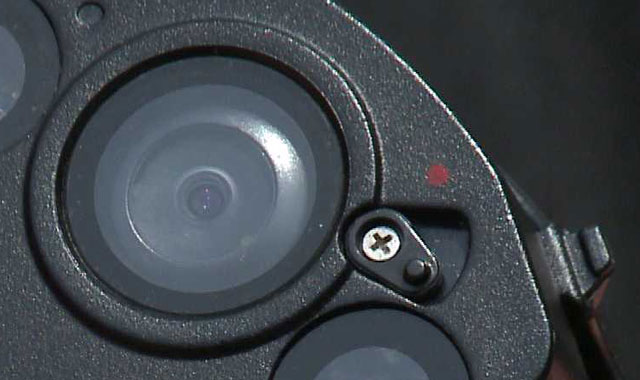
    The argument for the use of police body cameras is gaining momentum in South Africa, amid growing demand for greater police accountability, especially in the wake of the Marikana massacre.

    The cameras are typically worn on the chests of police officers. Their use is becoming common globally.

    The chairman of parliament’s portfolio committee on policing, Francois Beukman, recently asked for serious discussions on introducing body cameras in the South African Police Service.

    The police say they are discussing the use of technology, including body cameras, to improve communications and for the safety of officers. South Africa has a high rate of police murders.

    A recent study involving the random assignment of body cameras to half of the 54 patrol officers in Rialto, California showed that “shifts without cameras experienced twice as many incidents of use of force as shifts with cameras” and “the rate of use of force incidents per thousand contacts was reduced by 2,5 times.

    In a recent examination of allegations of police inefficiency in Khayelitsha, outside Cape Town, criminologist Andrew Faull suggested body cameras could improve the ability of police management to monitor officers’ interactions with civilians.

    In March 2015, the African Policing Civilian Oversight Forum produced a comprehensive report on smart policing technologies. The report highlighted the need for body cameras on local police.

    It also cited the Igarape Institute’s smart policing project. The project consists of an app for smartphones that tracks video, audio and GPS coordinates passively and in real time. It aims to improve police accountability and strengthen public safety in low- and middle-income settings in Brazil, Kenya and South Africa.

    South Africa ran a one-month pilot scheme under the smart policing project in October 2014. The South African Police Service and the Cape Town municipal police declined to participate because the technology was not stable. According to Gideon Morris, the provincial secretary for police, the focus of the pilot was “to get the technology stable enough and to try and expand the use of it once they know that the prototype is working fully. Once this had been achieved the discussion with the SAPS will be resumed.”

    Nevertheless, traffic officers from the national department of transport who took part in the pilot were not averse to wearing body cameras. They responded positively, saying their actions were questioned less by the public who knew they were being recorded.

    Incidents of police brutality are an ongoing problem in South Africa and body camera technology may help reduce them. Among the most recent high-profile cases:

    • In 2013, cellphone images showed Mido Macia, a Mozambican national working in South Africa as a taxi driver, handcuffed and being dragged behind a police van. The images were shot by members of the public and were used in court.
    • In 2011, the SABC broadcast images of the killing by police of a protester Andries Tatane. Despite the evidence, the inability to accurately identify the officers involved resulted in their acquittal.

    The advantages of body cameras seem obvious. The civilian oversight forum report highlighted the potential benefits of recordings, including for police training. Research from Scotland supports the evidentiary benefits of body cameras, saying they expedite resolution of cases.

    They also provide additional protection for the police from public complaints. That way, they may even reduce the costs to the state from civil claims.

    But the use of footage is not without unintended consequences. In Australia, it was found that a victim’s demeanour at a scene often differed greatly from what was presented in the courtroom. Footage depicting the initial reactions of a victim compared to the post traumatic aftermath can result in a victim essentially being re-victimised in the process.

    The disadvantages of cameras also relate to privacy issues for both the police and the public.

    Among the hurdles to the use of technology in policing is the need for enabling legislation, especially to cover cases where privacy and evidential matters arise. Unfortunately, the law will always remain years behind technology.

    The Electronic Communications and Transactions Act governs the admissibility and evidential weight of electronic evidence in court.

    South African law relating to electronic evidence is, however, hampered by the lack of procedures governing the collection, storage and presentation of electronic evidence for purposes of criminal proceedings.

    The South African Law Reform Commission has recommended changes to legislation to address the issue.

    The use of body cameras in South Africa is an inevitable, welcome progression. But for this to happen, both the public and the police must actively embrace the technology for their mutual benefit.

    There also needs to be discussion about the extent that these technological advances can help or hinder academic research of the police. Police are notoriously difficult for researchers to access. Will it mean they have a legitimate reason to exclude personal access and require researchers to study camera footage instead?The Conversation

    • Gráinne Perkins is a PhD student at the Centre of Criminology at the University of Cape Town
    • This article was originally published on The Conversation

    Follow TechCentral on Google News Add TechCentral as your preferred source on Google


    WhatsApp YouTube
    Share. Facebook Twitter LinkedIn WhatsApp Telegram Email Copy Link
    Previous ArticleDA slams Motsoeneng’s ‘vexatious litigation’
    Next Article 3D simulator launched to help stop road carnage

    Related Posts

    Home affairs opens visa fast lane - with tech talent a top priority

    Home affairs opens visa fast lane – with tech talent a top priority

    21 July 2026
    Skills authority to probe MICT Seta leadership crisis - Buti Manamela

    Skills authority to probe MICT Seta leadership crisis

    21 July 2026
    Mastercard bets billions on the tech that could eat its lunch - Prakriti Singh

    Mastercard bets billions on the tech that could eat its lunch

    21 July 2026
    Company News
    Cloud adoption is done. Execution is the new frontier - Cloud on Demand

    Cloud adoption is done. Execution is the new frontier

    21 July 2026
    Data poisoning in AI models: what businesses need to know - Domains.co.za

    Data poisoning in AI models: what businesses need to know

    21 July 2026
    The AI-led industrial revolution has begun - CallMiner Bruce McMahon

    The AI-led industrial revolution has begun

    20 July 2026
    Opinion
    Selling vapour is corporate suicide in slow motion - Jannie van Zyl

    Selling vapour is corporate suicide in slow motion

    16 July 2026
    Brazil's online gambling crackdown is a lesson for South Africa

    How Amazon outmanoeuvred Starlink in South Africa

    15 July 2026
    The Popia problem with agentic AI - Herman Haasbroek

    The Popia problem with agentic AI

    14 July 2026

    Subscribe to Updates

    Get the best South African technology news and analysis delivered to your e-mail inbox every morning.

    Latest Posts
    Home affairs opens visa fast lane - with tech talent a top priority

    Home affairs opens visa fast lane – with tech talent a top priority

    21 July 2026
    Skills authority to probe MICT Seta leadership crisis - Buti Manamela

    Skills authority to probe MICT Seta leadership crisis

    21 July 2026
    Mastercard bets billions on the tech that could eat its lunch - Prakriti Singh

    Mastercard bets billions on the tech that could eat its lunch

    21 July 2026
    From care homes to production lines, the robots are coming

    From care homes to production lines, the robots are coming

    21 July 2026
    © 2009 - 2026 NewsCentral Media
    Built and maintained by Chronon
    • Cookie policy (ZA)
    • TechCentral – privacy and Popia

    Type above and press Enter to search. Press Esc to cancel.

    Manage consent

    TechCentral uses cookies to enhance its offerings. Consenting to these technologies allows us to serve you better. Not consenting or withdrawing consent may adversely affect certain features and functions of the website.

    Functional Always active
    The technical storage or access is strictly necessary for the legitimate purpose of enabling the use of a specific service explicitly requested by the subscriber or user, or for the sole purpose of carrying out the transmission of a communication over an electronic communications network.
    Preferences
    The technical storage or access is necessary for the legitimate purpose of storing preferences that are not requested by the subscriber or user.
    Statistics
    The technical storage or access that is used exclusively for statistical purposes. The technical storage or access that is used exclusively for anonymous statistical purposes. Without a subpoena, voluntary compliance on the part of your Internet Service Provider, or additional records from a third party, information stored or retrieved for this purpose alone cannot usually be used to identify you.
    Marketing
    The technical storage or access is required to create user profiles to send advertising, or to track the user on a website or across several websites for similar marketing purposes.
    • Manage options
    • Manage services
    • Manage {vendor_count} vendors
    • Read more about these purposes
    View preferences
    • {title}
    • {title}
    • {title}