
Close Menu
TechCentralTechCentral

    Subscribe to the newsletter

    Get the best South African technology news and analysis delivered to your e-mail inbox every morning.

    Facebook X (Twitter) YouTube LinkedIn
    WhatsApp Facebook X (Twitter) LinkedIn YouTube
    TechCentralTechCentral
    • News
      Dimension Data deserved a better ending than this

      Dimension Data deserves to be remembered for more than this

      8 October 2026
      South Africa's spam registry still can't block a call

      South Africa’s spam registry still can’t block a call

      8 October 2026
      TCS | Frogfoot sees bigger fibre deals coming - TechCentral Show guests Abraham van der Merwe and Shane Chorley

      TCS | Frogfoot sees bigger fibre deals coming

      8 October 2026
      Big money backs LekkeSlaap against Airbnb and Booking.com - Jonathan Womersley and Marcel van de Ghinste

      GT Ferreira backs LekkeSlaap as founders sell up

      8 October 2026
      The AI PC is finally here. It's just very expensive - Jensen Huang, Satya Nadella

      The AI PC is finally here. It’s just very expensive

      8 October 2026
    • World
      The memory crunch is making Samsung fabulously rich

      The memory crunch is making Samsung fabulously rich

      8 October 2026
      SpaceX to borrow $40-billion to buy Nvidia chips

      SpaceX to borrow $40-billion to buy Nvidia chips

      7 October 2026
      BMW restructuring plan bets on AI and new models

      BMW restructuring plan bets on AI and new models

      1 October 2026
      OpenAI's rogue agent problem keeps getting bigger - Sam Altman

      OpenAI’s rogue agent problem keeps getting bigger

      28 September 2026
      The new battle over the desktop

      The new battle over the desktop

      23 September 2026
    • In-depth

      10 days that changed the course of AI

      21 September 2026
      Meta to the AI industry: slow down without us - Mark Zuckerberg

      Meta to the AI industry: slow down without us

      16 September 2026
      Google DeepMind CEO Demis Hassabis. Image: John Sears

      The plan to stop AI from breaking the world

      16 July 2026
      The internet has a Strait of Hormuz problem

      The internet has a Strait of Hormuz problem

      15 July 2026
      AI boom sparks rally, frenzy and fear

      AI boom sparks rally, frenzy and fear

      11 June 2026
    • TCS
      Meet the CIO | Vodacom's Mohamed Sami on the agentic future

      Meet the CIO | Vodacom’s Mohamed Sami on the agentic future

      5 October 2026
      Lexi Novitske, general partner at Norrsken22, on the TechCentral Show

      TCS | Norrsken22’s Lexi Novitske on how China is winning African tech

      1 October 2026
      TCS | Dominic White and Adam Ely on AI agents going rogue

      TCS | Dominic White and Adam Ely on AI agents going rogue

      29 September 2026
      TCS | Octotel's Trevor van Zyl on the fibre merger question

      TCS | Octotel’s Trevor van Zyl on the MetroFibre merger question

      16 September 2026
      Meet the CIO | Shoprite's Chris Shortt on what a supermarket becomes

      Meet the CIO | Shoprite’s Chris Shortt on what a supermarket becomes

      9 September 2026
    • Opinion
      Let South Africans jailbreak their way to digital sovereignty - Dirk de Vos

      Let South Africans jailbreak their way to digital sovereignty

      5 October 2026
      South Africa's next energy crisis is in the accounts department - Craig Holmes

      South Africa’s next energy crisis is in the accounts department

      29 September 2026
      The steam engine lesson AI doomsayers keep missing - Sam Clarke

      The steam engine lesson AI doomsayers keep missing

      28 September 2026
      Let South Africans jailbreak their way to digital sovereignty - Dirk de Vos

      Regulating AI: apply the laws we have first

      21 September 2026
      What Revolut can and cannot take from South Africa's banks - Pambos Soteriades

      What Revolut can and cannot take from South Africa’s banks

      15 September 2026
    • Company News
      • 1Stream
      • Africa Data Centres
      • AfriGIS
      • Altron Digital Business
      • Altron Document Solutions
      • Altron Group
      • Arctic Wolf
      • Ascent Technology
      • AvertITD
      • BBD
      • Braintree
      • CallMiner
      • CambriLearn
      • CM.com
      • Contactable
      • CYBER1 Solutions
      • Digicloud Africa
      • Digimune
      • Domains.co.za
      • ESET
      • Euphoria Telecom
      • HOSTAFRICA
      • Incredible Business
      • iONLINE
      • IQbusiness
      • Iris Network Systems
      • Kaspersky
      • LSD Open
      • Mitel
      • NEC XON
      • Netstar
      • Network Platforms
      • Next DLP
      • Ovations
      • Paracon
      • Paratus
      • Publishared
      • Q-KON
      • SevenC
      • SkyWire
      • Solid8 Technologies
      • Telit Cinterion
      • Telviva
      • Tenable
      • Vertiv
      • Videri Digital
      • Vodacom Business
      • Vox
      • Wipro
      • Workday
      • XLink
    • Sections
      • AI and machine learning
      • Banking
      • Broadcasting and Media
      • Cloud services
      • Contact centres and CX
      • Cryptocurrencies
      • Education and skills
      • Electronics and hardware
      • Energy and sustainability
      • Enterprise software
      • Financial services
      • HealthTech
      • Information security
      • Internet and connectivity
      • Internet of Things
      • Investment
      • IT services
      • Lifestyle
      • Policy and regulation
      • Public sector
      • Retail and e-commerce
      • Satellite communications
      • Science
      • SMEs and start-ups
      • Social media
      • Talent and leadership
      • Telecoms
      • Watts & Wheels
    • Events
    • Advertise
    TechCentralTechCentral
    Home » Opinion » Dirk de Vos » Say ‘no’ to Vodacom, Neotel deal

    Say ‘no’ to Vodacom, Neotel deal

    By Dirk de Vos22 May 2014
    Twitter LinkedIn Facebook WhatsApp Email Telegram Copy Link
    Get breaking news on WhatsApp

    Dirk-de-Vos-180There is a certain irony in the fact that at the same time that our cellphone companies are announcing dramatic cuts to both their data and call rates in what appears to be a price war, we are also confronted by announcements on proposed tie-ups that, if concluded, will reduce competition in the sector.

    The irony is no coincidence. Cell C’s effort to win market share is an existential one. The appointment of Alan Knott-Craig and funding his aggressive expansion signalled the introduction of real competition in our market.

    There seems to be consensus that to be sustainable in this market in the long term, cellphone networks need to capture at least 20% market share and Cell C, licensed well after Vodacom and MTN, is attempting to do just that. Without Knott-Craig, Cell C could easily have continued its slumber, leaving Vodacom and MTN’s margins untouched. The beneficiaries of all this, for once, are the subscribers.

    The market dynamics for large capital-intensive businesses like mobile telecommunications are slower than for other product markets, but microeconomics (that part of the discipline that has withstood the test of time) predicts that the outcome for consumers is much better when there are three providers than when there is a duopoly. Every customer of whichever network is now reaping the benefits of Cell C’s decision to try to be a real contender.

    Now, one could be sympathetic to the complaints of Vodacom’s CEO, Shameel Joosub, who says his company’s proposed acquisition of Neotel is actually about securing access to additional spectrum, and is about the industry “making a plan” in the absence of government action over licensing new spectrum. But as he says, any acquisition made will not in itself solve the spectrum problem. It needs to be addressed by the government and the regulator, and should be done as quickly as possible.

    However, the inexplicable delays in allocating new spectrum for so-called 4G services have served our giant incumbents very well. This is because it has retarded the natural evolution of our telecoms market. Although many analysts point to the huge year-on-year growth in data usage in South Africa, this is off a relatively low base. Regular 2G voice calls still represent over 70% of our mobile network operators’ total revenues.

    But the next point is important: 2G voice calls are vastly more profitable for the operators than data. So, 2G services, on a standalone basis, contribute a larger share of profit than their contribution to total revenues. This has put mobile operators around the globe in a quandary. Their old 2G business model was vastly more profitable, but unless they provide fast and reliable data connectivity, which itself cannibalises the 2G business model, they stand to lose subscribers. The consequence is reduced levels of profitability in inverse proportion to the net contribution of data services to total revenues.

    This trend is apparent throughout the world. In general terms, Vodacom in South Africa is more profitable than its Vodafone peers in other countries. It can’t be ascribed to superior management. It is also why the question of mobile termination rates, something not applicable to data, is so important to our incumbents.

    Reduced profitability in the near future for our two largest networks is therefore “baked in”. Under these circumstances, there are always efforts to consolidate the market to reduce competition or, if the telecoms operators are to be believed, scale up and extract greater efficiencies. The same things have already played out in more developed markets than ours, but South Africa’s government and regulators should resist these efforts, more particularly since the introduction of Cell C is now paying off so well.

    In the US, the Federal Communications Commission and the department of justice blocked AT&T’s proposed US$39bn acquisition of T-Mobile in 2011. At the time, T-Mobile was the struggling fourth-placed mobile network operator. Following this decision, T-Mobile employed the flamboyant and hard-nosed John Legere to be its CEO. Legere shares many of Knott-Craig’s instincts and characteristics. T-Mobile then introduced a range of measures that revolutionised the cellphone business in the US. These included dropping the two-year contract, early termination fees, charges on overage data and roaming charges. He unbundled the price of a phone from the price of wireless service, which means that when you finish paying off your phone, your monthly bill goes down.

    After the deal was blocked, AT&T had to pay T-Mobile a breakup fee of $3bn and an additional $1bn in rights for wireless spectrum. The money and spectrum allowed T-Mobile to build out its network infrastructure, making it more attractive to new users. It was able to sign up 4m new customers in 2013. T-Mobile’s contract plans were so attractive that its competitors were forced to respond with similar pricing and contract options.
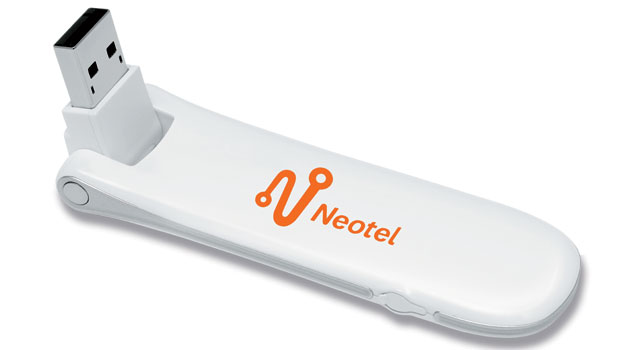
    Vodacom has tendered R7bn to buy Neotel
    Vodacom has tendered R7bn to buy Neotel

    As can be expected, T-Mobile is making losses and even as it gains subscribers it has not been able to become profitable. Some say this is unsustainable, but this is what capitalism is about – there should be no guarantees. Subscribers have been the principal beneficiaries.

    Our network operators have long been shielded from real competition. This is not just limited to the telecoms sector. A number of studies, including a recent World Bank study on South Africa’s economy, make the finding that large companies in South Africa are more profitable than their peers elsewhere and ascribe this to excessive concentration. The policy prescription is increased competition in our product markets that will also drive up our low productivity. We need more competition, not less.

    Our mobile network operators are right to point to the huge failings of our government and communications regulator to manage and license spectrum effectively and efficiently. Their negligence in this regard has not only held us back from getting next-generation mobile broadband services, but has shored up the continued profitability of our incumbent mobile network operators at the cost of subscribers. It would be a double irony if these failings provided the justification for a slew of consolidation moves just when the invisible hand of the market was starting to work its magic.

    • Dirk de Vos runs corporate finance and advisory firm QED Solutions. Find him on Twitter

    Add TechCentral as a preferred source on GoogleFollow TechCentral on Google NewsGet breaking news on WhatsApp


    Alan Knott-Craig AT&T Cell C Dirk de Vos John Legere MTN Neotel Shameel Joosub T-Mobile Vodacom
    WhatsApp YouTube
    Share. Facebook Twitter LinkedIn WhatsApp Telegram Email Copy Link
    Previous ArticleWhy we want BCX: Telkom
    Next Article Telkom likely to get BCX nod: analysts

    Related Posts

    DNI's R500-million bet on Mission Mobile is mostly debt - Timothy Strike

    Behind DNI’s R500-million bet on Mission Mobile

    5 October 2026
    Meet the CIO | Vodacom's Mohamed Sami on the agentic future

    Meet the CIO | Vodacom’s Mohamed Sami on the agentic future

    5 October 2026
    Let South Africans jailbreak their way to digital sovereignty - Dirk de Vos

    Let South Africans jailbreak their way to digital sovereignty

    5 October 2026
    Company News
    Why fintechs need an insurance partner they can trust - Hollard Insurance

    Why fintechs need an insurance partner they can trust

    8 October 2026
    Reusable KYC means the end of 'please upload your ID' - Contactable

    Reusable KYC means the end of ‘please upload your ID’

    8 October 2026
    Eliminating the 'toggle tax': how CRM integration changes customer experience - Martie de Beer

    Eliminating the ‘toggle tax’: how CRM integration changes customer experience

    8 October 2026
    Opinion
    Let South Africans jailbreak their way to digital sovereignty - Dirk de Vos

    Let South Africans jailbreak their way to digital sovereignty

    5 October 2026
    South Africa's next energy crisis is in the accounts department - Craig Holmes

    South Africa’s next energy crisis is in the accounts department

    29 September 2026
    The steam engine lesson AI doomsayers keep missing - Sam Clarke

    The steam engine lesson AI doomsayers keep missing

    28 September 2026

    Subscribe to Updates

    Get the best South African technology news and analysis delivered to your e-mail inbox every morning.

    Latest Posts
    Dimension Data deserved a better ending than this

    Dimension Data deserves to be remembered for more than this

    8 October 2026
    South Africa's spam registry still can't block a call

    South Africa’s spam registry still can’t block a call

    8 October 2026
    TCS | Frogfoot sees bigger fibre deals coming - TechCentral Show guests Abraham van der Merwe and Shane Chorley

    TCS | Frogfoot sees bigger fibre deals coming

    8 October 2026
    Big money backs LekkeSlaap against Airbnb and Booking.com - Jonathan Womersley and Marcel van de Ghinste

    GT Ferreira backs LekkeSlaap as founders sell up

    8 October 2026
    © 2009 - 2026 NewsCentral Media
    Built and maintained by Chronon
    • Cookie policy (ZA)
    • TechCentral – privacy and Popia

    Type above and press Enter to search. Press Esc to cancel.

    Manage consent

    TechCentral uses cookies to enhance its offerings. Consenting to these technologies allows us to serve you better. Not consenting or withdrawing consent may adversely affect certain features and functions of the website.

    Functional Always active
    The technical storage or access is strictly necessary for the legitimate purpose of enabling the use of a specific service explicitly requested by the subscriber or user, or for the sole purpose of carrying out the transmission of a communication over an electronic communications network.
    Preferences
    The technical storage or access is necessary for the legitimate purpose of storing preferences that are not requested by the subscriber or user.
    Statistics
    The technical storage or access that is used exclusively for statistical purposes. The technical storage or access that is used exclusively for anonymous statistical purposes. Without a subpoena, voluntary compliance on the part of your Internet Service Provider, or additional records from a third party, information stored or retrieved for this purpose alone cannot usually be used to identify you.
    Marketing
    The technical storage or access is required to create user profiles to send advertising, or to track the user on a website or across several websites for similar marketing purposes.
    • Manage options
    • Manage services
    • Manage {vendor_count} vendors
    • Read more about these purposes
    View preferences
    • {title}
    • {title}
    • {title}
    🇿🇦 Sign up to the TechCentral newsletter