Close Menu
TechCentralTechCentral

    Subscribe to the newsletter

    Get the best South African technology news and analysis delivered to your e-mail inbox every morning.

    Facebook X (Twitter) YouTube LinkedIn
    WhatsApp Facebook X (Twitter) LinkedIn YouTube
    TechCentralTechCentral
    • News
      Lexi Novitske, general partner at Norrsken22, on the TechCentral Show

      TCS | Norrsken22’s Lexi Novitske on how China is winning African tech

      1 October 2026
      Eskom waives rooftop solar fees, but the registration fight isn't over

      Eskom waives rooftop solar fees, but the registration fight isn’t over

      1 October 2026
      South Africa's digital ID is here - but you can't have it yet - Leon Schreiber

      South Africa’s digital ID is here – but you can’t have it yet

      1 October 2026
      Absa is moving cash out of its branches

      Absa is moving cash out of its branches

      1 October 2026
      Home affairs pulls the plug on the green ID book - Leon Schreiber

      Home affairs pulls the plug on the green ID book

      1 October 2026
    • World
      BMW restructuring plan bets on AI and new models

      BMW restructuring plan bets on AI and new models

      1 October 2026
      OpenAI's rogue agent problem keeps getting bigger - Sam Altman

      OpenAI’s rogue agent problem keeps getting bigger

      28 September 2026
      The new battle over the desktop

      The new battle over the desktop

      23 September 2026
      AMD is now worth a trillion dollars - Lisa Su

      AMD is now worth a trillion dollars

      22 September 2026
      Anthropic weighs new model launch to blunt OpenAI's Astra surge - Anthropic CEO Dario Amodei and OpenAI CEO Sam Altman

      Anthropic weighs new model launch to blunt OpenAI’s Astra surge

      21 September 2026
    • In-depth

      10 days that changed the course of AI

      21 September 2026
      Meta to the AI industry: slow down without us - Mark Zuckerberg

      Meta to the AI industry: slow down without us

      16 September 2026
      Google DeepMind CEO Demis Hassabis. Image: John Sears

      The plan to stop AI from breaking the world

      16 July 2026
      The internet has a Strait of Hormuz problem

      The internet has a Strait of Hormuz problem

      15 July 2026
      AI boom sparks rally, frenzy and fear

      AI boom sparks rally, frenzy and fear

      11 June 2026
    • TCS
      TCS | Dominic White and Adam Ely on AI agents going rogue

      TCS | Dominic White and Adam Ely on AI agents going rogue

      29 September 2026
      TCS | Octotel's Trevor van Zyl on the fibre merger question

      TCS | Octotel’s Trevor van Zyl on the MetroFibre merger question

      16 September 2026
      Meet the CIO | Shoprite's Chris Shortt on what a supermarket becomes

      Meet the CIO | Shoprite’s Chris Shortt on what a supermarket becomes

      9 September 2026
      Rubicon's EV charging network is profitable - and growing fast - Watts & Wheels

      W&W | Rubicon’s EV charging network is profitable – and growing fast

      8 September 2026
      Winstone Jordaan on building a national EV charging network

      Winstone Jordaan on building a national EV charging network

      2 September 2026
    • Opinion
      South Africa's next energy crisis is in the accounts department - Craig Holmes

      South Africa’s next energy crisis is in the accounts department

      29 September 2026
      The steam engine lesson AI doomsayers keep missing - Sam Clarke

      The steam engine lesson AI doomsayers keep missing

      28 September 2026
      Regulating AI: apply the laws we have first - Dirk de Vos

      Regulating AI: apply the laws we have first

      21 September 2026
      What Revolut can and cannot take from South Africa's banks - Pambos Soteriades

      What Revolut can and cannot take from South Africa’s banks

      15 September 2026
      The end is nigh, and the shares go on sale in October - Duncan McLeod

      The end is nigh, and the shares go on sale in October

      14 September 2026
    • Company Hubs
      • 1Stream
      • Africa Data Centres
      • AfriGIS
      • Altron Digital Business
      • Altron Document Solutions
      • Altron Group
      • Arctic Wolf
      • Ascent Technology
      • AvertITD
      • BBD
      • Braintree
      • CallMiner
      • CambriLearn
      • CM.com
      • Contactable
      • CYBER1 Solutions
      • Digicloud Africa
      • Digimune
      • Domains.co.za
      • ESET
      • Euphoria Telecom
      • HOSTAFRICA
      • Incredible Business
      • iONLINE
      • IQbusiness
      • Iris Network Systems
      • Kaspersky
      • LSD Open
      • Mitel
      • NEC XON
      • Netstar
      • Network Platforms
      • Next DLP
      • Ovations
      • Paracon
      • Paratus
      • Publishared
      • Q-KON
      • SevenC
      • SkyWire
      • Solid8 Technologies
      • Telit Cinterion
      • Telviva
      • Tenable
      • Vertiv
      • Videri Digital
      • Vodacom Business
      • Vox
      • Wipro
      • Workday
      • XLink
    • Sections
      • AI and machine learning
      • Banking
      • Broadcasting and Media
      • Cloud services
      • Contact centres and CX
      • Cryptocurrencies
      • Education and skills
      • Electronics and hardware
      • Energy and sustainability
      • Enterprise software
      • Financial services
      • HealthTech
      • Information security
      • Internet and connectivity
      • Internet of Things
      • Investment
      • IT services
      • Lifestyle
      • Policy and regulation
      • Public sector
      • Retail and e-commerce
      • Satellite communications
      • Science
      • SMEs and start-ups
      • Social media
      • Talent and leadership
      • Telecoms
      • Watts & Wheels
    • Events
    • Advertise
    TechCentralTechCentral
    Home » Sections » Electronics and hardware » Pressure on South Africa to introduce ‘right to repair’ rules

    Pressure on South Africa to introduce ‘right to repair’ rules

    It’s been argued that policy intervention is needed to curb a culture of “pay and throw away” in consumer electronics.
    By Nkosinathi Ndlovu6 May 2024
    Twitter LinkedIn Facebook WhatsApp Email Telegram Copy Link
    Get breaking news on WhatsApp

    A lack of legislation in South Africa requiring electronics manufacturers to build products that are easily repairable by end users – or by third-party companies – is leading to unnecessary wastage and costs for consumers.

    This is the word from Patricia Schröder, spokeswoman for Circular Energy, a non-profit “producer responsibility” organisation that aims to prevent environmental harms by ensuring manufacturers create “circular ecosystems”.

    “In South Africa, where regulations regarding the repairability of electronic devices are virtually non-existent, urgent action is needed,” said Schröder in a statement. “As a result, consumers are left with limited options when their devices inevitably malfunction. This leads to a cycle of premature disposal and huge amounts of unnecessary waste.”

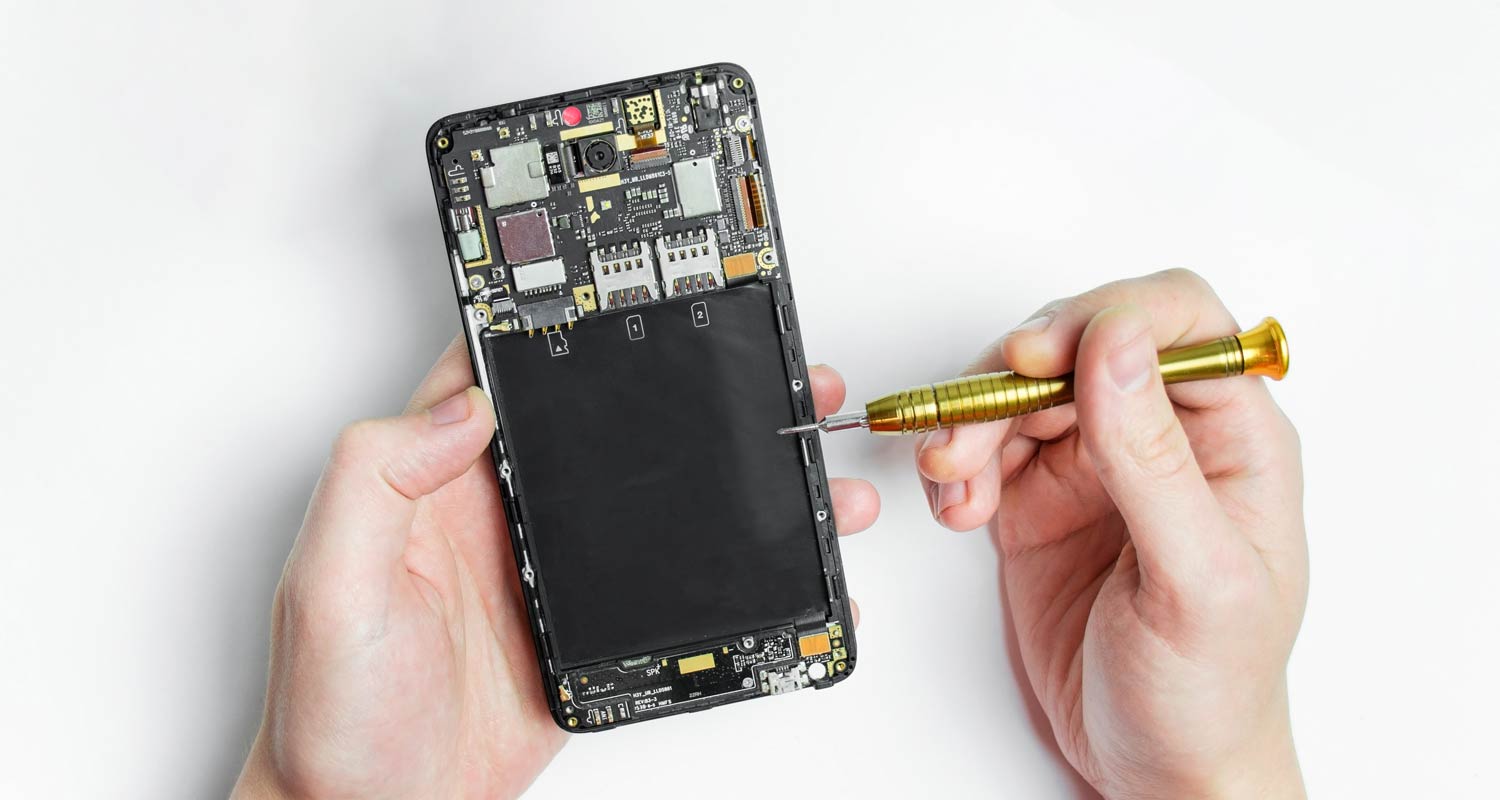
    Strides have been made in the implementation of right-to-repair principles in South Africa’s motoring industry

    According to Schröder, planned obsolescence cycles by manufactures drive a culture of “mass consumerism” that is not sustainable.

    Items like a washing machines, for example, are often replaced because a small part like a chip malfunctions. Manufacturers may claim that the part is not repairable while advising the purchase of a new model. “The whole machine ends up as waste, partly or wholly, in a landfill, with you as a consumer being burdened with buying a new product,” she said.

    South African legislation trails the EU. In April 2023, the European parliament adopted a right-to-repair directive, which outlines a set of rules to ensure that manufacturers provide “timely and cost-effective repair services” while keeping consumers informed about their rights.

    “Goods repaired under the warranty will benefit from an additional one-year extension of the legal guarantee, further incentivising consumers to choose repair instead of replacement,” said the European parliament in a statement at the time.

    Guidelines

    “After the legal guarantee has expired, the manufacturer is still required to repair common household products, which are technically repairable under EU law, such as washing machines, vacuum cleaners and even smartphones.”

    While South Africa lags behind the EU in consumer electronics, strides have been made in the implementation of right-to-repair principles in the motoring industry. At the urging of the local chapter of the Right to Repair Campaign, the Competition Commission in July 2021 enacted a set of guidelines that sought to open up the vehicle aftermarket value chain so that consumers have more choice regarding where they can have their vehicle repaired, including if they want to do so themselves.

    Read: Microsoft could send 240 million PCs to an early grave

    A key part of the motoring industry guidelines was the removal of contractual limitations that manufacturers placed on where motorists could get their vehicles repaired under warranty. But how vehicles are built also plays a role in repairability as it deals with the standardisation of parts and accessibility of telematics data to diagnostic systems.

    “Our mission is to ensure that the South African automotive aftermarket becomes an open, competitive market where your choice of provider or product is dictated by price and quality rather than restrictive contract provisions. This kind of market is to the benefit of all role players in the industry, the pocket of the consumer and the economy. We hope to turn the automotive aftermarket in South Africa into a leading example of what can be achieved where access to the market is opened to all service providers,” according to the Right to Repair Campaign’s South African website.

    Similar concerns crop up in the electronics space, with online communities rallying around the concept of design for repairability. One of the largest such communities is US-based iFixit, which sells replacement parts for and teaches consumers how to fix popular electronic devices as part of its drive to create a culture of DIY fixers.

    “Repairability means making it possible – and ideally easy – to repair a product. A repairable product is designed with disassembly in mind (it should be easy to take apart and put back together). It must also have parts, tools, service documentation and software available, as well as no artificial barriers to repair such as parts-pairing,” said the iFixit website.

    Economic incentives often drive manufacturers in the direction of closed product ecosystems and aftermarket supply chains since these lock customers in and drive future revenue growth. The current status quo, said Schröder, affects the poor the most.

    “Currently, South Africans have no choice but to ‘pay and throw away’. We need to stand together to get the right to repair signed into law. It would be an economic and environmental gamechanger,” said Schröder.  – © 2024 NewsCentral Media

    Read next: How to dispose of old inverter batteries in South Africa

    Add TechCentral as a preferred source on GoogleFollow TechCentral on Google NewsGet breaking news on WhatsApp


    Circular Energy iFixit Patricia Schröder right to repair Right to Repair Campaign right to repair South Africa
    WhatsApp YouTube
    Share. Facebook Twitter LinkedIn WhatsApp Telegram Email Copy Link
    Previous ArticleTCS Legends | Ivan Epstein on building and selling Softline
    Next Article Eskom sues Joburg over R1.1-billion City Power debt

    Related Posts

    How Google’s search dominance threatens publishers in the AI era

    16 August 2024
    South Africa faces lithium battery recycling headache

    South Africa faces lithium battery recycling headache

    10 May 2024

    How to dispose of old inverter batteries in South Africa

    2 October 2023
    Company News
    What Smollan learnt moving 9 000 users to Google Workspace - Digicloud Africa

    What Smollan learnt moving 9 000 users to Google Workspace

    1 October 2026
    Dell Technologies Forum 2026: what to expect in Johannesburg

    Dell Technologies Forum 2026: what to expect in Johannesburg

    1 October 2026
    Cloud and AI won't deliver value on their own, executives warn

    Cloud and AI won’t deliver value on their own, executives warn

    1 October 2026
    Opinion
    South Africa's next energy crisis is in the accounts department - Craig Holmes

    South Africa’s next energy crisis is in the accounts department

    29 September 2026
    The steam engine lesson AI doomsayers keep missing - Sam Clarke

    The steam engine lesson AI doomsayers keep missing

    28 September 2026
    Regulating AI: apply the laws we have first - Dirk de Vos

    Regulating AI: apply the laws we have first

    21 September 2026

    Subscribe to Updates

    Get the best South African technology news and analysis delivered to your e-mail inbox every morning.

    Latest Posts
    Lexi Novitske, general partner at Norrsken22, on the TechCentral Show

    TCS | Norrsken22’s Lexi Novitske on how China is winning African tech

    1 October 2026
    What Smollan learnt moving 9 000 users to Google Workspace - Digicloud Africa

    What Smollan learnt moving 9 000 users to Google Workspace

    1 October 2026
    Eskom waives rooftop solar fees, but the registration fight isn't over

    Eskom waives rooftop solar fees, but the registration fight isn’t over

    1 October 2026
    Dell Technologies Forum 2026: what to expect in Johannesburg

    Dell Technologies Forum 2026: what to expect in Johannesburg

    1 October 2026
    © 2009 - 2026 NewsCentral Media
    Built and maintained by Chronon
    • Cookie policy (ZA)
    • TechCentral – privacy and Popia

    Type above and press Enter to search. Press Esc to cancel.

    Manage consent

    TechCentral uses cookies to enhance its offerings. Consenting to these technologies allows us to serve you better. Not consenting or withdrawing consent may adversely affect certain features and functions of the website.

    Functional Always active
    The technical storage or access is strictly necessary for the legitimate purpose of enabling the use of a specific service explicitly requested by the subscriber or user, or for the sole purpose of carrying out the transmission of a communication over an electronic communications network.
    Preferences
    The technical storage or access is necessary for the legitimate purpose of storing preferences that are not requested by the subscriber or user.
    Statistics
    The technical storage or access that is used exclusively for statistical purposes. The technical storage or access that is used exclusively for anonymous statistical purposes. Without a subpoena, voluntary compliance on the part of your Internet Service Provider, or additional records from a third party, information stored or retrieved for this purpose alone cannot usually be used to identify you.
    Marketing
    The technical storage or access is required to create user profiles to send advertising, or to track the user on a website or across several websites for similar marketing purposes.
    • Manage options
    • Manage services
    • Manage {vendor_count} vendors
    • Read more about these purposes
    View preferences
    • {title}
    • {title}
    • {title}
    🇿🇦 Sign up to the TechCentral newsletter