
Close Menu
TechCentralTechCentral

    Subscribe to the newsletter

    Get the best South African technology news and analysis delivered to your e-mail inbox every morning.

    Facebook X (Twitter) YouTube LinkedIn
    WhatsApp Facebook X (Twitter) LinkedIn YouTube
    TechCentralTechCentral
    • News
      Home affairs' R10 ID fee is forcing companies to rethink identity verification

      Standard Bank joins smart ID push with fee-free launch

      11 February 2026
      Zscaler assets seized from South African data centres

      Zscaler assets seized from South African data centres

      11 February 2026
      SA app wants to end guesswork in online grocery shopping - We Need Milk CEO Arjan van den Berg

      SA app wants to end guesswork in online grocery shopping

      11 February 2026
      Absa appoints M-Pesa boss to lead personal and private banking - Sitoyo Lopokoiyit

      Absa appoints M-Pesa boss to lead personal and private banking

      11 February 2026
      David Ellison just won't quit

      David Ellison just won’t quit

      11 February 2026
    • World
      EU regulators take aim at WhatsApp

      EU regulators take aim at WhatsApp

      9 February 2026
      Musk hits brakes on Mars mission

      Musk hits brakes on Mars mission

      9 February 2026
      Crypto firm accidentally sends R700-billion in bitcoin to its users

      Crypto firm accidentally sends R700-billion in bitcoin to its users

      8 February 2026
      AI won't replace software, says Nvidia CEO amid market rout - Jensen Huang

      AI won’t replace software, says Nvidia CEO amid market rout

      4 February 2026
      Apple acquires audio AI start-up Q.ai

      Apple acquires audio AI start-up Q.ai

      30 January 2026
    • In-depth
      How liberalisation is rewiring South Africa's power sector

      How liberalisation is rewiring South Africa’s power sector

      21 January 2026
      The top-performing South African tech shares of 2025

      The top-performing South African tech shares of 2025

      12 January 2026
      Digital authoritarianism grows as African states normalise internet blackouts

      Digital authoritarianism grows as African states normalise internet blackouts

      19 December 2025
      TechCentral's South African Newsmakers of 2025

      TechCentral’s South African Newsmakers of 2025

      18 December 2025
      Black Friday goes digital in South Africa as online spending surges to record high

      Black Friday goes digital in South Africa as online spending surges to record high

      4 December 2025
    • TCS
      Watts & Wheels S1E4: 'We drive an electric Uber'

      Watts & Wheels S1E4: ‘We drive an electric Uber’

      10 February 2026
      TCS+ | How Cloud On Demand is helping SA businesses succeed in the cloud - Xhenia Rhode, Dion Kalicharan

      TCS+ | Cloud On Demand and Consnet: inside a real-world AWS partner success story

      30 January 2026
      Watts & Wheels S1E4: 'We drive an electric Uber'

      Watts & Wheels S1E3: ‘BYD’s Corolla Cross challenger’

      30 January 2026
      Watts & Wheels S1E4: 'We drive an electric Uber'

      Watts & Wheels S1E2: ‘China attacks, BMW digs in, Toyota’s sublime supercar’

      23 January 2026

      TCS+ | Why cybersecurity is becoming a competitive advantage for SA businesses

      20 January 2026
    • Opinion
      South Africa's skills advantage is being overlooked at home - Richard Firth

      South Africa’s skills advantage is being overlooked at home

      29 January 2026
      Why Elon Musk's Starlink is a 'hard no' for me - Songezo Zibi

      Why Elon Musk’s Starlink is a ‘hard no’ for me

      26 January 2026
      South Africa's new fibre broadband battle - Duncan McLeod

      South Africa’s new fibre broadband battle

      20 January 2026
      AI moves from pilots to production in South African companies - Nazia Pillay SAP

      AI moves from pilots to production in South African companies

      20 January 2026
      South Africa's new fibre broadband battle - Duncan McLeod

      ANC’s attack on Solly Malatsi shows how BEE dogma trumps economic reality

      14 December 2025
    • Company Hubs
      • Africa Data Centres
      • AfriGIS
      • Altron Digital Business
      • Altron Document Solutions
      • Altron Group
      • Arctic Wolf
      • AvertITD
      • Braintree
      • CallMiner
      • CambriLearn
      • CYBER1 Solutions
      • Digicloud Africa
      • Digimune
      • Domains.co.za
      • ESET
      • Euphoria Telecom
      • Incredible Business
      • iONLINE
      • IQbusiness
      • Iris Network Systems
      • LSD Open
      • NEC XON
      • Netstar
      • Network Platforms
      • Next DLP
      • Ovations
      • Paracon
      • Paratus
      • Q-KON
      • SevenC
      • SkyWire
      • Solid8 Technologies
      • Telit Cinterion
      • Tenable
      • Vertiv
      • Videri Digital
      • Vodacom Business
      • Wipro
      • Workday
      • XLink
    • Sections
      • AI and machine learning
      • Banking
      • Broadcasting and Media
      • Cloud services
      • Contact centres and CX
      • Cryptocurrencies
      • Education and skills
      • Electronics and hardware
      • Energy and sustainability
      • Enterprise software
      • Financial services
      • Information security
      • Internet and connectivity
      • Internet of Things
      • Investment
      • IT services
      • Lifestyle
      • Motoring
      • Public sector
      • Retail and e-commerce
      • Satellite communications
      • Science
      • SMEs and start-ups
      • Social media
      • Talent and leadership
      • Telecoms
    • Events
    • Advertise
    TechCentralTechCentral
    Home » Opinion » Hilton Tarrant » Telkom is losing the fibre race

    Telkom is losing the fibre race

    By Hilton Tarrant7 June 2016
    Twitter LinkedIn Facebook WhatsApp Email Telegram Copy Link
    News Alerts
    WhatsApp

    hilton-tarrant-180In November, I argued that Telkom’s broadband digital subscriber line (DSL) service had peaked (that was at the half-year mark). Since then, growth has slowed even further and the telecommunications giant is on a knife-edge of sorts. Don’t get me wrong, this DSL base is not going to disappear overnight. But Telkom cannot be complacent.

    The company has been bemoaning the impact of “fixed to mobile substitution” on its legacy voice business for at least a decade, but the truth is its data business has been squeezed by this, too. And this pressure is only increasing.

    Telkom itself generates nearly as much revenue from mobile data (R1,6bn) as it does from its Internet service provider (ISP) business Telkom Internet (R2bn). The broader “data connectivity” segment (line/service rental) still generates the bulk of its data revenue (at R6,8bn of the R11,8bn total, excluding Business Connexion).

    As DSL growth grinds to a halt, it needs to make sure its nascent fibre subscriber base grows at a fast enough rate to offset any decline in DSL. From the subscriber numbers published on Monday, it is clear that any meaningful fixed-line data growth from this point will be from fibre alone.

    At the same time, its customers have an insatiable appetite for data: fixed-line traffic volumes are up by nearly 40% (to 472 petabytes, while mobile data usage is up 72% to 37,3PB. In parts, its fixed-line network is already straining under the load. It’s only going to get worse.

    In the last year, the network has gone from zero to 8 129 fibre customers, mostly in the October-March timeframe. In that same period, its added 14 092 DSL subscribers (at an ever slower number per month).

    Now, 8 000-odd is not a big number, especially since Telkom says its fibre-to-the-home (FTTH) network passes 81 503 houses. That’s a penetration (or conversion) rate of 10%. In the 2015 financial year, it invested R252m on FTTH. That’s R3 091 per house passed and a cost of R31 000 per active fibre customer.

    In the year ahead, its FTTH capex spend will triple to R757m. And there’s good reason for that. In September last year, it announced its goal of providing fibre access to a million homes (effectively equal to its current DSL footprint) by 2018. That is a big ask whichever way you look at it.

    It could double its FTTH capex to R2bn in two years and it still won’t be sufficient

    CEO Sipho Maseko said that 70 000 homes would have access by the end of 2015 (from 38 000 at the end of August), and 150 000 by March 2016. This would jump to 500 000 by December. Many (including myself) challenged these targets when they were made public, as they’re simply too ambitious. Doubling a base every few months looks great on a white board in a strategy session, but it’s tough in practice.

    Basically, Telkom is looking to (roughly) double its fibre footprint nearly four times in a row inside less than 18 months. In other words, its aiming for growth of 1 200% in a year and a half. And, even if it hits that 500 000 target by the end of this year, it’s looking to double that yet again during the course of 2017!

    Barely a year in, it’s already behind by nearly 70 000 houses, and this is the easy part because we’re working in the tens of thousands (not hundreds of thousands yet). But let’s assume, it gets anywhere close to 500 000 by December. That’s fibre for another 400 000 houses in nine months.
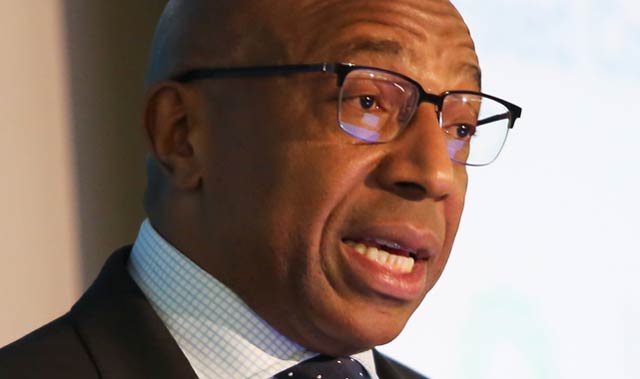
    Telkom CEO Sipho Maseko
    Telkom CEO Sipho Maseko

    And that puts Telkom’s R757m capex number in perspective. During this year, it’s hoping to get that cost per house provisioned down to under R2 000. Go visit any neighbourhood where any provider is rolling out fibre and you’ll see just how big an ask this is. It’s a tough, labour-intensive process and it never runs on schedule.

    But building out a fibre network is not the only challenge for Telkom. Convincing customers to actually start using it is another entirely. Linked to this is the migration of its current DSL customers. If penetration/conversion remains at 10%, or even 20%, it is going to have a big problem on its hands. Anything under 50% in the short to medium term would be a failure in my mind.

    If it continues in this vein, it’s simply going to be forced to pay up for its smaller competitors

    Competition on fibre network roll-out is intensifying. Not only are large competitors Vodacom and MTN building networks, but there are a handful of strong, nimble competitors including Vumatel, Fibrehoods, Frogfoot and Octotel who are cherry-picking the most lucrative suburbs and estates. Telkom was late to this game.

    By the end of its 2017 financial year in March next year, Telkom will have spent more than R1bn on FTTH roll-out in 24 months. But it’s not nearly enough. It’s spending as much on each of its mobile network and on its (back-office) operations and business support systems in the same period! It could double its FTTH capex to R2bn in two years and it still won’t be sufficient. Telkom should be incentivising the large estate and townhouse complex developers to get these wired up.

    I can’t quite fathom why it’s being this conservative with this build when the company’s fixed-line broadband future is at stake. If it continues in this vein, it’s simply going to be forced to pay up for these smaller competitors. Yes, it’s been burned on its media ambitions and in the early days of mobile, but this is the one instance where it doesn’t pay to be careful.

    • Hilton Tarrant works at immedia
    • This column was first published on Moneyweb and is used here with permission


    Fibrehoods Frogfoot Hilton Tarrant MTN Octotel Sipho Maseko Telkom Vodacom Vumatel
    WhatsApp YouTube Follow on Google News Add as preferred source on Google
    Share. Facebook Twitter LinkedIn WhatsApp Telegram Email Copy Link
    Previous ArticleTelkom to re-farm spectrum for LTE
    Next Article The nosebleed decline of newspapers, in pictures

    Related Posts

    A million reasons monopolies don't work

    A million reasons monopolies don’t work

    10 February 2026
    Vumatel tops a million subscribers in South African broadband milestone - Dietlof Mare

    Vumatel tops a million subscribers in South African broadband milestone

    9 February 2026
    Vodacom drops R5.6-billion for spectrum in key market

    Vodacom dropping R5.6-billion for spectrum in key market

    9 February 2026
    Company News
    Fyndae is building Africa's human verification layer for community security and collaboration

    Fyndae wants to turn lost-item recovery into Africa’s trust infrastructure

    11 February 2026
    How NEC XON tackled identity risk for a major telco - Michael de Neuilly Rice

    How NEC XON tackled identity risk for a major telco

    11 February 2026
    Breaking down the data silos: why single views require collaboration - Altron Digital Business

    Breaking down the data silos: why single views require collaboration

    10 February 2026
    Opinion
    South Africa's skills advantage is being overlooked at home - Richard Firth

    South Africa’s skills advantage is being overlooked at home

    29 January 2026
    Why Elon Musk's Starlink is a 'hard no' for me - Songezo Zibi

    Why Elon Musk’s Starlink is a ‘hard no’ for me

    26 January 2026
    South Africa's new fibre broadband battle - Duncan McLeod

    South Africa’s new fibre broadband battle

    20 January 2026

    Subscribe to Updates

    Get the best South African technology news and analysis delivered to your e-mail inbox every morning.

    Latest Posts
    Home affairs' R10 ID fee is forcing companies to rethink identity verification

    Standard Bank joins smart ID push with fee-free launch

    11 February 2026
    Zscaler assets seized from South African data centres

    Zscaler assets seized from South African data centres

    11 February 2026
    Fyndae is building Africa's human verification layer for community security and collaboration

    Fyndae wants to turn lost-item recovery into Africa’s trust infrastructure

    11 February 2026
    How NEC XON tackled identity risk for a major telco - Michael de Neuilly Rice

    How NEC XON tackled identity risk for a major telco

    11 February 2026
    © 2009 - 2026 NewsCentral Media
    • Cookie policy (ZA)
    • TechCentral – privacy and Popia

    Type above and press Enter to search. Press Esc to cancel.

    Manage consent

    TechCentral uses cookies to enhance its offerings. Consenting to these technologies allows us to serve you better. Not consenting or withdrawing consent may adversely affect certain features and functions of the website.

    Functional Always active
    The technical storage or access is strictly necessary for the legitimate purpose of enabling the use of a specific service explicitly requested by the subscriber or user, or for the sole purpose of carrying out the transmission of a communication over an electronic communications network.
    Preferences
    The technical storage or access is necessary for the legitimate purpose of storing preferences that are not requested by the subscriber or user.
    Statistics
    The technical storage or access that is used exclusively for statistical purposes. The technical storage or access that is used exclusively for anonymous statistical purposes. Without a subpoena, voluntary compliance on the part of your Internet Service Provider, or additional records from a third party, information stored or retrieved for this purpose alone cannot usually be used to identify you.
    Marketing
    The technical storage or access is required to create user profiles to send advertising, or to track the user on a website or across several websites for similar marketing purposes.
    • Manage options
    • Manage services
    • Manage {vendor_count} vendors
    • Read more about these purposes
    View preferences
    • {title}
    • {title}
    • {title}