Close Menu
TechCentralTechCentral

    Subscribe to the newsletter

    Get the best South African technology news and analysis delivered to your e-mail inbox every morning.

    Facebook X (Twitter) YouTube LinkedIn
    WhatsApp Facebook X (Twitter) LinkedIn YouTube
    TechCentralTechCentral
    • News
      Netflix, Warner Bros talks raise fresh headaches for MultiChoice

      Netflix, Warner Bros talks raise fresh headaches for MultiChoice

      5 December 2025
      Big Microsoft 365 price increases coming next year

      Big Microsoft price increases coming next year

      5 December 2025
      Vodacom to take control of Safaricom in R36-billion deal - Shameel Joosub

      Vodacom to take control of Safaricom in R36-billion deal

      4 December 2025
      Black Friday goes digital in South Africa as online spending surges to record high

      Black Friday goes digital in South Africa as online spending surges to record high

      4 December 2025
      BYD takes direct aim at Toyota with launch of sub-R500 000 Sealion 5 PHEV

      BYD takes direct aim at Toyota with launch of sub-R500 000 Sealion 5 PHEV

      4 December 2025
    • World
      Amazon and Google launch multi-cloud service for faster connectivity

      Amazon and Google launch multi-cloud service for faster connectivity

      1 December 2025
      Google makes final court plea to stop US breakup

      Google makes final court plea to stop US breakup

      21 November 2025
      Bezos unveils monster rocket: New Glenn 9x4 set to dwarf Saturn V

      Bezos unveils monster rocket: New Glenn 9×4 set to dwarf Saturn V

      21 November 2025
      Tech shares turbocharged by Nvidia's stellar earnings

      Tech shares turbocharged by stellar Nvidia earnings

      20 November 2025
      Config file blamed for Cloudflare meltdown that disrupted the web

      Config file blamed for Cloudflare meltdown that disrupted the web

      19 November 2025
    • In-depth
      Jensen Huang Nvidia

      So, will China really win the AI race?

      14 November 2025
      Valve's Linux console takes aim at Microsoft's gaming empire

      Valve’s Linux console takes aim at Microsoft’s gaming empire

      13 November 2025
      iOCO's extraordinary comeback plan - Rhys Summerton

      iOCO’s extraordinary comeback plan

      28 October 2025
      Why smart glasses keep failing - no, it's not the tech - Mark Zuckerberg

      Why smart glasses keep failing – it’s not the tech

      19 October 2025
      BYD to blanket South Africa with megawatt-scale EV charging network - Stella Li

      BYD to blanket South Africa with megawatt-scale EV charging network

      16 October 2025
    • TCS
      TCS+ | How Cloud on Demand helps partners thrive in the AWS ecosystem - Odwa Ndyaluvane and Xenia Rhode

      TCS+ | How Cloud On Demand helps partners thrive in the AWS ecosystem

      4 December 2025
      TCS | MTN Group CEO Ralph Mupita on competition, AI and the future of mobile

      TCS | Ralph Mupita on competition, AI and the future of mobile

      28 November 2025
      TCS | Dominic Cull on fixing South Africa's ICT policy bottlenecks

      TCS | Dominic Cull on fixing South Africa’s ICT policy bottlenecks

      21 November 2025
      TCS | BMW CEO Peter van Binsbergen on the future of South Africa's automotive industry

      TCS | BMW CEO Peter van Binsbergen on the future of South Africa’s automotive industry

      6 November 2025
      TCS | Why Altron is building an AI factory - Bongani Andy Mabaso

      TCS | Why Altron is building an AI factory in Johannesburg

      28 October 2025
    • Opinion
      Your data, your hardware: the DIY AI revolution is coming - Duncan McLeod

      Your data, your hardware: the DIY AI revolution is coming

      20 November 2025
      Zero Carbon Charge founder Joubert Roux

      The energy revolution South Africa can’t afford to miss

      20 November 2025
      It's time for a new approach to government IT spend in South Africa - Richard Firth

      It’s time for a new approach to government IT spend in South Africa

      19 November 2025
      How South Africa's broken Rica system fuels murder and mayhem - Farhad Khan

      How South Africa’s broken Rica system fuels murder and mayhem

      10 November 2025
      South Africa's AI data centre boom risks overloading a fragile grid - Paul Colmer

      South Africa’s AI data centre boom risks overloading a fragile grid

      30 October 2025
    • Company Hubs
      • Africa Data Centres
      • AfriGIS
      • Altron Digital Business
      • Altron Document Solutions
      • Altron Group
      • Arctic Wolf
      • AvertITD
      • Braintree
      • CallMiner
      • CambriLearn
      • CYBER1 Solutions
      • Digicloud Africa
      • Digimune
      • Domains.co.za
      • ESET
      • Euphoria Telecom
      • Incredible Business
      • iONLINE
      • IQbusiness
      • Iris Network Systems
      • LSD Open
      • NEC XON
      • Netstar
      • Network Platforms
      • Next DLP
      • Ovations
      • Paracon
      • Paratus
      • Q-KON
      • SevenC
      • SkyWire
      • Solid8 Technologies
      • Telit Cinterion
      • Tenable
      • Vertiv
      • Videri Digital
      • Vodacom Business
      • Wipro
      • Workday
      • XLink
    • Sections
      • AI and machine learning
      • Banking
      • Broadcasting and Media
      • Cloud services
      • Contact centres and CX
      • Cryptocurrencies
      • Education and skills
      • Electronics and hardware
      • Energy and sustainability
      • Enterprise software
      • Financial services
      • Information security
      • Internet and connectivity
      • Internet of Things
      • Investment
      • IT services
      • Lifestyle
      • Motoring
      • Public sector
      • Retail and e-commerce
      • Satellite communications
      • Science
      • SMEs and start-ups
      • Social media
      • Talent and leadership
      • Telecoms
    • Events
    • Advertise
    TechCentralTechCentral
    Home » Sections » Energy and sustainability » The energy revolution that started in 1954 is reaching its crescendo

    The energy revolution that started in 1954 is reaching its crescendo

    By Agency Staff23 April 2020
    Twitter LinkedIn Facebook WhatsApp Email Telegram Copy Link
    News Alerts
    WhatsApp

    We just marked the 50th anniversary of Earth Day, and as I sat writing this column at home, I could gaze out the window at a day that would have made its founders proud.

    Washington, DC is currently enjoying its cleanest air in at least 25 years, thanks to decades of local, state and federal policies combined with a wet, windy spring. Bicycles abound; there’s almost no car traffic. Birdsong awakens us, sometimes far too early. There is, of course, a global pandemic element to the quietness, and pandemic-induced shutdowns are really not the way to way to get clean air. The same way an economic collapse is really not the best way to get cheap petrol.

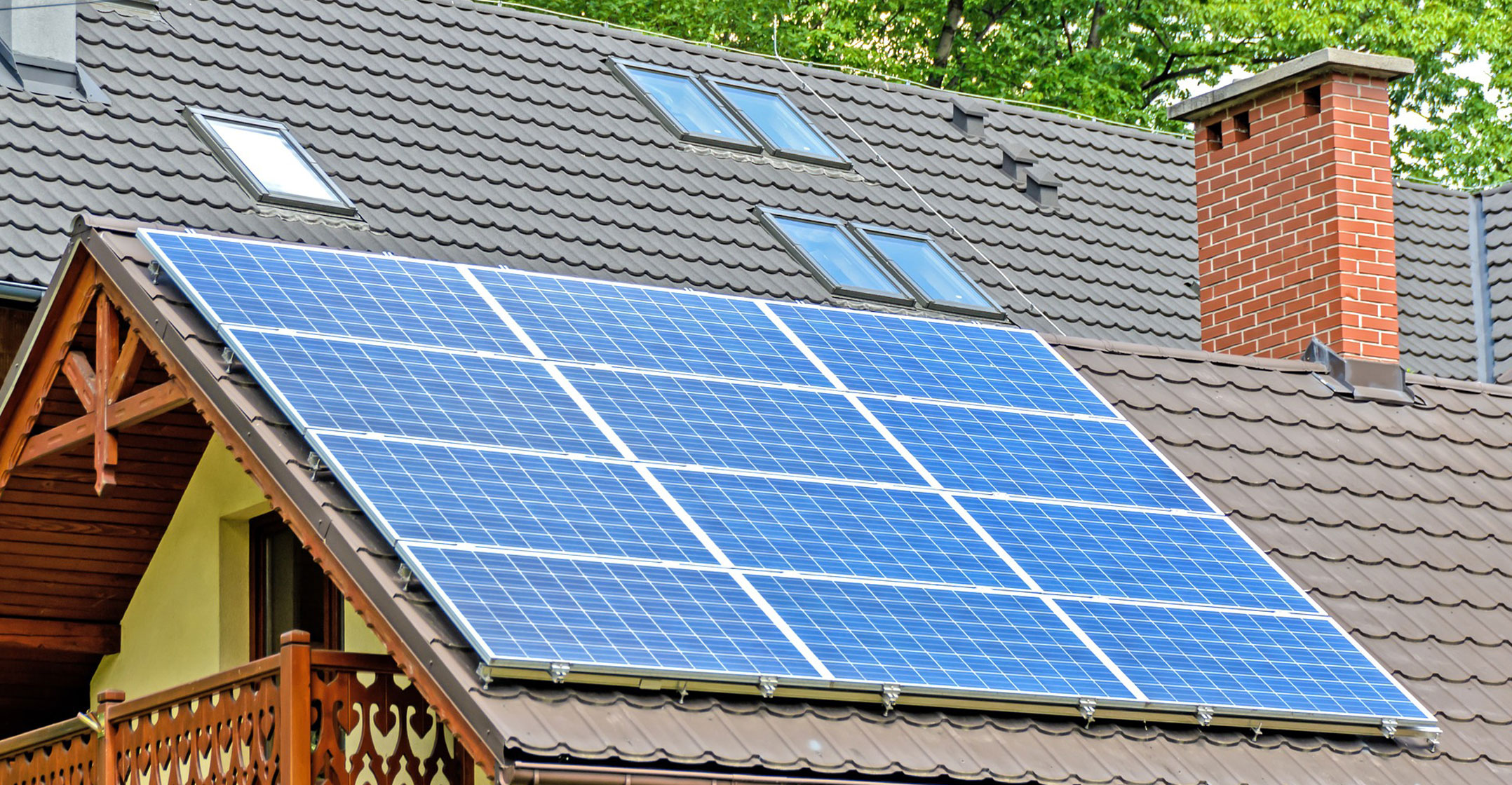
    There’s another thing I can see that Earth Day’s founders would be delighted by. On my roof, barely visible through a skylight, is a solar-power system that will more than meet my power demand for the day. It’s a small thing now, but it would have been an unimaginably big deal in 1970. Five decades on from the first Earth Day, an energy resolution that started low and slow is now changing the world in real time.

    It all started 16 years before the first Earth Day, in 1954, when Bell Laboratories unveiled the first photovoltaic cell

    It all started 16 years before the first Earth Day, in 1954, when Bell Laboratories unveiled the first photovoltaic cell. They called it the “solar battery”, and the ads for it are charming. “The same kindly rays that help the flowers and the grains and the fruits to grow,” reads one, “also send us almost limitless power”. But the early marketing also contained a strong dose of realism: “There’s still much to be done before the battery’s possibilities in telephony and for other uses are fully developed.”

    Much to be done, indeed. Photovoltaics were wildly expensive, complex to produce, and tiny. There wasn’t even a commercial application for them until 1962 with the Telstar 1, the “first privately sponsored space-faring mission” and the first satellite to relay a transatlantic television signal. Now solar power is standard on satellites.

    What a difference

    Other uses followed — power for weather stations, pipeline monitoring systems and off-grid homes — until developments in the mid-1970s made it possible to put a commercial value on PV cells. Make no mistake, they still weren’t cheap. The earliest data BloombergNEF has on solar costs shows that panels went for more than US$100/W in 1976. A residential solar installation needs output of at least several kilowatts. That means a few years after the first Earth Day, a pioneering solar homeowner would have had to spend tens of thousands just on panels, not to mention the costs of engineering, installation and power equipment.

    What a difference four decades makes. Last year, one PV panel cost $0.23/W — a 99.3% decrease. Entire systems now cost less than what the PV module alone cost just seven years ago. Today’s panels are also much better than what came before: more efficient, more reliable, more durable and lighter-weight. I could heft a solar panel on my own if I wanted to. My neighbourhood is now dotted with “We went solar!” signs.
    To put that in context, let’s look at another energy revolution underway prior to the first Earth Day: nuclear power. In 1954, just a few months after Bell Labs brought its Solar Battery to market, Lewis Strauss, the chairman of the US Atomic Energy Commission, gave a speech to the National Association of Science Writers in New York. There’s a key section, one that’s been bandied about often since (emphasis mine):

    Transmutation of the elements — unlimited power, ability to investigate the working of living cells by tracer atoms, the secret of photosynthesis about to be uncovered — these and a host of other results all in 15 short years. It is not too much to expect that our children will enjoy in their homes electrical energy too cheap to meter, will know of great periodic regional famines in the world only as matters of history, will travel effortlessly over the seas and under them and through the air with a minimum of danger and at great speeds, and will experience a lifespan far longer than ours, as disease yields and man comes to understand what causes him to age. This is the forecast for an age of peace.

    Needless to say, the harnessing of the atom didn’t give us energy that’s “too cheap to meter”. Building a new plant now costs tens of billions of dollars, meaning that newly built nuclear power has a hard time competing in many power markets. But the PV module has fulfilled Strauss’s vision and then some: it gave us energy that’s so cheap, people are being paid to use it.

    Negative prices are a feature of a properly functioning energy market, and perhaps you noticed on Monday that the key US oil benchmark closed trading at -$37.63 a barrel. Those are cases where the market must pay someone to take product away in order to balance supply and demand. It’s happening now in electricity, too, thanks to solar and wind power.

    Clear skies over Germany meant that intraday wholesale power prices were negative earlier this week

    Clear skies over Germany meant that intraday wholesale power prices were negative earlier this week. In the UK on 19 April, electric vehicle charging platform Ohme said that its customers were paid 69p to add 210km of charge to their vehicles.

    This is bigger than the market havoc of the pandemic. It’s just the beginning, really, of an energy world with more and more moments of being better than too cheap to meter. People will get paid to charge. Services will crop up, on-demand, to use free or negatively-priced electricity. Fleets of electrolysers will use renewable electrons to produce hydrogen and help reduce emissions in steel, cement and glass production that are right now a tremendous environmental challenge.

    And that’s the revolution. It would have seemed ridiculous even 10 years ago, much less 50, and yet here we are.  — By Nathaniel Bullard, (c) 2020 Bloomberg LP



    top
    Subscribe to TechCentral Subscribe to TechCentral
    Share. Facebook Twitter LinkedIn WhatsApp Telegram Email Copy Link
    Previous ArticleApple to sell Macs with in-house processors in major blow to Intel
    Next Article Openserve to upgrade fibre, DSL line speeds for free

    Related Posts

    18GW in unplanned breakdowns cripple Eskom

    2 November 2021

    Nersa kicks the Karpowership can down the road

    13 September 2021

    If you think South African load shedding is bad, try Zimbabwe’s

    13 September 2021
    Company News
    Beat the summer heat with Samsung's WindFree air conditioners

    Beat the summer heat with Samsung’s WindFree air conditioners

    5 December 2025
    AI is not a technology problem - iqbusiness

    AI is not a technology problem – iqbusiness

    5 December 2025
    Telcos are sitting on a data gold mine - but few know what do with it - Phillip du Plessis

    Telcos are sitting on a data gold mine – but few know what do with it

    4 December 2025
    Opinion
    Your data, your hardware: the DIY AI revolution is coming - Duncan McLeod

    Your data, your hardware: the DIY AI revolution is coming

    20 November 2025
    Zero Carbon Charge founder Joubert Roux

    The energy revolution South Africa can’t afford to miss

    20 November 2025
    It's time for a new approach to government IT spend in South Africa - Richard Firth

    It’s time for a new approach to government IT spend in South Africa

    19 November 2025

    Subscribe to Updates

    Get the best South African technology news and analysis delivered to your e-mail inbox every morning.

    Latest Posts
    Beat the summer heat with Samsung's WindFree air conditioners

    Beat the summer heat with Samsung’s WindFree air conditioners

    5 December 2025
    Netflix, Warner Bros talks raise fresh headaches for MultiChoice

    Netflix, Warner Bros talks raise fresh headaches for MultiChoice

    5 December 2025
    Big Microsoft 365 price increases coming next year

    Big Microsoft price increases coming next year

    5 December 2025
    AI is not a technology problem - iqbusiness

    AI is not a technology problem – iqbusiness

    5 December 2025
    © 2009 - 2025 NewsCentral Media
    • Cookie policy (ZA)
    • TechCentral – privacy and Popia

    Type above and press Enter to search. Press Esc to cancel.

    Manage consent

    TechCentral uses cookies to enhance its offerings. Consenting to these technologies allows us to serve you better. Not consenting or withdrawing consent may adversely affect certain features and functions of the website.

    Functional Always active
    The technical storage or access is strictly necessary for the legitimate purpose of enabling the use of a specific service explicitly requested by the subscriber or user, or for the sole purpose of carrying out the transmission of a communication over an electronic communications network.
    Preferences
    The technical storage or access is necessary for the legitimate purpose of storing preferences that are not requested by the subscriber or user.
    Statistics
    The technical storage or access that is used exclusively for statistical purposes. The technical storage or access that is used exclusively for anonymous statistical purposes. Without a subpoena, voluntary compliance on the part of your Internet Service Provider, or additional records from a third party, information stored or retrieved for this purpose alone cannot usually be used to identify you.
    Marketing
    The technical storage or access is required to create user profiles to send advertising, or to track the user on a website or across several websites for similar marketing purposes.
    • Manage options
    • Manage services
    • Manage {vendor_count} vendors
    • Read more about these purposes
    View preferences
    • {title}
    • {title}
    • {title}