Close Menu
TechCentralTechCentral

    Subscribe to the newsletter

    Get the best South African technology news and analysis delivered to your e-mail inbox every morning.

    Facebook X (Twitter) YouTube LinkedIn
    WhatsApp Facebook X (Twitter) LinkedIn YouTube
    TechCentralTechCentral
    • News
      Big Microsoft 365 price increases coming next year

      Big Microsoft price increases coming next year

      5 December 2025
      Vodacom to take control of Safaricom in R36-billion deal - Shameel Joosub

      Vodacom to take control of Safaricom in R36-billion deal

      4 December 2025
      Black Friday goes digital in South Africa as online spending surges to record high

      Black Friday goes digital in South Africa as online spending surges to record high

      4 December 2025
      BYD takes direct aim at Toyota with launch of sub-R500 000 Sealion 5 PHEV

      BYD takes direct aim at Toyota with launch of sub-R500 000 Sealion 5 PHEV

      4 December 2025
      'Get it now': Takealot in new instant deliveries pilot

      ‘Get it now’: Takealot in new instant deliveries pilot

      4 December 2025
    • World
      Amazon and Google launch multi-cloud service for faster connectivity

      Amazon and Google launch multi-cloud service for faster connectivity

      1 December 2025
      Google makes final court plea to stop US breakup

      Google makes final court plea to stop US breakup

      21 November 2025
      Bezos unveils monster rocket: New Glenn 9x4 set to dwarf Saturn V

      Bezos unveils monster rocket: New Glenn 9×4 set to dwarf Saturn V

      21 November 2025
      Tech shares turbocharged by Nvidia's stellar earnings

      Tech shares turbocharged by stellar Nvidia earnings

      20 November 2025
      Config file blamed for Cloudflare meltdown that disrupted the web

      Config file blamed for Cloudflare meltdown that disrupted the web

      19 November 2025
    • In-depth
      Jensen Huang Nvidia

      So, will China really win the AI race?

      14 November 2025
      Valve's Linux console takes aim at Microsoft's gaming empire

      Valve’s Linux console takes aim at Microsoft’s gaming empire

      13 November 2025
      iOCO's extraordinary comeback plan - Rhys Summerton

      iOCO’s extraordinary comeback plan

      28 October 2025
      Why smart glasses keep failing - no, it's not the tech - Mark Zuckerberg

      Why smart glasses keep failing – it’s not the tech

      19 October 2025
      BYD to blanket South Africa with megawatt-scale EV charging network - Stella Li

      BYD to blanket South Africa with megawatt-scale EV charging network

      16 October 2025
    • TCS
      TCS+ | How Cloud on Demand helps partners thrive in the AWS ecosystem - Odwa Ndyaluvane and Xenia Rhode

      TCS+ | How Cloud On Demand helps partners thrive in the AWS ecosystem

      4 December 2025
      TCS | MTN Group CEO Ralph Mupita on competition, AI and the future of mobile

      TCS | Ralph Mupita on competition, AI and the future of mobile

      28 November 2025
      TCS | Dominic Cull on fixing South Africa's ICT policy bottlenecks

      TCS | Dominic Cull on fixing South Africa’s ICT policy bottlenecks

      21 November 2025
      TCS | BMW CEO Peter van Binsbergen on the future of South Africa's automotive industry

      TCS | BMW CEO Peter van Binsbergen on the future of South Africa’s automotive industry

      6 November 2025
      TCS | Why Altron is building an AI factory - Bongani Andy Mabaso

      TCS | Why Altron is building an AI factory in Johannesburg

      28 October 2025
    • Opinion
      Your data, your hardware: the DIY AI revolution is coming - Duncan McLeod

      Your data, your hardware: the DIY AI revolution is coming

      20 November 2025
      Zero Carbon Charge founder Joubert Roux

      The energy revolution South Africa can’t afford to miss

      20 November 2025
      It's time for a new approach to government IT spend in South Africa - Richard Firth

      It’s time for a new approach to government IT spend in South Africa

      19 November 2025
      How South Africa's broken Rica system fuels murder and mayhem - Farhad Khan

      How South Africa’s broken Rica system fuels murder and mayhem

      10 November 2025
      South Africa's AI data centre boom risks overloading a fragile grid - Paul Colmer

      South Africa’s AI data centre boom risks overloading a fragile grid

      30 October 2025
    • Company Hubs
      • Africa Data Centres
      • AfriGIS
      • Altron Digital Business
      • Altron Document Solutions
      • Altron Group
      • Arctic Wolf
      • AvertITD
      • Braintree
      • CallMiner
      • CambriLearn
      • CYBER1 Solutions
      • Digicloud Africa
      • Digimune
      • Domains.co.za
      • ESET
      • Euphoria Telecom
      • Incredible Business
      • iONLINE
      • IQbusiness
      • Iris Network Systems
      • LSD Open
      • NEC XON
      • Netstar
      • Network Platforms
      • Next DLP
      • Ovations
      • Paracon
      • Paratus
      • Q-KON
      • SevenC
      • SkyWire
      • Solid8 Technologies
      • Telit Cinterion
      • Tenable
      • Vertiv
      • Videri Digital
      • Vodacom Business
      • Wipro
      • Workday
      • XLink
    • Sections
      • AI and machine learning
      • Banking
      • Broadcasting and Media
      • Cloud services
      • Contact centres and CX
      • Cryptocurrencies
      • Education and skills
      • Electronics and hardware
      • Energy and sustainability
      • Enterprise software
      • Financial services
      • Information security
      • Internet and connectivity
      • Internet of Things
      • Investment
      • IT services
      • Lifestyle
      • Motoring
      • Public sector
      • Retail and e-commerce
      • Satellite communications
      • Science
      • SMEs and start-ups
      • Social media
      • Talent and leadership
      • Telecoms
    • Events
    • Advertise
    TechCentralTechCentral
    Home » Sections » Energy and sustainability » The Eskom bailout won’t end power cuts, but here’s what will

    The Eskom bailout won’t end power cuts, but here’s what will

    One way to end electricity shortages is to allow competitively priced and privately funded generation at scale.
    By Roy Havemann24 February 2023
    Twitter LinkedIn Facebook WhatsApp Email Telegram Copy Link
    News Alerts
    WhatsApp

    The announcement by finance minister Enoch Godongwana of debt relief for the country’s troubled power utility, Eskom, is a step forward. It will fix one problem: Eskom has too much debt. But the plan won’t end power cuts which have worsened in recent years.

    The international experience is that one way to end electricity shortages is to allow competitively priced and privately funded generation at scale. This requires a reorganisation of South Africa’s electricity market along the lines announced by the department of public enterprises nearly four years ago. The crux of the plan was to split Eskom into three separate units – generation, transmission and distribution, with transmission remaining state owned.

    With the announced conditions, which include the requirement that Eskom prioritise capital expenditure in transmission and distribution during the debt-relief period, the finance minister has missed an opportunity to finally achieve this.

    A monopoly in generation is bad for all the same reasons that all monopolies are bad

    Other countries that have had power cuts offer South Africa lessons. China, for example, faced rolling blackouts between 2003 and 2006 because of an unexpected growth spurt. In 2015, Greece was in the middle of a financial crisis and its people could not afford the electricity supply, some of which came through a complex deal with Russia. And in Colombia, a drought in 1992 caused the main source of electricity supply – which came from a hydroelectric plant – literally to dry up.

    All these countries experienced power cuts. But South Africa is the only country to have had power shortages for 15 years. This is because the others moved quickly to rejig their electricity supply systems.

    All three countries followed a similar route, as have many others. They untangled their single electricity companies, focusing on keeping parts of it under state control and opening up the rest to a mix of state and private companies.

    Three parts

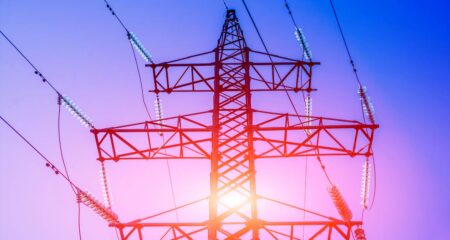
    The electricity supply system has three parts. First is generation – generating electricity at a power plant. Second is transmission – moving it from the power plant to the municipality, usually on a high-voltage line. Finally, distribution is about getting it the last few metres to a house or factory.

    High-voltage transmission is what economists call a “natural monopoly”. It is more efficient if there is a single electricity grid for an area, rather than multiple grids. This part is best managed by a central body – in many countries a state-owned company. Because the transmission business can recover costs, it can use that income to increase transmission capacity, something that is urgently needed.

    But China, Colombia and Greece all recognised that generation no longer needs to be a monopoly. Actually, a monopoly in generation is bad for all the same reasons that all monopolies are bad. They typically charge more and produce less. You need a complicated regulatory system to get their prices right. Smaller generation companies are easier to manage.

    Read: Eskom bailout mandates partial privatisation of South Africa’s power grid

    Distribution is best left to a company as close to the end user as possible – in almost all countries, that is the municipality. In South Africa, it is a mix. For example, City Power distributes electricity to customers in older parts of Johannesburg. But Eskom distributes electricity direct in outlying parts of the metros.

    This means that Eskom has to do everything: generate electricity, transmit it on large power lines to the cities and then distribute it to individual customers. It is a “vertical monopoly”. This makes it a fiendishly complex company to manage. Very few countries have such an arrangement – most prefer to allow specialist businesses in each part of the system.

    Here’s what happened when generation was untangled from the rest of the state-owned monopoly in China. Between 2003 and 2006, new generation companies added over 237GW to the Chinese grid. That’s the equivalent of delivering nearly 10 Eskoms in three years.

    In 2019, the department of public enterprises published a detailed and clear road map to follow this route, separating Eskom into generation, transmission and distribution. Internally, Eskom is already structured that way. On 17 December 2021, the legally binding merger agreement was executed to transfer transmission to the National Transmission Company South Africa SOC Limited.

    But the very last step has not been taken, despite being government policy since 1998. Every time the proposed separation comes closer to happening, there has been fierce resistance from both unions and Eskom management. In 2018, it was because of load shedding. During the years when there was no load shedding and plants were being run too hard, it was because it was not urgent. And since the current electricity crisis, it is because there is load shedding and Eskom is not financially viable. But it is precisely because Eskom is in financial distress that the separation needs to be accelerated.

    In 2023, two things make it possible to do the separation very quickly.

    The first is a new CEO. If the government is serious about the separation, as it has regularly said it is, it doesn’t make sense to appoint a single new CEO. Separate CEOs should be appointed for the National Transmission Company and for the other businesses. An independent board of directors for the transmission company should also be appointed.

    Read: Investors in Eskom cheer government debt plan

    The second is a technical issue related to Eskom’s debt. At the moment, Eskom as a whole is liable for the Eskom debt. The debt holders need to consent to any change in the legal structure.

    The national treasury has announced that approximately R254-billion of Eskom debt will be transferred to the national balance sheet in tranches over the next three years. Debt holders can be asked to approve the transfer of debt and the final piece of the restructuring at the same time. The legal and technical work has all been done – the National Transmission Company exists, and it just needs life and capital. It would have been far better to use the R254-billion to help capitalise this critical new company.

    Most debt holders will jump at the chance – certainty on the long-promised new structure as it will go a long way to fix energy problems in the country. Also, it will improve the chances that debt holders will get their interest payments on the debt that isn’t transferred.

    Read: Scale of Eskom crisis laid bare in five charts

    Unfortunately, the conditions that the national treasury has announced do not include the final unbundling. There is still an opportunity – the government’s conditions still have to be finalised. Eskom’s unbundling is one of the priorities of Operation Vulindlela, a joint initiative of the presidency and national treasury aimed at accelerating structural reforms and measures that can support economic recovery.

    Hopefully the government will learn from the international experience and use the R254-billion to fix fundamentally the problem of a vertically integrated, inefficient and ineffective monopoly. And with that, end power cuts.The Conversation

    • The author, Roy Havemann, is research associate, Stellenbosch University
    • This article is republished from The Conversation under a Creative Commons licence

    Eskom Roy Havemann
    Subscribe to TechCentral Subscribe to TechCentral
    Share. Facebook Twitter LinkedIn WhatsApp Telegram Email Copy Link
    Previous ArticleHuge setback as South Africa grey-listed by financial crime watchdog
    Next Article IT Leadership Series | Knowledge Factory CEO Ashwin Frankie

    Related Posts

    Eskom targets 2027 approval for new 5.2GW nuclear facility

    Eskom targets 2027 approval for new 5.2GW nuclear facility

    2 December 2025
    Eskom profit surges 37% as load shedding virtually vanishes

    Eskom profit surges 37% as load shedding virtually vanishes

    28 November 2025
    Big step forward in opening South Africa's electricity market - NTCSA

    Big step forward in opening South Africa’s electricity market

    28 November 2025
    Company News
    AI is not a technology problem - iqbusiness

    AI is not a technology problem – iqbusiness

    5 December 2025
    Telcos are sitting on a data gold mine - but few know what do with it - Phillip du Plessis

    Telcos are sitting on a data gold mine – but few know what do with it

    4 December 2025
    Unlock smarter computing with your surface Copilot+ PC

    Unlock smarter computing with your Surface Copilot+ PC

    4 December 2025
    Opinion
    Your data, your hardware: the DIY AI revolution is coming - Duncan McLeod

    Your data, your hardware: the DIY AI revolution is coming

    20 November 2025
    Zero Carbon Charge founder Joubert Roux

    The energy revolution South Africa can’t afford to miss

    20 November 2025
    It's time for a new approach to government IT spend in South Africa - Richard Firth

    It’s time for a new approach to government IT spend in South Africa

    19 November 2025

    Subscribe to Updates

    Get the best South African technology news and analysis delivered to your e-mail inbox every morning.

    Latest Posts
    Big Microsoft 365 price increases coming next year

    Big Microsoft price increases coming next year

    5 December 2025
    AI is not a technology problem - iqbusiness

    AI is not a technology problem – iqbusiness

    5 December 2025
    Vodacom to take control of Safaricom in R36-billion deal - Shameel Joosub

    Vodacom to take control of Safaricom in R36-billion deal

    4 December 2025
    Black Friday goes digital in South Africa as online spending surges to record high

    Black Friday goes digital in South Africa as online spending surges to record high

    4 December 2025
    © 2009 - 2025 NewsCentral Media
    • Cookie policy (ZA)
    • TechCentral – privacy and Popia

    Type above and press Enter to search. Press Esc to cancel.

    Manage consent

    TechCentral uses cookies to enhance its offerings. Consenting to these technologies allows us to serve you better. Not consenting or withdrawing consent may adversely affect certain features and functions of the website.

    Functional Always active
    The technical storage or access is strictly necessary for the legitimate purpose of enabling the use of a specific service explicitly requested by the subscriber or user, or for the sole purpose of carrying out the transmission of a communication over an electronic communications network.
    Preferences
    The technical storage or access is necessary for the legitimate purpose of storing preferences that are not requested by the subscriber or user.
    Statistics
    The technical storage or access that is used exclusively for statistical purposes. The technical storage or access that is used exclusively for anonymous statistical purposes. Without a subpoena, voluntary compliance on the part of your Internet Service Provider, or additional records from a third party, information stored or retrieved for this purpose alone cannot usually be used to identify you.
    Marketing
    The technical storage or access is required to create user profiles to send advertising, or to track the user on a website or across several websites for similar marketing purposes.
    • Manage options
    • Manage services
    • Manage {vendor_count} vendors
    • Read more about these purposes
    View preferences
    • {title}
    • {title}
    • {title}