Close Menu
TechCentralTechCentral

    Subscribe to the newsletter

    Get the best South African technology news and analysis delivered to your e-mail inbox every morning.

    Facebook X (Twitter) YouTube LinkedIn
    WhatsApp Facebook X (Twitter) LinkedIn YouTube
    TechCentralTechCentral
    • News
      South Africa's new fibre broadband battle

      South Africa’s new fibre broadband battle

      20 January 2026
      South Africa needs a national 'quantum defence strategy'

      South Africa needs a national ‘quantum defence strategy’

      20 January 2026
      Chinese brands tighten grip on South Africa's used car market

      Chinese brands tighten grip on South Africa’s used car market

      20 January 2026
      Severe geomagnetic storm hits Earth, Sansa confirms

      Severe geomagnetic storm hits Earth, Sansa confirms

      20 January 2026
      Icasa to target Sentech with tougher broadcast pricing rules

      Icasa to target Sentech with tougher broadcast pricing rules

      19 January 2026
    • World
      Taiwan, US strike strategic AI and chip supply-chain pact - TSMC

      Taiwan, US strike strategic AI and chip supply-chain pact

      20 January 2026
      Oracle sued as bondholders allege AI debt plans were hidden - Larry Ellison

      Oracle sued as bondholders allege AI debt plans were hidden

      15 January 2026
      Activists call for X, Grok to removed from app stores - Elon Musk

      Activists call for X, Grok to removed from app stores

      14 January 2026
      Uganda shuts down internet ahead of pivotal election

      Uganda shuts down internet ahead of pivotal election

      14 January 2026
      Taiwan seeks arrest of OnePlus CEO - Pete Lau

      Taiwan seeks arrest of OnePlus CEO

      14 January 2026
    • In-depth
      Digital authoritarianism grows as African states normalise internet blackouts

      Digital authoritarianism grows as African states normalise internet blackouts

      19 December 2025
      TechCentral's South African Newsmakers of 2025

      TechCentral’s South African Newsmakers of 2025

      18 December 2025
      Black Friday goes digital in South Africa as online spending surges to record high

      Black Friday goes digital in South Africa as online spending surges to record high

      4 December 2025
      DStv dodges channel blackout in last-minute deal with Warner Bros

      Canal+ plays hardball – and DStv viewers feel the pain

      3 December 2025
      Jensen Huang Nvidia

      So, will China really win the AI race?

      14 November 2025
    • TCS

      TCS+ | Why cybersecurity is becoming a competitive advantage for SA businesses

      20 January 2026
      TCS+ | Africa's digital transformation - unlocking AI through cloud and culture - Cliff de Wit Accelera Digital Group

      TCS+ | Cloud without culture won’t deliver AI: Accelera’s Cliff de Wit

      12 December 2025
      TCS+ | How Cloud on Demand helps partners thrive in the AWS ecosystem - Odwa Ndyaluvane and Xenia Rhode

      TCS+ | How Cloud On Demand helps partners thrive in the AWS ecosystem

      4 December 2025
      TCS | MTN Group CEO Ralph Mupita on competition, AI and the future of mobile

      TCS | Ralph Mupita on competition, AI and the future of mobile

      28 November 2025
      TCS | Dominic Cull on fixing South Africa's ICT policy bottlenecks

      TCS | Dominic Cull on fixing South Africa’s ICT policy bottlenecks

      21 November 2025
    • Opinion
      AI moves from pilots to production in South African companies - Nazia Pillay SAP

      AI moves from pilots to production in South African companies

      20 January 2026
      ANC's attack on Solly Malatsi shows how BEE dogma trumps economic reality - Duncan McLeod

      ANC’s attack on Solly Malatsi shows how BEE dogma trumps economic reality

      14 December 2025
      Netflix, Warner Bros deal raises fresh headaches for MultiChoice - Duncan McLeod

      Netflix, Warner Bros deal raises fresh headaches for MultiChoice

      5 December 2025
      BIN scans, DDoS and the next cybercrime wave hitting South Africa's banks - Entersekt Gerhard Oosthuizen

      BIN scans, DDoS and the next cybercrime wave hitting South Africa’s banks

      3 December 2025
      ANC's attack on Solly Malatsi shows how BEE dogma trumps economic reality - Duncan McLeod

      Your data, your hardware: the DIY AI revolution is coming

      20 November 2025
    • Company Hubs
      • Africa Data Centres
      • AfriGIS
      • Altron Digital Business
      • Altron Document Solutions
      • Altron Group
      • Arctic Wolf
      • AvertITD
      • Braintree
      • CallMiner
      • CambriLearn
      • CYBER1 Solutions
      • Digicloud Africa
      • Digimune
      • Domains.co.za
      • ESET
      • Euphoria Telecom
      • Incredible Business
      • iONLINE
      • IQbusiness
      • Iris Network Systems
      • LSD Open
      • NEC XON
      • Netstar
      • Network Platforms
      • Next DLP
      • Ovations
      • Paracon
      • Paratus
      • Q-KON
      • SevenC
      • SkyWire
      • Solid8 Technologies
      • Telit Cinterion
      • Tenable
      • Vertiv
      • Videri Digital
      • Vodacom Business
      • Wipro
      • Workday
      • XLink
    • Sections
      • AI and machine learning
      • Banking
      • Broadcasting and Media
      • Cloud services
      • Contact centres and CX
      • Cryptocurrencies
      • Education and skills
      • Electronics and hardware
      • Energy and sustainability
      • Enterprise software
      • Financial services
      • Information security
      • Internet and connectivity
      • Internet of Things
      • Investment
      • IT services
      • Lifestyle
      • Motoring
      • Public sector
      • Retail and e-commerce
      • Satellite communications
      • Science
      • SMEs and start-ups
      • Social media
      • Talent and leadership
      • Telecoms
    • Events
    • Advertise
    TechCentralTechCentral
    Home » In-depth » The Godfather, $700-billion and a crazy game of chicken

    The Godfather, $700-billion and a crazy game of chicken

    By Tim Culpan28 October 2021
    Twitter LinkedIn Facebook WhatsApp Email Telegram Copy Link
    News Alerts
    WhatsApp

    Global investors are in for a treat. An extremely expensive game of one-upmanship is being played out in the semiconductor industry where the winners will look like heroes and the rest may not even survive.

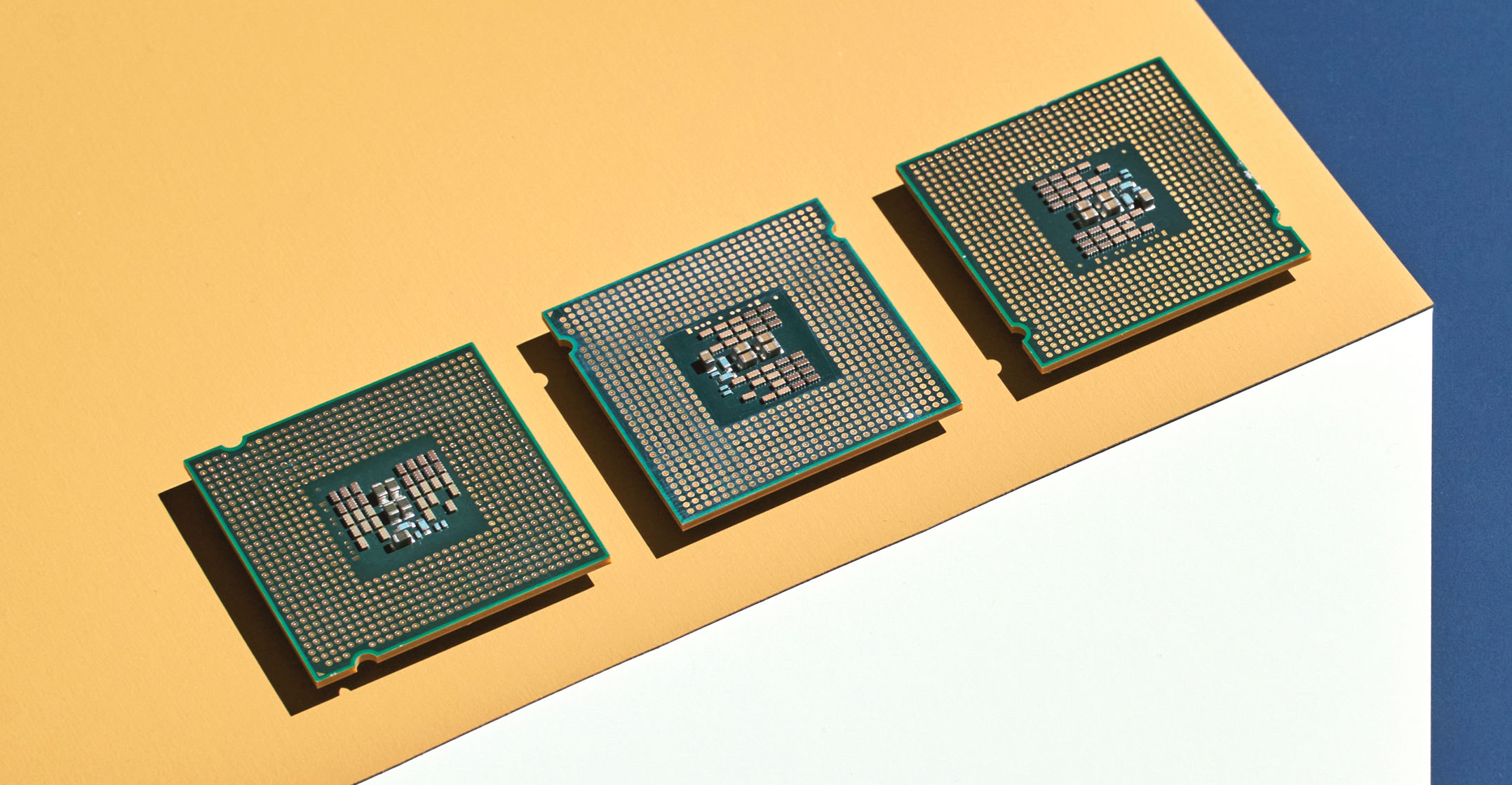
    All told, more than US$700-billion (R10.6-trillion) has been pledged over the next decade to expand production capacity for the chips that run smartphones, power data centres, and one day will drive cars. Samsung Electronics is the latest show its hand, reporting third-quarter numbers that put it on track to post record spending for 2021 and setting it up for even more next year. In August, the South Korean giant said it will bring forward plans to invest $150-billion on advanced chip-making, joining Taiwan Semiconductor Manufacturing Co, Intel, Micron Technology and SK Hynix in a massive gamble that the world’s appetite for electronics will continue unabated. By comparison, those five companies shelled out just $70-billion in 2018.

    This sudden hunger for capacity is being pinned on the recent component shortage that’s crimped car output and driven up prices. Yet the latest data on lead times between orders and delivery indicate this crisis has already peaked.

    Semiconductor companies are accelerating towards a capex cliff 

    Beyond this short-term hiccup, executives are betting that a confluence of 5G mobile communications, artificial intelligence and greater automation across industries including transport and manufacturing will create a sustained need for more chips.

    They might be right, but that still doesn’t justify their ridiculous spending plans.

    Instead, it seems nationalism and government interference are having an outsize influence on market forces, which will result in excessive expansion that won’t be matched by even the most bullish of demand scenarios.

    Bold blueprint

    Samsung said on Thursday that it plans to triple some capacity by 2026, which comes in the context of a bold blueprint outlined earlier this year by Korean President Moon Jae-in aimed at keeping the nation’s place as a technology powerhouse. Between them, Samsung and SK Hynix expect to spend around $450-billion in the coming decade with more than 150 other companies as part of a coordinated effort to continue the development and production of semiconductors, which the government calls a “strategic weapon”.

    Intel CEO Pat Gelsinger and Micron CEO Sanjay Mehrotra are determined not to let the US fall behind either, and have spent much of this year lobbying Washington for handouts to fund their own expensive programmes. Micron last week pledged $150-billion on factories and R&D over the next 10 years and made clear that it expects the government to give grants and tax breaks to help make that happen.

    Gelsinger and his team have been less subtle about their demands. The 60-year-old, who returned to head Intel after more than a decade away, is boosting spending by 30% this year to $19-billion and is likely to increase that figure three-fold over the next few years as he seeks to catch up with TSMC and Samsung. But plans to develop a new factory on US soil “would be very difficult” without the government doling out more than $50-billion of incentives outlined in the bipartisan Chips Act that’s yet to pass the house, government relations chief Al Thompson said last week.
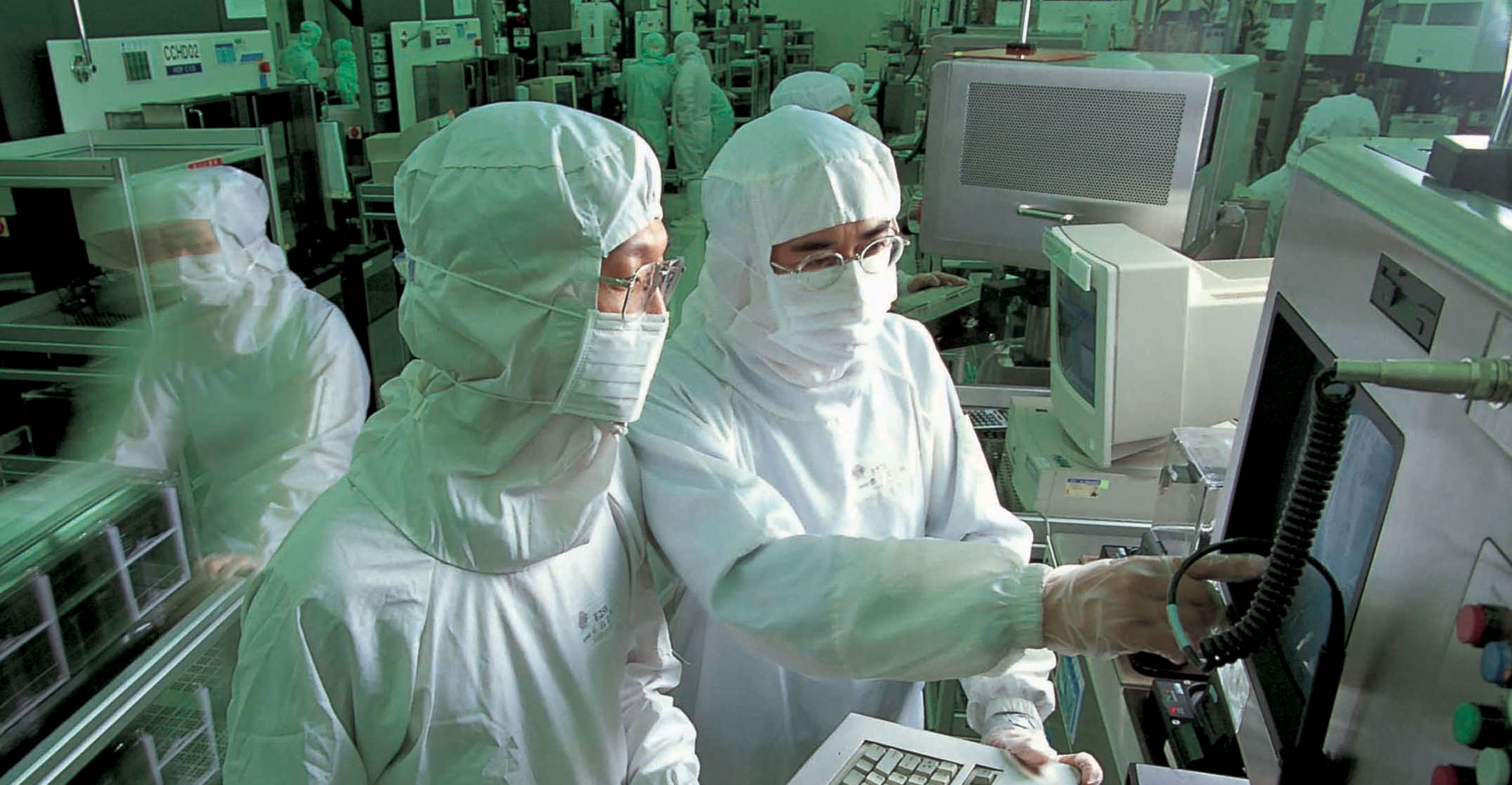
    Workers in a TSMC chip fabrication plant

    In the middle of this is global leader TSMC, which is being courted by governments around the world but would much rather keep its factories at home. Political pressure from Washington, coupled with generous enticements, left the Hsinchu-based company with little choice but to announce a new factory in Arizona, just down the road from one of Intel’s largest operations.

    But company founder and former chairman Morris Chang hasn’t minced words on US hopes of revitalising a sector that lends its name to Silicon Valley. Known as the Godfather of the local chip industry, Chang has repeatedly noted that high costs, a dearth of local suppliers and comparative lack of talent puts the US behind Taiwan and other nations. Gelsinger’s argument that the industry needs to be re-shored are driven by self-interest, Chang said this week in Taipei.

    The problem for Intel and those in Washington is that Chang, himself a US citizen, is not wrong. Intel fell behind in manufacturing technology, lost ground in computer processors to local rival AMD and was recently dumped by Apple. Gelsinger is pinning his hopes of returning the company to relevance on a brash plan to expand capacity and enter the chip foundry business dominated by TSMC and Samsung. But to pay for it, as Thompson noted, the company needs American taxpayer help.

    Even with the looming adoption of more advanced semiconductors, there won’t be enough growth to cover the costs

    Seoul also doesn’t want to fall behind. While China is lagging in semiconductor technology, it may pose a threat in memory chips — the bread and butter of South Korea’s industry and a commodity product sold mostly on price. An onslaught of cheap components could strike a painful, though not fatal, blow to Samsung and SK Hynix. The natural response is to boost capacity and technology to stay ahead of the game, while also allowing it to move into new areas like telecommunications and AI.

    But even with the looming adoption of more advanced semiconductors, there won’t be enough growth to cover the costs.

    By my calculations, the top five semiconductor manufacturers — which between them account for half the market — will spend close to $150-billion on capex in 2023, almost double what they shelled out in 2019 and around 50% more than projections for this year. Yet, according to trade group WSTS, global semiconductor growth is likely to climb just 10% next year. Data compiled by Bloomberg Intelligence suggests even more sedate numbers with just 4% expansion next year and only 9% from 2021 to 2023.

    Supply > demand

    We’re already seeing signs that supply is outpacing demand in memory, which this year will account for 29% of the chip market, resulting in falling prices.

    If trade groups and analysts envision only modest growth in coming years, you can be sure industry executives do, too. That means their aggressive capacity expansion isn’t driven by a deep belief that the market is truly going to double in just four years, as their spending suggests, but that they’re in a desperate land grab hoping that size and capacity will be enough to muscle out rivals.

    TSMC’s Chang is right that the lobbying efforts are driven by self-interest. But cheered on and funded by eager politicians, global semiconductor companies are accelerating towards a capex cliff. Let’s see who flinches first, and who plunges off the edge.  — (c) 2021 Bloomberg LP



    Intel Morris Chang Pat Gelsinger Samsung SK Hynix TSMC
    WhatsApp YouTube Follow on Google News Add as preferred source on Google
    Share. Facebook Twitter LinkedIn WhatsApp Telegram Email Copy Link
    Previous ArticleTechCentral Webinar: Debunking common myths to get to cloud security truths
    Next Article Samsung is doubling down on foldables

    Related Posts

    Taiwan, US strike strategic AI and chip supply-chain pact - TSMC

    Taiwan, US strike strategic AI and chip supply-chain pact

    20 January 2026
    Apple tops global smartphone rankings in 2025

    Apple tops global smartphone rankings in 2025

    12 January 2026
    India seeks unprecedented access to smartphone software - Narendra Modi

    India seeks unprecedented access to smartphone software

    12 January 2026
    Company News
    How Norton is protecting digital lives in a hostile online world - Avert ITD Avert IT Distribution

    How Norton is protecting digital lives in a hostile online world

    20 January 2026
    Beyond the hype: trust is the first step to generative AI ROI

    Beyond the hype: trust is the first step to generative AI ROI

    19 January 2026
    New Planet Energy and Span Africa launch landmark solar project

    New Planet Energy and Span Africa launch landmark solar project

    19 January 2026
    Opinion
    AI moves from pilots to production in South African companies - Nazia Pillay SAP

    AI moves from pilots to production in South African companies

    20 January 2026
    ANC's attack on Solly Malatsi shows how BEE dogma trumps economic reality - Duncan McLeod

    ANC’s attack on Solly Malatsi shows how BEE dogma trumps economic reality

    14 December 2025
    Netflix, Warner Bros deal raises fresh headaches for MultiChoice - Duncan McLeod

    Netflix, Warner Bros deal raises fresh headaches for MultiChoice

    5 December 2025

    Subscribe to Updates

    Get the best South African technology news and analysis delivered to your e-mail inbox every morning.

    Latest Posts
    South Africa's new fibre broadband battle

    South Africa’s new fibre broadband battle

    20 January 2026
    South Africa needs a national 'quantum defence strategy'

    South Africa needs a national ‘quantum defence strategy’

    20 January 2026
    AI moves from pilots to production in South African companies - Nazia Pillay SAP

    AI moves from pilots to production in South African companies

    20 January 2026
    Taiwan, US strike strategic AI and chip supply-chain pact - TSMC

    Taiwan, US strike strategic AI and chip supply-chain pact

    20 January 2026
    © 2009 - 2026 NewsCentral Media
    • Cookie policy (ZA)
    • TechCentral – privacy and Popia

    Type above and press Enter to search. Press Esc to cancel.

    Manage consent

    TechCentral uses cookies to enhance its offerings. Consenting to these technologies allows us to serve you better. Not consenting or withdrawing consent may adversely affect certain features and functions of the website.

    Functional Always active
    The technical storage or access is strictly necessary for the legitimate purpose of enabling the use of a specific service explicitly requested by the subscriber or user, or for the sole purpose of carrying out the transmission of a communication over an electronic communications network.
    Preferences
    The technical storage or access is necessary for the legitimate purpose of storing preferences that are not requested by the subscriber or user.
    Statistics
    The technical storage or access that is used exclusively for statistical purposes. The technical storage or access that is used exclusively for anonymous statistical purposes. Without a subpoena, voluntary compliance on the part of your Internet Service Provider, or additional records from a third party, information stored or retrieved for this purpose alone cannot usually be used to identify you.
    Marketing
    The technical storage or access is required to create user profiles to send advertising, or to track the user on a website or across several websites for similar marketing purposes.
    • Manage options
    • Manage services
    • Manage {vendor_count} vendors
    • Read more about these purposes
    View preferences
    • {title}
    • {title}
    • {title}