Close Menu
TechCentralTechCentral

    Subscribe to the newsletter

    Get the best South African technology news and analysis delivered to your e-mail inbox every morning.

    Facebook X (Twitter) YouTube LinkedIn
    WhatsApp Facebook X (Twitter) LinkedIn YouTube
    TechCentralTechCentral
    • News
      South African IT spending surging as AI boom lands locally

      South African IT spending surging as AI boom lands locally

      29 July 2026
      Radical rethink for South Africa's national AI policy

      Radical rethink for South Africa’s national AI policy

      29 July 2026
      South African tech's compounding debt problem

      South African tech’s compounding debt problem

      29 July 2026
      Russia charges Telegram founder with terrorism - Pavel Durov

      Russia charges Telegram founder with terrorism

      29 July 2026
      Green light for massive new Cape Town data centres

      Green light for massive new Cape Town data centres

      29 July 2026
    • World
      Meta AI will now tell parents if their teen is in crisis

      Meta AI will now tell parents if their teen is in crisis

      17 July 2026
      IBM shares crash 25% as AI upends software spending - Arvind Krishna

      IBM shares crash 25% as AI upends software spending

      15 July 2026
      Jony Ive's first OpenAI device: an AI smart speaker - Jony Ive and Sam Altman

      Jony Ive’s first OpenAI device: an AI smart speaker

      15 July 2026
      Stripe, Advent in talks to buy PayPal for $53-billion

      Stripe, Advent in talks to buy PayPal for $53-billion

      15 July 2026
      Memory crisis sends smartphone market into steep decline

      Memory crisis sends smartphone market into steep decline

      13 July 2026
    • In-depth
      The plan to stop AI from breaking the world - Google DeepMind CEO Demis Hassabis. Image: John Sears

      The plan to stop AI from breaking the world

      16 July 2026
      The internet has a Strait of Hormuz problem

      The internet has a Strait of Hormuz problem

      15 July 2026
      AI boom sparks rally, frenzy and fear

      AI boom sparks rally, frenzy and fear

      11 June 2026
      Every plug-in hybrid on sale in South Africa, ranked by price - Lamborghini Temerario

      Every plug-in hybrid on sale in South Africa, ranked by price

      7 June 2026
      What Wi-Fi 8 will mean for wireless networks

      What Wi-Fi 8 will mean for wireless networks

      1 June 2026
    • TCS
      TCS+ | A smarter approach to cloud for South African businesses - Joel Chacko and Jonathan Oaker

      TCS+ | A smarter approach to cloud for South African businesses

      28 July 2026
      TCS | How Optasia lends billions to people banks can't see - Salvador Anglada

      TCS | How Optasia lends billions to people banks can’t see

      23 July 2026
      The rands-and-cents case for electric trucks - William Kelly Watts & Wheels with Wills

      The rands-and-cents case for electric trucks

      20 July 2026
      Watts & Wheels S1E7: 'Ferrari's EV breaks the internet'

      Watts & Wheels S1E7: ‘Ferrari’s EV breaks the internet’

      8 July 2026
      TCS | Pick n Pay's Enrico Ferigolli on Penny, the AI that shops for you

      TCS | Pick n Pay’s Enrico Ferigolli on Penny, the AI that shops for you

      2 July 2026
    • Opinion
      The author, Jannie van Zyl

      Selling vapour is corporate suicide in slow motion

      16 July 2026
      Brazil's online gambling crackdown is a lesson for South Africa

      How Amazon outmanoeuvred Starlink in South Africa

      15 July 2026
      The Popia problem with agentic AI - Herman Haasbroek

      The Popia problem with agentic AI

      14 July 2026
      The author, Fanie van Rooyen

      South Africa can still catch the AI wave – here’s how

      7 July 2026
      The author, Fanie van Rooyen

      The AI utopia South Africa can’t afford

      1 July 2026
    • Company Hubs
      • 1Stream
      • Africa Data Centres
      • AfriGIS
      • Altron Digital Business
      • Altron Document Solutions
      • Altron Group
      • Arctic Wolf
      • Ascent Technology
      • AvertITD
      • BBD
      • Braintree
      • CallMiner
      • CambriLearn
      • CM Telecom
      • Contactable
      • CYBER1 Solutions
      • Digicloud Africa
      • Digimune
      • Domains.co.za
      • ESET
      • Euphoria Telecom
      • HOSTAFRICA
      • Incredible Business
      • iONLINE
      • IQbusiness
      • Iris Network Systems
      • Kaspersky
      • LSD Open
      • Mitel
      • NEC XON
      • Netstar
      • Network Platforms
      • Next DLP
      • Ovations
      • Paracon
      • Paratus
      • Q-KON
      • SevenC
      • SkyWire
      • Solid8 Technologies
      • Telit Cinterion
      • Telviva
      • Tenable
      • Vertiv
      • Videri Digital
      • Vodacom Business
      • Vox
      • Wipro
      • Workday
      • XLink
    • Sections
      • AI and machine learning
      • Banking
      • Broadcasting and Media
      • Cloud services
      • Contact centres and CX
      • Cryptocurrencies
      • Education and skills
      • Electronics and hardware
      • Energy and sustainability
      • Enterprise software
      • Financial services
      • HealthTech
      • Information security
      • Internet and connectivity
      • Internet of Things
      • Investment
      • IT services
      • Lifestyle
      • Policy and regulation
      • Public sector
      • Retail and e-commerce
      • Satellite communications
      • Science
      • SMEs and start-ups
      • Social media
      • Talent and leadership
      • Telecoms
      • Watts & Wheels
    • Events
    • Advertise
    TechCentralTechCentral
    Home » In-depth » The iPhone’s future? Boring reliability

    The iPhone’s future? Boring reliability

    By Agency Staff21 April 2017
    Twitter LinkedIn Facebook WhatsApp Email Telegram Copy Link
    News Alerts
    WhatsApp
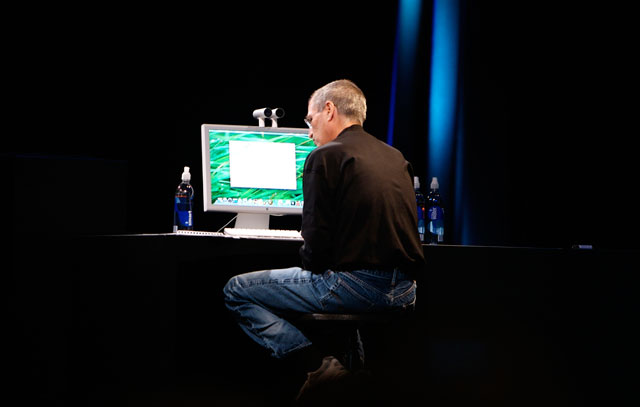
    Former Apple CEO Steve Jobs with the original iPhone

    For the iPhone’s 10th anniversary, Apple is planning to release new and upgraded models later this year, with updated designs, improved cameras and better screens. But a more important product launch actually began in mid-March, when the company quietly reintroduced the discontinued, two-and-a-half-year-old iPhone 6 in several Asian countries and Eastern Europe.

    That might sound dull. But for Apple, which is banking on the developing world for growth, it’s actually a far-sighted move. The company is acknowledging that smartphones have transitioned from elite niche products into mature technologies, owned by everyone and upgraded infrequently. And that means that boring reliability — not innovation — will define the iPhone’s future.

    By now, most consumers know what they want from a smartphone (social media, text messaging, and so on). And better screens and cameras will only persuade so many to splurge on new models. That’s especially true in emerging markets. In Kenya, users cite social media as the primary reason for upgrading from a feature phone, and used smartphones — which go for as little as US$40 (about R500) — work just fine for accessing Facebook. True, the cheaper phones won’t look as good. But they do everything that late smartphone adopters want, and that’s good enough.

    “Good enough” doesn’t sound great for Apple and other phone makers, which prosper off the relentless upgrade cycle. But many well-known products have followed the same path, from ground-breaking innovation to reliable, profitable, “good enough” staples. The KitchenAid Model K mixer revolutionised American kitchens when it was introduced in 1937, but has since changed only incrementally as it became a wedding-registry juggernaut. Maytag washing machines, Aermotor windmills, the Ford Model T, and the Browning M1911 pistol have gone much the same route.

    Perhaps the product that most closely approximates the iPhone’s future is the venerable Selectric typewriter, from IBM. When IBM introduced the device in 1961, electric typewriters had already been around for decades. But the Selectric upended the business by enabling faster typing and the changing of fonts, thereby boosting productivity worldwide. The technology also came packaged in a sleek, minimalist case quickly recognized as a landmark in industrial design.

    Sales exceeded forecasts from day one, and eventually the Selectric captured as much as 75% of the US typewriter market, as millions of office managers recognised that it provided exactly what they needed. But a device so perfectly suited to its customers’ demands didn’t need much in the way of upgrades, and IBM had trouble extending the line. The Selectric II, introduced in 1971, allowed users to change the number of characters typed per inch — helpful, but hardly essential to most office tasks. A third model was introduced at the dawn of the PC era, but by then, increased competition and changing consumer demands meant the Selectric’s days were numbered, and the line was discontinued in 1986. Yet it was hardly a failure. Its decades-long success helped finance other innovations at IBM, notably the PC.
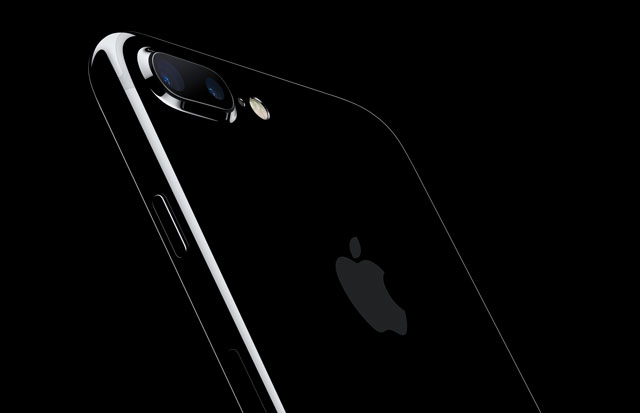
    The iPhone 7

    In principle, the iPhone is becoming something similar: a tried-and-true model that simply matches customer needs. In Malaysia, where I live, one authorised reseller is promoting the iPhone 6 with a big red sign that promises “Amazing Phone, Amazing Price”, with no reference to the model name or vintage. A clerk told me that the phone is selling well, especially to younger customers who can’t afford a newer model but appreciate the iPhone’s reliability compared to most Android phones. Although not flashy, this approach should remain profitable for Apple for some time, and help pay the bills as it transitions to the next big thing.

    It may sting Apple’s executives to learn that their iconic invention is evolving into the digital era’s equivalent of a typewriter or washing machine. But in recent years, Apple has pushed hard to expand its services and content business, and more iPhones — no matter how old — help meet that goal. If marketed well, the durability of the company’s older, duller phones could become an asset. Meanwhile, if Apple wants to maintain its reputation as an innovator, it should acknowledge the iPhone as the mature product it has become, and redirect its vaunted creative energy to something new.  — (c) 2017 Bloomberg LP

    Follow TechCentral on Google News Add TechCentral as your preferred source on Google


    Adam Minter Apple IBM
    WhatsApp YouTube
    Share. Facebook Twitter LinkedIn WhatsApp Telegram Email Copy Link
    Previous ArticleMusk nears $1,4bn windfall
    Next Article Give Gigaba time: Kganyago

    Related Posts

    Apple at Work: business technology that works as one

    Apple at Work: business technology that works as one

    29 July 2026
    Apple's next CEO plants his flag in Hollywood - John Ternus and Tim Cook

    Apple’s next CEO plants his flag in Hollywood

    28 July 2026
    Africa's most popular phones have a tracking problem

    Africa’s most popular phones have a tracking problem

    24 July 2026
    Company News
    Huawei Connect 2026: taking South African AI beyond pilots

    Huawei Connect 2026: taking South African AI beyond pilots

    29 July 2026
    Apple at Work: business technology that works as one

    Apple at Work: business technology that works as one

    29 July 2026
    The infrastructure behind smart account-based recurring payments in South Africa - Pay@ Capitec Pay

    The infrastructure behind smart account-based recurring payments in South Africa

    29 July 2026
    Opinion
    The author, Jannie van Zyl

    Selling vapour is corporate suicide in slow motion

    16 July 2026
    Brazil's online gambling crackdown is a lesson for South Africa

    How Amazon outmanoeuvred Starlink in South Africa

    15 July 2026
    The Popia problem with agentic AI - Herman Haasbroek

    The Popia problem with agentic AI

    14 July 2026

    Subscribe to Updates

    Get the best South African technology news and analysis delivered to your e-mail inbox every morning.

    Latest Posts
    South African IT spending surging as AI boom lands locally

    South African IT spending surging as AI boom lands locally

    29 July 2026
    Radical rethink for South Africa's national AI policy

    Radical rethink for South Africa’s national AI policy

    29 July 2026
    South African tech's compounding debt problem

    South African tech’s compounding debt problem

    29 July 2026
    Russia charges Telegram founder with terrorism - Pavel Durov

    Russia charges Telegram founder with terrorism

    29 July 2026
    © 2009 - 2026 NewsCentral Media
    Built and maintained by Chronon
    • Cookie policy (ZA)
    • TechCentral – privacy and Popia

    Type above and press Enter to search. Press Esc to cancel.

    Manage consent

    TechCentral uses cookies to enhance its offerings. Consenting to these technologies allows us to serve you better. Not consenting or withdrawing consent may adversely affect certain features and functions of the website.

    Functional Always active
    The technical storage or access is strictly necessary for the legitimate purpose of enabling the use of a specific service explicitly requested by the subscriber or user, or for the sole purpose of carrying out the transmission of a communication over an electronic communications network.
    Preferences
    The technical storage or access is necessary for the legitimate purpose of storing preferences that are not requested by the subscriber or user.
    Statistics
    The technical storage or access that is used exclusively for statistical purposes. The technical storage or access that is used exclusively for anonymous statistical purposes. Without a subpoena, voluntary compliance on the part of your Internet Service Provider, or additional records from a third party, information stored or retrieved for this purpose alone cannot usually be used to identify you.
    Marketing
    The technical storage or access is required to create user profiles to send advertising, or to track the user on a website or across several websites for similar marketing purposes.
    • Manage options
    • Manage services
    • Manage {vendor_count} vendors
    • Read more about these purposes
    View preferences
    • {title}
    • {title}
    • {title}