
Close Menu
TechCentralTechCentral

    Subscribe to the newsletter

    Get the best South African technology news and analysis delivered to your e-mail inbox every morning.

    Facebook X (Twitter) YouTube LinkedIn
    WhatsApp Facebook X (Twitter) LinkedIn YouTube
    TechCentralTechCentral
    • News
      SA film industry to get funding boost and digital overhaul after outcry

      SA film industry to get funding boost and digital overhaul after outcry

      18 February 2026
      The last generation of coders

      The last generation of coders

      18 February 2026
      MTN to buy back its own towers in R35-billion deal - Ralph Mupita

      MTN to buy back its own cellular towers in R35-billion deal

      17 February 2026
      Icasa gears up for South Africa's next big spectrum auction - Tshiamo Maluleka-Disemelo

      Icasa gears up for South Africa’s next big spectrum auction

      17 February 2026
      Not enough: Eskom unions spurn above-inflation wage offer

      Not enough: Eskom unions spurn above-inflation wage offer

      17 February 2026
    • World
      Prominent Southern African journalist targeted with Predator spyware

      Prominent Southern African journalist targeted with Predator spyware

      18 February 2026
      More drama in Warner Bros tug of war

      More drama in Warner Bros tug of war

      17 February 2026
      Russia bans WhatsApp

      Russia bans WhatsApp

      12 February 2026
      EU regulators take aim at WhatsApp

      EU regulators take aim at WhatsApp

      9 February 2026
      Musk hits brakes on Mars mission

      Musk hits brakes on Mars mission

      9 February 2026
    • In-depth
      How liberalisation is rewiring South Africa's power sector

      How liberalisation is rewiring South Africa’s power sector

      21 January 2026
      The top-performing South African tech shares of 2025

      The top-performing South African tech shares of 2025

      12 January 2026
      Digital authoritarianism grows as African states normalise internet blackouts

      Digital authoritarianism grows as African states normalise internet blackouts

      19 December 2025
      TechCentral's South African Newsmakers of 2025

      TechCentral’s South African Newsmakers of 2025

      18 December 2025
      Black Friday goes digital in South Africa as online spending surges to record high

      Black Friday goes digital in South Africa as online spending surges to record high

      4 December 2025
    • TCS
      Watts & Wheels S1E4: 'We drive an electric Uber'

      Watts & Wheels S1E4: ‘We drive an electric Uber’

      10 February 2026
      TCS+ | How Cloud On Demand is helping SA businesses succeed in the cloud - Xhenia Rhode, Dion Kalicharan

      TCS+ | Cloud On Demand and Consnet: inside a real-world AWS partner success story

      30 January 2026
      Watts & Wheels S1E4: 'We drive an electric Uber'

      Watts & Wheels S1E3: ‘BYD’s Corolla Cross challenger’

      30 January 2026
      Watts & Wheels S1E4: 'We drive an electric Uber'

      Watts & Wheels S1E2: ‘China attacks, BMW digs in, Toyota’s sublime supercar’

      23 January 2026

      TCS+ | Why cybersecurity is becoming a competitive advantage for SA businesses

      20 January 2026
    • Opinion
      A million reasons monopolies don't work - Duncan McLeod

      A million reasons monopolies don’t work

      10 February 2026
      The author, Business Leadership South Africa CEO Busi Mavuso

      Eskom unbundling U-turn threatens to undo hard-won electricity gains

      9 February 2026
      South Africa's skills advantage is being overlooked at home - Richard Firth

      South Africa’s skills advantage is being overlooked at home

      29 January 2026
      Why Elon Musk's Starlink is a 'hard no' for me - Songezo Zibi

      Why Elon Musk’s Starlink is a ‘hard no’ for me

      26 January 2026
      A million reasons monopolies don't work - Duncan McLeod

      South Africa’s new fibre broadband battle

      20 January 2026
    • Company Hubs
      • Africa Data Centres
      • AfriGIS
      • Altron Digital Business
      • Altron Document Solutions
      • Altron Group
      • Arctic Wolf
      • AvertITD
      • Braintree
      • CallMiner
      • CambriLearn
      • CYBER1 Solutions
      • Digicloud Africa
      • Digimune
      • Domains.co.za
      • ESET
      • Euphoria Telecom
      • Incredible Business
      • iONLINE
      • IQbusiness
      • Iris Network Systems
      • LSD Open
      • Mitel
      • NEC XON
      • Netstar
      • Network Platforms
      • Next DLP
      • Ovations
      • Paracon
      • Paratus
      • Q-KON
      • SevenC
      • SkyWire
      • Solid8 Technologies
      • Telit Cinterion
      • Tenable
      • Vertiv
      • Videri Digital
      • Vodacom Business
      • Wipro
      • Workday
      • XLink
    • Sections
      • AI and machine learning
      • Banking
      • Broadcasting and Media
      • Cloud services
      • Contact centres and CX
      • Cryptocurrencies
      • Education and skills
      • Electronics and hardware
      • Energy and sustainability
      • Enterprise software
      • Financial services
      • Information security
      • Internet and connectivity
      • Internet of Things
      • Investment
      • IT services
      • Lifestyle
      • Motoring
      • Public sector
      • Retail and e-commerce
      • Satellite communications
      • Science
      • SMEs and start-ups
      • Social media
      • Talent and leadership
      • Telecoms
    • Events
    • Advertise
    TechCentralTechCentral
    Home » Sections » AI and machine learning » The last generation of coders
    The last generation of coders

    The last generation of coders

    By Duncan McLeod18 February 2026

    There is a website called RentaHuman.ai that exists to connect autonomous AI agents with human beings who can carry out physical tasks in the real world – things the agents cannot yet do themselves. Its tagline? “Clear briefs, no drama.”

    It sounds like science-fiction. It is, in fact, very real. More than half a million people have already signed up, hoping to sell their services to machines.

    For Morgan Goddard, partner and head of software engineering at South African management consulting and technology services firm iqbusiness, the existence of such a platform neatly encapsulates where we are in the AI revolution: a moment of such dizzying acceleration that the traditional relationship between humans and technology has begun, quietly but unmistakably, to invert.

    “Maybe one day my AI bot will just do it for me. And we’ll just chill while the machines are doing all the work

    “Maybe one day my AI bot will just do it for me,” Goddard says, laughing. “And we’ll just chill while the machines are doing all the work.”

    He is not entirely joking.

    “Humans have always been typing to machines in machine language so that we can get applications to work for us,” he tells TechCentral. “That’s kind of nonsensical. We should actually be talking English to computers, so that they can go and build things. That’s what large language models have done for us.”

    The rise of so-called “vibe coding” – using natural language to generate functional software without writing a single line of code – has, in Goddard’s view, fundamentally disrupted the economics of software development. Tools like Lovable and Replit now allow a non-technical person to describe what they want, and receive a working web application complete with a database and a live URL, often within a few hours.

    ‘Honestly mind-blowing’

    “Traditionally, you would need a designer, frontend developers, backend developers, DevOps people – possibly a four- or five-person team,” he says. “Now a non-technical person can fire that up in minutes. No syntax understood, no technical capability required.”

    For experienced developers, the shift has been equally dramatic. Agentic coding assistants embedded in development environments now autocomplete, suggest, test and architect code – operating, Goddard says, at speeds that make conventional programming look archaic.

    “These tools are speeding up your coding ability by something like 10 000 times,” he says. “And then, in the last few months, we’ve seen multi-agent orchestration come into the picture – an architect agent, a tester, a designer, a reviewer, a coder – all working simultaneously, autonomously, on your behalf. The amount of work these systems can do in a systematic way is honestly mind-blowing.”

    Read: Dr Google, meet Dr Chatbot – neither is ready to see you now

    The implications for the profession of software engineering are profound – and, Goddard acknowledges, somewhat unsettling.

    “Team sizes will reduce,” he says. “What used to be a 10-person job is now potentially a two- or three-person job, or even a single person’s job. You’re becoming an orchestrator, a conductor. You’re allowing these tools to generate things on your behalf.”
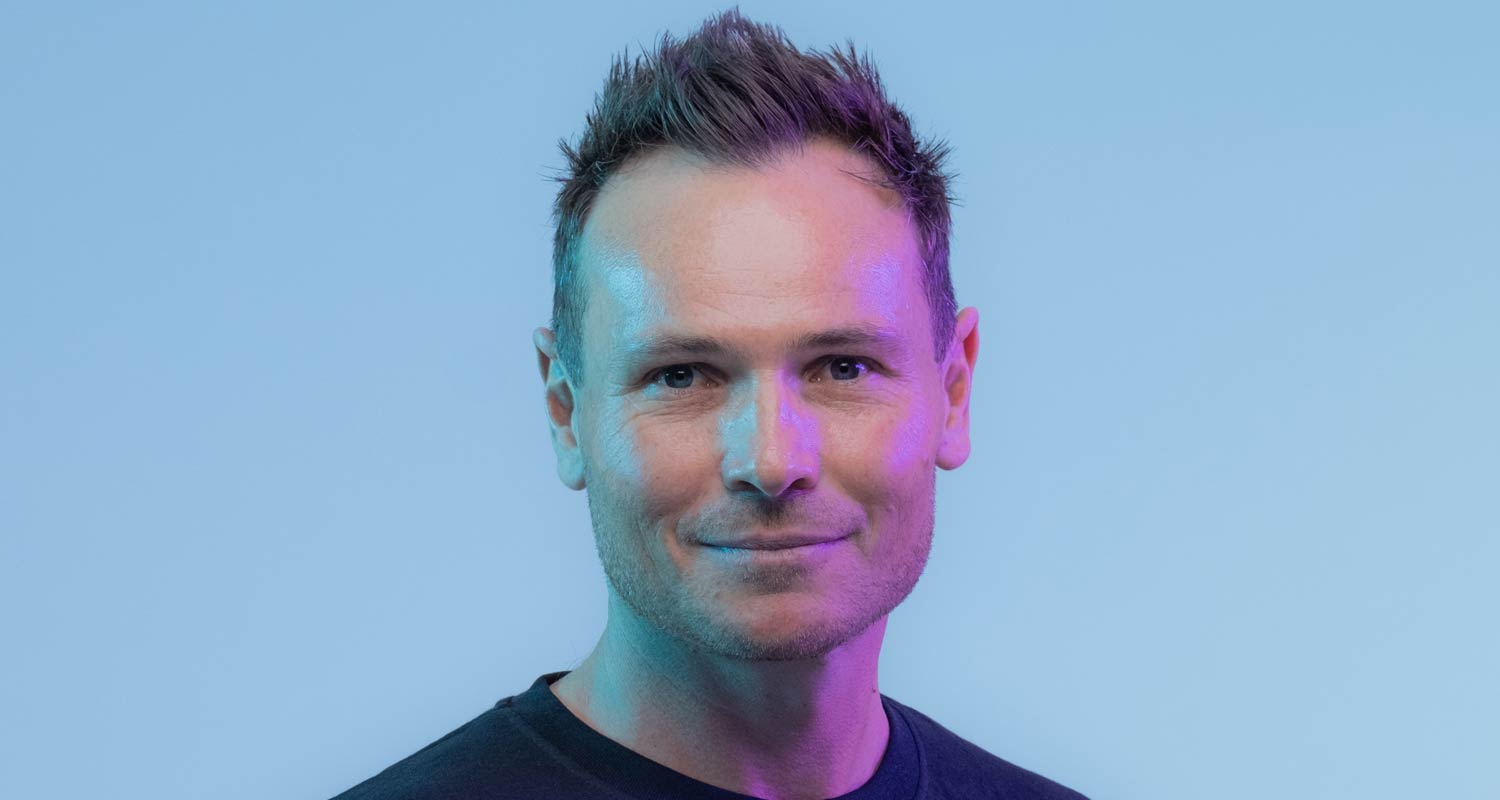
    Morgan Goddard
    Morgan Goddard

    Not all vibe coders are equal, he is quick to add. The more technical the operator, the better the output, because understanding what good code looks like remains essential to evaluating what the AI produces. “The genius will lie in whether you have the aptitude to understand if the output is of quality,” he says.

    But this raises a troubling question about the future of the profession’s pipeline. Senior developers are battle-tested precisely because they have spent years writing code, making mistakes and understanding the nuances of their craft. If junior developers never acquire that grounding – because agents are doing the work from the outset – where do tomorrow’s senior developers come from?

    “Do we still train people in syntax and the fundamentals before we allow them an agent?” Goddard asks. “Or do we just not care, because the agents are getting better and better? The universe of code that has been scraped by the most powerful language models on Earth – is that really worse than a general software developer? It knows every syntax, every language, every principle. It just needs the context.”

    Every other revolution happened at a pace that society could cope with. This one is like jumping off a cliff

    He believes the answer, in time, will be that it simply will not matter. “I think in the future we would just know it is done, and we wouldn’t care how it works. Like driving a car – you get in, you drive it, you don’t care how the engine works.”

    The cybersecurity dimension of all this is one that keeps Goddard alert. The same tools accelerating legitimate software development are equally available to bad actors – and the threat landscape is shifting accordingly.

    “If you have a coding agent cracking a system, and on the other side you have AI trying to stop it, both parties have the same tools,” he says. “It will escalate. It absolutely will escalate.”

    More immediately, he is concerned about the risks posed not by sophisticated adversaries, but by ordinary users who do not understand what they are doing with the tools at their disposal.

    Inequality

    “People are working in four different agents simultaneously, pasting company information into them, and they have no real idea what is going on. Is the data being trained on? Is it being leaked? Companies need to take this extremely seriously – how they utilise these tools, how they train their people, the etiquette around using them.”

    He likens it to the bring-your-own-device security nightmare that IT departments grappled with a decade ago. “But this is way worse,” he says. “Way, way worse.”

    Then there is the bigger picture – the one that, Goddard admits, keeps him up at night.

    Read: OpenAI unveils GPT-5, promising ‘on-demand software’ and PhD-level expertise

    In South Africa, a country of extreme inequality and persistent unemployment, the displacement of routine cognitive and administrative work by AI agents is not an abstraction – it is an existential threat to millions of livelihoods.

    “We see it already in retail,” he says. “You take one photograph of a garment, and using image models you can generate lifestyle photos, videos, social media posts, look books, brochures, all of it – from a single image. In that stream of work, we used to have photographers, designers, shoot locations, many people involved. Now we don’t. Apply that same thinking to admin, finance, accounting – every single one of them is impacted.”

    The world of software development is changing rapidly
    The world of software development is changing rapidly

    He is sceptical of the techno-optimist argument that AI, like previous tech-led revolutions, will simply create new categories of work to replace those it destroys.

    “Every other revolution happened at a pace that society could cope with,” he says. “This one is like jumping off a cliff. It’s fast, there’s enormous money behind it and it confronted us before we had time to figure it out. It took years to industrialise the car. With this, in about a year, you’re displaced. That’s different.”

    So, what should a young person considering a career in software do? Goddard has a 10-year-old son and has thought about this question carefully.

    Read: AI won’t replace software, says Nvidia CEO amid market rout

    “There is no better time to be an entrepreneur in technology, because it’s completely wide open,” he says. “Take courses in entrepreneurship, finance, people management, marketing. Get real-world experience. But if you were planning to be the engine for writing code? That is not what you should do. Go further up the value chain.”

    And the qualities that will matter most in whatever comes next?

    “Curiosity, adaptability and resilience,” he says.  – © 2026 NewsCentral Media

    Get breaking news from TechCentral on WhatsApp. Sign up here.



    IQbusiness Morgan Goddard
    WhatsApp YouTube Follow on Google News Add as preferred source on Google
    Share. Facebook Twitter LinkedIn WhatsApp Telegram Email Copy Link
    Previous ArticleProminent Southern African journalist targeted with Predator spyware
    Next Article SA film industry to get funding boost and digital overhaul after outcry

    Related Posts

    Breaking free from legacy thinking in banks: AI, automation and the agentic operating model - Steve Burke iqbusiness

    Breaking free from legacy thinking in banks: AI, automation and the agentic operating model

    15 January 2026
    AI is not a technology problem - iqbusiness

    AI is not a technology problem – iqbusiness

    5 December 2025
    Rob Godlonton named CEO of iqbusiness, replacing Adam Craker

    Rob Godlonton named CEO of iqbusiness, replacing Adam Craker

    23 November 2025
    Company News
    The quiet infrastructure powering AI: why long-life IOT networks matter more than ever - Sigfox South Africa

    The quiet infrastructure powering AI: why long-life IoT networks matter more than ever

    18 February 2026
    Scaling modern, data-driven farming across Africa - Chris Duvenage

    Scaling modern, data-driven farming across Africa

    17 February 2026
    Why getting your small business online costs less than you think

    Why getting your small business online costs less than you think

    17 February 2026
    Opinion
    A million reasons monopolies don't work - Duncan McLeod

    A million reasons monopolies don’t work

    10 February 2026
    The author, Business Leadership South Africa CEO Busi Mavuso

    Eskom unbundling U-turn threatens to undo hard-won electricity gains

    9 February 2026
    South Africa's skills advantage is being overlooked at home - Richard Firth

    South Africa’s skills advantage is being overlooked at home

    29 January 2026

    Subscribe to Updates

    Get the best South African technology news and analysis delivered to your e-mail inbox every morning.

    Latest Posts
    The quiet infrastructure powering AI: why long-life IOT networks matter more than ever - Sigfox South Africa

    The quiet infrastructure powering AI: why long-life IoT networks matter more than ever

    18 February 2026
    SA film industry to get funding boost and digital overhaul after outcry

    SA film industry to get funding boost and digital overhaul after outcry

    18 February 2026
    The last generation of coders

    The last generation of coders

    18 February 2026
    Prominent Southern African journalist targeted with Predator spyware

    Prominent Southern African journalist targeted with Predator spyware

    18 February 2026
    © 2009 - 2026 NewsCentral Media
    • Cookie policy (ZA)
    • TechCentral – privacy and Popia

    Type above and press Enter to search. Press Esc to cancel.

    Manage consent

    TechCentral uses cookies to enhance its offerings. Consenting to these technologies allows us to serve you better. Not consenting or withdrawing consent may adversely affect certain features and functions of the website.

    Functional Always active
    The technical storage or access is strictly necessary for the legitimate purpose of enabling the use of a specific service explicitly requested by the subscriber or user, or for the sole purpose of carrying out the transmission of a communication over an electronic communications network.
    Preferences
    The technical storage or access is necessary for the legitimate purpose of storing preferences that are not requested by the subscriber or user.
    Statistics
    The technical storage or access that is used exclusively for statistical purposes. The technical storage or access that is used exclusively for anonymous statistical purposes. Without a subpoena, voluntary compliance on the part of your Internet Service Provider, or additional records from a third party, information stored or retrieved for this purpose alone cannot usually be used to identify you.
    Marketing
    The technical storage or access is required to create user profiles to send advertising, or to track the user on a website or across several websites for similar marketing purposes.
    • Manage options
    • Manage services
    • Manage {vendor_count} vendors
    • Read more about these purposes
    View preferences
    • {title}
    • {title}
    • {title}