Close Menu
TechCentralTechCentral

    Subscribe to the newsletter

    Get the best South African technology news and analysis delivered to your e-mail inbox every morning.

    Facebook X (Twitter) YouTube LinkedIn
    WhatsApp Facebook X (Twitter) LinkedIn YouTube
    TechCentralTechCentral
    • News
      Vula Medical named as South Africa's 2025 app of the year

      Vula Medical named as South Africa’s 2025 app of the year

      5 December 2025
      Netflix, Warner Bros talks raise fresh headaches for MultiChoice

      Netflix, Warner Bros talks raise fresh headaches for MultiChoice

      5 December 2025
      Big Microsoft 365 price increases coming next year

      Big Microsoft price increases coming next year

      5 December 2025
      Vodacom to take control of Safaricom in R36-billion deal - Shameel Joosub

      Vodacom to take control of Safaricom in R36-billion deal

      4 December 2025
      Black Friday goes digital in South Africa as online spending surges to record high

      Black Friday goes digital in South Africa as online spending surges to record high

      4 December 2025
    • World
      Amazon and Google launch multi-cloud service for faster connectivity

      Amazon and Google launch multi-cloud service for faster connectivity

      1 December 2025
      Google makes final court plea to stop US breakup

      Google makes final court plea to stop US breakup

      21 November 2025
      Bezos unveils monster rocket: New Glenn 9x4 set to dwarf Saturn V

      Bezos unveils monster rocket: New Glenn 9×4 set to dwarf Saturn V

      21 November 2025
      Tech shares turbocharged by Nvidia's stellar earnings

      Tech shares turbocharged by stellar Nvidia earnings

      20 November 2025
      Config file blamed for Cloudflare meltdown that disrupted the web

      Config file blamed for Cloudflare meltdown that disrupted the web

      19 November 2025
    • In-depth
      Jensen Huang Nvidia

      So, will China really win the AI race?

      14 November 2025
      Valve's Linux console takes aim at Microsoft's gaming empire

      Valve’s Linux console takes aim at Microsoft’s gaming empire

      13 November 2025
      iOCO's extraordinary comeback plan - Rhys Summerton

      iOCO’s extraordinary comeback plan

      28 October 2025
      Why smart glasses keep failing - no, it's not the tech - Mark Zuckerberg

      Why smart glasses keep failing – it’s not the tech

      19 October 2025
      BYD to blanket South Africa with megawatt-scale EV charging network - Stella Li

      BYD to blanket South Africa with megawatt-scale EV charging network

      16 October 2025
    • TCS
      TCS+ | How Cloud on Demand helps partners thrive in the AWS ecosystem - Odwa Ndyaluvane and Xenia Rhode

      TCS+ | How Cloud On Demand helps partners thrive in the AWS ecosystem

      4 December 2025
      TCS | MTN Group CEO Ralph Mupita on competition, AI and the future of mobile

      TCS | Ralph Mupita on competition, AI and the future of mobile

      28 November 2025
      TCS | Dominic Cull on fixing South Africa's ICT policy bottlenecks

      TCS | Dominic Cull on fixing South Africa’s ICT policy bottlenecks

      21 November 2025
      TCS | BMW CEO Peter van Binsbergen on the future of South Africa's automotive industry

      TCS | BMW CEO Peter van Binsbergen on the future of South Africa’s automotive industry

      6 November 2025
      TCS | Why Altron is building an AI factory - Bongani Andy Mabaso

      TCS | Why Altron is building an AI factory in Johannesburg

      28 October 2025
    • Opinion
      Your data, your hardware: the DIY AI revolution is coming - Duncan McLeod

      Your data, your hardware: the DIY AI revolution is coming

      20 November 2025
      Zero Carbon Charge founder Joubert Roux

      The energy revolution South Africa can’t afford to miss

      20 November 2025
      It's time for a new approach to government IT spend in South Africa - Richard Firth

      It’s time for a new approach to government IT spend in South Africa

      19 November 2025
      How South Africa's broken Rica system fuels murder and mayhem - Farhad Khan

      How South Africa’s broken Rica system fuels murder and mayhem

      10 November 2025
      South Africa's AI data centre boom risks overloading a fragile grid - Paul Colmer

      South Africa’s AI data centre boom risks overloading a fragile grid

      30 October 2025
    • Company Hubs
      • Africa Data Centres
      • AfriGIS
      • Altron Digital Business
      • Altron Document Solutions
      • Altron Group
      • Arctic Wolf
      • AvertITD
      • Braintree
      • CallMiner
      • CambriLearn
      • CYBER1 Solutions
      • Digicloud Africa
      • Digimune
      • Domains.co.za
      • ESET
      • Euphoria Telecom
      • Incredible Business
      • iONLINE
      • IQbusiness
      • Iris Network Systems
      • LSD Open
      • NEC XON
      • Netstar
      • Network Platforms
      • Next DLP
      • Ovations
      • Paracon
      • Paratus
      • Q-KON
      • SevenC
      • SkyWire
      • Solid8 Technologies
      • Telit Cinterion
      • Tenable
      • Vertiv
      • Videri Digital
      • Vodacom Business
      • Wipro
      • Workday
      • XLink
    • Sections
      • AI and machine learning
      • Banking
      • Broadcasting and Media
      • Cloud services
      • Contact centres and CX
      • Cryptocurrencies
      • Education and skills
      • Electronics and hardware
      • Energy and sustainability
      • Enterprise software
      • Financial services
      • Information security
      • Internet and connectivity
      • Internet of Things
      • Investment
      • IT services
      • Lifestyle
      • Motoring
      • Public sector
      • Retail and e-commerce
      • Satellite communications
      • Science
      • SMEs and start-ups
      • Social media
      • Talent and leadership
      • Telecoms
    • Events
    • Advertise
    TechCentralTechCentral
    Home » In-depth » Inside the quest to simulate the human brain

    Inside the quest to simulate the human brain

    By Editor20 December 2011
    Twitter LinkedIn Facebook WhatsApp Email Telegram Copy Link
    News Alerts
    WhatsApp
    Henry Markram

    The Blue Brain Project is an attempt to simulate the human brain using supercomputers to allow neuroscientists, biologists, physicists and computer scientists to better understand the brain and to provide them with the tools to simulate diseases and, hopefully, come closer to alleviating them.

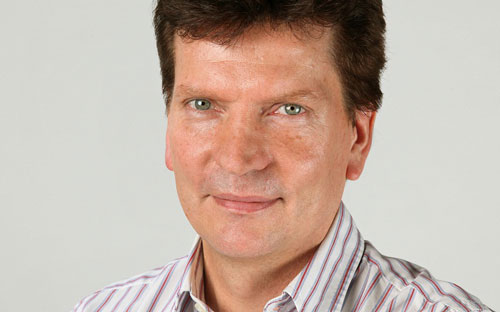
    SA expat, former Fulbright Scholar and University of Cape Town alumnus Henry Markram is the director of the Blue Brain Project at École Polytechnique Fédérale de Lausanne (EPFL) in Switzerland. He says the project is meant to simulate the activity of the brain using supercomputers, a process he hopes will provide a more holistic understanding of the brain.

    Markram says the project is essentially one of reverse engineering but, instead of a gadget, the object is a mammalian brain. Originally the project set out to simulate the 10 000 neurons of a rat’s neocortical column. Markram completed that project successfully in 2005 and has since been working on the longer term goal of simulating the human brain.
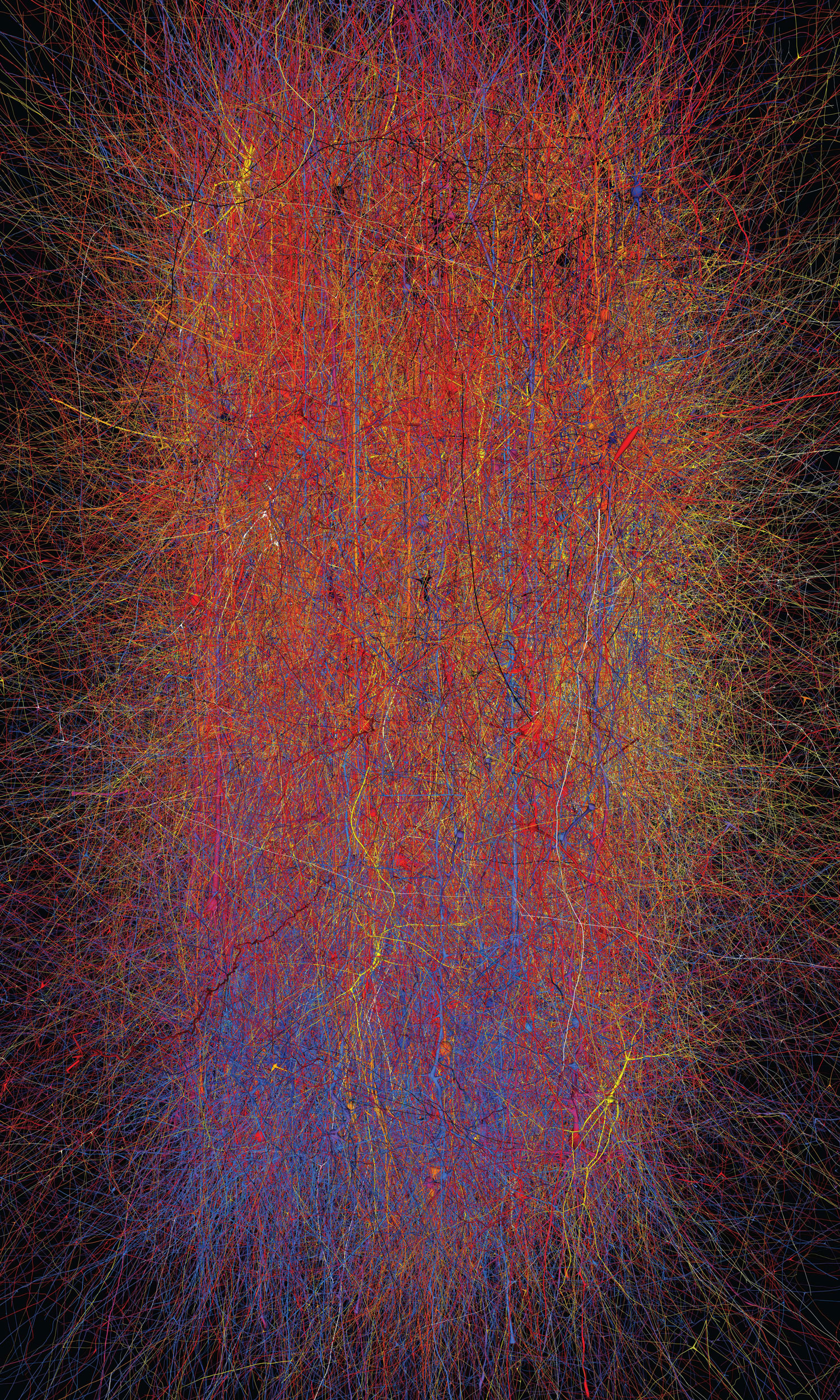
    Visualisation of an entire neocortical column with network activity. The membrane voltage is shown in false colours. This provides a view into the neocortical column at a level inaccessible to experimental techniques to date - click image to enlarge - ©BBP/EPFL 2007

    “As part of the project, we are teaching 30 or so of the best students we could find across Africa,” says Markram, who is in SA this month. The students come from a range of faculties and the project will see five of them participating in exchange programmes with European universities.

    The Blue Brain project involves technical collaboration with IBM and EPFL buys its supercomputers from the company. It employs IBM’s Blue Gene supercomputer technology and is funded by the Swiss government.

    Markram says there is far more to the project than merely simulating the brain’s functions. Another key aim is creating “medical infomatics” using data and statistics from hospitals around the world to improve the simulations and better diagnose individuals suffering from brain disorders or diseases.

    There is also the hope that the Blue Brain Project, and an interrelated project called the Human Brain Project, will help in the development of new supercomputer technology that Markram calls “neuromorphic technology”.

    “’Neuromorphic’ basically refers to a new kind of processor based on how the brain handles information and calculations as opposed to the way processors do traditionally,” he says. Work is also underway with related robotics developments and the creation of “neuroprosthetic devices”.

    Markram says one of the biggest challenges facing neuroscientists is coming to grips with disease, and that part of the problem is that studies of the brain — and the diseases that ail it — are fragmented because of the need for enormous specialisation.

    “There are many specialists, but there’s no coherent or integrated view,” he says. “It’s like a gold rush with people digging into small corners but no bigger picture. We can’t tell what one gene or protein does in the context of whole brain.”

    When people look for genes causing diseases they find that in the brain, unlike the rest of the body, there isn’t one, or even 10, but rather hundreds of genes that all play some role in a single disease. “We need to understand how [the genes] all interact together and orchestrate a disease. That can’t be done in one lab, because individually labs are too specialist.”
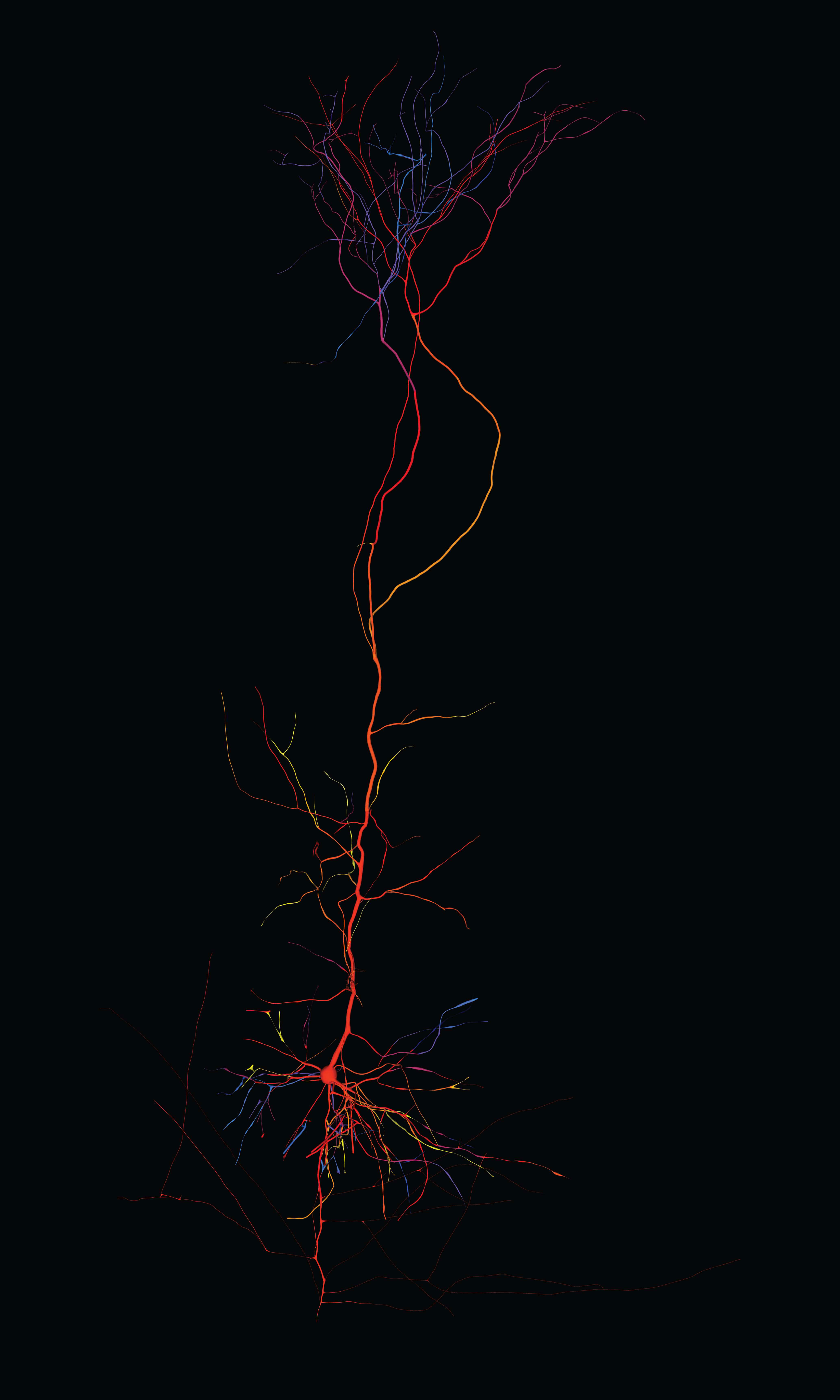
    Visualisation of the membrane voltage of a simulated layer V pyramidal cell during network activity. Insets show closeups of portions of the same neuron. This level of detail is inaccessible to experimental techniques to date - click image to enlarge - ©BBP/EPFL 2007

    The University of Cape Town is halfway through a two-week school that Markram is leading to link Africa, and particularly SA, with the Blue Brain and Human Brain projects. It involves scientists from 22 faculties and students from across Africa.

    Eight of the students are from SA, with the rest coming from places like Cameroon, Egypt, Nigeria and Tanzania. Markram says there were more than 300 applications, of which around 30 made the final selection. The students include physicists, neuroscientists, behavioural neuroscientists, computer scientists and biologists.

    The main supercomputer employed by the Blue Brain Project has more than 16 000 processor cores, but the next one to be installed will have 100 000, and within the next 10 years that will be replaced by a €300-500m IBM “exascale supercomputer” capable of more than a billion billion floating point operations per second (an exaflop).

    “We want to get ready for such a machine and we have to start training students now to be able to use a machine like that,” Markram says.

    Ultimately, much of the Human Brain and Blue Brain projects concern reverse engineering. Markram says it’s hoped the teams working on them will figure out both how many neurons there are in the brain, and what types of neurons.

    “We suspect there are a few thousand types. So, we develop methods that look for the different genes that are switched on to build different cells. It’s more complicated in the brain than in other organs because there are more genes building more kinds of cells.”

    He says that once it’s known how genes build different types of cells, equations can be constructed to mimic this process. “We have to work out the distribution. Like a good pasta recipe, we need to know how many of each different neuron to put in.”

    Then scientists need to figure out how these neurons are connected. Markram says using supercomputers, infomatics and modelling it’s possible to work out where these connections need to be.

    He says the process can be thought of as an enormous audit. “The advantage of the audit approach is you see big holes quickly and can often fill them without experiments by extrapolation. We then test them to see if they’re valid.”

    In due course Markram expects scientists will be able to “systematically deconstruct” the brain into its parts. “It’s a big problem, but not an infinite one.”  — Craig Wilson, TechCentral

    • Subscribe to our free daily newsletter
    • Follow us on Twitter or on Google+ or on Facebook
    • Visit our sister website, SportsCentral (still in beta)


    Blue Brain Project Henry Markram Human Brain Project IBM
    Subscribe to TechCentral Subscribe to TechCentral
    Share. Facebook Twitter LinkedIn WhatsApp Telegram Email Copy Link
    Previous ArticleSA Newsmakers of the Year – the top five
    Next Article ZA Tech Show: Episode 190 – ‘Geek gift guide’

    Related Posts

    The rise and fall of operating systems - a 45-year digital timelapse

    The rise and fall of operating systems – a 45-year digital timelapse

    15 September 2025
    The average cost of a data breach in South Africa

    The average cost of a data breach in South Africa

    1 August 2025
    AI on IBM Power: the platform built for enterprise transformation - Kim van Zyl

    AI on IBM Power: the platform built for enterprise transformation

    30 June 2025
    Company News
    Beat the summer heat with Samsung's WindFree air conditioners

    Beat the summer heat with Samsung’s WindFree air conditioners

    5 December 2025
    AI is not a technology problem - iqbusiness

    AI is not a technology problem – iqbusiness

    5 December 2025
    Telcos are sitting on a data gold mine - but few know what do with it - Phillip du Plessis

    Telcos are sitting on a data gold mine – but few know what do with it

    4 December 2025
    Opinion
    Your data, your hardware: the DIY AI revolution is coming - Duncan McLeod

    Your data, your hardware: the DIY AI revolution is coming

    20 November 2025
    Zero Carbon Charge founder Joubert Roux

    The energy revolution South Africa can’t afford to miss

    20 November 2025
    It's time for a new approach to government IT spend in South Africa - Richard Firth

    It’s time for a new approach to government IT spend in South Africa

    19 November 2025

    Subscribe to Updates

    Get the best South African technology news and analysis delivered to your e-mail inbox every morning.

    Latest Posts
    Vula Medical named as South Africa's 2025 app of the year

    Vula Medical named as South Africa’s 2025 app of the year

    5 December 2025
    Beat the summer heat with Samsung's WindFree air conditioners

    Beat the summer heat with Samsung’s WindFree air conditioners

    5 December 2025
    Netflix, Warner Bros talks raise fresh headaches for MultiChoice

    Netflix, Warner Bros talks raise fresh headaches for MultiChoice

    5 December 2025
    Big Microsoft 365 price increases coming next year

    Big Microsoft price increases coming next year

    5 December 2025
    © 2009 - 2025 NewsCentral Media
    • Cookie policy (ZA)
    • TechCentral – privacy and Popia

    Type above and press Enter to search. Press Esc to cancel.

    Manage consent

    TechCentral uses cookies to enhance its offerings. Consenting to these technologies allows us to serve you better. Not consenting or withdrawing consent may adversely affect certain features and functions of the website.

    Functional Always active
    The technical storage or access is strictly necessary for the legitimate purpose of enabling the use of a specific service explicitly requested by the subscriber or user, or for the sole purpose of carrying out the transmission of a communication over an electronic communications network.
    Preferences
    The technical storage or access is necessary for the legitimate purpose of storing preferences that are not requested by the subscriber or user.
    Statistics
    The technical storage or access that is used exclusively for statistical purposes. The technical storage or access that is used exclusively for anonymous statistical purposes. Without a subpoena, voluntary compliance on the part of your Internet Service Provider, or additional records from a third party, information stored or retrieved for this purpose alone cannot usually be used to identify you.
    Marketing
    The technical storage or access is required to create user profiles to send advertising, or to track the user on a website or across several websites for similar marketing purposes.
    • Manage options
    • Manage services
    • Manage {vendor_count} vendors
    • Read more about these purposes
    View preferences
    • {title}
    • {title}
    • {title}