Close Menu
TechCentralTechCentral

    Subscribe to the newsletter

    Get the best South African technology news and analysis delivered to your e-mail inbox every morning.

    Facebook X (Twitter) YouTube LinkedIn
    WhatsApp Facebook X (Twitter) LinkedIn YouTube
    TechCentralTechCentral
    • News
      Big Microsoft 365 price increases coming next year

      Big Microsoft price increases coming next year

      5 December 2025
      Vodacom to take control of Safaricom in R36-billion deal - Shameel Joosub

      Vodacom to take control of Safaricom in R36-billion deal

      4 December 2025
      Black Friday goes digital in South Africa as online spending surges to record high

      Black Friday goes digital in South Africa as online spending surges to record high

      4 December 2025
      BYD takes direct aim at Toyota with launch of sub-R500 000 Sealion 5 PHEV

      BYD takes direct aim at Toyota with launch of sub-R500 000 Sealion 5 PHEV

      4 December 2025
      'Get it now': Takealot in new instant deliveries pilot

      ‘Get it now’: Takealot in new instant deliveries pilot

      4 December 2025
    • World
      Amazon and Google launch multi-cloud service for faster connectivity

      Amazon and Google launch multi-cloud service for faster connectivity

      1 December 2025
      Google makes final court plea to stop US breakup

      Google makes final court plea to stop US breakup

      21 November 2025
      Bezos unveils monster rocket: New Glenn 9x4 set to dwarf Saturn V

      Bezos unveils monster rocket: New Glenn 9×4 set to dwarf Saturn V

      21 November 2025
      Tech shares turbocharged by Nvidia's stellar earnings

      Tech shares turbocharged by stellar Nvidia earnings

      20 November 2025
      Config file blamed for Cloudflare meltdown that disrupted the web

      Config file blamed for Cloudflare meltdown that disrupted the web

      19 November 2025
    • In-depth
      Jensen Huang Nvidia

      So, will China really win the AI race?

      14 November 2025
      Valve's Linux console takes aim at Microsoft's gaming empire

      Valve’s Linux console takes aim at Microsoft’s gaming empire

      13 November 2025
      iOCO's extraordinary comeback plan - Rhys Summerton

      iOCO’s extraordinary comeback plan

      28 October 2025
      Why smart glasses keep failing - no, it's not the tech - Mark Zuckerberg

      Why smart glasses keep failing – it’s not the tech

      19 October 2025
      BYD to blanket South Africa with megawatt-scale EV charging network - Stella Li

      BYD to blanket South Africa with megawatt-scale EV charging network

      16 October 2025
    • TCS
      TCS+ | How Cloud on Demand helps partners thrive in the AWS ecosystem - Odwa Ndyaluvane and Xenia Rhode

      TCS+ | How Cloud On Demand helps partners thrive in the AWS ecosystem

      4 December 2025
      TCS | MTN Group CEO Ralph Mupita on competition, AI and the future of mobile

      TCS | Ralph Mupita on competition, AI and the future of mobile

      28 November 2025
      TCS | Dominic Cull on fixing South Africa's ICT policy bottlenecks

      TCS | Dominic Cull on fixing South Africa’s ICT policy bottlenecks

      21 November 2025
      TCS | BMW CEO Peter van Binsbergen on the future of South Africa's automotive industry

      TCS | BMW CEO Peter van Binsbergen on the future of South Africa’s automotive industry

      6 November 2025
      TCS | Why Altron is building an AI factory - Bongani Andy Mabaso

      TCS | Why Altron is building an AI factory in Johannesburg

      28 October 2025
    • Opinion
      Your data, your hardware: the DIY AI revolution is coming - Duncan McLeod

      Your data, your hardware: the DIY AI revolution is coming

      20 November 2025
      Zero Carbon Charge founder Joubert Roux

      The energy revolution South Africa can’t afford to miss

      20 November 2025
      It's time for a new approach to government IT spend in South Africa - Richard Firth

      It’s time for a new approach to government IT spend in South Africa

      19 November 2025
      How South Africa's broken Rica system fuels murder and mayhem - Farhad Khan

      How South Africa’s broken Rica system fuels murder and mayhem

      10 November 2025
      South Africa's AI data centre boom risks overloading a fragile grid - Paul Colmer

      South Africa’s AI data centre boom risks overloading a fragile grid

      30 October 2025
    • Company Hubs
      • Africa Data Centres
      • AfriGIS
      • Altron Digital Business
      • Altron Document Solutions
      • Altron Group
      • Arctic Wolf
      • AvertITD
      • Braintree
      • CallMiner
      • CambriLearn
      • CYBER1 Solutions
      • Digicloud Africa
      • Digimune
      • Domains.co.za
      • ESET
      • Euphoria Telecom
      • Incredible Business
      • iONLINE
      • IQbusiness
      • Iris Network Systems
      • LSD Open
      • NEC XON
      • Netstar
      • Network Platforms
      • Next DLP
      • Ovations
      • Paracon
      • Paratus
      • Q-KON
      • SevenC
      • SkyWire
      • Solid8 Technologies
      • Telit Cinterion
      • Tenable
      • Vertiv
      • Videri Digital
      • Vodacom Business
      • Wipro
      • Workday
      • XLink
    • Sections
      • AI and machine learning
      • Banking
      • Broadcasting and Media
      • Cloud services
      • Contact centres and CX
      • Cryptocurrencies
      • Education and skills
      • Electronics and hardware
      • Energy and sustainability
      • Enterprise software
      • Financial services
      • Information security
      • Internet and connectivity
      • Internet of Things
      • Investment
      • IT services
      • Lifestyle
      • Motoring
      • Public sector
      • Retail and e-commerce
      • Satellite communications
      • Science
      • SMEs and start-ups
      • Social media
      • Talent and leadership
      • Telecoms
    • Events
    • Advertise
    TechCentralTechCentral
    Home » Sections » Energy and sustainability » The race to harness nuclear fusion

    The race to harness nuclear fusion

    There is a growing sense that developing practical fusion energy is no longer an if but a when.
    By The Conversation10 January 2025
    Twitter LinkedIn Facebook WhatsApp Email Telegram Copy Link
    News Alerts
    WhatsApp
    The race to harness nuclear fusion
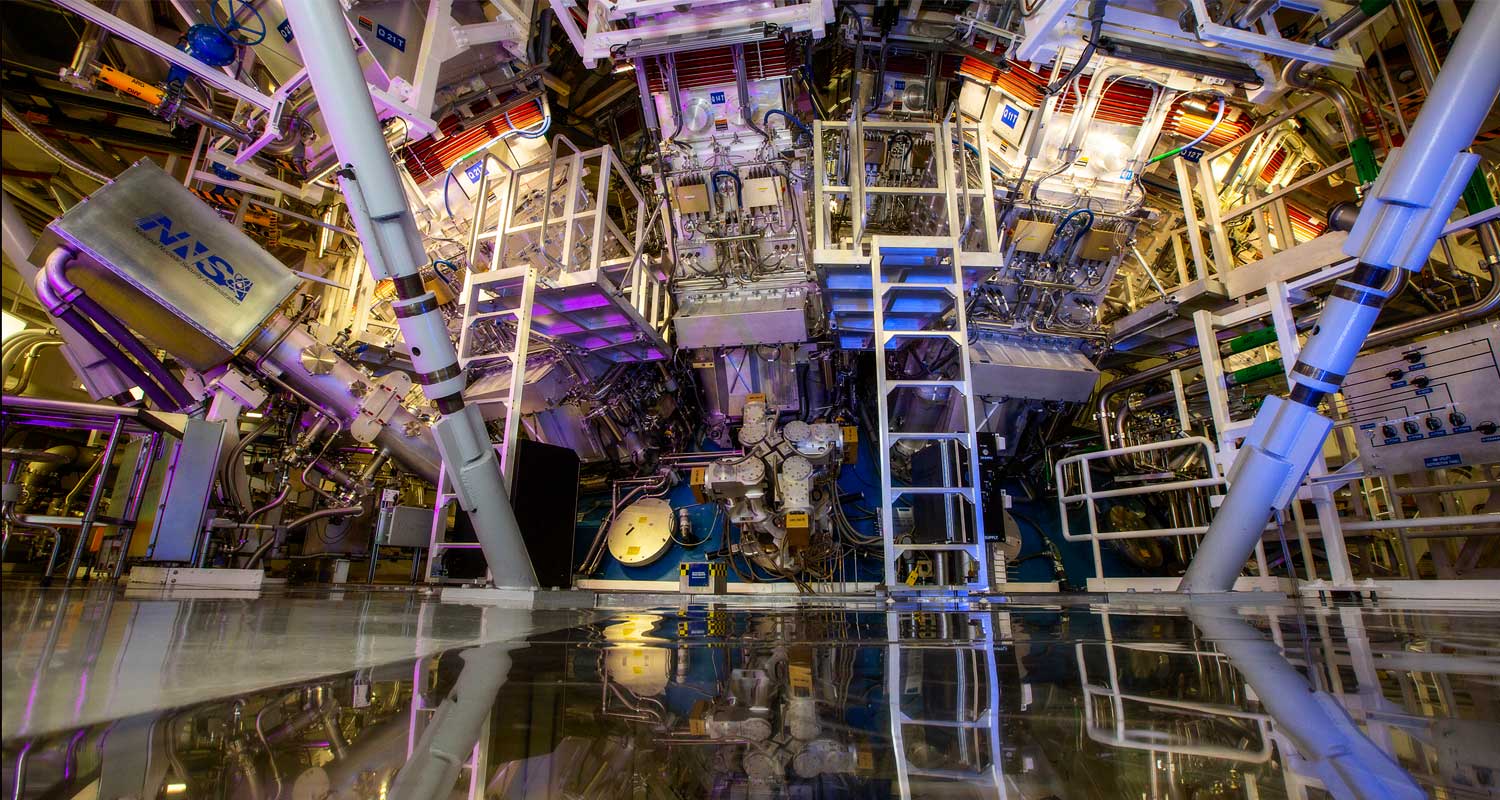
    The US National Ignition Facility’s target chamber, where a powerful laser was used to start nuclear fusion reactions in 2022. Image: Jason Laurea/Lawrence Livermore National Laboratory, CC BY-NC-SA

    The way scientists think about fusion changed forever in 2022, when what some called the experiment of the century demonstrated for the first time that fusion can be a viable source of clean energy.

    The experiment, at Lawrence Livermore National Laboratory, showed ignition: a fusion reaction generating more energy out than was put in.

    In addition, the past few years have been marked by a multibillion-dollar windfall of private investment in the field, principally in the US.

    To make fusion a feasible source of commercial power, engineers now have to tackle a host of practical challenges

    But a whole host of engineering challenges must be addressed before fusion can be scaled up to become a safe, affordable source of virtually unlimited clean power. In other words, it’s engineering time.

    As engineers who have been working on fundamental science and applied engineering in nuclear fusion for decades, we’ve seen much of the science and physics of fusion reach maturity in the past 10 years.

    But to make fusion a feasible source of commercial power, engineers now have to tackle a host of practical challenges. Whether the US steps up to this opportunity and emerges as the global leader in fusion energy will depend, in part, on how much the nation is willing to invest in solving these practical problems – particularly through public-private partnerships.

    Building a fusion reactor

    Fusion occurs when two types of hydrogen atoms, deuterium and tritium, collide in extreme conditions. The two atoms literally fuse into one atom by heating up to 100 million deg C), 10 times hotter than the core of the sun. To make these reactions happen, fusion energy infrastructure will need to endure these extreme conditions.

    There are two approaches to achieving fusion in the lab: inertial confinement fusion, which uses powerful lasers, and magnetic confinement fusion, which uses powerful magnets.

    While the “experiment of the century” used inertial confinement fusion, magnetic confinement fusion has yet to demonstrate that it can break even in energy generation.

    Read: Harnessing nuclear fusion is now a matter of ‘when’, not ‘if’

    Several privately funded experiments aim to achieve this feat later this decade, and a large, internationally supported experiment in France, ITER, also hopes to break even by the late 2030s. Both are using magnetic confinement fusion.

    Challenges lying ahead

    Both approaches to fusion share a range of challenges that won’t be cheap to overcome. For example, researchers need to develop new materials that can withstand extreme temperatures and irradiation conditions.

    Fusion reactor materials also become radioactive as they are bombarded with highly energetic particles. Researchers need to design new materials that can decay within a few years to levels of radioactivity that can be disposed of safely and more easily.

    Producing enough fuel, and doing it sustainably, is also an important challenge. Deuterium is abundant and can be extracted from ordinary water. But ramping up the production of tritium, which is usually produced from lithium, will prove far more difficult. A single fusion reactor will need hundreds of grams to 1kg of tritium a day to operate.

    The ultimate fusion reactor

    Right now, conventional nuclear reactors produce tritium as a byproduct of fission, but these cannot provide enough to sustain a fleet of fusion reactors.

    So, engineers will need to develop the ability to produce tritium within the fusion device itself. This might entail surrounding the fusion reactor with lithium-containing material, which the reaction will convert into tritium.

    To scale up inertial fusion, engineers will need to develop lasers capable of repeatedly hitting a fusion fuel target, made of frozen deuterium and tritium, several times per second or so. But no laser is powerful enough to do this at that rate – yet. Engineers will also need to develop control systems and algorithms that direct these lasers with extreme precision on the target.

    The technology used to heat and confine the plasma until the atoms fuse needs to operate reliably for years

    Additionally, engineers will need to scale up production of targets by orders of magnitude: from a few hundreds handmade every year with a price tag of hundreds of thousands of dollars each to millions costing only a few dollars each.

    For magnetic containment, engineers and materials scientists will need to develop more effective methods to heat and control the plasma and more heat- and radiation-resistant materials for reactor walls. The technology used to heat and confine the plasma until the atoms fuse needs to operate reliably for years.

    These are some of the big challenges. They are tough but not insurmountable.

    Current funding landscape

    Investments from private companies globally have increased – these will likely continue to be an important factor driving fusion research forward. Private companies have attracted over US$7-billion in private investment in the past five years.

    Several start-ups are developing different technologies and reactor designs with the aim of adding fusion to the power grid in coming decades. Most are based in the US, with some in Europe and Asia.

    While private sector investments have grown, the US government continues to play a key role in the development of fusion technology. We expect it to continue to do so in the future.

    It was the US department of energy that invested about $3-billion in building the National Ignition Facility at the Lawrence Livermore National Laboratory in the mid-2000s, where the “experiment of the century” took place 12 years later.

    In 2023, the department of energy announced a four-year, $42-million programme to develop fusion hubs for the technology. While this funding is important, it likely will not be enough to solve the most important challenges that remain for the US to emerge as a global leader in practical fusion energy.

    One way to build partnerships between the government and private companies in this space could be to create relationships similar to the one between Nasa and SpaceX. As one of Nasa’s commercial partners, SpaceX receives both government and private funding to develop technology that Nasa can use. It was the first private company to send astronauts to space and the International Space Station.

    Read: Bill Gates invests in nuclear fusion start-up

    There is reason for cautious optimism. New experimental and theoretical results, new tools and private sector investment are all adding to our growing sense that developing practical fusion energy is no longer an if but a when.The Conversation

    • The authors, George R Tynan and Farhat Beg, are professors of mechanical and aerospace engineering, University of California, San Diego
    • This article is republished from The Conversation under a Creative Commons licence. Read the original article

    Get breaking news from TechCentral on WhatsApp. Sign up here.

    Don’t miss:

    US scientists repeat fusion ignition breakthrough


    Subscribe to TechCentral Subscribe to TechCentral
    Share. Facebook Twitter LinkedIn WhatsApp Telegram Email Copy Link
    Previous ArticleMediaTek: the next AI stock market darling?
    Next Article Cell C was hit by ransomware gang

    Related Posts

    Big Microsoft 365 price increases coming next year

    Big Microsoft price increases coming next year

    5 December 2025
    AI is not a technology problem - iqbusiness

    AI is not a technology problem – iqbusiness

    5 December 2025
    Vodacom to take control of Safaricom in R36-billion deal - Shameel Joosub

    Vodacom to take control of Safaricom in R36-billion deal

    4 December 2025
    Company News
    AI is not a technology problem - iqbusiness

    AI is not a technology problem – iqbusiness

    5 December 2025
    Telcos are sitting on a data gold mine - but few know what do with it - Phillip du Plessis

    Telcos are sitting on a data gold mine – but few know what do with it

    4 December 2025
    Unlock smarter computing with your surface Copilot+ PC

    Unlock smarter computing with your Surface Copilot+ PC

    4 December 2025
    Opinion
    Your data, your hardware: the DIY AI revolution is coming - Duncan McLeod

    Your data, your hardware: the DIY AI revolution is coming

    20 November 2025
    Zero Carbon Charge founder Joubert Roux

    The energy revolution South Africa can’t afford to miss

    20 November 2025
    It's time for a new approach to government IT spend in South Africa - Richard Firth

    It’s time for a new approach to government IT spend in South Africa

    19 November 2025

    Subscribe to Updates

    Get the best South African technology news and analysis delivered to your e-mail inbox every morning.

    Latest Posts
    Big Microsoft 365 price increases coming next year

    Big Microsoft price increases coming next year

    5 December 2025
    AI is not a technology problem - iqbusiness

    AI is not a technology problem – iqbusiness

    5 December 2025
    Vodacom to take control of Safaricom in R36-billion deal - Shameel Joosub

    Vodacom to take control of Safaricom in R36-billion deal

    4 December 2025
    Black Friday goes digital in South Africa as online spending surges to record high

    Black Friday goes digital in South Africa as online spending surges to record high

    4 December 2025
    © 2009 - 2025 NewsCentral Media
    • Cookie policy (ZA)
    • TechCentral – privacy and Popia

    Type above and press Enter to search. Press Esc to cancel.

    Manage consent

    TechCentral uses cookies to enhance its offerings. Consenting to these technologies allows us to serve you better. Not consenting or withdrawing consent may adversely affect certain features and functions of the website.

    Functional Always active
    The technical storage or access is strictly necessary for the legitimate purpose of enabling the use of a specific service explicitly requested by the subscriber or user, or for the sole purpose of carrying out the transmission of a communication over an electronic communications network.
    Preferences
    The technical storage or access is necessary for the legitimate purpose of storing preferences that are not requested by the subscriber or user.
    Statistics
    The technical storage or access that is used exclusively for statistical purposes. The technical storage or access that is used exclusively for anonymous statistical purposes. Without a subpoena, voluntary compliance on the part of your Internet Service Provider, or additional records from a third party, information stored or retrieved for this purpose alone cannot usually be used to identify you.
    Marketing
    The technical storage or access is required to create user profiles to send advertising, or to track the user on a website or across several websites for similar marketing purposes.
    • Manage options
    • Manage services
    • Manage {vendor_count} vendors
    • Read more about these purposes
    View preferences
    • {title}
    • {title}
    • {title}