Close Menu
TechCentralTechCentral

    Subscribe to the newsletter

    Get the best South African technology news and analysis delivered to your e-mail inbox every morning.

    Facebook X (Twitter) YouTube LinkedIn
    WhatsApp Facebook X (Twitter) LinkedIn YouTube
    TechCentralTechCentral
    • News
      Cell C cleans up its balance sheet but faces tough trading reality

      Cell C cleans up its balance sheet but faces tough trading reality

      13 February 2026
      MVNO business shines in Cell C's first post-listing results - Jorges Mendes

      MVNO business shines in Cell C’s first post-listing results

      13 February 2026
      Ramaphosa presses ahead with Eskom break-up - Cyril Ramaphosa

      Ramaphosa presses ahead with Eskom break-up

      13 February 2026
      The key technology takeaways from Ramaphosa's 2026 Sona - Cyril Ramaphosa

      The key technology takeaways from Ramaphosa’s 2026 Sona

      13 February 2026
      Toyota SA CEO: NEV inaction will cost South Africa its motoring industry - Andrew Kirby

      Toyota SA CEO: NEV inaction will cost South Africa its motoring industry

      12 February 2026
    • World
      Russia bans WhatsApp

      Russia bans WhatsApp

      12 February 2026
      EU regulators take aim at WhatsApp

      EU regulators take aim at WhatsApp

      9 February 2026
      Musk hits brakes on Mars mission

      Musk hits brakes on Mars mission

      9 February 2026
      Crypto firm accidentally sends R700-billion in bitcoin to its users

      Crypto firm accidentally sends R700-billion in bitcoin to its users

      8 February 2026
      AI won't replace software, says Nvidia CEO amid market rout - Jensen Huang

      AI won’t replace software, says Nvidia CEO amid market rout

      4 February 2026
    • In-depth
      How liberalisation is rewiring South Africa's power sector

      How liberalisation is rewiring South Africa’s power sector

      21 January 2026
      The top-performing South African tech shares of 2025

      The top-performing South African tech shares of 2025

      12 January 2026
      Digital authoritarianism grows as African states normalise internet blackouts

      Digital authoritarianism grows as African states normalise internet blackouts

      19 December 2025
      TechCentral's South African Newsmakers of 2025

      TechCentral’s South African Newsmakers of 2025

      18 December 2025
      Black Friday goes digital in South Africa as online spending surges to record high

      Black Friday goes digital in South Africa as online spending surges to record high

      4 December 2025
    • TCS
      Watts & Wheels S1E4: 'We drive an electric Uber'

      Watts & Wheels S1E4: ‘We drive an electric Uber’

      10 February 2026
      TCS+ | How Cloud On Demand is helping SA businesses succeed in the cloud - Xhenia Rhode, Dion Kalicharan

      TCS+ | Cloud On Demand and Consnet: inside a real-world AWS partner success story

      30 January 2026
      Watts & Wheels S1E4: 'We drive an electric Uber'

      Watts & Wheels S1E3: ‘BYD’s Corolla Cross challenger’

      30 January 2026
      Watts & Wheels S1E4: 'We drive an electric Uber'

      Watts & Wheels S1E2: ‘China attacks, BMW digs in, Toyota’s sublime supercar’

      23 January 2026

      TCS+ | Why cybersecurity is becoming a competitive advantage for SA businesses

      20 January 2026
    • Opinion
      A million reasons monopolies don't work - Duncan McLeod

      A million reasons monopolies don’t work

      10 February 2026
      Eskom unbundling U-turn threatens to undo hard-won electricity gains - Busi Mavuso

      Eskom unbundling U-turn threatens to undo hard-won electricity gains

      9 February 2026
      South Africa's skills advantage is being overlooked at home - Richard Firth

      South Africa’s skills advantage is being overlooked at home

      29 January 2026
      Why Elon Musk's Starlink is a 'hard no' for me - Songezo Zibi

      Why Elon Musk’s Starlink is a ‘hard no’ for me

      26 January 2026
      A million reasons monopolies don't work - Duncan McLeod

      South Africa’s new fibre broadband battle

      20 January 2026
    • Company Hubs
      • Africa Data Centres
      • AfriGIS
      • Altron Digital Business
      • Altron Document Solutions
      • Altron Group
      • Arctic Wolf
      • AvertITD
      • Braintree
      • CallMiner
      • CambriLearn
      • CYBER1 Solutions
      • Digicloud Africa
      • Digimune
      • Domains.co.za
      • ESET
      • Euphoria Telecom
      • Incredible Business
      • iONLINE
      • IQbusiness
      • Iris Network Systems
      • LSD Open
      • Mitel
      • NEC XON
      • Netstar
      • Network Platforms
      • Next DLP
      • Ovations
      • Paracon
      • Paratus
      • Q-KON
      • SevenC
      • SkyWire
      • Solid8 Technologies
      • Telit Cinterion
      • Tenable
      • Vertiv
      • Videri Digital
      • Vodacom Business
      • Wipro
      • Workday
      • XLink
    • Sections
      • AI and machine learning
      • Banking
      • Broadcasting and Media
      • Cloud services
      • Contact centres and CX
      • Cryptocurrencies
      • Education and skills
      • Electronics and hardware
      • Energy and sustainability
      • Enterprise software
      • Financial services
      • Information security
      • Internet and connectivity
      • Internet of Things
      • Investment
      • IT services
      • Lifestyle
      • Motoring
      • Public sector
      • Retail and e-commerce
      • Satellite communications
      • Science
      • SMEs and start-ups
      • Social media
      • Talent and leadership
      • Telecoms
    • Events
    • Advertise
    TechCentralTechCentral
    Home » In-depth » The Uberisation of everything

    The Uberisation of everything

    By The Conversation9 March 2016
    Twitter LinkedIn Facebook WhatsApp Email Telegram Copy Link
    News Alerts
    WhatsApp

    uber-640

    Online marketplaces, also known as platform companies, are sprouting up everywhere and redefining business in every industry. “The Uber of…” has become shorthand for tech start-ups looking to redefine the way everything is delivered, from legal services (Sydney-based LawPath) to Package deliveries (San Francisco-based Doorman), to Lottery services (Gibraltar-based Lottoland).

    Paris-based Videdressing offers global aftermarket luxury branded fashion and Los Angeles-based DogVacay is an Airbnb-style online marketplace for dog vacations that has created a network of more than 20 000 pet sitters. It has raised more than US$45m from investors.

    Major online marketplaces are attracting the attention of leading technology investors. Last year, Sydney-based Expert360, a global marketplace for consulting talent, attracted A$4m; Artsy, a New York-based global marketplace for artwork, closed US$25m, and Shyp, a San Franscisco-based on-demand shipping services marketplace finalised another $50m in investment.

    There are currently 5 723 early-stage private online marketplace companies listed on AngelList, the leading online marketplace for investors in early stage technology start-ups. The average valuation is US$4,5m — so that is about $25bn worth of early stage start-ups in this area.
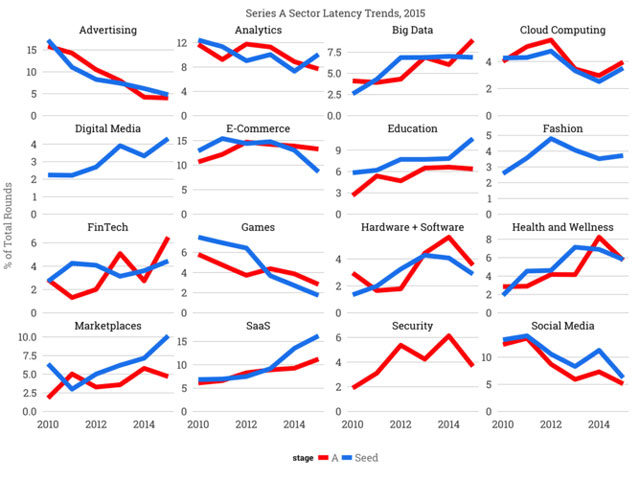
    Marketplaces are among the hottest startup sectors of 2016 according to many leading technology investors. Tomasz Tunguz
    Marketplaces are among the hottest startup sectors of 2016 according to many leading technology investors. Tomasz Tunguz

    The US Center for Global Enterprise this year valued the global market for online platform-based companies at $4,3 trillion. Leading investors in the technology sector have also predicted online marketplaces and the related software-as-a-service (Saas) companies will be the hottest areas to invest in 2016.

    The reason digital marketplaces are so valuable and sought after by investors is they tend toward a winner takes most equilibrium state.

    The evolution of marketplaces

    Great software used to be created by “hackers” or maverick programmers with a can-do spirit who toiled away in their bedrooms or university dorms to create revolutionary new applications, games and tools. Bill Gates, Steve Wozniak and Mark Zuckerberg are often cast in this role. This is not dissimilar to the modern idea of the architect — the solo iconoclast of Le Corbusier, Jørn Utzon or Frank Gehry who designed the last century’s most memorable buildings and then carefully directed others on every aspect of their construction.

    But what if you could create a building more like a beehive — without a complete detailed design plan but instead agreement on principles and a set of rules of exchange, or in other words, using a market.

    In his classic and influential essay and later book, The Cathedral and Bazaar, Eric Raymond contrasts two methods of developing software — one the “Cathedral” method where a small elite group of developers work on the software, versus the “Babbling Bazaar” approach pioneered by Linus Torvalds who led the formation of Linux, the open-source software system that today powers most of the Web.

    Torvalds demonstrated how great and complex products like a computer operating system could incorporate many people’s diverse ideas. This could be done by using the Web as an organising force and a variety of tools to enable systematic incorporation of their labour. Wikipedia is a similar example of a “great cathedral” built with decentralised authority and a series of marketplace rules.

    Where to next — Alchemy marketplaces

    After two generations of online services marketplaces, we’re now entering a third, what I call Alchemy marketplaces.

    The first generation of online services provided Advice marketplaces (forums for review and recommendations such as restaurant review websites and investment discussion boards). A second generation of services enabled Access marketplaces to transact online (such as registering domain names, buying shares or applying for jobs online); and now we’re seeing a third generation of services I call Alchemy marketplaces that combine networks, workflows with real world people and things such as transport (Uber); accommodation (Airbnb) and work (Freelancer.com).

    In these sophisticated and often global third-generation marketplaces, a number of new trends are beginning to emerge, including formation of satellite businesses, support for agents and matrix-like automation support for third parties.

    Once online marketplaces are established and begin to mature, we are seeing aggregation within the marketplaces themselves. Markets that started by connecting individuals to each other are evolving. For example, we are seeing Airbnb landlords who own multiple properties with a team of professional staff using the service to let their properties to tenants.

    Flatbook, a company based in Canada, offers a booking service that works across hotels and Airbnb properties. It communicates with users from all stages, from taking bookings to explaining where the keys are, all via live chat often from the other side of the Atlantic.

    New business models are emerging for companies servicing those in the marketplace itself. Uber started with individual drivers but now there are companies buying and leasing cars to drivers.

    Indeed, a whole network of smaller specialist companies are emerging around many of these marketplaces. eBay started connecting a bunch of individuals selling second-hand goods to one another whereas today it’s mainly used by small businesses.

    Many online marketplaces are providing support for agents — tools for small companies or freelancers to use their services to help their clients.

    The complexity and quality of services that are able to be created on platforms will expand as more markets are built on top of other platforms and services

    Some online services start out as consumer facing and then switch to serving businesses. Sequoia Capital-backed TokBox started out providing real-time video connections between individuals. It was a pioneer in being able to create Internet-based multi-person video chats before Skype and Google offered similar services. Then it changed its business model or “pivoted” to provide services to other companies that wanted to offer video services to their customers — it migrated effectively from being a retailer to becoming a wholesaler.

    And many direct-to-consumer online marketplaces now also provide a facility for companies to create and on sell these services to their customers. Global online newsletter company Campaign Monitor, for example, provides “white label” services to enable small digital advertising agencies and graphic design firms to use their services and provide these to their clients.

    Others are partnering with third parties to enable a mix of online services with offline partners. The university student jobs marketplace Ribit.net partnered with Australian fintech hub Stone and Chalk to help match university students with their resident start-up companies.

    And some are complementing their large automated self-service marketplaces with live and real helpers: the global online services giant Freelancer.com recently introduced a new “recruitment service” that offers a human agent to help you find the perfect freelancer to match your needs.

    Melbourne, Australia-based Marketplacer is a leading company focused solely on making marketplaces. It has created a platform for creating other platforms. Marketplacer has now founded seven marketplaces, including BikeExchange, which is the world’s biggest marketplace for everything bicycle related.

    And in a kind of a back-to-the-future development, one of the hottest new online marketplaces is not a marketplace for jobs but one for for finding human recruiters — RecruitLoop.

    Many online marketplaces now allow others to build new online systems that plug directly into theirs and build on top of them with an application programming interface, or API. This is hugely powerful and will have serious implications for many industries and companies.

    Many platform and marketplace companies refer to this as cultivation of their “ecosystem” — a dynamic mixture of business partners and developers that has long been part of the software industry but is now extending into all industries.

    A good example is online accounting software company Xero which has partnered with banks such as NAB to expedite loan approvals. It does this by sharing Xero customer accounting information online. There’s also a range of start-up companies like Vistr that offer cash flow forecasting services. Vistr is built on top of Xero so it means existing users can use it without re-keying any data.

    Increasingly, as online marketplaces evolve, we’ll see more of this behaviour. The complexity and quality of services that are able to be created on platforms will expand as more markets are built on top of other platforms and services.The Conversation

    • Paul X McCarthy is author of Online Gravity and adjunct professor, UNSW Australia
    • This article was originally published on The Conversation


    WhatsApp YouTube Follow on Google News Add as preferred source on Google
    Share. Facebook Twitter LinkedIn WhatsApp Telegram Email Copy Link
    Previous ArticleSA edges closer to ‘junk’
    Next Article Molefe backtracks on warning of blackouts

    Related Posts

    Cell C cleans up its balance sheet but faces tough trading reality

    Cell C cleans up its balance sheet but faces tough trading reality

    13 February 2026
    MVNO business shines in Cell C's first post-listing results - Jorges Mendes

    MVNO business shines in Cell C’s first post-listing results

    13 February 2026
    Ramaphosa presses ahead with Eskom break-up - Cyril Ramaphosa

    Ramaphosa presses ahead with Eskom break-up

    13 February 2026
    Company News
    Cell C delivers maiden results with growth momentum, financial flexibility - Jorges Mendes

    Cell C delivers maiden results with growth momentum, financial flexibility

    13 February 2026
    Start-up king joins Paratus Rwanda - Innocent Mutimura

    Start-up king joins Paratus Rwanda

    13 February 2026
    How NEC XON tackled identity risk for a major telco - Michael de Neuilly Rice

    How NEC XON tackled identity risk for a major telco

    11 February 2026
    Opinion
    A million reasons monopolies don't work - Duncan McLeod

    A million reasons monopolies don’t work

    10 February 2026
    Eskom unbundling U-turn threatens to undo hard-won electricity gains - Busi Mavuso

    Eskom unbundling U-turn threatens to undo hard-won electricity gains

    9 February 2026
    South Africa's skills advantage is being overlooked at home - Richard Firth

    South Africa’s skills advantage is being overlooked at home

    29 January 2026

    Subscribe to Updates

    Get the best South African technology news and analysis delivered to your e-mail inbox every morning.

    Latest Posts
    Cell C cleans up its balance sheet but faces tough trading reality

    Cell C cleans up its balance sheet but faces tough trading reality

    13 February 2026
    MVNO business shines in Cell C's first post-listing results - Jorges Mendes

    MVNO business shines in Cell C’s first post-listing results

    13 February 2026
    Ramaphosa presses ahead with Eskom break-up - Cyril Ramaphosa

    Ramaphosa presses ahead with Eskom break-up

    13 February 2026
    The key technology takeaways from Ramaphosa's 2026 Sona - Cyril Ramaphosa

    The key technology takeaways from Ramaphosa’s 2026 Sona

    13 February 2026
    © 2009 - 2026 NewsCentral Media
    • Cookie policy (ZA)
    • TechCentral – privacy and Popia

    Type above and press Enter to search. Press Esc to cancel.

    Manage consent

    TechCentral uses cookies to enhance its offerings. Consenting to these technologies allows us to serve you better. Not consenting or withdrawing consent may adversely affect certain features and functions of the website.

    Functional Always active
    The technical storage or access is strictly necessary for the legitimate purpose of enabling the use of a specific service explicitly requested by the subscriber or user, or for the sole purpose of carrying out the transmission of a communication over an electronic communications network.
    Preferences
    The technical storage or access is necessary for the legitimate purpose of storing preferences that are not requested by the subscriber or user.
    Statistics
    The technical storage or access that is used exclusively for statistical purposes. The technical storage or access that is used exclusively for anonymous statistical purposes. Without a subpoena, voluntary compliance on the part of your Internet Service Provider, or additional records from a third party, information stored or retrieved for this purpose alone cannot usually be used to identify you.
    Marketing
    The technical storage or access is required to create user profiles to send advertising, or to track the user on a website or across several websites for similar marketing purposes.
    • Manage options
    • Manage services
    • Manage {vendor_count} vendors
    • Read more about these purposes
    View preferences
    • {title}
    • {title}
    • {title}